Sacramento council votes to give city’s youth department greater share of Measure L funds
The Sacramento City Council voted 9-0 to allocate 40% of Measure L funds to its Department of Youth, Parks and Community Enrichment, overriding a unanimous recommendation from a resident-led commission to limit that appropriation to about 28%.
Youth and their advocates mounted a grass-roots campaign in 2022 to persuade Sacramento voters to use a portion of taxes generated from cannabis operations to fund positive youth development and violence prevention programs. The ballot initiative, known as Measure L, won approval from almost two-thirds of voters.
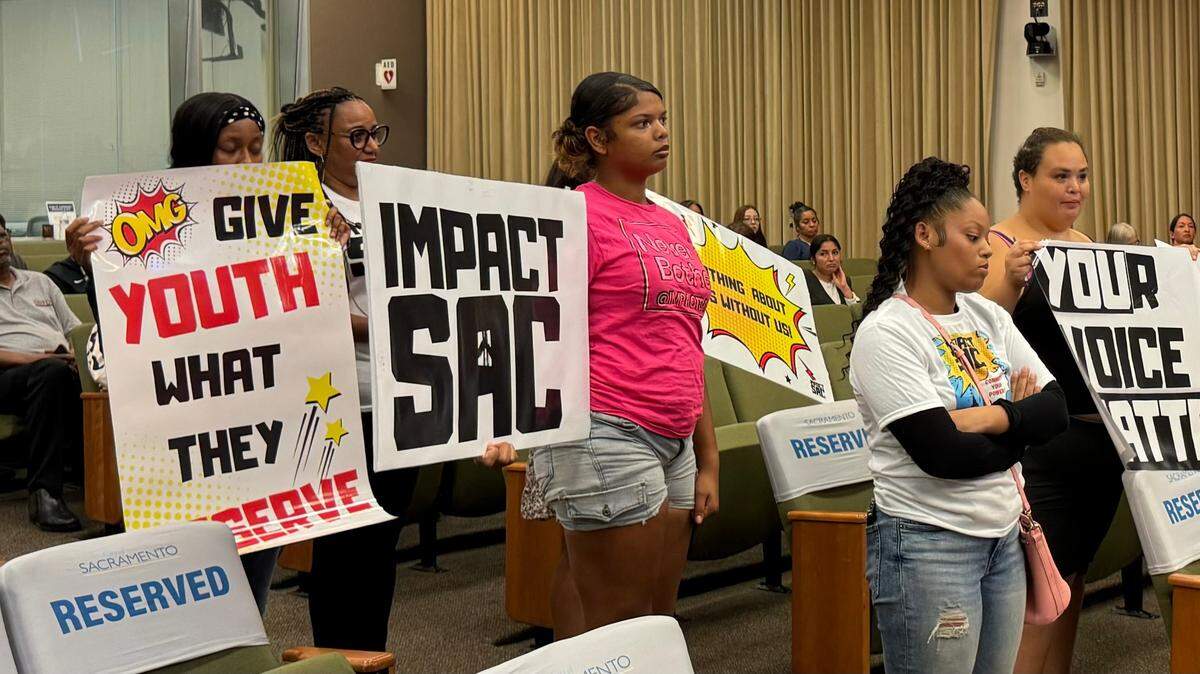
At the meeting, advocates reminded city leaders that it was the culmination of nearly a decade of work by them to get a dedicated funding stream for youth.
Measure L created a Sacramento Children’s Fund and a planning and oversight commission, composed of one voter from each of the city’s nine districts, to make recommendations on how that fund should be spent. City staff estimated that there will be $46.1 million in Measure L funds after administrative costs of $6.6 million are paid.
The Measure L commission, working in tandem with the Sacramento Youth Commission, had recommended that 52% of the $46.1 million go toward grants to community-based organizations, 28% go to the Youth department for its work with youth and 20% go toward a universal basic income program for foster youth ages 18 to 24.
Under the plan approved 9-0 by the council, 40% of Measure L funds will support grants for community-based nonprofits, 40% will go to the youth department and 20% will go to the basic income program.
Dao Vang, a Sacramento field organizer for Hmong Innovating Politics, said he had worked to get Measure L passed, and he described “this campaign as by and for the people, especially our young people.”
He said he was disheartened that city council had discussed using the funds to help cover the costs of deferred maintenance on parks because Measure L spelled out using the funds for positive youth development and violence prevention efforts.
Like dozens of speakers, DeAngelo Mack expressed disgust and anger that council members did not support the commission’s plan as it was submitted.
“You didn’t listen to the countless young people who cried out to you in the past, who have since lost their lives, who have since become shooters that you so loved to villainize and fear,” Mack said. “And if you had listened closely just now, you would have heard them say, why have you held on to resources that could have saved my life?”
Measure L Commissioners Shannon Williams and Nicole Kravitz-Wirtz said they felt the council appropriated more money to the city in an effort to win a “yes” vote from all council members.
“The intention of the commission was to put forth what we perceived to be the intention of the community, which was to prioritize the majority of funds to our community-based organizations who are rooted in community, who are closest to the young people who are hurting most,” Kravitz-Wirtz said, “and so I think I appreciate the fact that we’re still, in part, doing that.”
Mayor Darrell Steinberg had expressed a wish to get a unanimous vote for the strategic investment plan to ensure the fund allocation process wouldn’t face disruption next year. The November election will bring new members to the council, he said, and broad support now likely would limit any disruptions to fund allocation in 2025.
Councilmember Rick Jennings said he wanted the council to have increased oversight on how the funds are allocated and evaluations of how grant recipients are performing, and Steinberg amended the motion to ensure council members would have a chance to review how funds were allocated as part of the competitive process that the city uses.
City staff noted that this could delay the awarding of funds by about two weeks, but the motion passed.
This story was originally published September 25, 2024 at 11:53 AM.
CORRECTION: This story has been updated to correctly attribute a quote to Nicole Kravitz-Wirtz.