
Why I came home: To fight for equity in Sacramento
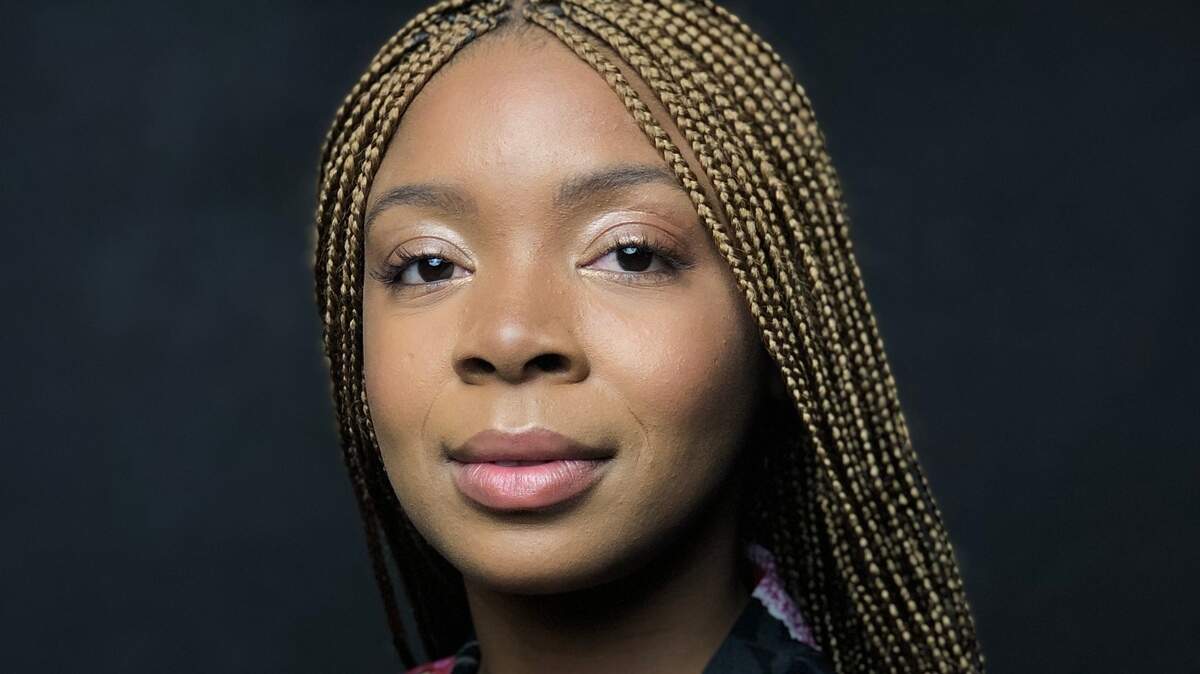
It takes a village to raise a child. That’s one of the reasons I decided to move home to Sacramento.
My family enthusiastically welcomed my 9-month-old son Mahdi and me back with open arms in July. We were living in Brooklyn and I was working for The New York Times before we returned to the beautiful city of trees, now farm-to-fork capital, where I was born and raised. I was thrilled to hear The Sacramento Bee raised community dollars to create a journalism lab focused on achieving equity in Sacramento.
If it takes a village to raise a child, what would it take for all of us to build a city where everyone has a life of opportunity, dignity and access? The kind of place our children can learn and excel in schools not far from their homes.
A city where we can afford to buy homes in the neighborhoods we wish to live, where we can walk outside and breathe the air of a clean city, where we can be seen by trained doctors who are advocating on our behalf and taking our pain seriously. A city that can thrive through redevelopment, while not leaving any of us behind.
What would it look like, really, for all of us to take care of each other?
After eight years away from Sacramento, these questions bring me home. I’m a new editor for The Bee. It’s my job now to lead a team of journalists who will examine how we hold ourselves accountable and create equity in Sacramento. We’ll also provide representative coverage of communities we have not only largely ignored, but have often misrepresented.
The legacy of racism has seeped into our social and political systems, and the devaluing of so many of our neighbors based on class, gender, sexual orientation and race is not your fault nor mine. The systems are working as they were designed. And we must take a closer look at those systems if we want to live in a city where every human life is valued.
We’ve looked at the numbers. When it comes to income, Black, Latino, Hmong, Hawaiin, Pakistini, Vietnamese, Laotian and Chinese communities make almost $20,000 less a year than white families. Black and Latino communities are trailing in home ownership while over-representing the populations of our neighbors who are experiencing homelessness. We can’t feel separated from each other. We, together, must look under the hood of our city and acknowledge that – as it stands – not everyone can claim feeling protected, served or represented in the way that we govern.
We’ve listened to you. We know that in addition to reporting on the city of Sacramento, we must pay attention to our neighbors in Rancho Cordova, Citrus Heights and Elk Grove. We know that equity is not just an issue of race, but of gender, religion and sexuality. We hear the cries to report on your communities in the way you see them, not through the lens of crime or trauma or fear. We know that you want us to hold people and institutions accountable and lift up those who are serving thanklessly day in and day out. You want local news that reflects who we all are, not who a very select few get to be.
We won’t shy away from the hard stuff. In fact, quite the opposite. It’s the hard stuff, the confronting of the status quo that will give way to the kind of thinking, talking, doing and being we should all aspire to engage in.
We’ll need to give up the ideas we have about ourselves. Our ideas of innocence, naivete, of championing small and ineffective piecemeal progress. We are either all in or not. The dance of pretending to do the work while refusing measures of true accountability can and will serve no one.
Sacramento is our village.
The city has to come together to raise the ideals of democracy and make them true. A good question: “What are we not questioning?” It is in this space, the space of things we accept without interrogation, where change is just itching to grow. The first step is to acknowledge it, then we must all walk toward it.
The Equity Lab will function in two parts. The first, accountability. Our accountability journalism seeks to assess the levels of access and influence Sacramento’s diverse demographics have on the governing systems, practices, and decisions in regard to housing, education, economic opportunity and the environment.
The second, representative journalism, will reflect the everyday lives, cultures and concerns of communities being underserved by mainstream media and news outlets. Both pillars seek to offer sophisticated solutions to disrupting the status quo and imagining a better Sacramento.
We’ve hired two driven and committed journalists to lead the way. Alexandra Yoon-Hendricks is our equity reporter and Jeong Park, our economic mobility reporter. We’ll continue to strengthen our Community Voices program, which publishes pieces from young and emerging journalists in Sacramento.
You can support this work here.
Send us your stories. Hold us accountable.
We’re in this together.
Follow this reporting work: Sign up for The Equity Lab newsletter.
This story was originally published September 24, 2020 at 5:00 AM.