How white sage, beading, more help Sacramento-area Native Americans escape domestic abuse
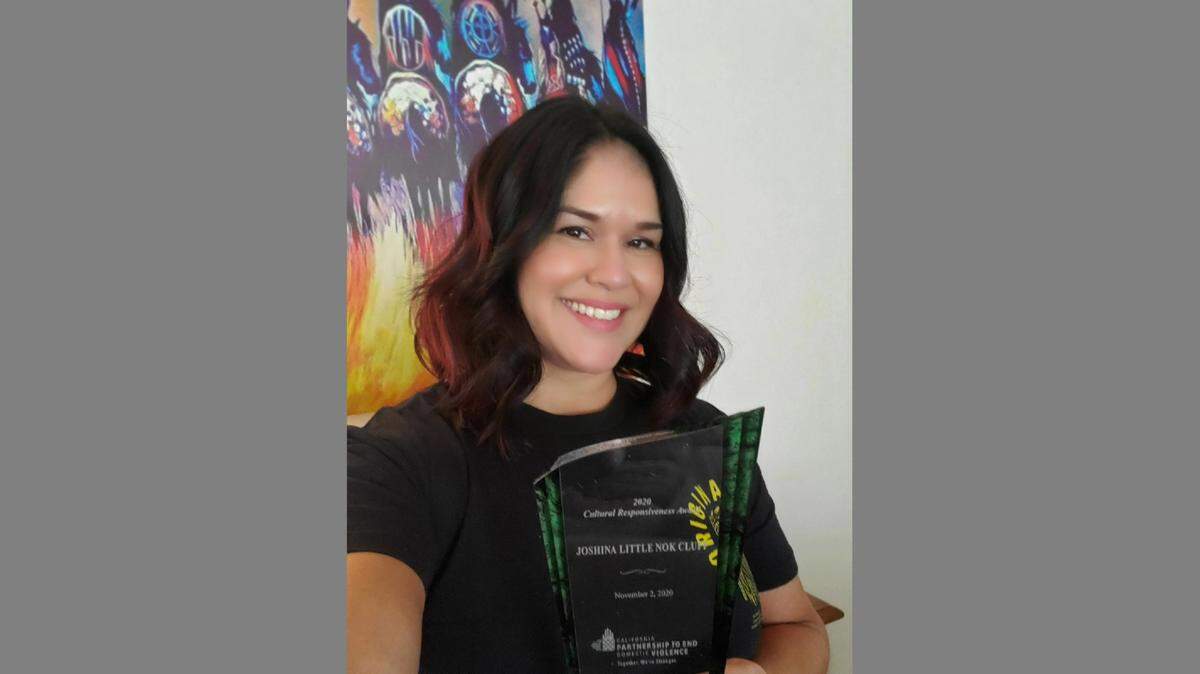
Joshina Little Nok Cluff gets the reasons why other Native Americans, especially those living in homes where there is domestic violence, would want to avoid her.
Indigenous Americans lack trust, Cluff said, in a society that has historically compounded their woes even as it promises something more equitable.
Nonetheless, Cluff readily takes up the challenge of reaching out to Native Americans and Alaska Natives living in violent relationships in hopes of being just the conduit they need to escape.
Although paid by WEAVE Inc., Cluff works about two blocks away from her employer’s K Street headquarters at the Sacramento Native American Health Center. There, clinical staff describe Cluff as a collaborative, knowledgeable and unflappable advocate for Native Americans who are experiencing intimate partner violence.
“When there are signs of domestic violence or maybe a client or patient reports there’s been an incident, we can send Joshina right in on the front lines and she will intervene with them,” said Joshua Collver, the health center’s clinical director of behavioral health. “She’s highly professional. She has a great background in understanding domestic violence, and she has a lot of lived experience and she herself is Native.“
In a measure of the WEAVE advocate’s success, leaders of the California Partnership to End Domestic Violence recently recognized Cluff with that organization’s statewide cultural responsiveness award, saying they were “especially moved by Joshina’s personal approach when working with survivors, by supporting them physically and spiritually, even gifting survivors with healing tools for their rituals.”
How culture leads to connection
Cluff, a descendant of Northern Caifornia’s Yurok and Tolowa people, said that she has embraced these cultural practices as part of her own journey and that it feels natural to do so with those she serves.
“We can explore what their medicine is, and when I ask them what their medicine is, it’s about what helps them in their wellness journey and on your past recovery,” Cluff said. “I can provide white sage for traditional ceremonies and healing. We can also make medicine bags together. That’s another component that we do. We’re also working on having a women’s talking circle. That’s something I’ve noticed the need for, and so we’ll address that need pretty soon.”
WEAVE made many adjustments to its organizational culture after launching its partnership with the Native health center in January 2014, said Weave CEO Beth Hassett, as the staff worked to ensure indigenous men and women would feel welcome.
“The group that we did over there, we modeled more on how the Native community does circle time and incorporated some things we wouldn’t normally do in a counseling group to make it feel more like services they already are used to,” Hassett said. “We incorporated things like beading exercises or doing some artwork.“
And, she said, they learned quickly that, even if medical practitioners introduced their patients to the WEAVE advocate at the Native health center, those patients wouldn’t necessarily feel comfortable walking over to WEAVE’s offices for services. Rather, they wanted services at the health center where they felt comfortable, Hassett said, and so that’s why Cluff and other past advocates have worked there for the better part of each day.
This holistic approach to case management and counseling appeals to Cluff, she said, and she has built upon that foundation since taking the advocate position in January 2019. At the health center, she gets eight to 12 referrals a week and it’s her job to identify and advocate social services that would benefit her clients, then to make a plan that allows them to get what they need.
Oftentimes, Cluff said, the people she meets are not able to afford basic needs like food and school supplies. Consequently, she has assembled backpacks with school supplies for children, as well as kits with snacks and hygiene products.
She’s made a study of local nonprofit organizations that work on behalf of Native people and has collaborated with them to fund the supplies she distributes, as well as services such as emergency stays at local hotels.
Building trust and respect
Before she can get to these needs, though, Cluff has to earn the trust of individuals being referred to her. That requires taking time to get to know the women, men and two-spirit individuals — the Native term for LGBTQ+ — who come to her.
“We’re very narrative, and so that’s the way I approach my work as well,” she said. “We’re storytellers, and so we cling to that.”
Sometimes, Cluff said, she talks with clients about the lands their tribal ancestors once occupied or which people once occupied the land they’re standing on. Or, she provides them with materials to make medicine bags in her office or organizes beading, whistle-making or shawl workshops.
“The workshops create a space of belonging, and they create a sense of community,” Cluff said. “We’re very collectivist and very empathic, so we’re there for each other and we’re able to meet each other where we are. Often, due to a shared history in general, we can relate to the trauma that’s being brought up or talked about.”
Cluff, 41, brings a crucial understanding of the historical injustices suffered by American Indians and Alaska Natives, said Jaime Gerigk, the chief program officer for counseling and outreach at WEAVE. It affects her work with clients who face challenges and barriers to receiving appropriate and culturally responsive support and services.
“So, for example, if a client is struggling to engage in services ... Joshina is knowledgeable and understanding of all of the factors that may contribute to that and understands that relationships with service providers take time to build trust and mutual respect,” Gerigk said.
Cluff said: “It does take an average of eight times for a survivor to leave their abuser and, with that understanding, we know that every time they reach out and I’m able to connect with them, even though they decline to receive services, that’s still a time when they are receiving the information that they need.”
Hassett said this reticence is true of many people in abusive relationships, and that is why WEAVE developed a training program called “Silence Doesn’t Work Here” that staff do for businesses around the region. When they launched their relationship with the Native health center, she said, they also did the training there to help staff understand what to do if someone discloses and how they can support patients they suspect may be in violent relationships, even if they choose not to disclose it.
As part of its partnership with WEAVE, providers at the Native health center agreed to implement an always-seen-alone policy that ensures all patients have privacy in exam rooms to allow providers to screen for domestic violence, Hassett said. The staff there has been successful at these screenings, she said, conducting 1,506 such screenings with indigenous Americans in 2017.
Eight percent of Native patients identified that they were experiencing domestic violence, Hassett said, and 23% of those identified — or 135 patients — indicated they were ready for WEAVE services.
WEAVE staff noted that many of those referrals came from dentists, something that surprised them since they thought the procedures would limit opportunities for patients to talk, Hassett said, but what they saw was that people had a large degree of trust for their dental care providers.
With this knowledge in hand, WEAVE then produced a video that would play in the waiting room, explaining to patients that they can trust that their provider’s exam area is a safe space.
She ‘helps people navigate challenges artfully’
Cluff has been called to meet with patients in situations prone to conflict, where patients have black eyes or missing teeth and the partner who caused the injuries is sitting in the waiting room, but Collver said “she’s got nerves of steel. She just helps people. She is still waters. She is so calm and practiced and helps people navigate challenges artfully.”
In such cases, Cluff is often working to quickly relocate the patient from their homes, Collver said, and situations where you’re trying to separate someone from their abuser are at high risk for violence.
Cluff brings maturity, wisdom and gravitas to her work, Hassett said, and after hearing from her in staff meetings on implicit bias, racism and equity, it’s clear she’s done a lot of self-reflection about what being Yurok and Tolowa means to her.
Those qualities and Cluff’s wry sense of humor, Collver said, also resonate with many clients, and that is crucial here because Sacramento is home to one of the most diverse urban Indian populations in the nation. as a result of a federal relocation program in the 1960s.
“You’ll get people from tribes up and down the East Coast,” he said. “Of course, the effort to relocate didn’t come with all of the promised benefits that should have come with that, so a lot of people got stuck here in poverty without many resources.”
Health challenges include higher rates of suicide and, for Native American women, a greater risk of being a victim of violence than other U.S. racial or ethnic groups. American Indian parents are also judged more harshly by the child welfare system, and thus their children are often removed from their homes at rates significantly higher than their representation in the population.
“Native women are murdered at a rate 10 times higher than women of other ethnicities,” Cluff said, “and it’s actually the third leading cause of death for our women. Eighty-four percent of Native women have experienced violence in their lifetime, while 50% have experienced sexual violence.”
These statistics and those on suicide are never far from Cluff’s mind, she said, as she pursues her work.
“I think that my work helps to lessen the numbers of the other aspects like suicide rates, which are exponentially higher for Natives,” Cluff said. “A lot of that is due to all the trauma, and so if we’re able to provide resources through WEAVE and through my advocacy embedded at SNAHC and just help with that healing process and wellness journey, then we can make that positive impact on the community in general, in my opinion.”
This story was originally published January 15, 2021 at 5:00 AM.