
‘Well-intentioned but ill-informed’: A Sacramento theater’s reckoning over diversity
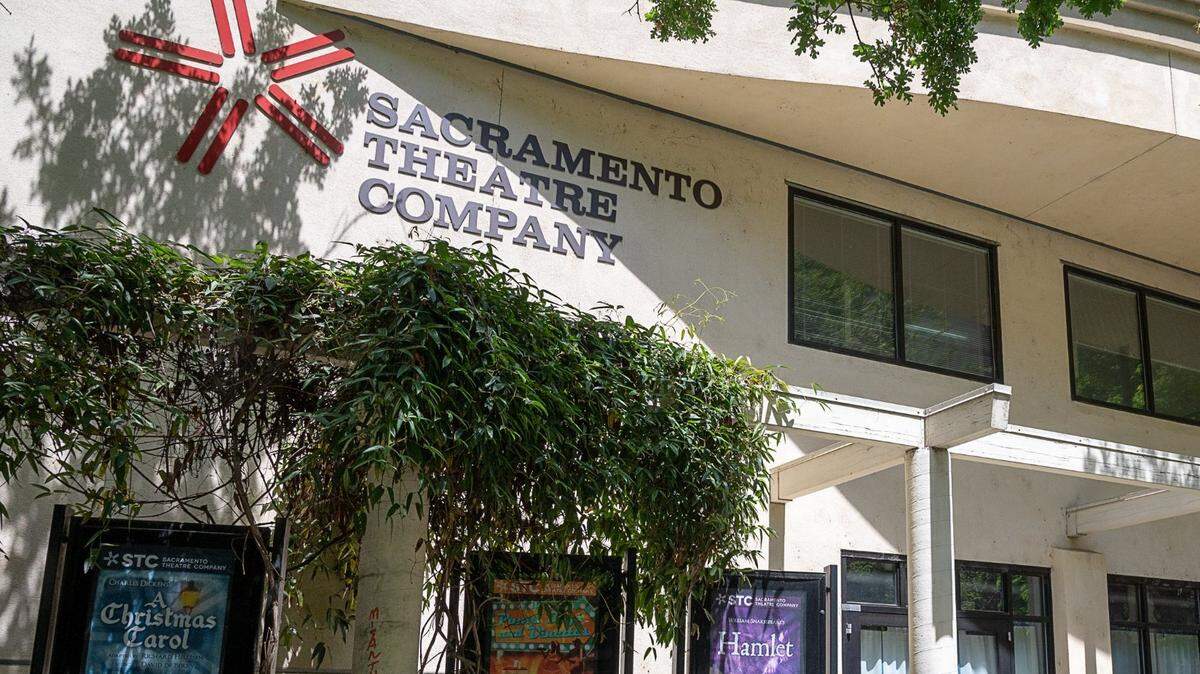
In the wake of the killing of George Floyd and the greater racial reckoning that ricocheted across the country last year, Sacramento Theatre Company announced a play festival last fall that would tackle issues surrounding diversity and inclusion.
But the virtual stage readings of the ten plays selected by the theater company was ultimately canceled in March, after actors backed out en masse and raised concerns that the plays and the casting decisions made failed to live up to the festival’s mission.
Actors criticized the decision to cast white and cisgender actors for several nonwhite and non-binary roles, and described at least one play as being racially inappropriate. They also criticized the fact that the majority of the ten plays selected were written by white playwrights.
Some members of the local theater community said the theater company’s recent stumble is part of a pattern of making culturally insensitive blunders and reflects the theater industry’s overall legacy of producing shows and serving audiences that are predominately white, wealthy, and exclusive.
“The fact that these plays were greenlit as they stood to be put in the festival, in addition to the way subsequent casts were selected, (shows) a blatant disregard for any racial or gender accuracy in the casting,” said Andrew Perez, an actor based in Los Angeles who has been a part of several productions at Sacramento Theatre Company but was not affiliated with the festival.
Executive director Michael Laun said in a statement that the theater company is planning to reschedule the New Works Play Festival, and wants “to make sure the time and effort needed to do it right is invested.” No new date has been set.
“We believe in this event and want it to be done annually, so we have to plan it thoughtfully,” he stated. “We are utilizing the time now to do just that.”
The upheaval at Sacramento Theatre Company, known for its productions of industry classics like Shakespeare, is one that theater groups across the country are similarly experiencing. Some are starting to implement anti-racist policies, establish new hiring practices, and rethink and diversify their programming.
Gaelika Brown, who’s been working in the local performing arts scene for more than 20 years, said there’s no lack of diverse talent in Sacramento. Still, many artists, particularly artists of color, struggle to break through at major institutions. Recent efforts to highlight new voices in the industry ring at least partially hollow.
“You may have a great intention, but at the same time, you’re doing it as a business strategy,” Brown said. “If that’s truly how you felt, you would’ve been doing it the whole time. ... You’re going to do it wrong because if your heart isn’t in it, you’re going to half-ass it.”
New Works Festival, postponed
Sacramento Theatre Company initially announced in October it’s New Works Play Festival competition, seeking submissions from “new and experienced writers that deal with issues such as diversity, culture, and integration,” according to an Instagram post.
The company ultimately selected 10 finalist plays, and helped the playwrights workshop and finalize drafts of their respective scripts. Each play would be performed as a staged reading by professional actors via Zoom at the festival, which would be recorded and posted online in March. The ultimate goal of the festival was commissioning one play to be developed into a full-length play with a world premiere theatrical production.
Will Block, who’s worked at the company on and off for the last 13 years, was asked by Laun to replace another actor in three different plays the night before the rehearsal and subsequent recording the following day. Block said he initially agreed, but after cold reading the script of one play, he immediately felt uncomfortable.
The play “Coyotes,” focuses on two conservative white men who — after meeting a Navajo medicine man — body-switch into a couple of El Salvadoran asylum seekers.
The Navajo medicine man character was integral to the plot, Block said, but there were no Native American cast members. The magical medicine man is a common media stereotype, often used as a means of providing spiritual guidance to white characters.
Block said he had other concerns as well, such as being asked to perform the role of a nonbianary character despite being cisgender. Other actors involved in the festival raised additional worries, like white actors being cast as Chinese characters.
“My impression of STC is it’s well-intentioned but ill-informed,” Block said. “Michael genuinely wanted to make a diverse festival ... but just had no idea what that actually meant.”
The Sacramento Theatre Company has faced controversy in the past. Its production of “Crazy Horse and Custer” in 2013 was heavily criticized by members of the Native American community and the Lakota people. The Crazy Horse family “called the play racist, derogatory, disrespectful, and said it desecrates the memory of Crazy Horse,” according to an Indian Country Today article at the time. The company made some modifications to the play, but “some of the original problems still exist,” the article stated.
Actors questioned why the company’s production of “The Diary of Anne Frank” in 2017 opened on Yom Kippur, which is considered the holiest day of the year in Judaism and a day of rest. Its 2018 production of “Man of La Mancha,” the musical adaption of the Spanish classic “Don Quixote,” had an all-white cast. “I’ve never done a show at Sacramento Theatre Company with more than two people of color,” Perez said.
“If the goal is to diversify what has been an extremely white theater historically that’s made programming gaffes in the past,” Block said, “it’s going to take a lot more work.”
Stephen Miller, who wrote “Coyotes” and is white, said the play was intended to highlight the plight of asylum seekers and families separated at the U.S.-Mexico border in a way that was respectful and culturally sensitive.
Miller interviewed a member of the Navajo tribe for research, he said, and agreed it would’ve been preferred to have Latino and Native American actors cast for the show. He added that Laun did not tell playwrights of the actors’ concerns about the festival production, only that it had to be postponed.
“I think they absolutely had fantastic intentions,” Miller said. “I don’t know of other theater companies doing anything like it. My hats off to them for wanting to help develop playwrights and bring something that’s diverse.”
A way forward for theater
Block, who works at a Shakespeare theater company in Los Angeles, said he understands that “it’s hard to convince playwrights of color there is room at the table” when most of the company’s repertoire skews “white and dead.”
Still, he said, Sacramento Theatre Company has “not gone above and beyond to create a space for artists of color,” Block said.
“It’s not about just opening the doors and seeing who comes, it’s about curating the artistic experience to genuinely reflect diversity,” he added.
The recent push to dismantle systemic racism in the theater industry was a surprising but welcomed change to James Wheatley, founder of Celebration Arts. Wheatley founded the Black community theater in 1986 after seeing there weren’t enough training and performance opportunities for African Americans in Sacramento.
“When we had this George Floyd incident, a lot of organizations wanted to show inclusivity,” he said.
Sacramento Theatre Company, like most theater companies, has a long journey ahead of itself, Wheatley said.
He recalls that in 2007, the Sacramento Theatre Company announced a decade-long commitment to produce The Pittsburgh Cycle, the seminal 10-play series written by August Wilson, one of the most celebrated Black American playwrights.
The plan was to produce one play each year, concluding in 2018. The company ultimately produced only one play, “Gem of the Ocean,” which Wheatley starred in.
“I don’t know what happened internally, but I know the play we did, I didn’t think was well attended, and I’ve been to plays there with full houses,” he said.
The racial reckoning that boiled over in the theater world came as the performing arts industry was in freefall because of the coronavirus pandemic, which forced live venues to close and left thousands of artists out of work.
Capital Stage, another professional theater company in Sacramento, has always been conscious of social justice issues, said producing artistic director Michael Stevenson. “Pass Over,” a play about two Black men trying to escape the cyclical nature of racism, poverty, and violence à la “Waiting for Godot,” would’ve opened the week George Floyd was killed.
“But we were not active enough,” Stevenson said. “This last year changed things in a big way.”
Still, while Capitol Stage’s audiences remain largely white, a reality Stevenson said the theater company is actively working to change.
The theater company is creating an artist advisory council to get feedback on scripts and productions, he said. And the company is trying to find ways of diversifying its audience, Stevenson added, such as working with community organizations to draw in large groups.
“Theater is one of the places you can build a bridge to open people’s eyes and share a new experience,” he said. “Are we going to make mistakes? Absolutely. But I think we have to keep working.”
This story was originally published April 30, 2021 at 5:00 AM.