
Equity Lab: Millennials are buying homes in Sacramento. How??? + Climate Hot Take(s)
Like this newsletter? Forward it to a friend and help us get the word out. They can sign up here.
It’s Wednesday, Aug. 11, 2021; this is Alex Yoon-Hendricks.
You’ve heard it before — millennials have killed everything from Applebee’s to bar soap to, apparently, the Canadian tourism industry.
Headlines have also decreed millennials are also “killing” the real estate market, go figure. The reason why is pretty obvious — millennials are saddled with untenable student debt, stagnant wages, rising home prices, the economic aftershocks of multiple recessions, to name just a few culprits.
That’s why I was surprised by a recent story published by my colleague Hannah Wiley, who regularly reports on the ways the California legislature tries (and fails) to make good on its promise to address the state’s affordable housing crisis.
Published Wednesday, shows that millennials actually make up the largest share of home buyers in the state. I wanted to find out more about why that is. Here’s our chat, condensed for length and clarity:
Why did you decide to write this story in the first place?
I’m a millennial who one day would like to buy a house with student loans, and just with the expensive nature of living in California, that seems pretty daunting.
Millennials, we’re not young anymore. The oldest of us are 40. Empirically, we’re the largest share of home buyers, but there’s quite a number of hoops to jump through to get there.
That was something I was surprised by — that millennials make up the largest share of home buyers, given how much of the discourse is focused on how millennials struggle to buy homes. Why is that?
We’re in our mid-late 20s and 30s, that tends to be the natural age you buy a home. To be clear, Gen X also make up 37% of home buyers, compared to millennials at 39%, so we’re actually pretty neck and neck. And I do know that baby boomers bought homes earlier and quicker than we were able to.
(And to be clear, fewer millennials are homeowners compared to previous generations — in 1985, 45.5% and 68% of 25-34 year olds and 35-44 year olds were homeowners, respectively; in 2015, it was 34.5% and 56.4% respectively, according to the American Housing Survey.)
How are millennials with massive student debt or limited incomes even able to buy homes then?
Well, because of the nature of our generation, in order for lenders to stay in business, they have to lend to millennials. We came of age when tuition was rising faster than wages, and that’s part of the package. Lenders are also able to approve people with 3% or 3.5% down, compared to the traditional 20% down saying.
Is that worrisome at all for millennials? Purchasing homes when in a financial position that maybe would’ve been considered riskier for past generations?
Honestly, it comes to financial planning. That’s not surprising, of course, but a consideration for buying a home is basic budgeting. A lot of this comes down to, you may be able to buy a home, but only if you take a really close examination of your budget and make sacrifices accordingly.
Was there anything surprising you found in your reporting?
I learned a lot more people were buying homes against the odds than I thought. People don’t let student debt get in the way of buying homes, and they can also be making an income that’s not necessarily in the hundreds of thousands of dollars and still buy a modest home. The story ended up being more positive in that way.
An unsurprising factor is that those who don’t have family members to help with a down payment or are middle class took a hit because of the pandemic, they often aren’t able to buy a home. It doesn’t mean it’s forever, but it is the low- and middle-class-income Californians who are struggling to realize their home buying dream.
Read Hannah’s story here.
Here’s what else you need to know this week:
Must-Read Stories
GROWING MORE BLACK- AND BROWN-OWNED BUSINESSES:
Elk Grove is diverse, but Black- and brown-owned businesses lag. A task force wants to change that.
‘DINE DIFFERENT’:
Last Supper Society brings culture to Sacramento’s fine dining scene. What do they want people to get from a Last Supper Society function? The common thread was making dining, an experience.
HOME BUYING TIPS FOR CALIFORNIA MILLENNIALS:
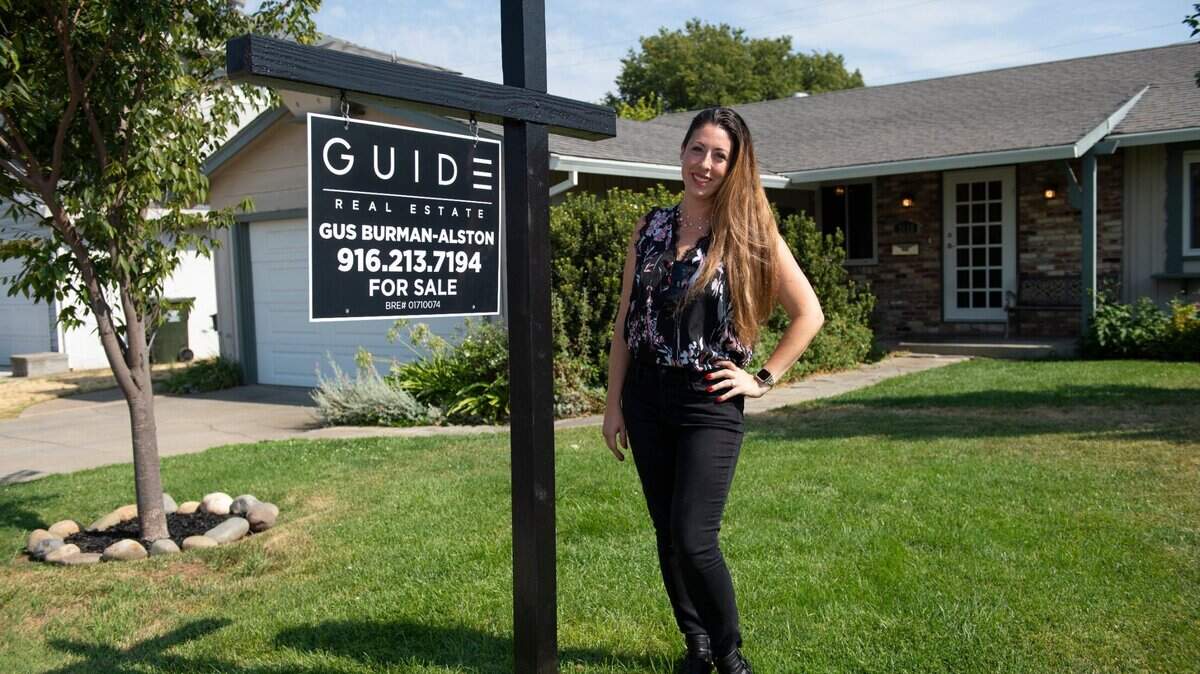
“Your first house doesn’t have to be your dream house,” one Sacramento real estate agent said about setting expectations.
More Interesting Reads
New rules for California hospital visits now in place. Here’s what you need to know
COVID-19 infections among children on the rise as delta variant spreads in California
Vaccinating during pregnancy has become even more urgent as ICU beds fill up
What we’re listening to (and you should, too!)
Did you feel an intense sense of doom this week? A major new United Nations scientific report has concluded we can no longer avoid global warming from intensifying over the next 30 years. (Though there is still time to prevent an even more most devastating future.)
When I feel particularly morose about our future, I put in some headphones and start learning. Something about knowledge makes me feel a little more steady on my feet.
A few months ago I recommended a climate change podcast called “How to Save a Planet.” Now, I’m recommending another podcast I’ve recently discovered called, “Hot Take.”
Hosted by Mary Annaïse Heglar and Amy Westervelt, the show is a self-described “holistic, irreverent, no-bullshit look at the climate crisis and all the ways we’re talking—and not talking—about it.”
The show looks at the climate conversation with an intersectional lens that’s refreshingly honest and sorely needed in The Discourse. Episodes include “More F------ Greenwashing!” and “Seeing Corona Through Climate-Colored Glasses,” and “So This Is Purgatory.”
The show just wrapped up its third season, but if you’re still itching for new and fresh Content, they also have a very thoughtful newsletter you can sign up for.
Where to find us
❗ We want to hear from you! Please send us your story tips and thoughts to equitylab@sacbee.com.
➡️ You can also follow us on Instagram and Twitter, and like us on Facebook at @EquityLabSac.
Thank you for reading, and we will see you again next week!
Like this newsletter? Forward it to a friend and help us get the word out. They can sign up here.
This story was originally published August 11, 2021 at 3:18 PM.