
Vaccine influencers? How Sacramento County is helping everyday residents become advocates
At the end of the presentation, the questions came fast.
Is there any data for pregnant women?
Are we considered fully vaccinated after two shots or just after the booster?
If someone’s tested positive, how long after can they get vaccinated safely?
This is an online vaccine influencer training session, attended by more than 60 community members and hosted by Sacramento County in partnership with Sac Collab, a group of nonprofits helping public health officials get COVID-19 information and resources to neighborhoods particularly hit by the virus.
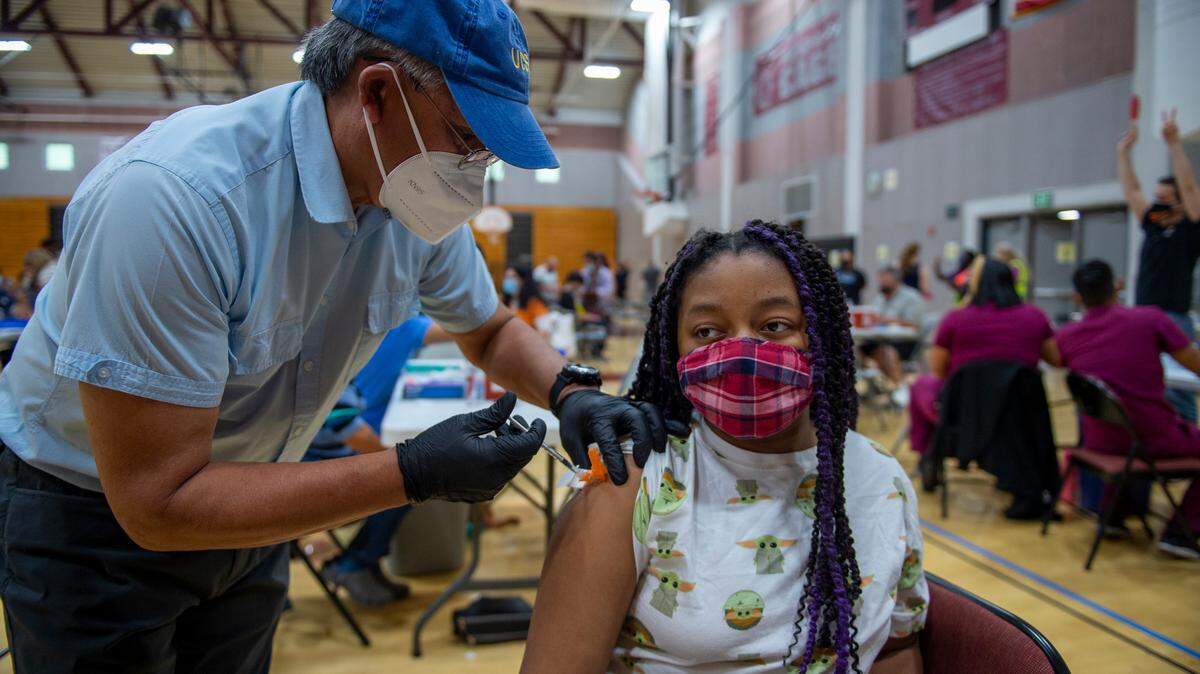
The program is a kind of educational tool, the latest effort by county health officials to break through the vaccination level ceiling Sacramento hit this summer and protect as many residents as possible under the mantra that every single new shot delivered is a success. The program that operates on the belief that some of those still hesitant about the vaccine can be persuaded, so long as they get one-on-one information from a trusted source.
Led by local nurses and doctors, Sac Collab has run online trainings in Spanish, hosted a webinar catered to building trust in the vaccine within the Black community, and plans an additional Russian-language session in September. More than 100 people have attended each previous training — all potential advocates for the vaccine in their own social circles, according to Samantha Garcia with the Sierra Health Foundation and The Center, which manages the Sac Collab.
“These trainings are intended to be an antidote to the very real vaccination reluctance we’re seeing in our communities,” she said in an email. “People have serious questions and concerns and we want to prepare as many people as possible to have answers and to feel empowered to help their loved ones make informed decisions about whether and how to get vaccinated.”
Just shy of 52% of Sacramento County residents are vaccinated, according to county public health data. In the last month, the number of vaccinations doled out has slightly but steadily increased: After the Fourth of July, about 2,325 people received a shot per day on average for the previous week. On Aug. 26, the latest date available with data, just over 3,200 people received a shot per day on average for the previous week.
But pockets of Sacramento still remain heavily under-vaccinated, even as the highly contagious delta variant drove a surge of COVID-19 cases this summer and pushed hospitals in the region to the brink with sick patients.
Old North Sacramento, Elverta, Rio Linda, Antelope, North Highlands, Foothill Farms are among the least vaccinated neighborhoods in the county. In the last month, cases have been highest in Florin, the Parkway, Carmichael, Folsom, Del Paso Heights and Antelope, according to county public health data.
Asian and Native Hawaiian or Pacific Islander residents have gotten vaccinated at the highest levels in Sacramento County, with about 71% of both groups at least partially vaccinated. In contrast, about 47% of White residents, 42% of American Indian or Alaska Native residents, 39% of Black residents and 38% of Hispanic residents have received at least one dose.
On Wednesday, hundreds of doctors published an urgent plea to residents of the four-county Sacramento region to get vaccinated against COVID-19.
“Please get vaccinated. We ask this from the bottom of our hearts,” the doctors state in the letter. “We are tired of the suffering, pain and death that can be avoided by getting vaccinated.”
How to convince someone to get the vaccine
During Wednesday’s webinar, Dr. Milin Ratanasen with Kaiser Permanente answered dozens of questions on booster shots, symptoms, differences between the vaccines, and more. Using anecdotes gleaned in the field and a plethora of metaphors, Ratanasen explained the benefits of vaccines, the risks of getting COVID-19, and the evolving research on the virus.
For example, natural immunity — the protection one gets from having had COVID-19 previously — may be good for three months, he said.
“After that, (getting vaccinated) it’s like updating your immune system, like getting the latest software for your iPhone,” he said.
Many questions surrounded vaccinations and pregnancy. Ratanasen pointed out that the American College of Obstetricians and Gynecologists and the Society for Maternal-Fetal Medicine recommend that all pregnant people get vaccinated against COVID-19, The Centers for Disease Control and Prevention has also warned of complications stemming from getting the virus while pregnant, such as increased risk for preterm birth.
Here are some key messages to emphasize when initiating conversations around the vaccine:
▪ The vaccine is safer than contracting COVID-19.
▪ The side effects from the vaccine are common, but temporary.
▪ The risk of getting COVID-19 is greater this year than last because lockdowns restrictions have ended and the delta variant is more easily transmissible.
▪ The vaccine was not created in a year, but went through rigorous testing and builds on a decade of research and science.
Ultimately, Ratanasen said, trust is a journey. Advocating for the vaccine means keeping communication lines open, helping family members find a vaccine appointment, and acknowledging their personal choice.
“Empowerment in the individual choice is important,” Ratanasen said.
This story was originally published September 8, 2021 at 5:00 AM.