Exclusive: Evictions soar in Sacramento as remaining COVID tenant protections set to end
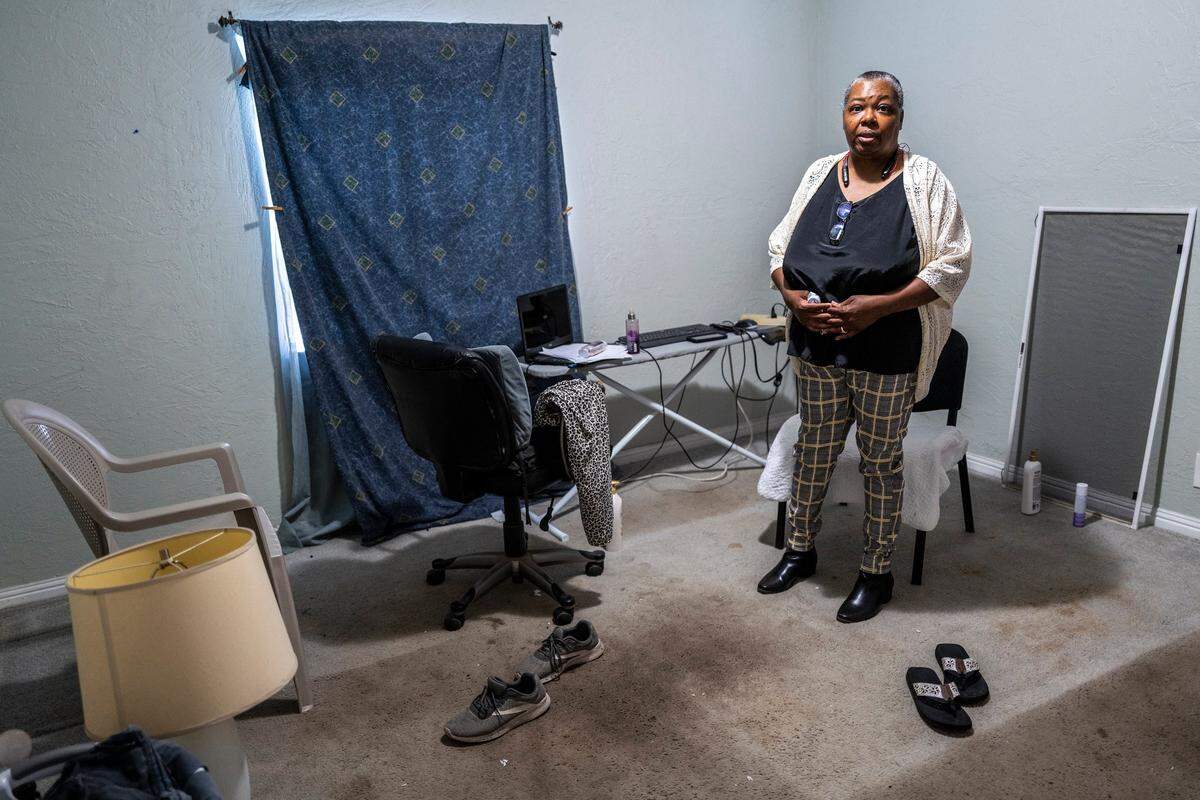
Lenora Jackson came home in South Oak Park from her job as a state worker one day in April to find her property manager standing outside her house, asking for her keys.
He was trying to evict her because of a bed bug infestation. She feared that losing her home, where she has rented since 2017, would force her into homelessness and to live in her pick-up truck.
“It’s scary because I have a lot of medical problems,” said Jackson, 55. “I would have nowhere to go.”
Hundreds of Sacramento residents shared similar experiences over the past year as tenant protections adopted during the COVID-19 pandemic expired. The evictions unfolded as a landlord, a property manager, or in many cases, a deputy from the Sacramento County Sheriff’s Office knocked at the door to kick out tenants.
Pandemic tenant protections gave an unprecedented level of security to California and Sacramento County renters. As the economy shut down and thousands lost their jobs overnight, eviction moratoriums kept people housed as the virus spread.
But those protections have been phasing out since last fall. Now, tenant advocates worry that when the last major stopgap measure to block evictions from moving forward in the courts lifts at the end of this month, thousands will face the prospect of homelessness.
“We’re very worried about July when many of the protections evaporate, and the ensuing flood that that will entail with really nowhere for anyone to go,” said Sarah Ropelato, an attorney for Legal Services of Northern California who represents tenants.
And, as rent prices shoot up across the region and affordable housing remains scarce, evicted Sacramento County residents face especially especially daunting challenges as they look for new places to live, said Sacramento Housing Alliance executive director Kendra Noel Lewis.
Typical rents in the Sacramento region increased nearly 20% last year. Even full-time workers struggle. Unemployment levels have returned to pre-pandemic levels, now hovering around 3.2% for the Sacramento metro area, but thousands are struggling to get by on jobs that don’t pay enough.
According to an estimate from the California Housing Partnership, a person needs to earn at least $31.25 an hour — or more than twice the minimum wage — to afford the median rent of a two-bedroom home in Sacramento County without spending more than 30% of their pay on housing.
More than 1.4 million California renters were behind on at least one month’s rent, according to the most recent Household Pulse Survey released by the U.S. Census Bureau in May. About six in ten of those renters self-identified as being very or somewhat likely to leave their homes due to eviction.
“It’s only getting worse,” Lewis said. “The moratorium is going to come up ... and then all hell’s really going to break loose and the problem is there’s nowhere to go.”
Who was evicted during COVID-19?
Evictions occurred regularly in Sacramento County before the pandemic. In 2019, more than 6,600 eviction lawsuits, known as unlawful detainers, were filed in Sacramento Superior Court, amounting to roughly 18 filed per day.
That number dropped by more than 70% in 2020. Renters who filed paperwork with their landlords proving they had lost their jobs or had to take care of sick loved ones because of COVID-19 were shielded from eviction for non-payment.
But those who didn’t fill out the required paperwork could still be evicted. Landlords could also kick tenants out if they planned to renovate the unit, if tenants committed minor lease violations or engaged in criminal activity.
In the second year of the coronavirus pandemic, the number of lockouts performed by a sheriff’s deputy in Sacramento County more than doubled compared to the first year, a Sacramento Bee analysis of Sacramento County Sheriff’s Office records show.
Between March 19, 2021 and March 19, 2022, more than 1,231 people were evicted from their home by a sheriff’s deputy after their case concluded in court. In comparison, 487 people were locked out by a sheriff’s deputy in the first year of the pandemic.
Few areas of the county were untouched by sheriff lockouts in the second year of the pandemic.
But some neighborhoods felt the consequences more than others. About 42% of sheriff lockouts that occurred in the second year of the pandemic took place in a census tract with a poverty rate of 20% or more.
Swaths of Arden Arcade, Valley Hi/North Laguna, Old North Sacramento, South Natomas and Meadowview — neighborhoods with a large number of immigrant communities, as well as Black, Latino and Asian families — were marked by evictions. In some cases, multiple people were kicked out by a sheriff’s deputy from the same apartment complex.
In the last year, nine were evicted from the Crossings, an apartment complex that caters to students attending nearby Sacramento State; seven were evicted from an Extended Stay America hotel in South Natomas; five were evicted at The Madison, an apartment complex in North Highlands with units set aside for low-income tenants; four were evicted from a Ping Yuen Apartments, a senior-living affordable housing complex in downtown Sacramento; six were evicted from Montage at Fair Oaks, which markets itself as a luxury apartment complex in Citrus Heights; nine were evicted from a Fruitridge Glen Apartments, a complex in south Sacramento.
Some renters fight notice
For most people, even the threat of an eviction amounts to a personal calamity, unique to each household, upending lives. What comes next, in turn, varies from person to person.
Some tenants fight.
In Jackson’s case, she believes her landlords used the pest issue as an excuse to kick her out and raise the rent. Her property manager, Fred Fletcher, previously told her he wanted to raise her $950 monthly rent to at least $1,500 — a 50% increase she would not be able to afford, she said.
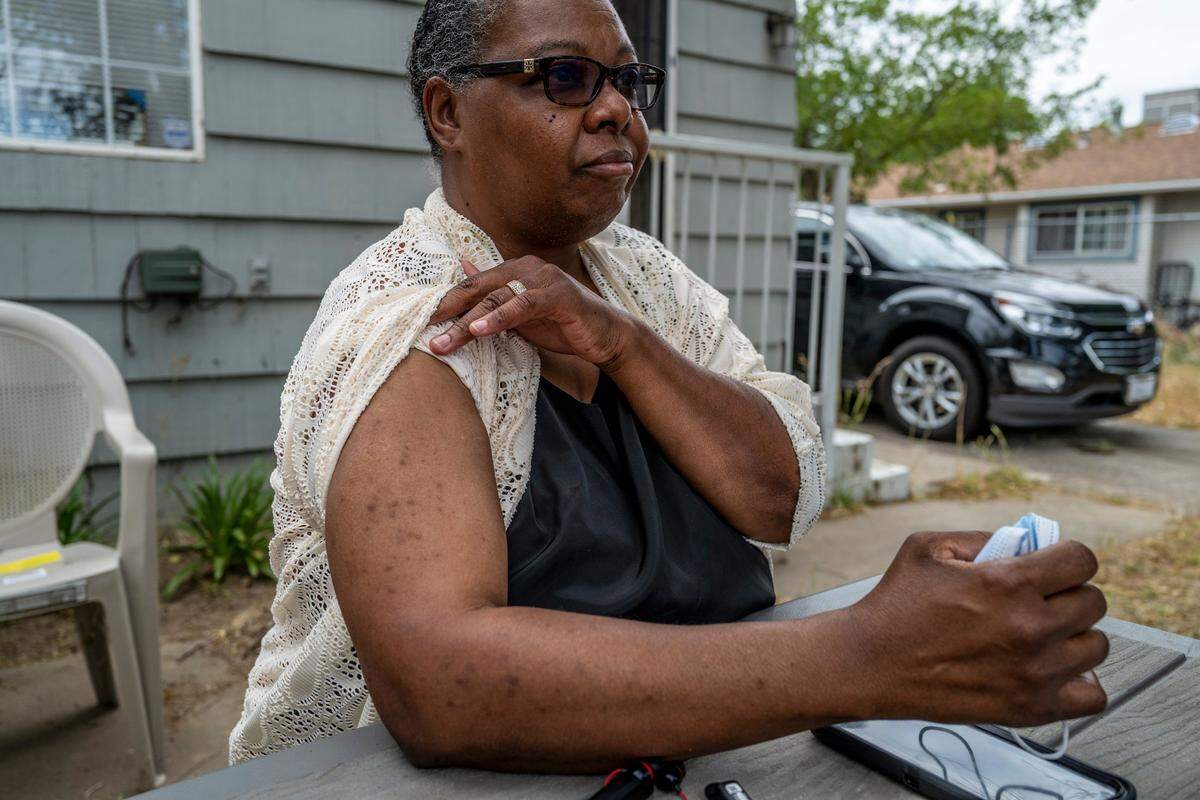
When Fletcher demanded the keys from Jackson in April, a group of activists from Alliance of Californians for Community Empowerment showed up at the property to defend her. Live-streaming the interaction online, the activists told Fletcher that the eviction was illegal without the proper notice. He left, and Jackson has continued living in the house.
Jackson’s landlords did not respond to a request for comment.
In many cases, low-income tenants most vulnerable to an eviction don’t have the financial resources needed to advocate for themselves in court.
By the time a sheriff’s deputy is knocking on a tenant’s door, the renter and their household must scramble to find new shelter, Erica Jaramillo of the Sacramento Tenants Union said.
Some may end up at a motel, she said, desperately scrolling through online listings and filling out applications on their phone using spotty hotel WiFi. The black mark of an eviction will appear on background checks for years, making it difficult to secure new lodgings.
Those working low-wage jobs with inflexible hours might struggle to apartment hunt in Sacramento’s cutthroat rental market. Some landlords require tenants to earn three times the rental income. Couchsurfing at a family member’s home is an option for some renters, but it’s rarely a permanent solution, Jaramillo said.
“That’s when they end up falling through the cracks,” she said, sliding into homelessness.
It’s a dilemma Brooke Nelson faced last summer.
Nelson, 52, receives about $1,100 in disability benefits each month and uses a motorized wheelchair. She has always struggled to find an affordable and accessible home. After about three years of renting a one-bedroom home in Del Paso Heights for roughly $750 a month, she and her fiance received a 30-day eviction notice from her landlord, who wanted to remodel and sell the home.
Through word of mouth, she was able to secure an apartment restricted to female tenants. But her fiance, who is deaf and also receives disability checks, became homeless in September.
“I’m trying to find a place for me and him, I may have had one last night but they wanted a $400 security deposit to hold the apartment, and the rent was $900 for a room, just a room,” Nelson said. “It’s just frustrating because I don’t know how to go about finding anything we can afford.”
What about landlords?
The protections in place during the pandemic “held a lot of evictions at bay,” Ropelato said.
But the pace has been picking up — a change that some landlords and property owners welcome.
Landlords and property owners “have not been sheltered from economic hardship,” said California Rental Housing Association president Christine Kevane LaMarca in a statement.
Tenant protections during the height of the pandemic were supposed to keep renters “with true COVID-related financial hardships” housed, said California Apartment Association executive vice president for state public affairs Debra Carlton in a statement.
But some renters abused the eviction ban, Carlton said. Some continued to work full-time jobs at full pay, she added, and “withheld the rent without fear of eviction due to state and local laws.”
Failing to receive rent or rental assistance payments for months, some landlords had to sell their properties, according to LaMarca.
“Now, over two years later, most eligible Californians are vaccinated, and people are back to work,” Carlton said in a statement. “It’s time to put COVID eviction moratoria behind us and get back to paying the rent on time.”
Last COVID renter protection
One major renter protection remained on the books after California’s main coronavirus eviction ban expired in October — if a renter had applied for rental assistance, but had yet to receive money or see their application processed, eviction proceedings for nonpayment of rent could not begin.
That protection ends Friday.
In Sacramento County, more than 12,000 low-income households have received approximately $104 million in COVID-19 rental and utility assistance as of April 20, according the Sacramento Housing and Redevelopment Agency, which runs the relief program using state and federal funding.
That rental relief was a lifeline for some families. About one in six people who received local COVID-19 rent or utility relief had already received an eviction notice, according to the agency.
“To the people who have gotten it, it really is game changing and allowed folks to be able to stay,” Ropelato said.
But more than 30,000 people who also applied for funding never received COVID-19 relief. The agency said it has processed many of those applications through its wait list, but that it simply doesn’t have the funding required to aid all those households.
“We are still seeing folks struggling with the aftermath of the pandemic and the recovery to the extent it exists, is not ensuring that folks are able to afford the rent in Sacramento,” Ropelato said.
Sacramento renters priced out
If Jackson, the South Oak Park resident, was evicted, she would likely not be able to afford another apartment in Sacramento. She makes $49,000 a year as a program technician in the California Department of Justice, where she’s worked for 28 years, she said. Studio apartments typically cost at least $1,100 a month.
It isn’t the first time she’s been priced out. She loved her former apartment in North Oak Park, but the landlord increased rent almost every single month, and she had to leave, she said.
Jackson’s house is owned by Kumarswamy Somashekhara and Kasturi Muchudi, who have a mailing address in the Bay Area city of Newark. A San Francisco Bay University alumni website lists Machudi as a real estate investor. They did not return requests for comment.
Local tenant advocates say that Sacramento’s current protections for renters constitutes a patchwork system with too many gaps.
The city’s Tenant Protection Program, which the council adopted in 2019, prohibits landlords from raising rent more than 10%, annually, but does not apply to renters of single-family homes. The state’s version only applies to single-family homes if they are owned by a real estate investment trust, a corporation or an LLC that includes a corporation as a member.
“Unfortunately in Sacramento there are not enough protections,” said Luis Fernando Anguiano of Alliance of Californians for Community Empowerment. “Including single-family homes (in the city program) would immediately help. The laws right now put a lot of work on the tenants.”
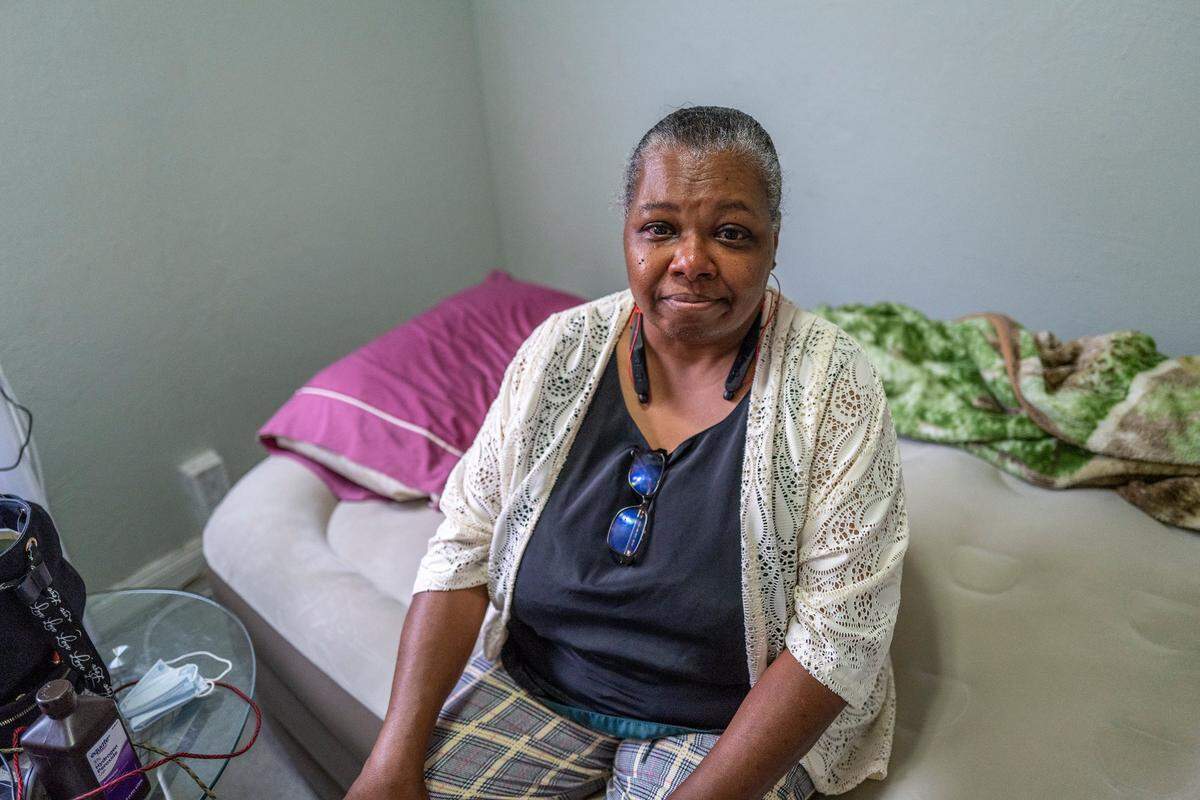
Jackson’s living situation isn’t perfect. She had to throw away her bed and couch due to a bed bug infestation. She’s been sleeping on an air mattress that hurts her back. She uses an ironing board as a desk. Most of the rest of her belongings are in two storage units for which she pays $238 a month. On a recent weekday, she was close to tears as she sat on a picnic table in her front yard.
“I’m paying for two storages and have to pay rent, which is a hardship on me,” Jackson said. “I’m just trying to keep from crying right now.”
This story was originally published June 29, 2022 at 5:00 AM.