Sacramento tattoo studio promotes inclusivity, aims to break barriers. Here’s how
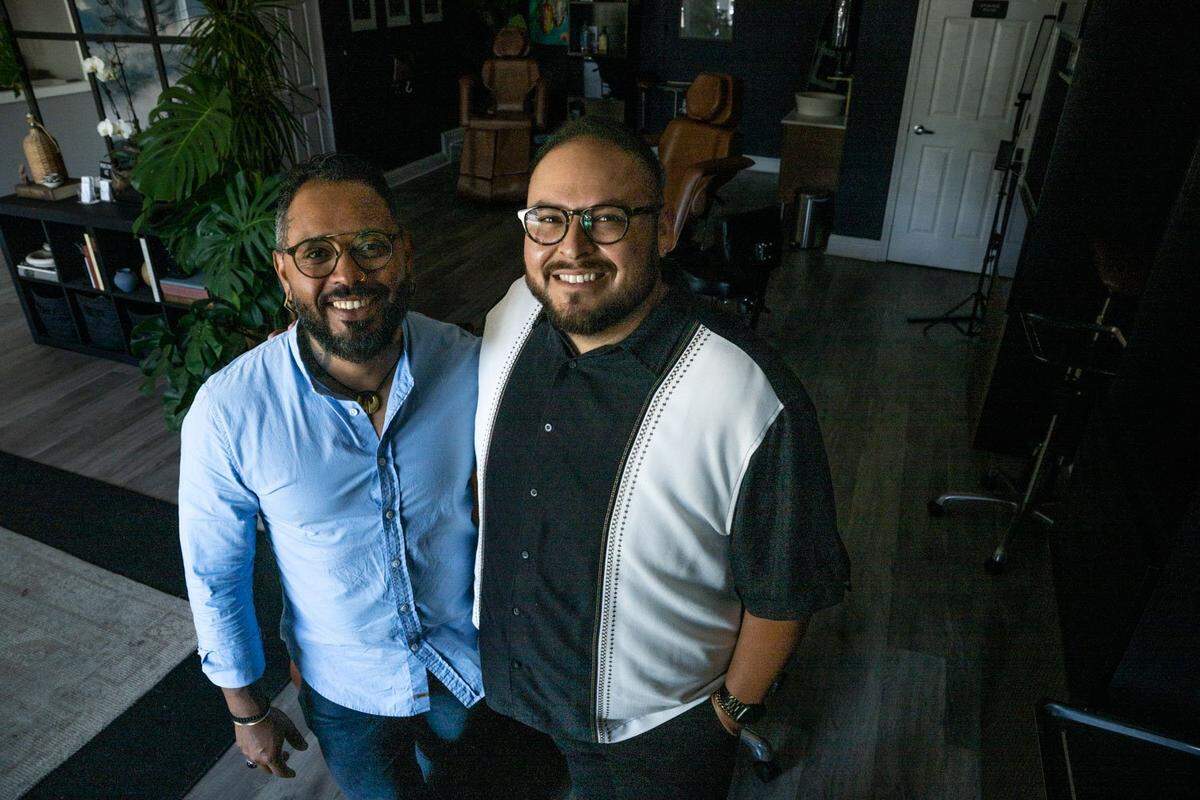
Gerardo and David Ramses Cabral’s business is a rarity in Sacramento, and across the entire tattooing industry.
“Time and time again, we meet clients that come from the Bay Area because they Googled queer, Latino artists and they found us,” Gerardo said. “There’s queer artists out there. There’s Latino artists out there as well. But I don’t know any that have their own studio.”
The Cabrals’ identities and culture have come together at their tattoo studio Ghost Ink Company in Land Park. After overcoming the challenge of finding a studio space, the business launched last year and has quickly gained a reputation for being one of the few Latino, queer-owned tattoo studios in the country.
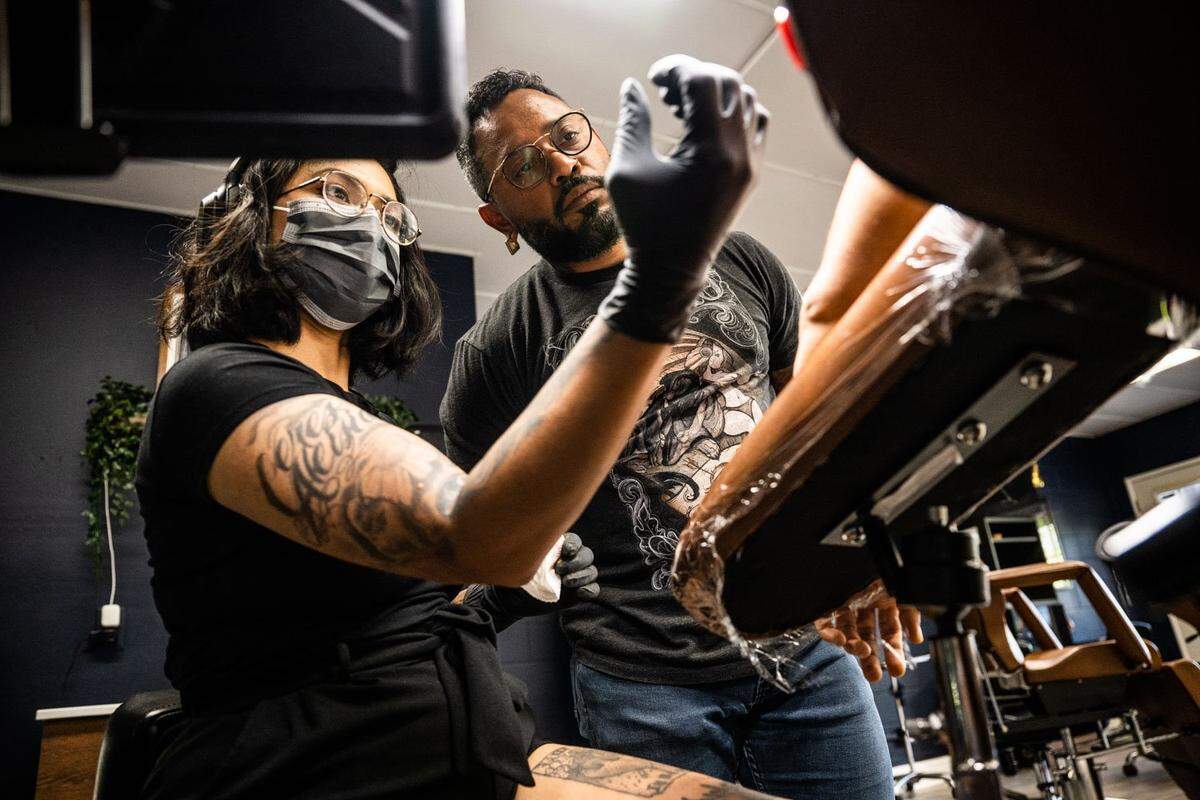
Gerardo, 38, is the business manager, while husband David, 43, is the lead tattoo artist specializing in color illustration, geometric and line-work.
But for the Cabrals, the 1,200-square-foot studio is much more than a rare business. It’s an opportunity to break barriers in a “hyper-masculine” industry and showcase newer Latino artists who struggle to breakthrough in tattooing.
“We wanted to provide a space where we are empowering artists and clients, where they feel comfortable and where they feel seen,” David said.
Tattoo beginnings
David is a native of Honduras, and grew up in an era when tattoos were synonymous with prison. But that didn’t stop him from falling in love with the art at 12-years-old.
He recalled opening a tattoo catalog, and being amazed by the ability to do drawings on skin. By 14, David received his first tattoo — the face of a dragon — on his upper back. He learned tattoo basics from a local artist that same year, and soon began drawing on himself and friends.
Though he gravitated toward tattooing at a young age, he faced societal pressure that turned him away from the art.
“In my country, they tell you if you’re going to be an artist, you’re going to starve,” he said.
He went on to work a series of other jobs, including becoming a well-known CrossFit trainer and spin instructor in Honduras for several years.
But in 2013, David immigrated to San Diego and again desired to return to tattooing. This time, he called the decision “easy.”
“It has always been written in my life,” he said.
One year later, David met Gerardo, who was born and raised in San Diego.
The differences in their backgrounds led to a culture clash early on in their relationship. Gerardo’s mindset stemmed from his Mexican-born parents, who instilled a traditional work path.
“I shattered his dreams, when he said he wanted to become a tattoo artist. I told him that’s not a job,” Gerardo Ramses Cabral recalled.
David pushed back, saying he was going to prove Gerardo wrong. That passion and drive eventually earned his partner’s trust and ensuing buy-in to support a tattooing career.
The Cabrals moved to Sacramento in 2017, when Gerardo accepted an student outreach job at Sacramento State. Around this time, David continued to hone his skills. He contracted at different tattoo shops, often paying about 40% of his earnings to the owner.
These rates led the couple to consider renting their own studio.
Tattoo studio, not tattoo shop
The Cabrals’ described their journey to open the studio as challenging, particularly with finding a rentable space.
Gerardo, a business major, took the lead in reaching out to leasing companies. He recalled contacting more than two dozen companies, but all turned him down due to the perceived notion of tattoo businesses and their clientele.
“I had to think about how to pitch this to somebody who doesn’t understand tattoo culture and just hears Gerardo, tattoo studio, just those two things makes people already assume what we are going to bring,” he said.
The couple eventually came across a 3020 Freeport Blvd. studio while walking their dog.
Gerardo, remembering the previous rejections, decided to try a new technique and “code switch.” He described “putting on his American voice” and using certain key words such as calling the potential business a tattoo studio, not a tattoo shop.
“It’s the same thing, we do tattoos, but we needed to elevate it,” he said .
The leasing agent ended up being a perfect match. They had recently helped another tattoo business establish in Elk Grove, and understood the struggles of the Cabrals.
‘Central American and Mexican owned’
David’s Central American homeland is integral to Ghost Ink Company.
Part of the studio’s wallpaper is decorated with the mountains of Honduras, while other sections feature photographs and drawings by Honduran artists. Many of the photographs are of coffee beans — the country’s main agricultural export crop. And at the entrance, the table is stacked with plants and an orchid, which is the national flower of Honduras.
The focus on the country is intentional, Gerardo said. He said Latinos are too often only associated with Mexico and there needs to be a fuller understanding of the community.
“That representation is important,” Gerardo said. “We are Latino-owned, but if you break it down we are Central American and Mexican owned.”
The studio currently employs three artists, two of which are Latino. The other is Filipina.
David said the business’ goal is to find and welcome new Latino tattoo artists who haven’t received opportunities. He hopes to support them, so they can expedite their careers faster than he could.
“We want to bring artists from other countries — Columbia, Honduras, Mexico, and other parts of Central America,” he said. “Artists who have put a lot of work into their craft so that people can recognize them.”