
Japanese, Black Californians search for ‘ethical solidarity’ with state reparations movement
There’s a pattern Kristee Haggins has noticed in her 30 years of advocacy: When Black communities fight for progress, everyone benefits.
In the civil rights movement, everyone meant immigrants and other communities of color, including Asian Americans. When the federal government wrongfully incarcerated thousands of Japanese Americans in World War II, Black activists and lawmakers joined Japanese Americans in their fight for redress. The result? Congress passed a law to give survivors of incarceration $20,000 and a formal apology in 1988.
But just over a year after those successful efforts, a federal bill to consider reparations for slavery stalled.
“There’s been some support in some ways,” said Haggins, executive director and founder of Safe Black Space, a nonprofit organization aiming to support healing for local Black communities. When it came to the redress movement, “Black folks were there,” she said. “And yet, we still haven’t gotten ours.”
In California, around 66% of Asian Americans support an official apology for slavery and it’s lingering effects, but, much like white Americans, that support drops significantly when it comes to cash payments as reparations, a May 2023 UCLA report found.
As more Japanese and Asian American organizations sign their names to the growing list of groups that support the state’s Black communities in their fight for reparations, parallels between their fight for redress in the ’70s and ’80s to today’s discussion at the Legislature have emerged. But those shared struggles on their own miss the full picture, reparations supporters say, as the movements have also raised questions about how to combat and understand the tensions between the two communities.
“Sometimes I think solidarity can be thought of really shallow, only like ‘What are the connections?’ which is very important,” said Wendi Yamashita, assistant professor of ethnic studies at Sacramento State and a fourth-generation Japanese American. Her family avoided discussing their experiences with incarceration, she said, and she found answers in college ethnic studies classes, a field of study born from Asian, Black, Latino and Native students protests in the late ‘60s.
In order to have a more “ethical solidarity“ and be better allies, Japanese Americans “also have to really think of our positionality,” Yamashita argues. Asian Americans have long been stereotyped as economically successful minorities who have overcome disadvantages, a perspective often used to downplay the marginalization impacting Black Americans.
And after Florida officials criticized several elements of an Advanced Placement African American studies course, state leaders went on to mandate teaching Asian American and Pacific Islander history: “We have historically been used as this kind of wedge.”
One piece of a broader story
In the recent fight for reparations for the slavery of Black people, there has been significant support from Japanese Americans. The final recommendations from the state’s reparations task force make several references to Japanese Americans’ experiences with redress and incarceration, such as a need for public education about the injustice after atonement. At one point, experts pointed to their incarceration in World War II when calculating loss of freedom estimates from the war on drugs and mass incarceration.
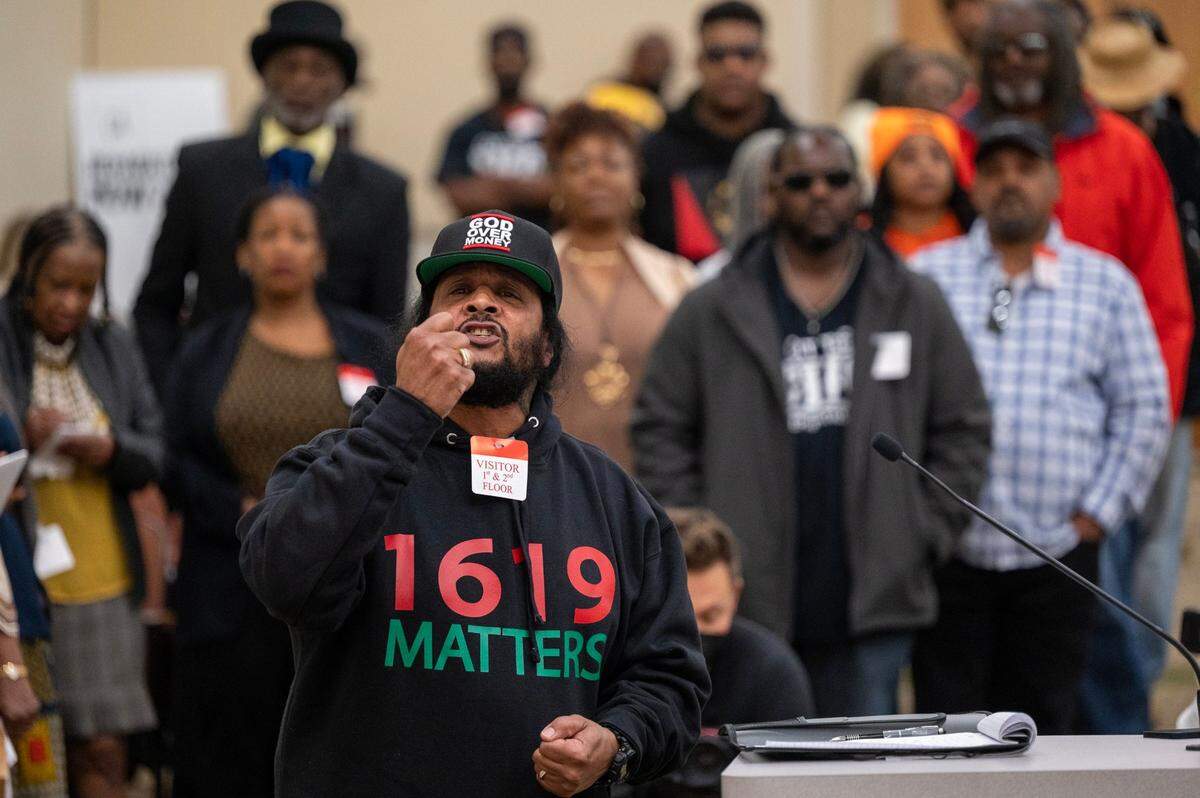
One of the oldest Asian American civil rights organizations, the Japanese American Citizens League, helped lead the redress movement and soon went on to support reparations legislation. But redress would have not been successful without the support of Black activists and lawmakers, said Josh Kaizuka, co-president of the JACL’s Sacramento Valley Florin chapter. That makes engaging Japanese Americans to understand and advocate for reparations all the more crucial, he said.
More Japanese Americans are “making those connections” and “saying, ‘If we are recipients of redress because of our own form of incarceration, why would the 400 plus years of slavery and mass incarceration that would then come later, that would disproportionately impact Black people, why is that also not deserving of atonement?” said Jeanelle Hope, associate professor and director of African American Studies at Prairie View A&M University.
Hope, who holds a doctorate in cultural studies from UC Davis, studied how Black and Asian communities in south Sacramento stood together in protest amid rising police brutality in 2018.
“Our discussion on redress and reparations have to deal with state sanctioned violence and mass incarceration,” Hope said. Those moments of violence have not been limited to one racial or ethnic group, but it’s important to recognize “a system within this country that has viewed people as disposable and in needing of being enslaved and incarcerated.”
In California, the state’s reparations task force took around two years to complete its efforts, and dozens of Asian American organizations have chimed in with support. By the end of it, Don Tamaki, who is Japanese and the only non-Black member of the task force, said he had a new appreciation and understanding of the experiences of communities of color.
“The state of our communities now is often very siloed,” said Tamaki, a San Francisco-based lawyer who witnessed the civil rights movement. People “tend to see racial discrimination as an isolated event,” and begin “comparing harms.” But now “there’s a different conversation,” he says.
The experiences of systemic discrimination against Asian Americans are part of a “sub-chapter” in a broader story “that actually began in 1619,” when the first enslaved people were brought to the United States, Tamaki said.
“There was a culture in place that propped up the institution of slavery to enable the dehumanization of people, reduce them to cattle, and make it normal,” Tamaki said. “That created this dynamic of white superiority. Black and Native people on the bottom in particular, and other groups that came along later, through immigration, in the middle.”
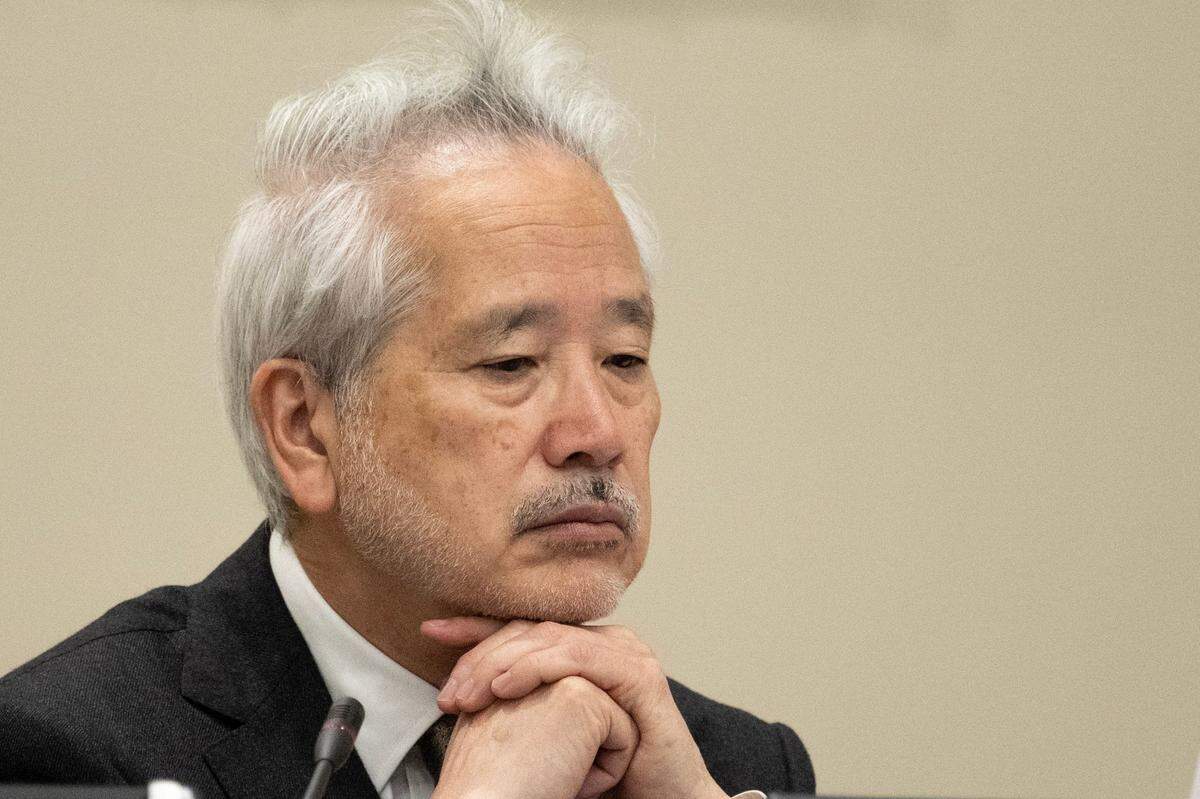
Part of reckoning with that is understanding the role Japanese Americans have played in other communities of colors’ experiences, Yamashita said.
After the 2020 racial justice protests, more Asian Americans have made efforts to combat tensions and build solidarity among communities of color, particularly with Black communities. That has led to increased discussions of anti-Blackness within the Asian American community, but it’s also raised other similar tensions as more Asian Americans attempt to be better allies.
Over the years, Haggins has participated in multiple organizations aiming to advance diversity, sometimes with other Asian Americans. She has forged connections she appreciates, but she’s also seen how her experiences as a Black person are unique to her Asian peers. As she describes it: “we’re talking about a tension between the ‘let’s support one another,’ and ‘we have to do some taking care of our own communities.’”
Redress: A ‘quote unquote success’
Christine Umeda knew it was going to take more than money for the U.S. government to right its wrongs.
Years of heightened anti-Japanese sentiments in the United States, being “targeted as an enemy,” and having her culture denigrated left Umeda, who was only four years old at the time of her incarceration, feeling lost. Aside from redress, it was the civil rights movement, spearheaded by Black Americans, that gave her strength again.
“It took a lot of my effort and definitely the civil rights movement helped to really overcome some of those feelings of real inferiority, and the self doubt,” said Umeda, who was born in Sacramento. She supports the state’s reparations efforts: “Being enslaved is so different. That’s really stripping all of your dignity away from you ... in some sense, we shared that, but it was in a different form.”
In many ways, the “quote unquote success” of the redress movement, helped “validate hierarchies,’ Yamashita said. Japanese Americans were soon praised for “pulling themselves up by the bootstraps,” and their economic success was used against Black communities who were criminalized, she said.
Following redress, the federal government would go on to strip down welfare benefits. Those policies drew upon growing racist narratives that criminalized Black mothers and fathers and painted them as hypersexual or absent, Yamashita said. But Japanese Americans were “upstanding” and “innocent” citizens who overcame discrimination.
“The definition of crime obviously changes in historic moments,” said Yamashita, quick to note that Japanese Americans were once considered criminals by the government, too. “It positions who is sort of innocent and guilty ... that is so central to carcerality ....there are people who deserve punishment or people who do not.”
Mia Yamamoto witnessed older generations of Japanese Americans begin to internalize that idea. The Los-Angeles based attorney and civil rights activist was born in the incarceration camps and remembers when Japanese Americans received redress.
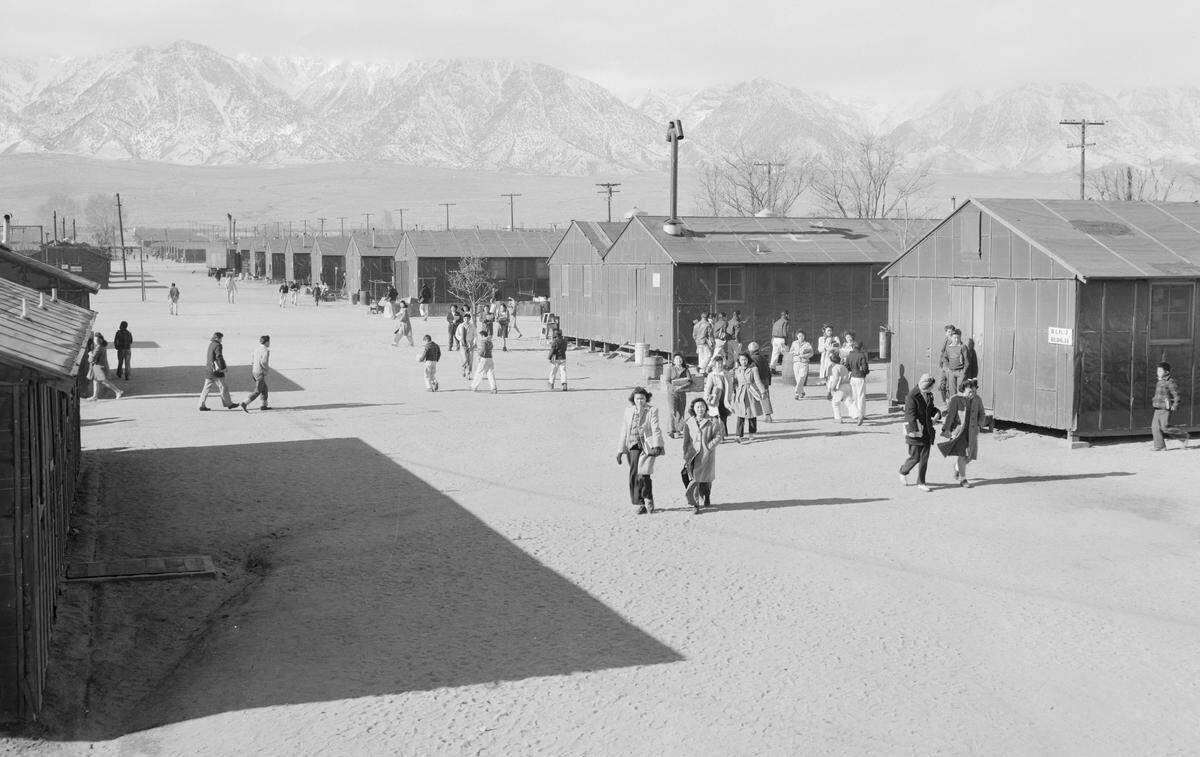
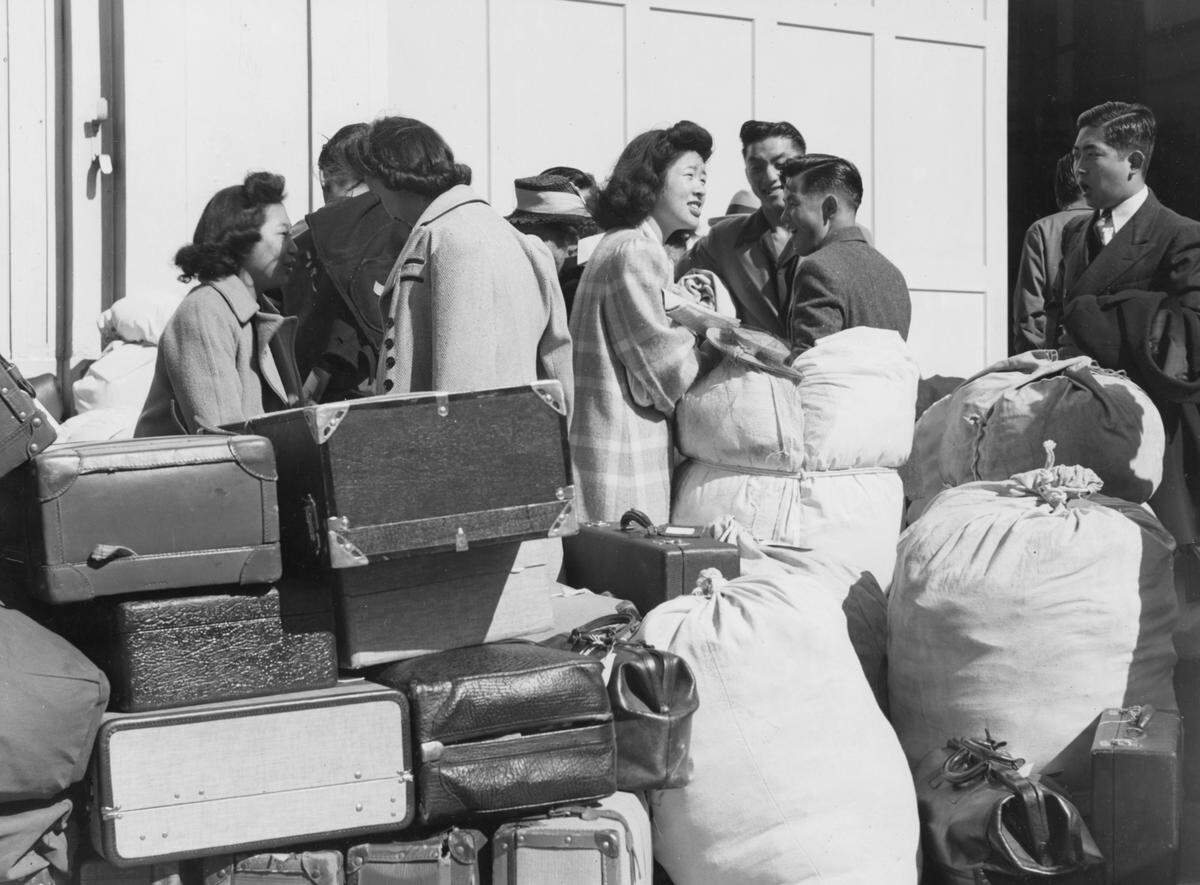
Yamamoto was “amazed” at the “self-righteous sort of pronouncements” that leaders made about their ability to get redress passed. “You would think that Japanese Americans would say ‘we have reparations, we understand that justice,’... Why wouldn’t those same people say the same thing about African American people?”
Recalling Asian Americans who did push back on these ideas, Yamamoto remembers Mari Matsuda, an early contributor to the foundations of critical race theory who spoke out against using Asian Americans’ experiences as a reason to block affirmative action. Those connections and attempts to combat division are ongoing, supporters say, but they can’t be successful without a real understanding of why those divisions exist.
“There’s so many ways that we are, as a country, moving in a direction that we can’t talk about things or we can’t have honest reflections on things. It’s that conflict of how do we do what we are unwilling to do?” Haggins said. “We’ve got to look at the wound. We have to be willing to do that. Otherwise, we’re not going to heal.”
The state’s reparations task force has made several recommendations, ranging from direct cash payments to property tax relief for African Americans living in formerly red-lined neighborhoods, but the decision is now up to legislators as to whether any of it will become law.
This story was originally published July 14, 2023 at 5:00 AM.