
Joe Biden, Democrats must sharpen message to reach lukewarm Black voters, researcher says
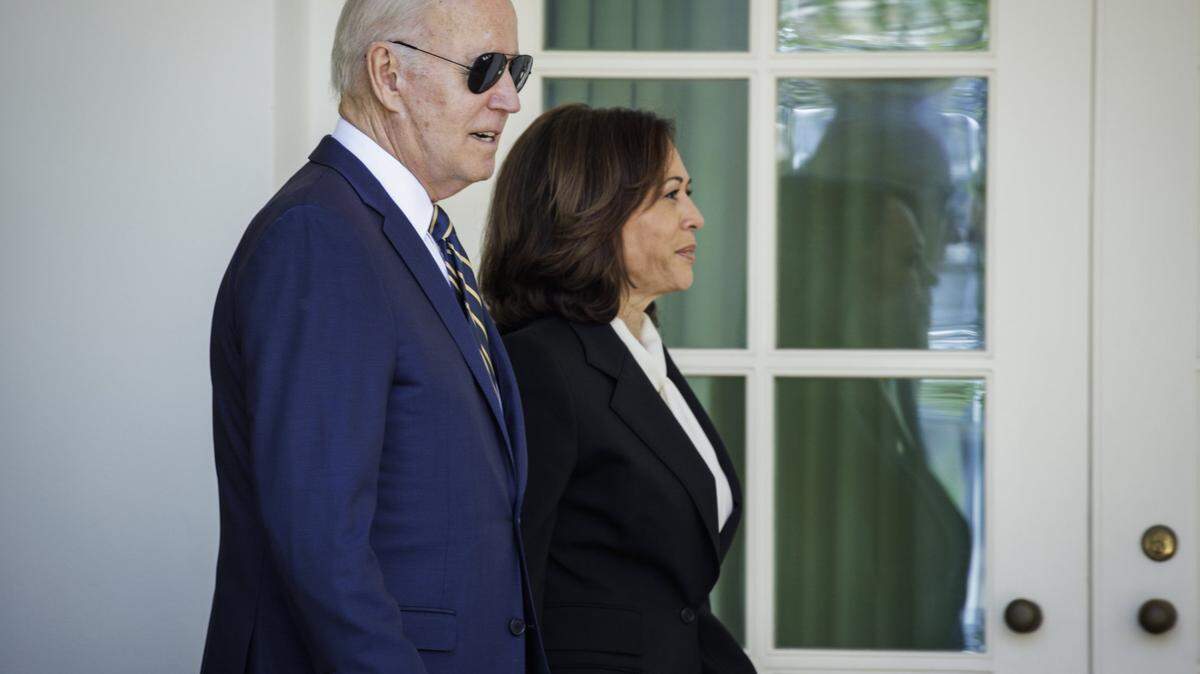
President Joe Biden and Democrats must sharpen their message to re-energize Black voters.
“The Democratic Party is confronted with a serious problem: a lack of enthusiasm in the Black community,” Christopher Towler, Sacramento State associate political science professor and faculty fellow at the university’s Center for Race, Immigration and Social Justice, opens in his survey, “The Black Voter and the 2024 Elections.”
Towler, director of the Sacramento-based Black Voter Project, teamed with research partner University of California, Santa Barbara political science professor Christopher Parker and research firms TargetSmart and Black Insights Research to conduct a national survey of the Black electorate. They led focus groups and interviewed 2,040 respondents to get to the root of voters’ attitudes.
Since 2016, the project’s survey of Black voters has examined issues of democracy, citizenship, belonging and political incorporation in the Black community.
“If Democrats hope to defeat the GOP and Trump, they must move beyond the narrative that simply communicating to the Black community Biden’s deed(s) on their behalf, will result in turnout. There’s no proof this is a valid strategy,” Towler continued.
The alternative for Democrats, he said, remind the Black community about the stakes should former President Donald Trump win election in November.
Black voters, especially those who seldom vote or infrequently go to the polls, are tuning out Democratic candidates’ traditional, aspirational appeals of hope and opportunity, the survey showed. They also remain cool to Biden’s record, skeptical of his and Democrats’ commitment to Black Americans.
Towler said that lukewarm enthusiasm for Biden and the party at large could sap traditionally reliable Black turnout with potential consequences for Democratic fortunes — and American democracy — in November.
“There’s no messaging that has been effective by Biden that has energized Black voters. On a national scale, the messaging campaigns have been few and far between,” Towler said in a Friday interview.
Biden’s opinion among “low-propensity” voters was telling. Those voters expressed “a lack of interest, a sense of apathy, a sense that Biden is paying lip service,” he said.
Implications for Black America
What has resonated with those surveyed, however, is the prospect of the former president Trump returning to high office, the furtherance of the “Make America Great Again” agenda, and the implications for Black America.
Towler’s research is focused on Black public opinion and insights post-Obama administration. He said he wanted to identify what mobilized Black voters politically, especially those who seldom voted.
Black turnout had waned significantly since the highs of former President Barack Obama’s historic presidency, with low-propensity voters — those less likely to vote — and infrequent voters increasingly disillusioned by and disconnected to politics.
But, Black turnout rebounded in the 2020 election cycle. Black voters dramatically turned around then-candidate Biden’s fortunes in that year’s South Carolina primary.
A scuffling Biden, bruised by poor showings in New Hampshire and Iowa and desperately needing a victory in the Palmetto State, gained the crucial endorsement of South Carolina Sen. Jim Clyburn just days before the primary. Biden won South Carolina, momentum that carried him to the nomination and, ultimately, the White House.
Turnout regained roughly half of its losses from 2016 as Black voters rallied to stop a second Trump term, Towler said.
Democratic leaders rewarded South Carolina’s support in 2020 by awarding the state the party’s first-in-the-nation primary in 2024.
Biden handily won the state’s primary and an NBC News poll in late February found that 75% of Black voters polled said they would vote for the president, but headlines of his wavering support among Black voters dominated February.
So, what happened? The first Black president engendered a sense of trust and efficacy, Towler said. That sentiment has changed in a Biden presidency even with Vice President Kamala Harris at the president’s side, he said.
“When you see someone who looks like you, that empowerment that came along with Obama, that empowerment tapered off,” Towler said. But empowerment is but a part of the equation, Towler said.
Trust, empowerment, policies
Survey questioners explored political trust, empowerment, policies, issues and threats and how each of those motivated frequent and infrequent voters.
They questioned respondents on the most important issues they faced and that the nation faces. The groups shared similar concerns about jobs, inflation, housing, the cost of living, racism and the threats to reproductive rights.
But when the focus shifted to the nation, the groups were divided. Frequent voters were concerned most about the erosion of voting rights and the country’s deep political divide. Racism topped the concerns of infrequent voters. Voters said casting ballots honored the sacrifices past generations made to ensure voting rights.
High-propensity voters believed votes for change were also votes to preserve democracy. Infrequent voters were far more pessimistic: they had little faith that their vote meant anything, the report showed.
High propensity voters, on the other hand, respond to hope and inspiration because they participate regularly in the political process. “They’re not the issue,” Towler said.
The key then for Democrats is to more effectively reach disaffected and disengaged voters.
“If we’re able to rouse low-propensity Black voters from their apathy and disaffection from the president and the party, closing the gap between low and high-propensity Black voters, American democracy will survive—at least for the foreseeable future,” the researchers wrote.
Biden and Democratic Party leaders are “going to have to take time for self-reflection. They aren’t doing it now with traditional appeals,” Towler said. “If we end up with another Trump presidency, we will see gains swept away.”
This story was originally published March 5, 2024 at 5:00 AM with the headline "Joe Biden, Democrats must sharpen message to reach lukewarm Black voters, researcher says."
.JPG)