This Placer County program will match pay raises for hundreds who qualify for it. Do you?
As recently as 2018, Katie Horton didn’t know what a 401k retirement account was. She had a drug addiction, and her credit report was a hot mess.
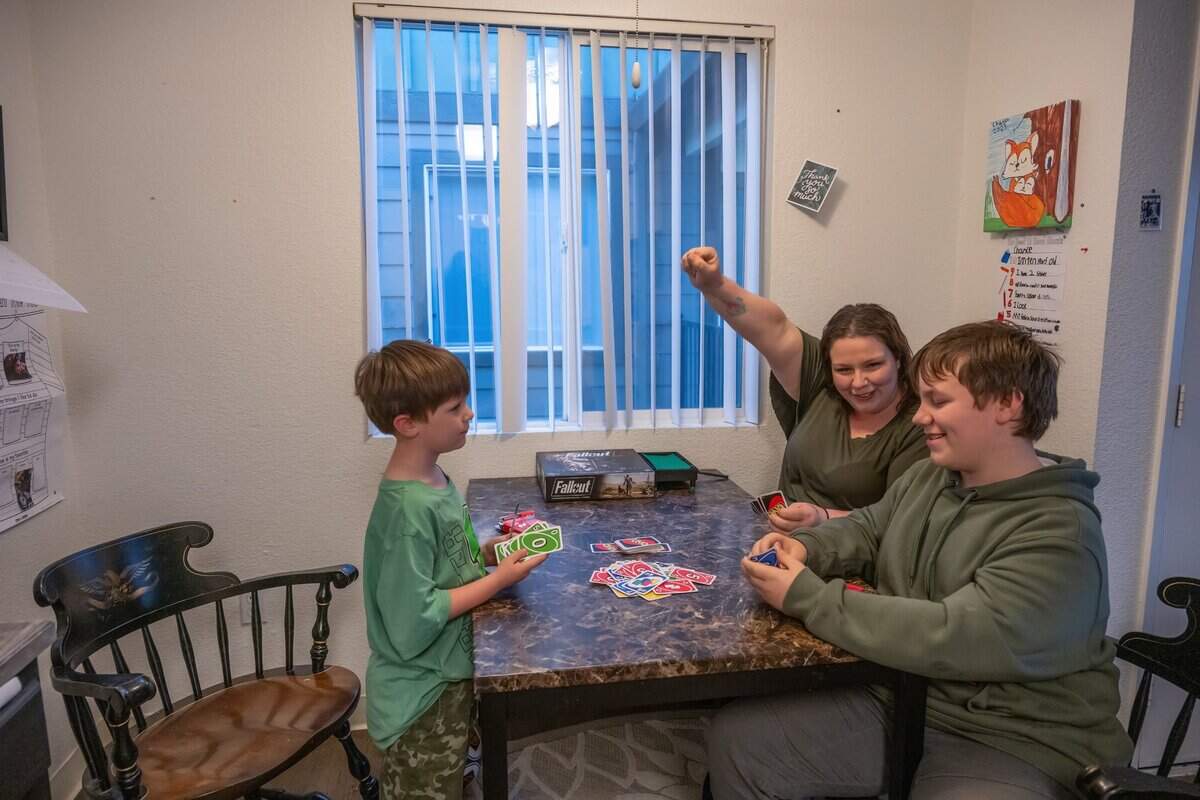
Now, the mom of two wants to get a message out to other single parents: If she could find a career with opportunities for increased income, if she could recover from her substance use disorder, if she could get on the road to financial security, anyone can do it.
She even recommended a way for other single parents who are down on their luck to get started: Placer County’s Family Self-Sufficiency Program.
Since she signed up a year ago, Horton said, the Placer County Housing Authority has matched every raise she’s gotten and socked away the matching funds into an escrow account to cover unexpected emergencies or save toward her goal of one day owning a home.
Hundreds of households in Placer County qualify for this initiative, funded by the U.S. Department of Housing and Urban Development, said Janelle Martinez, who oversees Placer County’s Housing Authority. To be eligible, families must live in project-based housing units or have a Section 8 housing voucher from the county’s housing agency.
Each family is assigned a caseworker, Judi Moore, who will work with them over five years to set and reach goals that will allow them to be able to pay for their own housing, Martinez said.
At first, that idea frightened Horton, she said, but Moore assured her that her job wasn’t to force people out of housing at the end of the five years but rather to help them find pathways to the self-sufficient life.
Horton ultimately decided to give it a try because she’d had positive outcomes from participating in other Placer County programs: CalFresh for nutritional food for her boys, CalWorks’ welfare-to-work job training, and a Section 8 housing voucher that slashed what she had to pay on rent.
Learning skills to climb the career ladder
“When I went to welfare-to-work, I was so green,” she said. “It was ridiculous.”
But she faithfully went toclasses and workshops to learn how to type, send emails and craft a resume.
“I have climbed the career ladder,” she said. “I started as a receptionist. I didn’t have any skills except the office skills that welfare-to-work taught me.”
After that, a nonprofit wellness organization hired her to work as a peer support person, walking alongside recovering addicts and helping them to locate documents such as birth certificates or social security cards and showing them how to sign up for services to transform their lives.
Even as she did that work, Horton said, she went to classes to get the license she needed to become a substance use counselor. Then she secured that job and has since moved up to become a lead counselor.
She’s continuing to build her credentials and licensing, she said, in hopes that she can one day become a manager.
After being hired by the nonprofit in 2020, Horton was awarded a Section 8 voucher that pays a big chunk of her rent. As she has been promoted and her pay has increased, Horton said, she has become responsible for paying a greater share of her own rent.
That’s how Section 8 works, she said, but since she started in the Family Self-Sufficiency Program, HUD began matching any wage increases and putting those funds into an escrow account where it earns interest.
“The ultimate goal is to get off of (housing) assistance, so it opens up for other people,” Horton said, “but if your rent goes up every time you get a raise, how are you able to save the money versus having to pay it out?”
Participants sign a contract with Placer County’s housing authority that creates a training and services plan, Martinez explained, and at that time, their baseline income is recorded. That could be zero dollars or some welfare income, she said, whatever it is, it’s their baseline income after they enroll.
Anytime they have an increase in earned income, Martinez said, their rent goes up, but the housing authority also bumps up the amount of money it’s setting aside in a savings account for them.
When participants graduate, they are given all the matching funds and interest, Martinez said, or if they have a qualifying emergency — say their car breaks down and they need to fix it to keep getting to work — they can get a disbursement from the matching funds to help cover that expense.
Roughly 90% of U.S. adults say they would need at least three months of expenses saved to feel comfortable, a poll by consumer financial services company Bankrate showed, yet only 44% of Americans actually have that much saved.
Will this money be the seed for a down payment?
A self-described “resource queen,” Horton said that she has relied upon both public and nonprofit organizations to improve her financial situation and help create a stable life for her sons that one day could lead to a home she can pass along.
Before starting her employment training with Placer County, Horton spent 18 months living on the nonprofit Acres of Hope campus in Auburn. There, she and other homeless women and their children received lodging and time to heal from trauma or addiction. On the campus, they found a structured environment and assistance with making a plan.
As her time at Acres of Hope neared its end, Horton began to look for resources to help her establish a home and find work. The Acres of Hope team suggested she write a letter to the Guaranteed Rate Foundation, an organization that customizes its financial support for people working to overcome extraordinary hardship.
Horton poured out her story, how she started running the streets as a teenager, how she’d made a vow to take responsibility as a young mother, how she’d found Acres of Hope and had beaten her addiction to illicit drugs.
What would help, she told the organization, was an automobile to get back and forth to a job and assistance paying rent until she landed a job.
She was over the moon, she said, when the foundation agreed to help with both, allotting $8,900 for her to buy a new car and paying six months worth of rent for her. The money for rent came a few years before she was awarded a Section 8 voucher.
She channels her grief into reaching goals
Horton channeled her grief into setting and reaching goals: training with Placer Learns, securing a new job and being a present mother.
When her mother died, the father of her boys was working in a construction trade and helping her out, but last year, he passed away as well.
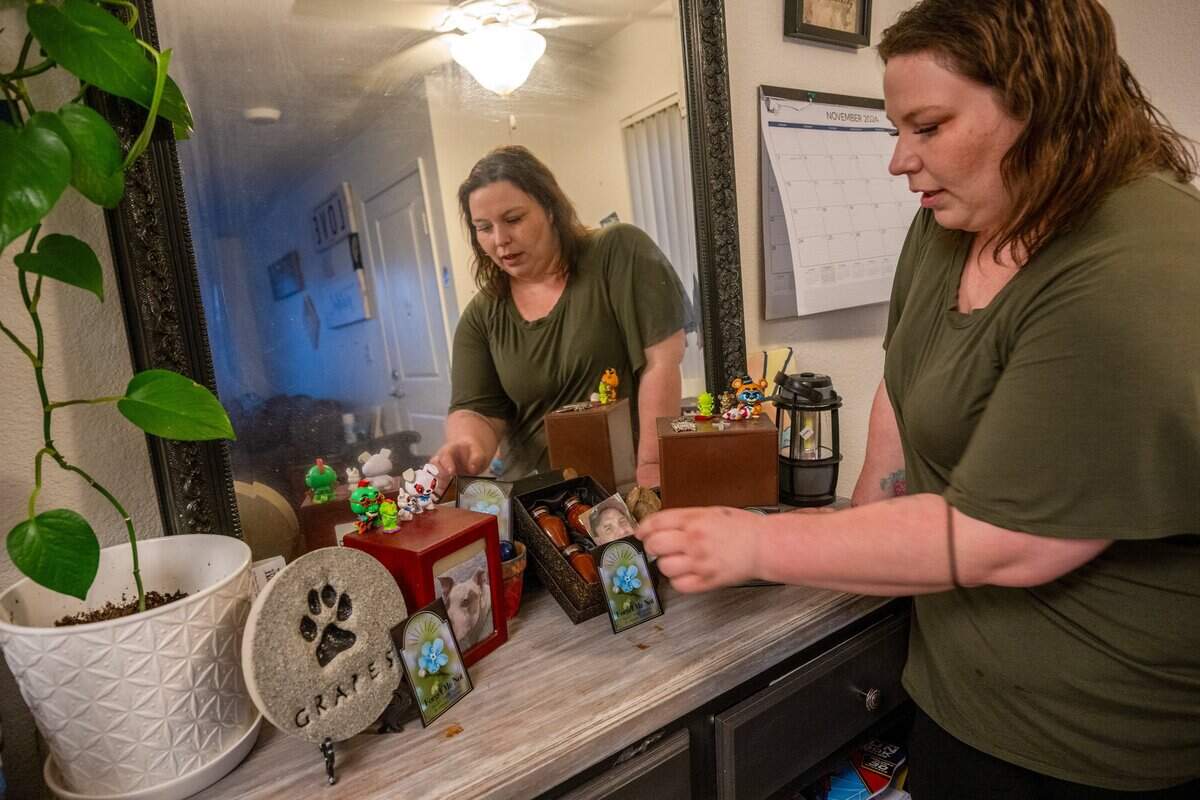
His unexpected loss rocked Horton, she said, but by then, she had qualified for a Section 8 housing voucher. And fortunately, Horton said, her ex had an adult daughter with kids of her own, and they showered her two boys with love, cushioning the blow of the early loss of their dad.
Horton said she has one thing now that she didn’t have when she was young, something that no one can take from her: her education.
“The county has invested in me,” Horton said. “I went to school to become a drug and alcohol counselor. That was one of my goals. It was a year and a half, and then I did a practicum. I put into practice what I learned, like doing suicide assessments.”
As part of the Family Self-Sufficiency Program, Horton has continued to set goals to advance her career. The program requires that participants obtain and sustain employment and work toward getting off welfare and public housing support.
Moore said she works to provide program participants with the knowledge and resources they need to be successful. For instance, she said, SAFE Credit Union has created a series of webinars to improve financial wellness.
They teach budgeting, planning for emergencies, how to improve credit scores and more, Moore said. The classes are open to the public at large.
Program offers a little extra help finding work
Moore also has referred clients to the Clean Slate Clinic if they have either misdemeanors or felonies on their records that could affect their ability to get work. They meet with a lawyer from Legal Services of Northern California who will work on a pro bono basis to review their record and determine if they’re eligible for expunging their charges, Moore said, and if they are eligible, the lawyer will explain the steps they can take to complete that.
Placer County’s CalWORKS team regularly communicates with employers to understand what training they want their employees to have and what job opportunities they will have coming up, Martinez said, and she and Moore meet with representatives of adult schools, Sierra College’ career and technical education program, job training organizations such as Golden Sierra and other organizations to learn about training opportunities that could benefit the Family Self-Sufficiency participants.
Moore also can refer participants over to CalWorks or other county-run programs that could help them find work and pay for child care or transportation to work if they’re eligible.
The clients drive how the conversation goes, Moore said, and she listens and figures out what resources will assist them. Sometimes, Moore said, clients just need to talk about their fears or get advice on how to make a transition.
“One of the greatest resources that we have to offer our people is just to be there and support them and talk through these scenarios, brainstorm these scenarios,” Moore said.
For instance, Moore said, Robert Bosch Semiconductor recently acquired the assets of the U.S. chipmaker TSI Semiconductors Corp. in Roseville, and plans to start manufacturing chips in 2026. Those chips will be produced on 200-millimeter wafers based on silicon carbide.
These are the type of developments she can share with individuals joining the Family Self-Sufficiency Program, she said, but she encouraged all Placer County residents to reach out to the county’s employment services division or to Golden Sierra or other potential job development resources for guidance on how to find work.
Are you a current participant in the Section 8 housing choice or project-based voucher programs with Placer County Housing Authority? Email PCHA@placer.ca.gov or call (530) 889-7692 to see how you can participate in the Family Self-Sufficiency Program.

This story was originally published February 2, 2025 at 5:00 AM.