
Sacramento program boosts access to fresh food — but its future is uncertain
AI-generated summary reviewed by our newsroom.
- Market Match doubles produce buying power for CalFresh users at local markets.
- The program faces a $158K funding shortfall.
- Users seek to raise the match cap and expand access statewide amid inflation.
In a sea of bodies that ebbed in the direction of free sample offerings and eggs under $10, was CalFresh user Porsha Williams and her two sons, Nasir and Denzell.
Williams makes the more than 20 minute trek to the Midtown Farmers Market nearly every Saturday from her home in Arden Arcade. She became aware of Sacramento’s farmers markets by her mother, who informed her of the state’ previous $60 Market Match pilot program, which provided EBT users access to fresh produce at select locations.
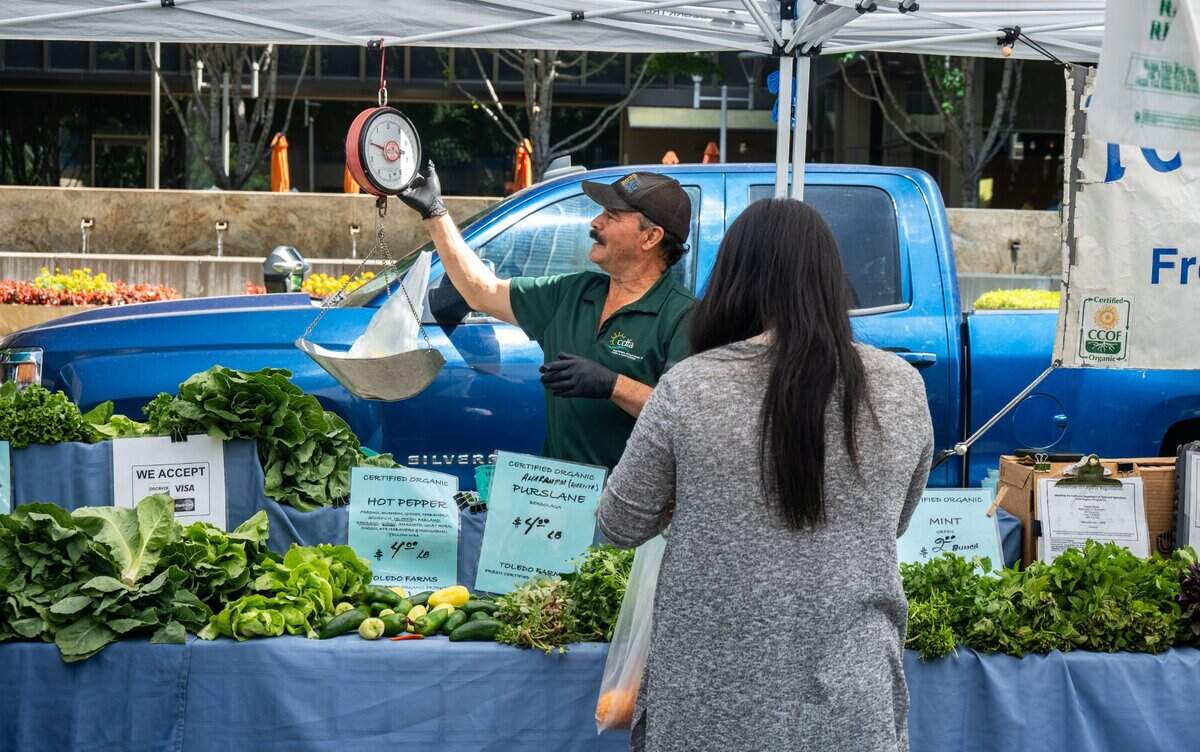
Market Match is a state-run incentive that provides CalFresh users with a dollar-for-dollar match — up to $15 or $20, depending on the location — to spend on fresh produce at specific farmers markets. The program gives users wooden tokens or laminated dollars to exchange for eligible produce, effectively doubling the purchasing power on healthy food.
In both Williams’ hands and Nasir’s miniature shopping cart were $40 worth of eggs, lettuce, cucumber, mint and cherries. The groceries extended beyond the midtown market’s maximum of $15.
“I would love the $60 match to come back because that was awesome,” Williams said. “It really helped me kind of stack up and have a little extra cash to come back and use because $15 doesn’t go a long way at the farmers market, but the matching $60 really did.”
Farther down 20th Street, where the midtown market is stationed, there’s kombucha, green smoothies and Venus flytraps for sale near the intersection at L Street; tamales, dark roast and leather belts are sold near the one on K Street.
Most of the products at the market, though, cannot be purchased through Market Match.
How Market Match works
Through Market Match, eligible Californians can swipe their EBT cards at information booths to the mock currency to purchase fresh fruit and vegetables. The match helps families afford more fresh fruits and vegetables but cannot be used on ineligible items such as bread, hot foods, flowers or unpackaged cold foods. After users spend their mock dollars and chips, farmers and vendors return them to the operator and later get reimbursed.
Nonprofit Alchemist Community Development Corp. has served the greater Sacramento region since 2004, and directly facilitates CalFresh access and Market Match at nine local certified farmers’ markets.
Sam Greenlee, chief executive officer for the corporation, explained that the program was conceived in 2009. In 2011, the state passed a law which allowed a third party to offer CalFresh EBT benefits at farmers’ markets.
Last year, the CalFresh and Market Match programs brought more than $650,000 in incentives to low-income Sacramentans, according to Greenlee.
This year, Alchemist has seen a 5% growth trend in the program’s usage at markets and is projected to generate about $1.5 million in transactions this year, stimulating nearly $3 million in local economic activity.
Greenlee emphasized, though, that the program is still in need of an additional $158,000 to keep it fully operational through June of next year.
Martin Bourque, executive director of the Ecology Center which runs Market Match, said the company has been making strides to make funding for the program ongoing and a consistent facet of the California Department of Food and Agriculture’s budget.
Market Match is offered at roughly 40% of the 650 markets in the state, according to Bourque. Last year, the program secured $35 million in state funding last year, and Bourque’s long term goal in to make Market Match a permanent staple offered at every market in the state and increase the match to $20.
“We can either offer it at fewer locations and to fewer people to give a greater match or we can offer a lower match to people in more locations.”
Greenlee hopes potential donors recognize the program’s importance in providing access to produce but also supporting local farmers.
CalFresh users should take advantage of the program because it benefits them and provides revenue for small, local farms, Greenlee said.
The accessibility to markets that accept EBT across the city varies. Neighborhoods including Avondale, Glen Elder and parts of North Sacramento lack access to the markets, according to the Ecology Center’s Farmers’ Market Finder. Others, in more central parts of the city like midtown, downtown and East Sacramento, have about five total.
Sacramento City Councilmember Phil Pluckebaum represents midtown and downtown and said that the areas’ prioritization of its markets boils down to wanting to provide fresh produce to communities that wouldn’t otherwise have access.
“A huge part of the success of all of the markets is to have that component of high-quality fresh produce at a reasonable cost and make it part of (Market Match users’) daily routines,” Pluckebaum said. “Especially in places where folks don’t have access to transportation or parking is a challenge.”
The Midtown Farmers Market resides in Pluckebaum’s district. In the center of the market was a sandy brown tent manned by various staff, one being Adriana Velez, a program assistant with CalFresh/Market Match.
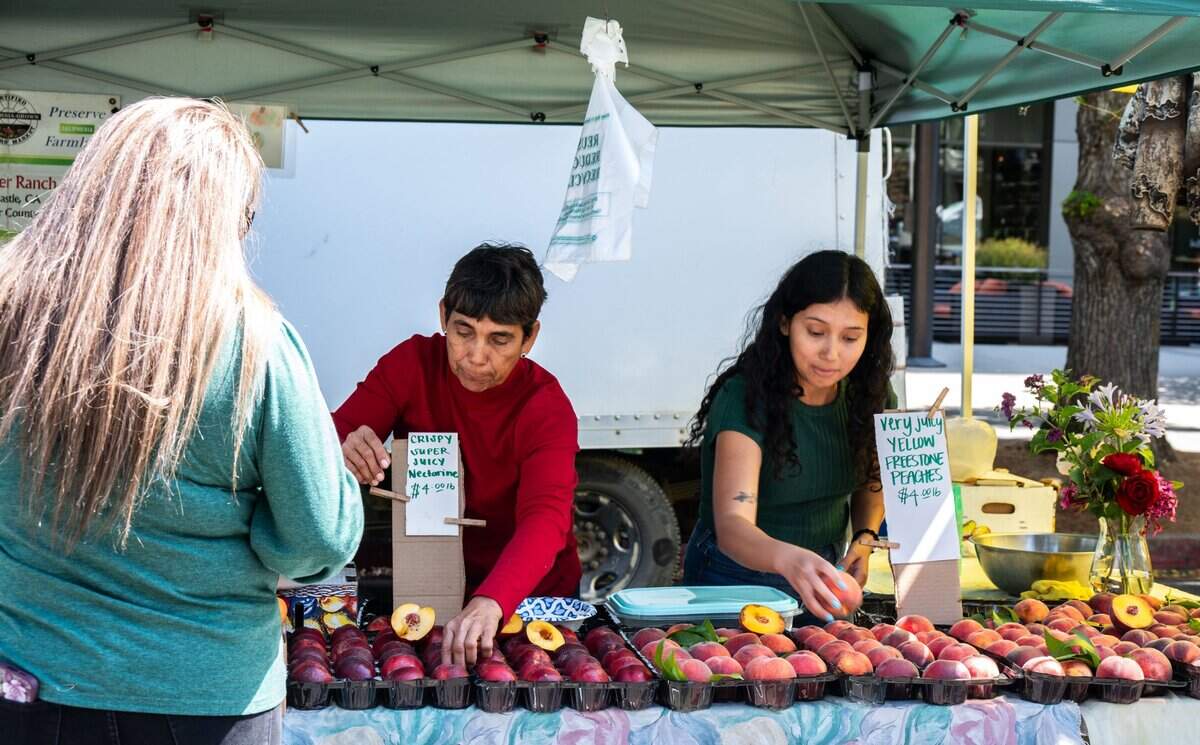
On Saturday, individuals and families come in staggers to receive what Velez dubs “free money” for fresh produce. She explained that eligible individuals can take out more than the market’s $15 maximum, depending on what is leftover from their EBT card. Users can also indulge in “farmer’s market tours,” going around to different markets and pulling $15 to spend at that particular location.
Velez, though, acknowledges the limits in stretching the maximum at the market.
“Here in midtown, things are a lot more expensive because it’s midtown, it’s popular, it’s social,” Velez said. “But at different markets like Florin, that definitely stretches out because the vendors there have more discounted produce because they know the area, the people, and what they need. If you take out the maximum, that’s like a good two bags of produce, maybe eggs or bread.”
The call for a stronger program
Annabelle Williams, a recipient of Market Match, has been coming to the Oak Park Market for years and appreciates the greater $20 match.
“It benefits the neighborhood because it’s a food desert area,” Williams said. “This is a smaller market, and it caters to the neighborhood, and it’s more interactive.”
On a typical Saturday, vendors at Oak Park talk to their neighbors and longtime friends as a DJ stationed in the pavilion plays club remixes of 80s and 90s pop hits. Williams stocks up on everything from root vegetables to chorizo.
She comes from a family of ranch and farm owners and has a sharp eye for quality produce.
“I’m looking for sustainable,” Williams said. “I’m looking at the small farmers that I know I can trust, who care about what they put in the ground, what they put in their produce. That’s why I buy here, because I know they’re grown sustainably.”
In addition to being a Market Match recipient, Williams operates a booth at the market for Coffee Pot Ranch, selling filet mignon, pork chops and chicken breasts out of a white cooler.
Despite the high quality products she and her market neighbors sell, Williams admitted that the $20 allotted by Market Match is just short of sufficient, compelling users to build relationships with vendors to stretch the dollar.
“I’m grateful that I have farmers that I’ve been buying from for so many years that I can say, ‘Can I pay you in two weeks?’ and they’ll say, ‘Yeah.’”
Changes Williams would like to see made to the program included an increase in the maximums across all markets to meet the needs of the communities many markets serve and address national inflation.
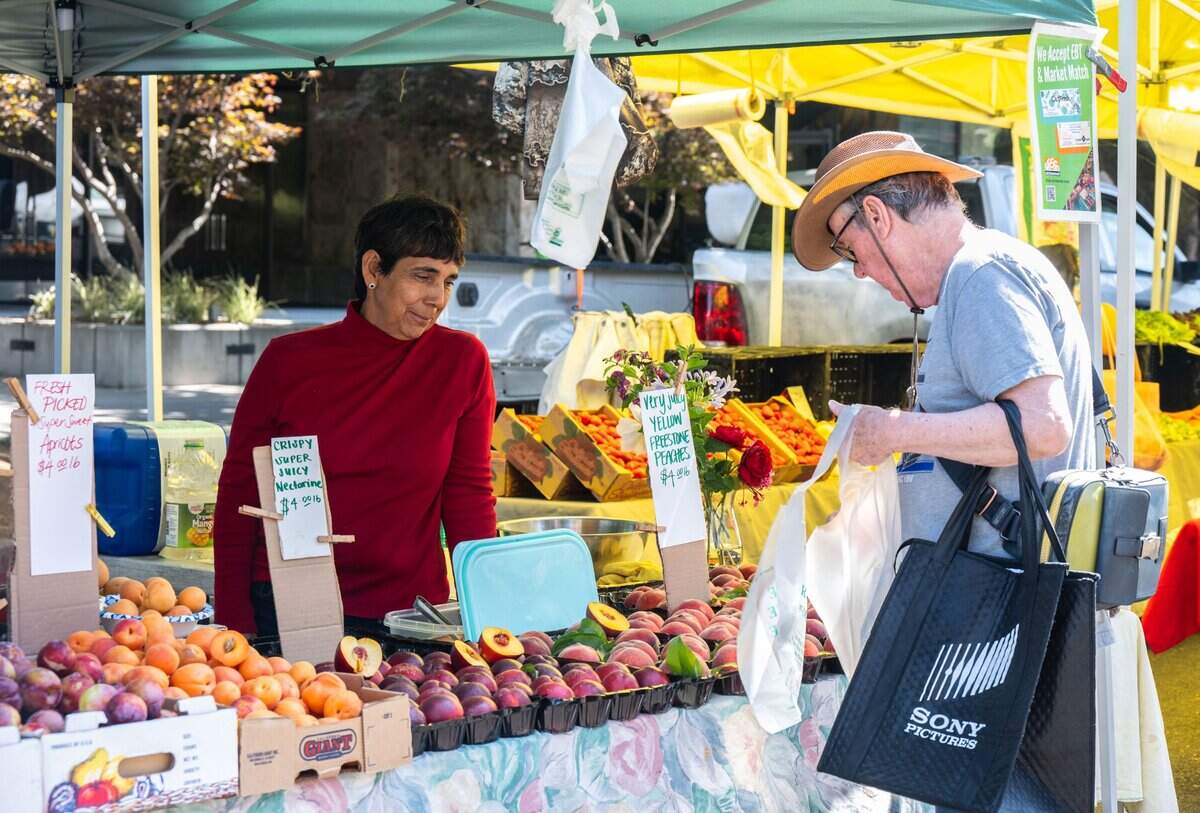
Down from Williams was Chris Kovach, a booth worker for Kovach Family Farms. He sat behind a table of paper bowls filled with various tree nuts and exotic fruits like honeyfire nectarines, seascape strawberries and spring snow peaches.
“As far as this neighborhood goes, there are a lot of things that are unhealthy and have more incidence here,” Kovach said. “It’s good for the neighborhood to have the Market Match program because this creates healthier people.”
This story was originally published July 1, 2025 at 7:00 AM.