Meet the woman who will lobby California’s powerful legislature on behalf of Black communities
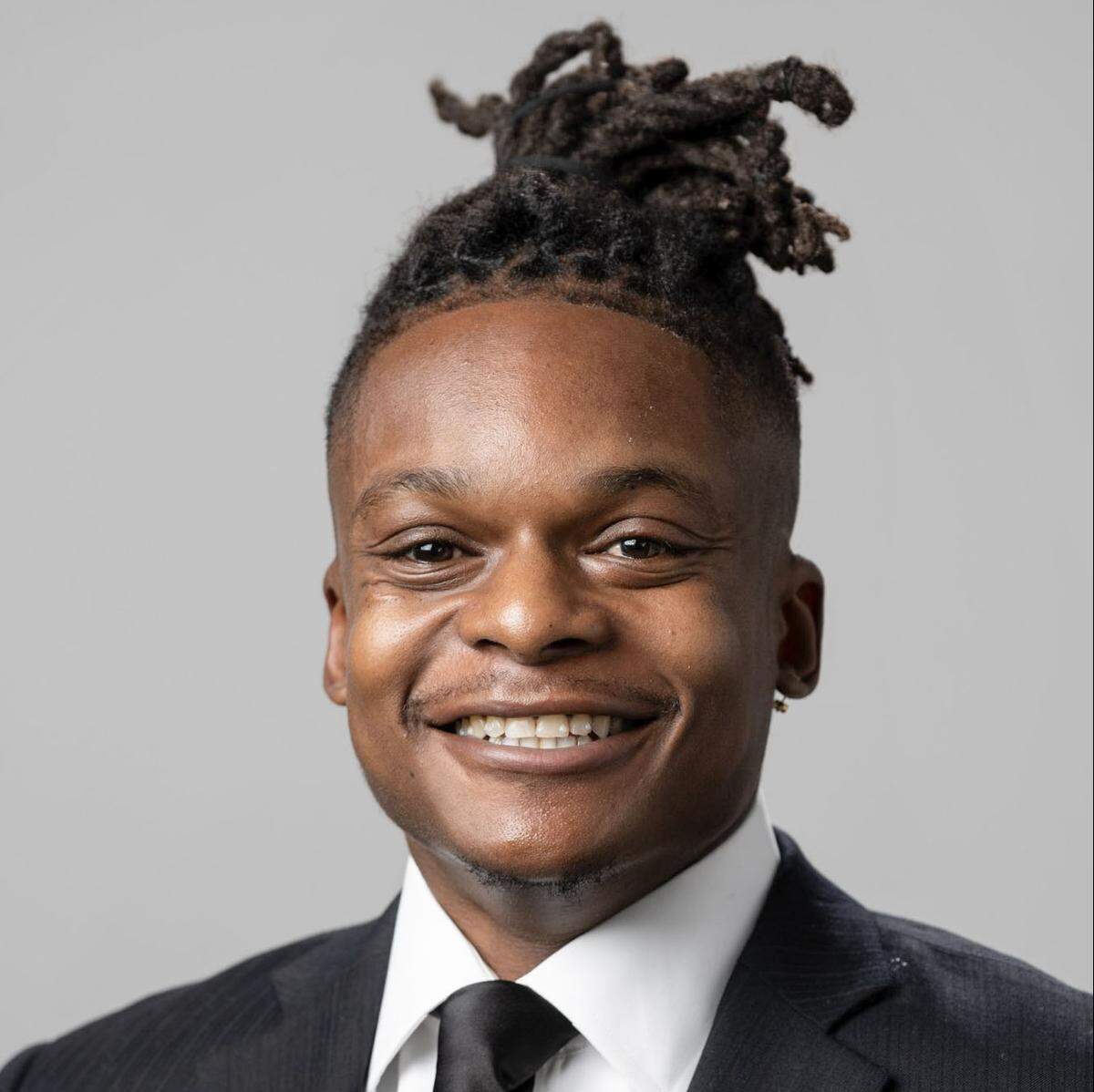
Dominique Donette is the new public affairs specialist for the California Hawaii State Conference NAACP(CA/HI NAACP).
She will be the CA/HI NAACP’s lead lobbyist and will also support the organization’s communications and public relations strategies.
Donette is a Sacramento native and was raised in Oak Park. She recently spoke with The Sacramento Bee to discuss her journey back to her hometown and her work with the NAACP.
Note: The following interview has been edited for clarity and length.
Q: Explain to me a little bit about the Public Affairs Specialist position with the CA-HI State Conference NAACP.
A: The CA/HI State Conference NAACP is a statewide organization and although I’m in Sacramento, I’ll be working on behalf of residents in California and Hawaii. Nationally, the mission of the NAACP is to secure the political, educational, social, and economic equality rights in order to eliminate race-based discrimination and ensure the health and well-being of all persons. In my role as a Public Affairs Specialist, essentially, I’m doing a 50-50 split role. Half of my role is really focused on our external and internal brand management, social media, writing press releases, things like that and the other half is focused on lobbying. Lobbying is the act of influencing the people in power – legislators – and bring to them the issues that the NAACP in California and Hawaii most care about and try to influence their decision.
Q: Are there any projects you’re looking forward to?
Expungement clinics being offered by the NAACP in California are super cool, they’re free, they’re offered about once a month throughout the summer and people from various counties in the state can apply. But basically, it’s a workshop to help people with a criminal record either erase or seal it. There are other opportunities giving people access to resources and information they may not have been able to find on their own. It’s just such a wonderful resource to the community, so I highly recommend if you or someone you know has a criminal record and even if you’ve been told by someone else it is not possible, still attend. Get the information, network, and see what can be done.
Q: Tell me about some of the work you’ve done in the past - I heard you spent some time in New Orleans.
A: So after high school I took a gap year, and I did a lot of community service in the Oak Park neighborhood. After my gap year I applied to UC Berkeley. I started undergrad in the summer of 2005 – the day after Hurricane Katrina. I saw all these news stories, videos and images of people literally drowning – without water, without access to lights and electricity. So from that point on I started fundraising. Every spring break and summer I spent in New Orleans or the Gulf South doing different campaigns, mostly around housing rights and voting rights, working with the Rainbow PUSH Coalition, NAACP, and all sorts of community organizations.
Q: I understand from Berkeley you went on to the Harvard Graduate School of Education. What motivated you to pursue that?
A: It was after losing the statewide election to elect Marshall Tuck for California State Superintendent (of schools) back in 2014. I really wanted to understand education policy more deeply, so I applied to Harvard. I wanted to get a framework for policy. I really wanted to understand how policy is made, how it is implemented because so many policies that I had experienced growing up were harmful policies and the people in power didn’t hear from people like me, who were most negatively impacted. I did that for three years and in my time at Harvard, something really pivotal happened for me.
Q: Are you comfortable sharing that information with us?
So the spring semester – the same semester that I was graduating – my little brother was arrested for a stolen backpack and an involvement in an alleged robbery. Initially it didn’t seem like that big a deal, but it turned into what has now been a five year fight for my brother’s freedom. So it was very important for me in the work that I was doing to represent communities that had experiences like the ones that I lived through. I can do things like launch a scholarship fund. I’m launching a scholarship fund called the Ceari Scholar Fund, which will award two $2500 scholarships to students from Sacramento High School, who have ever had immediate family members or parents in the prison system, or who have been in prison or Juvenile Detention Hall, the system themselves.
Q: Three words that describe Dominique.
A: Curious, joyful and loving.
Q: How do you apply those principles to your position with the NAACP?
I asked a lot of questions I want to know. I want to get to the bottom of things and if you can’t tell me then I’m going to go find who can. So curiosity really drives me. I have such a voracious appetite for knowledge, I would consider myself to be a lifelong learner. Someone who’s super committed to personal development and growth. I’m quenching knowledge for myself but I want to ensure that other people have the information. I think that’s natural advocacy.
Joyful or joy. The most joyous thing I can do in my life is want to be myself and be full of joy but also create systems and structures, so that other people that I love and that look like me can also experience that and every person, particularly people of color, deserve access to basic needs and necessities. And so to me, like, what’s the pathway to joy. It’s like being able to do that for people and advocate for them and my role.
And finally, love. I govern my life through love. How I love myself, how I love my people – I love being Black. I have a deep sense of self and awareness and therefore love my blackness. This carries into my role based on my passion and purpose being aligned in this work. I also approach everything through the lens of love and attempt to understand people’s why-empathy, compassion and understanding are a part of this practice and will help me build trust and relationships in this work. Everything I do will be done with love. I think that’s why I’ll be a successful lobbyist because I don’t have an agenda outside of representing people and advocating for equal rights.
This story was originally published May 11, 2021 at 5:00 AM.