
‘How can we let bygones be bygones?’ Intense talks highlight California reparations meeting
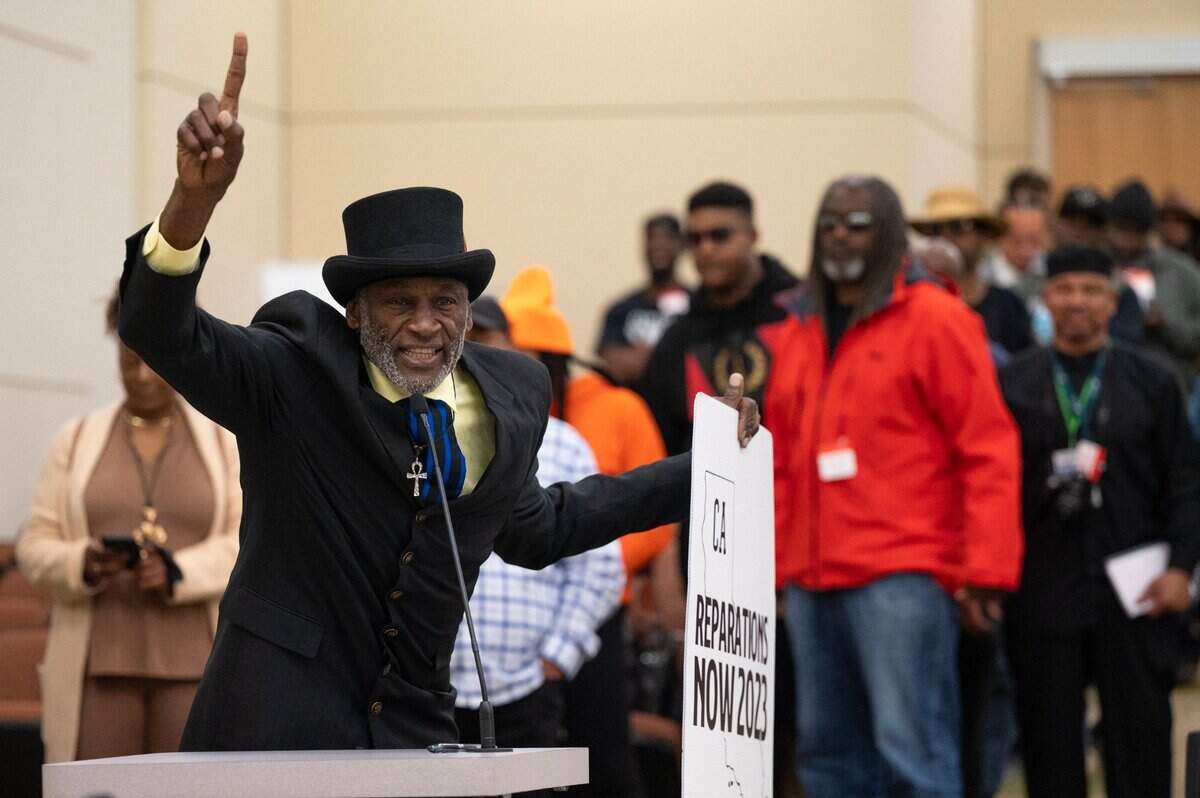
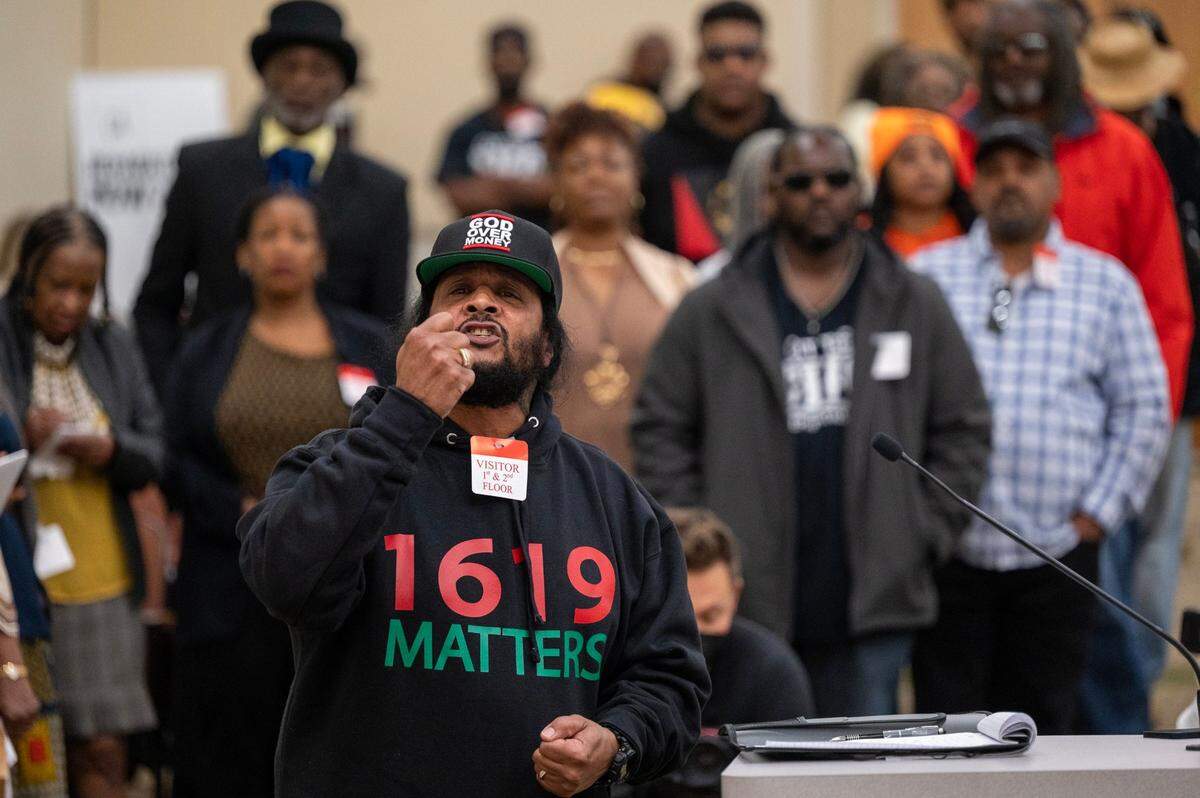
Passionate voices filled Sacramento’s Byron Sher Auditorium on Friday during an intense discussion over whether Black Americans who have been historically disenfranchised should receive reparations from the state.
Among the more than 100 people who turned out for California’s Reparations Task Force meeting was Gloria Pierrot-Dyer. She’s a Roseville resident with roots going back to Allensworth — a Central Valley town founded in the early 20th Century by Blacks who were ex-slaves.
Pierrot-Dyer, 71, who comes from a farming family, shared that her father had to travel miles to the next nearest well for 11 years to obtain water for their home and their animals.
Neighboring white farmers in the area had wells and actively worked to keep Black farmers from accessing water, she said. Her story resonated with many at the hearing.
“It’s not going to solve the problem if we just throw money at it,” Pierrot-Dyer said. ”(We need) programs and resources that undo the psychological harm that has been done by being surrounded by hatred for centuries.”
Friday’s the first of a two-day meeting where the reparations task force is charged with finding and recommending ways to compensate residents for slavery and atrocities inflicted upon them and their ancestors.
It’s the first statewide effort in the U.S. to explore restitution and develop some sort of restorative justice plan.
The task force was created after Gov. Gavin Newsom in 2020 signed AB 3121, authored by then-Assemblywoman Shirley Weber, D-San Diego. The bill focused on exploring how the state could potentially remedy the harms caused by enslavement and racial discrimination.
A second meeting is set for 9 a.m. Saturday at the Byron Sher Auditorium, 1001 I St.
Task force officials said they expect to have more meetings on March 29 and 30. On May 2 the task force will meet for final approval of its report. There will also be a June 30 meeting once the report is finalized and printed. All of those meetings will be in person, though the locations still need to be determined.
The meetings will also be streamed online and allow for public comment.
“How can we let bygones be bygones when the knee of white supremacy is still on the necks of Black Americans, choking the very life from us?” said Maureen Simmons, a consultant who began researching the reparations issue in Weber’s office back in 2019.
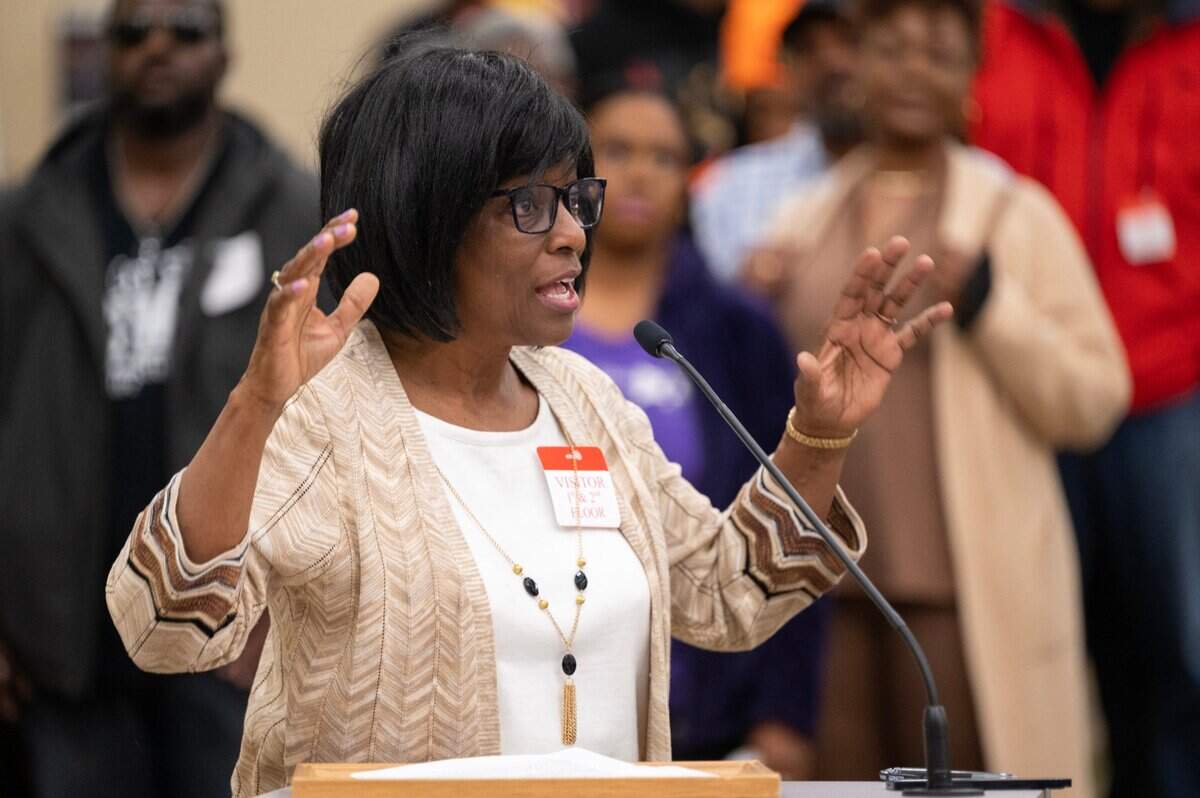
Simmons, who spoke at the beginning of Friday’s meeting, also typed the first draft of AB 3121.
“How can we let bygones be bygones when American medicine was built on the backs of slaves, yet the descendants of those Black slaves have worse health outcomes than their counterparts due to health care disparities?
“How do we let bygones be bygones when Africans forced into 400 years of chattel slavery through kidnapping and fraud undergirded the economic infrastructure of America? Yet the economic wealth gap between the heirs of chattel slavery and whites are a blaring reminder of the injustice created by the oppressive regime.”
Range of opinions
During the first hour of Friday’s meeting, members of the public were able to speak to the task force in person, or call in.
There were a small number of callers who were in complete disagreement with the idea of reparations. One caller, Mark Johnson, said because California was never a member of the Confederacy, Black Americans shouldn’t even be considered.
“Nobody gets a dollar until the Indians get one, OK?” Johnson said.
While the majority of speakers supported the idea of reparations, there were differences about which approach should be taken.
Some supported the idea of compensating the descendants of Black war veterans who never received the military benefits they were due. There were also suggestions of low-cost loans or free education for those who are descendants of slaves.
Meanwhile, some criticized Friday’s proceedings, saying there was not adequate outreach to impacted communities who would be interested in participating. However the task force during the meeting did show a series of informative advertisements they said had appeared on local radio stations.
Others expressed concerns the task force might divert reparations funding to nonprofit groups or others.
“We want a full-service freedman’s bureau set up. We don’t want money to go to all of these nonprofits, where you’re out there handing money to your friends and family, and scam the community like y’all have probably been doing your whole careers,” said one caller going by the name John Mudd.
The task force is made up of nine members — five were appointed by Newsom; four were appointed by the Legislature.
An executive interim report was published in June by the task force and submitted to the Legislature detailing the lasting effects of enslavement and discriminatory policies, including present-day inequalities. The panel has until July 1 to submit its final report, which could include recommendations the state could adopt to address the lasting effects of discriminatory practices.
Saturday’s meeting
Those who can’t attend Saturday’s task force meeting in-person can livestream it on the California Department of Justice website or on YouTube through the Emend The Mass Media Group.
During the first hour, the floor will be open to members of the public to speak on any proposed agenda item. Those wanting to call in can dial 844-291-5495, using the code 3968101 for the waitlist. The public can also share comments by email to reparationstaskforce@doj.ca.gov.
This story was originally published March 3, 2023 at 3:25 PM.