California combats high death rates of Black mothers with anti-bias training. Does it work?
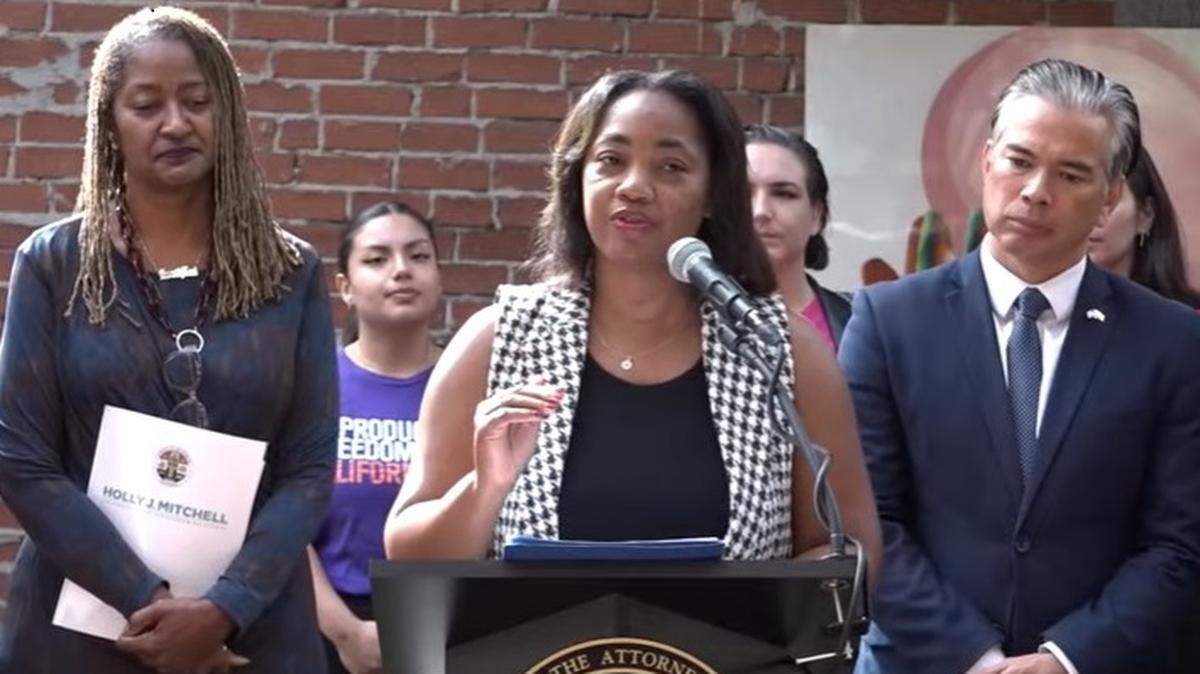
The California Department of Justice found that health care facilities in the state largely failed to ensure that their labor, delivery and other birthing care staff took mandated training on recognizing their own implicit biases. That was until regulators began checking.
Studies have shown implicit biases contribute to the alarmingly high rates of death in childbirth for Black women, and oftentimes, people, even health care professionals, are unaware that they have these negative attitudes and beliefs.
The United States leads the developed world in maternal mortality rates, state Attorney General Rob Bonta said Friday while sharing a department report on compliance with training requirements. The death rate disproportionately affects communities of color, suggesting potential bias.
“In California, Black women make up 5% of pregnant patients, but account for 21% of total pregnancy-related deaths,” Bonta said. “The rate of maternal death for Black women is three to four times higher than for white women.”
During the press conference, Bonta shared his own experience with how implicit bias affected the care of his wife, Assemblymember Mia Bonta of Oakland. Bonta said his wife, who identifies as Afro-Latina, felt the emergency room staff didn’t believe she was in pain and instead were accusing her of being drug-seeking.
“Implicit bias has been shown to affect interactions between patients and providers, provider treatment decisions, adherence to treatments and actual health outcomes,” Bonta said, who announced his office’s findings in Los Angeles with former state Sen. Holly Mitchell, author of Senate Bill 464, the California Dignity in Pregnancy and Childbirth Act. Enacted in 2019, it mandated training on implicit bias.
Mitchell, now a Los Angeles County supervisor, said that health systems have played a central role in keeping Black women from living full, healthy, complete lives.
The law required health providers who treat women before or after pregnancy to take evidence-based anti-implicit bias training starting Jan. 1, 2020. But when the department sought an update from 258 facilities in August 2021, a “substantial number” had not completed or even begun training staff, the agency noted in its report.
By July 2022, a reported 242 facilities and 81.4% of the applicable personnel at the facilities had complied with the law.
By the time Mitchell proposed the bill, she said, a coalition of advocates, medical professionals and Black women had been working for years to get meaningful legislation passed that could save Black lives. The high rate of deaths exists across all income levels for Black women, Mitchell said.
In fact, Black women who practice healthy behaviors during pregnancy have worse perinatal outcomes than white women who do not, according to a report released earlier this year by the California Department of Public Health and the UCSF Center for Health Equity.
Still, “widespread erroneous assumptions of genetic or behavioral causes of poor health have often placed the responsibility for adverse birth outcomes on Black women,” the CDPH and UCSF report stated. “Research does not support an underlying genetic basis for these outcomes among Black women, and health behaviors and medical factors alone cannot account for these disparities.”
Global Health Equity Week shines light on maternal health disparities
The release of the DOJ’s report comes as communities worldwide celebrate Global Health Equity Week. This year, the organizers are asking everyone to send a letter to their governor and state Medicaid directors (Medi-Cal in California) to urge them to help eliminate maternal health disparities.
The virtual Global Health Equity Summit also featured a webinar that explored the impact of cultural, racial, and linguistic factors on maternal care experiences and outcomes. An African-American panelist, Kate Solomon-Tilley, said that she was concerned about the maternal mortality rates for Black women as she headed into her first pregnancy.
So, she did her homework when it came to choosing a hospital. She decided to work with the midwives at that facility because of the extra support their patients received, but still, she said, the medical personnel made a lot of assumptions about her when she came in for appointments.
They asked her how she was controlling her diabetes, though her blood sugar results were well within normal range. When she told them she’d never had problems with it, they continued to educate her about it and treat her as though she didn’t know what she was talking about.
In the delivery room, she said she was ignored and would go hours without being checked.
“At some point, even when I would call the nurse for help, they stopped paging (the) nurses at all,” she said. “You could hear them over the loudspeaker, paging for other rooms and they would just not page for my room. So I wouldn’t see any health care provider for two, three, four hours at a time while my labor’s progressing.”
Mitchell and Congresswoman Sydney Kamlager-Dove urged expectant mothers in California to connect with organizations like Black Women for Wellness, California Black Women’s Health Project, and Planned Parenthood, which has a Black health initiative.
Bonta and Dr. Akilah Weber, D-La Mesa, said SB 464 needs more teeth to ensure compliance, and they rejected arguments that the COVID-19 pandemic delayed implementation. Training for perinatal care personnel, they said, could be done online.
“Legislation alone will not fix this problem,” said Weber, who’s a board-certified obstetrician-gynecologist. “Increasing funding alone will not fix this problem. We need legislation and funding with oversight enforcement, data collection and accountability to produce the equity that we must achieve for all birthing mothers. Among other things highlighted in this report, we need training completion deadlines, assurances that the training programs are regularly reviewed and are evidence-based.”