Sacramento’s oldest Day of the Dead celebration is nearly 50. It continues to grow in popularity
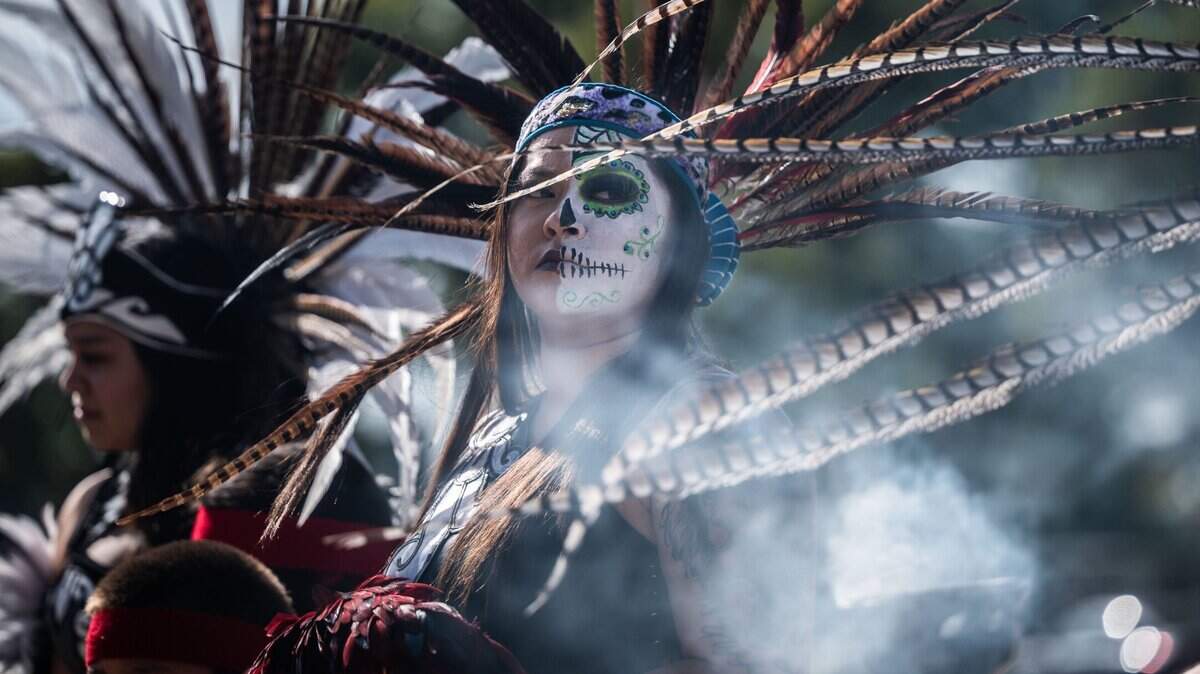
Sacramento’s oldest Día de los Muertos celebration is going strong, continuing tradition as the holiday grows in mainstream popularity.
Families from across the capital region gathered on Thursday at St. Mary’s Cemetery to mark Day of the Dead, or Día de los Muertos — a folkloric holiday dating back thousands of years celebrated across Latin America and among Latino communities in the United States. The holiday honors the life and death of loved ones on the first two days of November.
In Sacramento, residents began publicly celebrating in 1975. The event was started by community members, like Angelbertha Cobb and the Royal Chicano Air Force, a Sacramento-based art collective pivotal to the Chicano movement in the ‘60s and ‘70s.
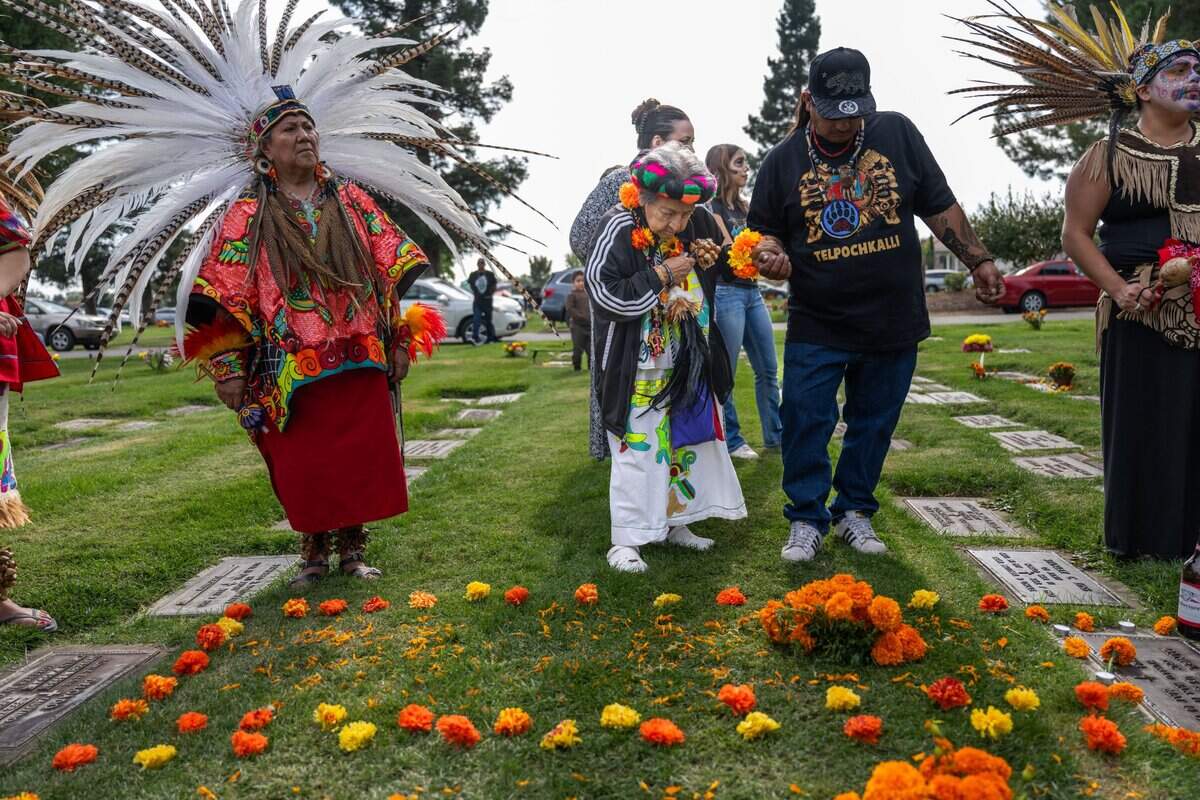
“It was a lot smaller, and a little scarier back then,” said Cobb, now 91.
As attendees walked, they were threatened and watered with hoses by neighborhood residents, Cobb recalled.
Lupe Portillo, another attendee of the first gathering, said the group was misunderstood by outsiders. Some thought they were celebrating the devil.
“They weren’t very accepting of the procession,” said Portillo, who now leads the annual event.
In its 48th year, the St. Mary’s Cemetery’s celebration begins with that same procession — an Indigenous ceremony with Aztec dancers and Catholic mass.
On Thursday, dozens of people ranging from elders to toddlers walked to each cardinal direction — North, East, South, West — of the cemetery. Each area honored a specific group of deceased people including men, women, veterans and children.
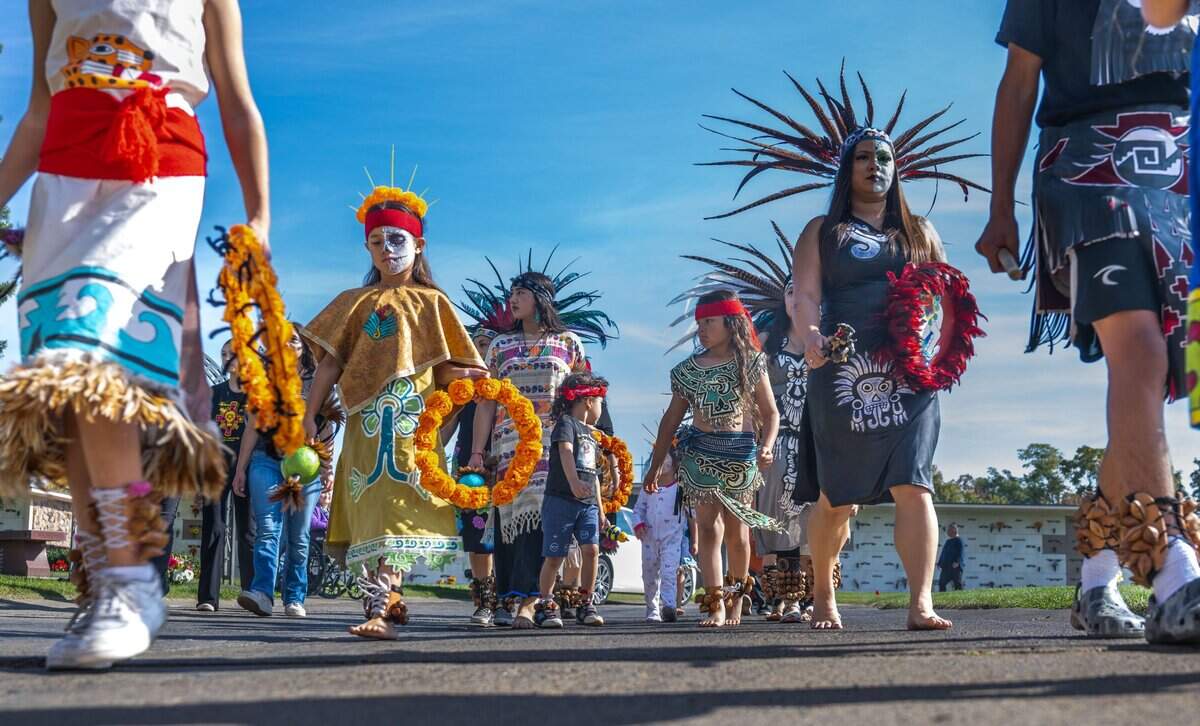
Many individuals were dressed with colorful Aztec attire including headdresses, tunics, facepaint and beads around their ankles.
“It’s a blend of Aztec, Indigenous and Catholic culture coming together,” said Jorge Mendoza, the director of parish and community outreach for the Catholic Funeral and Cemetery Services of the Diocese of Sacramento.
A community ofrenda — personal belongings, old photos and favorite foods placed on makeshift altars — was also available throughout the event. The ofrenda was lined with vibrant marigolds flowers, candles, food, drinks, belongings and more than 500 photographs of deceased individuals that Portillo has collected since the event’s first year.
The holiday, which was largely celebrated by rural or Indigenous Mexican communities, has risen in popularity in recent decades among Latinos throughout Mexico and the United States. The 2017 Pixar movie “Coco” centered on the holiday, furthering its recognition.
Cobb hoped people would continue to remember the true meaning of the celebration.
“Today, you see Day of the Dead everywhere,” Cobb said. “It’s very commercialized. To me, it will always be to honor our ancestors, not to make money.”
This story was originally published November 3, 2023 at 5:00 AM.