
Black farming group’s Sacramento Kwanzaa celebration connects community to its African roots
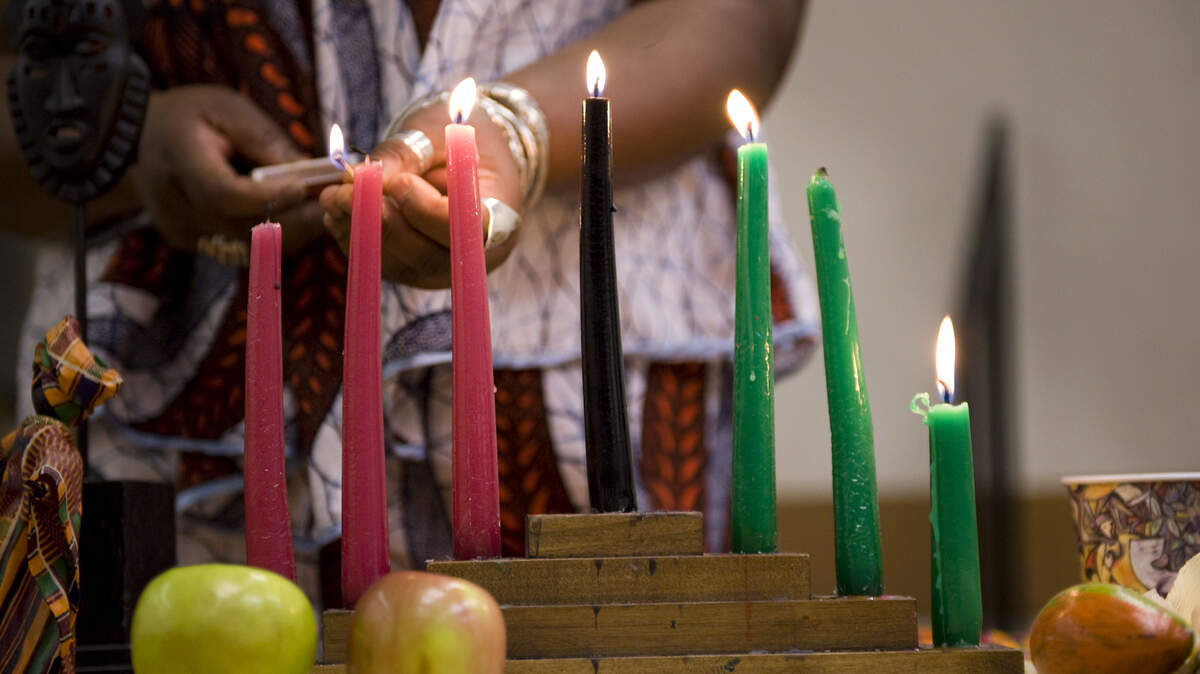
Its name comes from the soil. Kwanzaa, from the Swahili phrase “matunda ya kwanza,” is rooted in the first fruits of the harvest.
Kwanzaa’s week-long celebration of Black family, community and African traditions is also linked to the land, said Michael Harris. The Folsom man leads the California Black Agriculture Working Group and is using Kwanzaa to reconnect the community to its African agricultural roots.
“Agriculture is the foundation of our culture,” Harris said. “Kwanzaa is intergenerational. The history of our people needs to be told. It’s about reflecting on, and reconnecting to, the principles that lift up our community. This is how we can use Kwanzaa for the rebirth of Black agriculture in California.”
The Black Agriculture Working Group will mark the first day of Kwanzaa from 11:30 a.m. to 2:30 p.m. on Dec. 26, at the California State Capitol with its event “Celebrating the Historic Journey of California Black Agriculture, Past, Present and Future.”
The event is one among a broad slate of gatherings across the Sacramento region to celebrate Kwanzaa and its Ngubo Saza, the seven principles: unity, self determination, collective work, cooperative economics, honoring African and African-American history and culture, creativity and faith. Each day of Kwanzaa, which is celebrated through Jan. 1, honors a different core value.
“The beauty is that it’s seven days (and) seven principles established on all seven continents, all founded on principles that are all consistent — a celebration of being Black everywhere you go,” Harris said. “That’s the beauty of Kwanzaa. It’s a global Pan-African history.”
For 25 years, the Black Agriculture Working Group has pushed for policy and legislation to grow the numbers of Black farmers in the Golden State. The Dec. 26 event features the Los Angeles-based chairwoman of the California Women in Agriculture Association Queen Nina Womack and the Black Agriculture Resource Network, which seeks to look beyond past discrimination and disparate treatment and to develop and expand agriculture opportunities for Black Californians.
Black farmers make up fewer than 500 of the approximately 124,000 farmers in California, according to the U.S. Department of Agriculture, making up a little more than 1% of farmers nationwide.
The fight by California’s Black farmers and Black agriculture groups for a larger, more equitable share of California’s nearly $56 billion agriculture economy is long and ongoing, mirroring battles in court and Congress for a fairer share of the nation’s farming dollar.
Racist policy, discriminatory lending practices, government abuse of eminent domain have marked the sharp, century-long decline in Black-owned land in the U.S. The American Bar Association outlined the toll in its January report on historic Black land loss.
By 1997, Black-owned farmland in the U.S. shrank by more than 90% of the 16 million acres Black farmers owned in 1910, the report showed. The American Bar Association assessed the land value loss at $326 billion.
“We’ve demanded the USDA be fair and equitable, but we’ve got to stop fighting and start growing food — having success stories to have more Black folk in the ag industry,” Harris said. Kwanzaa, Harris said, is an ideal platform to spread the message.
Harris said he is determined to see opportunity for Black farmers beyond the obstacles.
“We’ve turned a corner,” Harris said. “I want to see a rebirth of agriculture as Black culture.”
.JPG)