‘A home away from home’: Sacramento State affinity centers provide sense of belonging
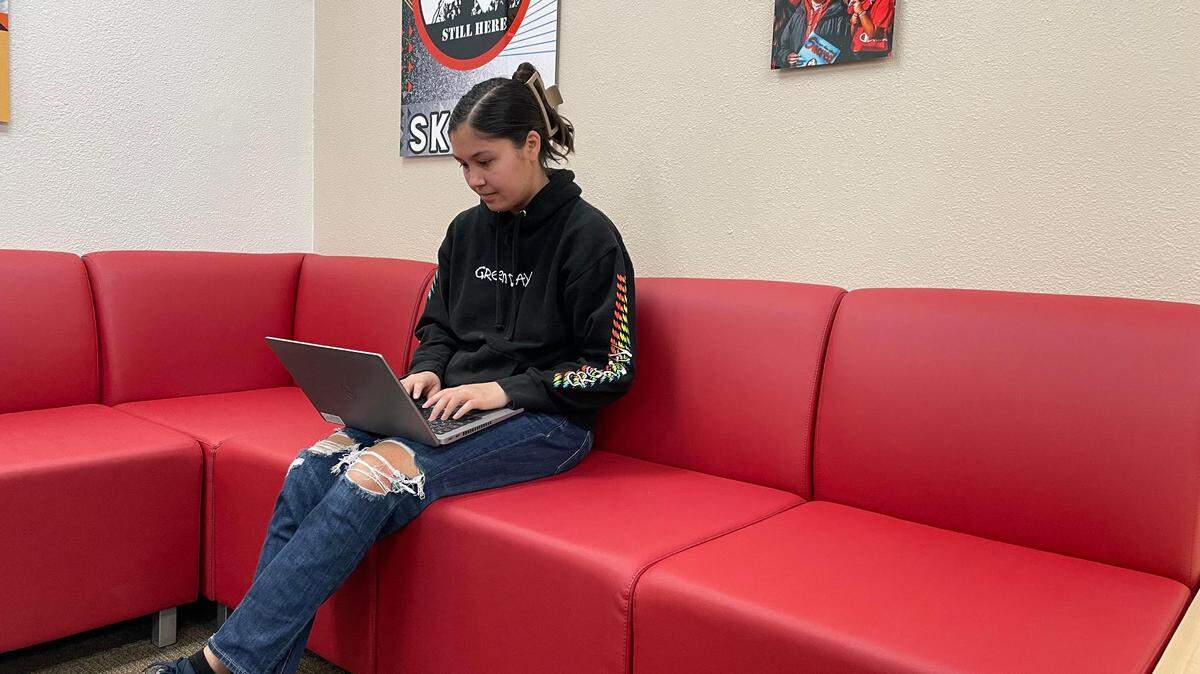
Lillian Weese used to feel homesick in Sacramento. She moved to the city from Visalia to study at Sacramento State.
She felt even more alone as someone who is Wukchumni (a Yokut tribe from California). Weese and other Native students make up 1% of the university’s population.
“I never wanted to stay on campus,” Weese said “I didn’t know where to hang out. I had no one to talk to.”
But with the opening of the Esak’timá Center, a campus affinity center dedicated to Native students, she finally feels like she belongs. She’s now surrounded by her culture, things she grew up, and people like her.
“A lot of times in school, we’re taught to be ashamed of our culture,” Weese said. “We’re called a dying culture. This shows that we’re alive, that we’re here, that we’re present. We’re not just history.”
On March 8, Sacramento State held its grand opening of the Esak’timá Center, which has been long awaited by Native students after years of delays.
The Esak’timá Center is among 10 equity and affinity centers at Sacramento State. An affinity center provides academic advising and cultural resources to students from underrepresented backgrounds and. Affinity centers provide academic advising and cultural resources to student groups who have been historically marginalized.
With the Esak’timá Center, Native students have access to cultural workshops, an elder in residence and assistance with financial aid and scholarships. The campus’s Native student club, Ensuring Native Indian Traditions, also meets on-site at the center. Before the center, the club was forced to hold all its meetings and events over Zoom.
By having a space designated for students to connect with peers who share the same experience and culture, can make the difference for a student, said Rena Horse, the Native Success Program coordinator.
“I know for myself, when I left home and went to college at Humboldt State, I got very homesick,” said Horse, who is a member of the Pit River tribe. “Having the center is also going to help Native students connect with other Native students and have a supportive network.”
Amanda Croteau, a graduate student and member of Cherokee Nation said having a center is also beneficial to the mental health of Native students.
“Because we’re such a small community, it’s hard to find each other,” Croteau said. “So knowing that we can find each other, in a designated space that’s made for us, is very important.”
Other campus affinity centers
Last year, Sacramento State opened the Asian Pacific Islander Desi American Center and expanded its Martin Luther King Jr. Center. Sacramento State also has the Dreamer Resource Center, the Guardian Scholars Program, the PRIDE Center, Project Rebound, the Serna Center, the Women’s Resource Center and the Veteran’s Success Center.
Sacramento State’s nine other centers also provide similar services inside and outside the classroom. Project Rebound, for example, is completely dedicated to helping formerly incarcerated students transition into higher education. Last year, Sacramento State provided housing for Project Rebound students.
A study from Educational Researcher, an academic journal, found that students who feel like they belong at their universities perform better academically and experience higher graduation rates. The study also stated that they’re more engaged, have better persistence and improved mental health.
Kueleza Vega, a fourth year engineering major, works at the MLK Center and finds it helpful to be surrounded by other Black students. As a transfer student from San Joaquin Delta College, Vega said there’s a “sense of familiarity” when he walks into the center.
“This is a space I can come to and just be,” Vega said. “I can just hang out, chill, and be around people who look like me.”
Lily Yang, a first year student, frequents the APIDA Center. Yang is originally from South Sacramento, where she said she didn’t feel represented. As a Hmong student, she finds that the APIDA Center not only helps her find other Hmong students she can relate to, but it provides a space where she feels safe.
“It makes me feel a sense of belonging,” Yang said. “People aren’t looking (at me) a different way.”
And over at the Serna Center, a space for Chicano and Latino students, Samuel Solis, a fourth year history major, feels the same way. The Serna Center makes him feel comfortable as a Mexican student. He said he’s surrounded by community and enjoys having a quiet place to study.
“It’s just like having a sense of a home away from home.” Solis said.
Support beyond a center
Students like Croteau, who have attended Sacramento State since they were an undergraduate student, said the Esak’timá Center is a great first step. She’s been on the planning committee for years and started as a undergraduate student.
While she describes the center’s opening as a “very positive thing,” she said she feels “emotionally disconnected” because of how long the center took to open. Despite this, the existence of a Native center is a “big step forward.” She said Sacramento State has made a “verbal shift” in the past year and it’s validating for staff to step up.
However, Croteau said Sacramento State still needs to stray from “performative” behavior when it comes to supporting Native students. A center is only the first step, and the university needs to follow through with more. Recently, she said she brought up the idea to give back the university’s arboretum to tribes.
“It took not even just me, but generations of before me of Native students trying to open the center,” Croteau said. “...Time will tell if these ideas are actually executed, or if it really is performative.”
This story was originally published March 18, 2024 at 5:00 AM.