
Cofer or McCarty will make history as Sacramento’s second Black mayor. How they see that legacy
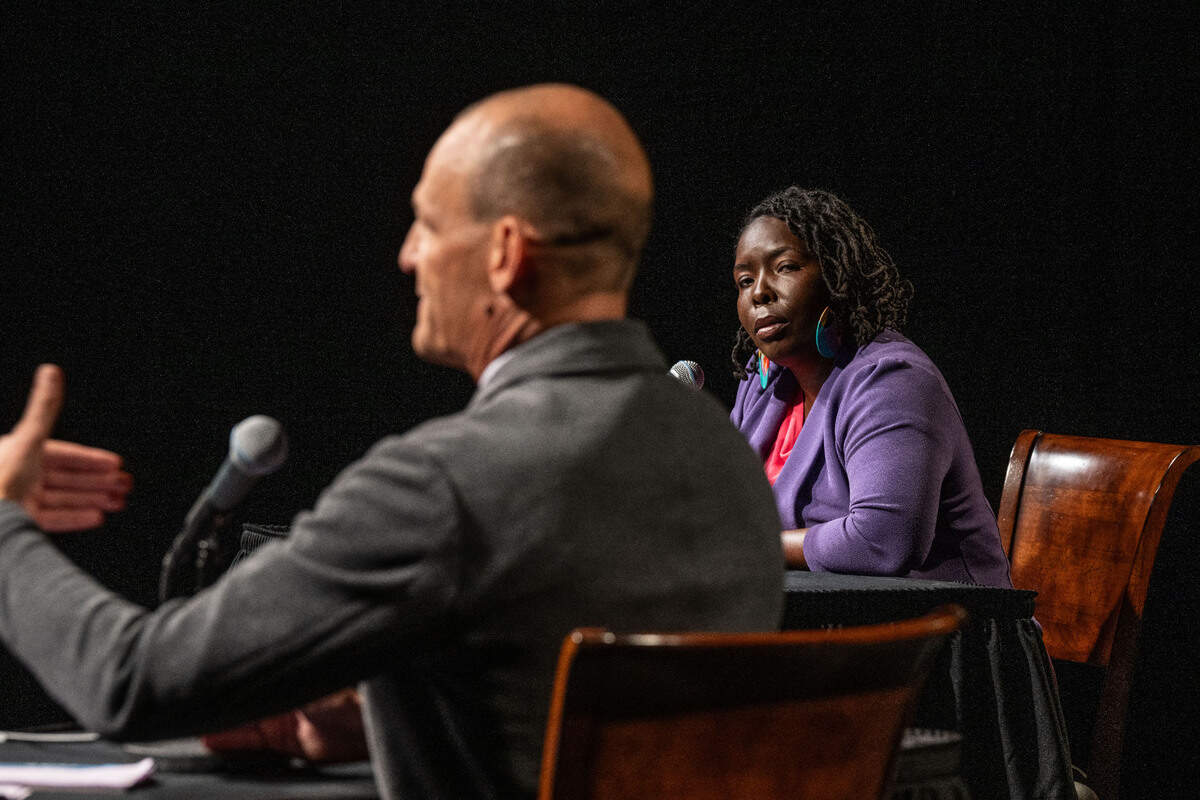
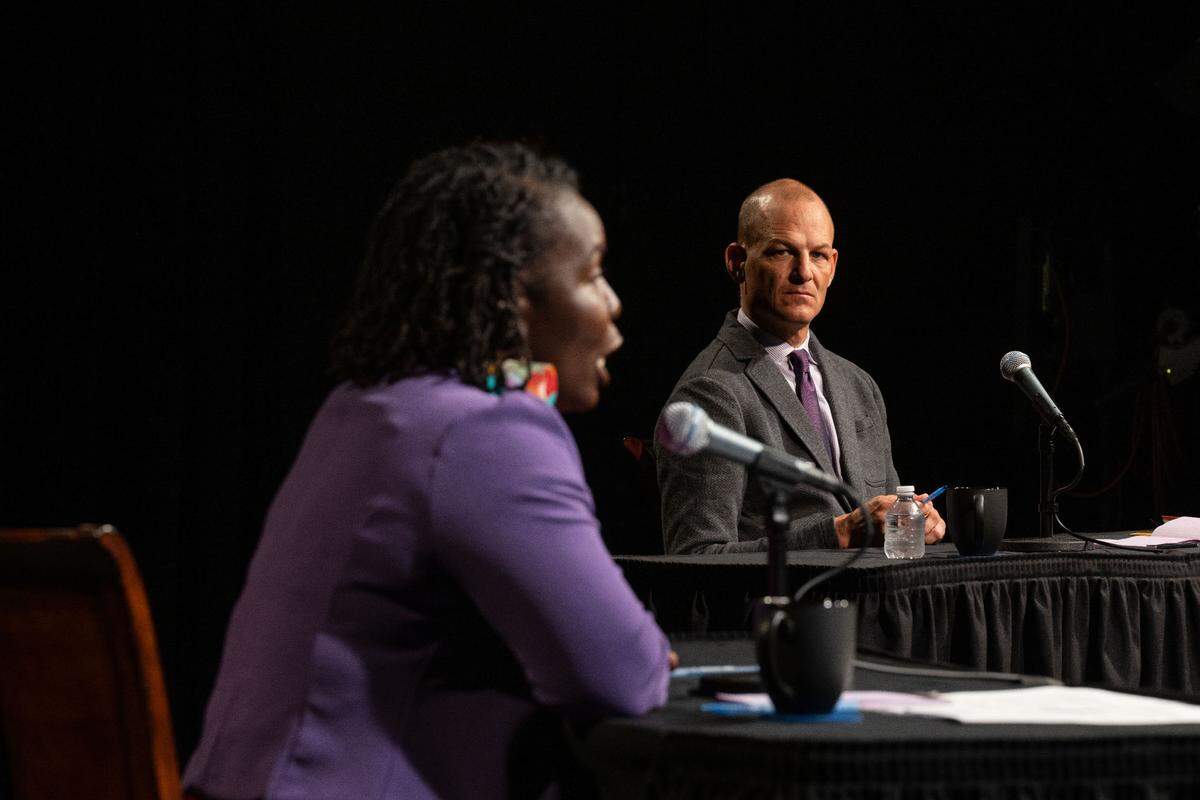
The two mayoral candidates took their places on the raised stage at a recent debate, one that preceded The Bee’s and KVIE’s Oct. 23. They were accompanied only by their microphones to talk about the issues vexing Sacramento — homelessness and housing; public safety and the economy.
It was as common a scene as there was during election season: the neighborhood candidates’ forum.
It was also Sacramento history in the making. The city, for only the second time in its 174-year history, will have a Black mayor: public health professional Flojaune “Flo” Cofer; or Assemblyman Kevin McCarty. Cofer would be the first Black woman to win the seat.
“They’re both dynamic candidates,” Ardell La’Mond Harrison, acting president of the Greater Sacramento NAACP, said in June.
Whether Cofer or McCarty is elected Sacramento’s next mayor, Harrison said, they must work to create more opportunity in the city’s Black and brown communities and continue to develop housing and other solutions to the city’s homelessness crisis.
If elected, Sacramento native McCarty would return to the dais as mayor of his hometown where he once served as city council member.
“The city that raised me and gave me so much,” McCarty said at a recent forum in the city’s Heritage Park neighborhood. “I know that I can do more and that I can do more to serve the city of Sacramento in a new capacity.”
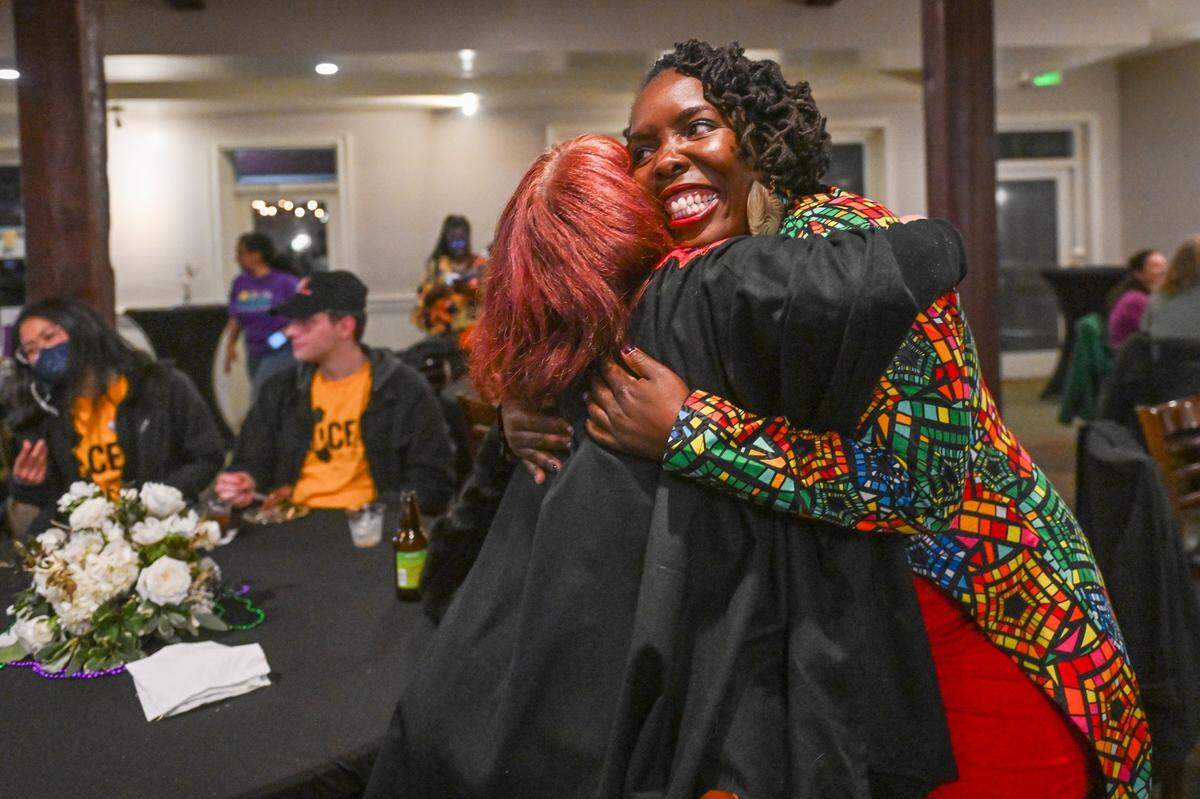
But there is a sense among Cofer’s supporters and election watchers that her candidacy represents something bigger — a Sacramento politics that looks and works differently.
“It’s not just historic,” Tracie Stafford, a former local Democratic party chair, said of the prospect of Sacramento’s first Black woman mayor. “It changes, literally, the face of politics in Sacramento.”
The televised debate
At Wednesday’s briskly paced hour-long debate, co-hosted by The Sacramento Bee and public television station KVIE, Cofer and McCarty sharply sparred on homelessness.
“We need to be crystal clear: We can’t allow encampments in the city of Sacramento,” McCarty said, repeating his claim that Cofer would allow camping in underutilized city parks.
Cofer would call for an end to homeless sweeps (“That is the No. 1 difference between us,” she said) and called McCarty’s camping claim “a lie,” restating her plan to allow urban camping on empty city lots that have not yet been converted into parks.
“We have to have places for people to go and we need to look at city-owned lots,” Cofer said Wednesday. “We have to stop with the failed policies and the rhetoric that makes people feel safe but is just bad ideas being recycled.”
The candidates also tussled over whether Sacramento City Manager Howard Chan, in the final year of his contract and a lightning rod for his high pay and the power he wields at City Hall, should keep his job under a new mayor.
McCarty said he supported the city manager “stick around for one more year,” saying stability is needed at City Hall. McCarty worked with Chan when McCarty was a city councilman.
“He’s a fine public servant. I could work with him in our first year. I think its important that we have continuity on those early days,” adding that council members need time to “have a thorough conversation as far as the future of Sacramento.”
Cofer would look to an interim city manager and begin the search for a new city manager.
“We’re in a position where we have to talk about who’s in control. Who’s in control is the mayor and the council. That’s what our charter says,” Cofer said. “It’s time for a fresh start. The city of Sacramento needs new leadership. It’s time for new leadership. We don’t have to be afraid to say that out loud. That’s where we are as a city. It’s time.”
Both candidates found strong support in primary
Just three Black women have ever served on the Sacramento City Council: longtime Oak Park community champion Callie Carney; the trailblazing Lauren Hammond, the first Black woman elected to the council; and Bonnie Pannell, south Sacramento’s forceful leader who served as a Sacramento city councilwoman for 16 years until 2014.
“It is historic, it is transformative what Dr. Cofer is doing,” said Maria Madril Hernandez, who leads the Sacramento chapter of the National Women’s Political Caucus. Hernandez succeeded Hammond, who guided the caucus in its mission of identifying, recruiting and training women candidates for public office. Hammond died in January at 68.
“She’s a woman running a serious and viable campaign for mayor. I think she’s serving as a role model. As diverse is the city of Sacramento, the seriousness and the viability of her campaign, she’s connecting with people across neighborhoods,” Hernandez continued. “I hope it gets more people out to vote. Here is a woman who can bring about a different leadership look.”
Both Cofer and McCarty, the two most progressive candidates in this year’s mayoral race, found strong support during the primary among lower-income Sacramento voters — voters who often are disillusioned or disengaged with politics — Bee analyses showed.
Cofer was particularly strong in lower income areas such as downtown, midtown, Meadowview and Oak Park; while McCarty received the second most support from low income communities, including Del Paso Heights.
Both candidates also garnered broad support from across the city in different ways.
Previous mayors in a diverse city
Kevin Johnson, Sacramento’s first Black mayor, who played a key role in keeping the Sacramento Kings in the city and in making downtown’s Golden 1 Center a reality during his consequential, controversial two-term run, served from 2008-2016.
Johnson was a basketball standout first at Oak Park’s Sacramento High School, then at Cal. Then came the NBA, the point guard rising to stardom: lottery pick, Olympic Dream Teamer, All-Star. He proved to be just as dynamic in the political arena, winning the mayor’s seat in 2008 in a landslide with a vow to turn Sacramento into a “destination city.”
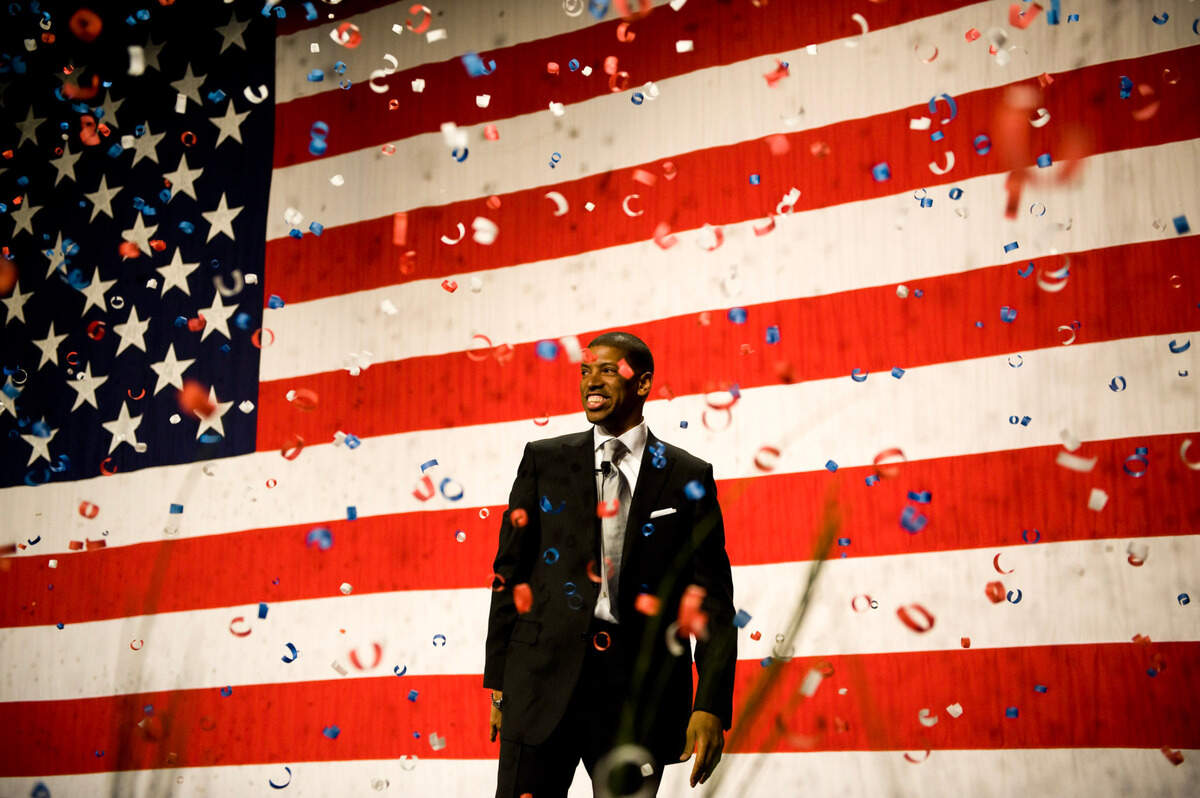
A second, stormy term buffeted by scandal followed, ending as the The Bee reported, “one of the most tumultuous and consequential political runs in city history.”
Today, Johnson is managing partner of the Black Capital Fund, an early-stage venture capital fund focused on investing in black and underrepresented founders.
But the history-making Johnson was also the latest in a line of Sacramento mayors who broke barriers.
Anne Rudin, in 1983, the first woman elected as Sacramento mayor, was Jewish. Joe Serna Jr., the city’s first elected Latino mayor, served from 1993 until his death in 1999.
Then-City Councilman Jimmy Yee, appointed to serve out the remainder of Serna’s term, became the city’s first Asian American mayor.
Heather Fargo followed. She was the second woman elected Sacramento mayor serving two terms before Johnson’s 2008 victory.
Today, Sacramento remains a mosaic, 2023 Census data shows: 29% are Hispanic or Latino; 19.5% are Asian; 12.6% are Black, slightly less than the 13.7% national rate. Another 13% are two or more races; more than one in five are foreign-born; while 39% of the city’s residents are white.
McCarty: Known in Sacramento politics
McCarty is a household name in Sacramento politics, the establishment candidate with his own progressive bonafides, rising from city commissioner to City Council at 32; to the state Capitol as an assemblyman and member of the California Legislative Black Caucus. All, he said, with a collaborative philosophy.
“In this business, if you want to go fast, go alone. If you want to go far, go with others. Together,” McCarty said Wednesday. “That’s always been my approach.”
McCarty has lined up endorsements from Sacramento Mayor Darrell Steinberg, Sacramento County District Attorney Thien Ho, former Sacramento mayor and longtime Sacramento County supervisor Jimmie Yee and former council member and mayoral candidate Steve Hansen to civic groups including the Sacramento Asian Chamber of Commerce and, in June, influential labor and civil rights leader Dolores Huerta.
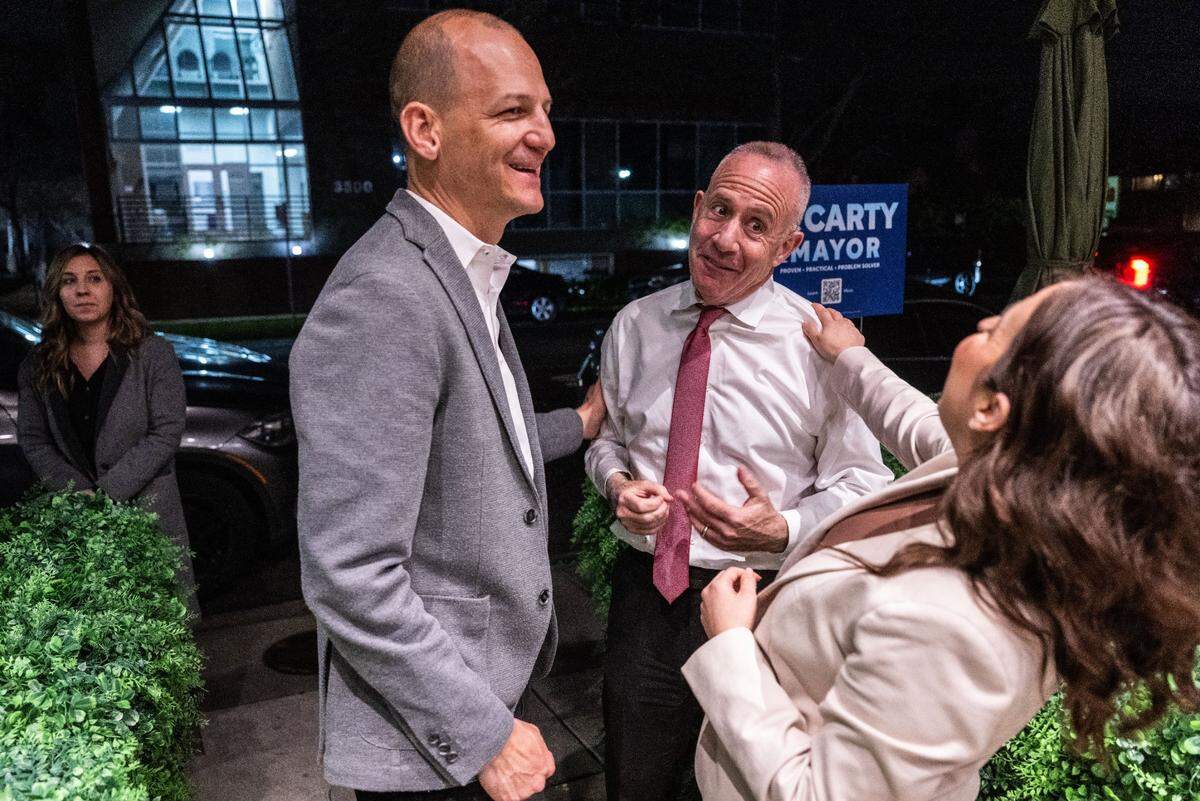
McCarty has been an important voice in the California legislature in education and on police reform carrying bills calling for independent investigations into police use of deadly force; strengthening county sheriff oversight and more transparency related to taxpayer-funded use-of-force settlements.
His bill to expand career technical education opportunities in Black and brown communities was among the package of reparations bills the state’s legislative Black caucus introduced this year. He announced the bill’s signing by Gov. Gavin Newsom at a September forum and talked about his work on behalf of Black and brown Californians.
“Yes, I’m a biracial African American male,” he said at the forum at Congregation B’nai Israel. “I look at my dad’s and my grandparents’ experiences, very different from mine, I’ll readily admit, but I have these personal stories. ... “
“Five hours ago, I got a call from the Governor’s Office saying that they signed my law, a reparations measure to bring about more career education for Black and brown communities that have been ignored for these career programs to help expand opportunities,” McCarty continued. “So it’s in my work.”
Cofer has never held public office but says her years of work leading organizations that are working on state and local public health policy will guide her time as mayor. Cofer previously led the preconception health initiative for the California Department of Public Health.
As senior director of policy for Davis-based nonprofit Public Health Advocates, she led health equity initiatives teams focused on state policy and prevention, response, and recovery from public health emergencies.
“Our cities are responsible for the most important things in our lives: The number of years in our life and the quality of life in our years,” she said at the recent Heritage Park forum.
Cofer: Political newcomer
Cofer is a political newcomer, but her road to the mayoral race has been years in the making, said Christi Ketchum, who heads the leadership and career development nonprofit Sacramento Sister Circle. The two first met more than 20 years ago as students at Spelman College in Atlanta and became collaborators in Sacramento at Sister Circle, where Cofer was first encouraged to seek public office.
“She’s been called to run for mayor for many years,” Ketchum said. “She’s actively positioned to lead and do well in this position. She’s looking at wanting to solve problems instead of talking about problems.”
Cofer’s everywhere-at-once ground game and political outsider narrative steadily built support.
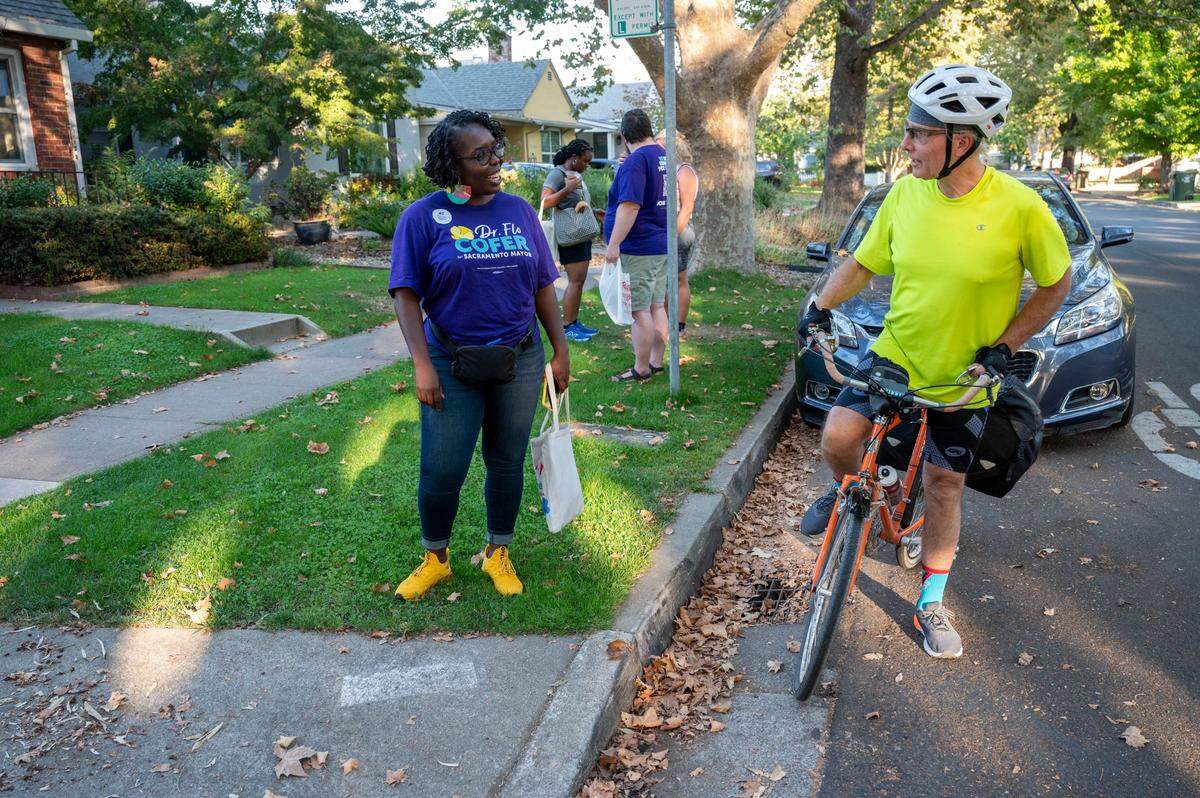
“We need new leadership that respects us and listens to us, that partners with us and brings a new vision to Sacramento,” Cofer said during a recent forum in the city’s Heritage Park neighborhood.
It’s a message that Sacramento voters have embraced and it propelled the public health professional past Sacramento city council member Steven Hansen and former Sacramento state Sen. Richard Pan, primary candidates with far greater name recognition, to face off with seasoned Sacramento lawmaker McCarty.
“She’s not speaking just for Black folks but she is one of us and she gives us an offer of hope that’s not entirely unrealistic,” Lavinia Phillips of Oak Park, a Sacramento City Unified School Board member, told The Bee in April. “We really want someone who’s going to hear us. And, not only hear us, but understand us.”
Sacramento State professor and researcher Christopher Towler, director of the Black Voter Project, spoke to the dynamic earlier this year as Cofer moved to the top of the race at the end of the mayoral primary.
“There’s a potential to transfer her campaign into a political movement. Not only visibly, but systemically, to change the inner workings of the city,” Towler said. “She’s very attractive to low-propensity voters, especially those who feel their voices have been taken away.”
The issues they share
Homelessness and housing are central issues for both candidates. McCarty is calling for “common-sense solutions” to address public safety and the city’s homelessness crisis. At a campaign kickoff event at his East Sacramento campaign headquarters, he emphasized his pro-law enforcement stance on homelessness, public safety and the city budget.
“As I run for mayor, I think a lot about the younger generation. You should be able to walk through your neighborhood and to the park safely,” McCarty said. “That means smart, practical, common-sense solutions... without taking money from the city.”
Cofer would redirect funds from the police budget toward hiring non-police personnel to respond to non-violent calls, freeing up police time to handle violent crime.
The plan wouldn’t shed officers but would reduce overtime and allow vacant positions to remain unfilled.
“Responding after a crime is only part of public safety. Public safety also includes prevention. We want to be safe. But we do need to reimagine systems that are not working,” Cofer said at Wednesday’s debate. “Throwing money at a system is not the only answer. It’s about how we spend that money effectively. I want real outcomes and I want us to be able to reimagine what that looks like.”
McCarty on Wednesday cited his legislative work for police reform in the wake of the 2020 killing of George Floyd by Minneapolis police that sparked a reckoning on race and the treatment of Black people by law enforcement. He also vowed not to cut police or fire department budgets, if elected.
“I support having accountability and transparency in our policing, but I think defunding and abolishing the police department is a bridge way, way too far. We have more needs, more people and fewer police officers,” McCarty said, adding candidate Cofer’s idea “would not make Sacramento safer, it would make us more unsafe.”
Both candidates addressed the need for more shelter beds for the more than 6,600 homeless people with limited shelter availability.
With Sacramento confronting a $77 million budget deficit, McCarty has said the city will need help from Sacramento County, state and federal government to tackle the issues around homelessness. He has said his first priority as mayor would be to audit programs designed to address the crisis and look at Safe Ground sites where people can safely stay and receive needed services, identifying sites including former city corporation yards.
Cofer has said she would establish safe, “community-determined sites” where unhoused people could sleep and access essential services. She said she would also leverage the city’s partnerships with county, state and federal programs to coax funding while also looking to public-private partnerships.
She would couple those plans with simplifying permitting for affordable housing projects to grow housing stock; and instituting protections for renters and landlords.
With days to go before election day, the historic vote for Sacramento could come down to people like Jim Shoch. The retired Sacramento State professor and his wife took in a forum last month at Sacramento’s Congregation B’nai Israel.
Shoch said he was still undecided on which of the candidates he’ll choose in November.
“McCarty, he’s impressive because of experience and legislation that he’s introduced and passed,” he said. “Dr. Flo, she seems knowledgeable, has executive experience and an inspirational persona. I’m sort of thinking either one of them could be a fine mayor.”
.JPG)