‘We’re still here’: Sacramento embraces inaugural Native American Parade in heart of downtown
The smell of white sage brisked in the air, as the chanting of bird singers made its way through the Capitol Mall. Native American families sat on lawn chairs watching parade floats go down the road. Aunties let out big laughs and cracked jokes. Cousins caught up with one another, exchanging smiles and friendly banter. Children watched in awe seeing people who look like them march downtown.
Community came together.
As Sacramento held its inaugural Native American parade Saturday morning, organized by the California Legislative Native American Caucus, the day was filled with joy. To celebrate being Native. The day was a reminder that, what was once a place where Native culture and practices were outlawed, has now welcomed it.
The parade was filled with more than 80 floats from local tribal communities that came out of 301 Capitol Mall, also known as Pusúune. This area was originally a Nisenan ancestral village and was bought back from the Shingle Springs Band of Miwok Indians in April. The parade celebrated California’s First People and Indigenous communities nationwide.
The day was about honoring heritage and empowering Native communities, said Linda Sacks, a consultant with the California Legislative Native American Caucus, and to commemorate visibility and let the general population know about tribal communities.
“It’s about reclaiming and celebrating our culture, our heritage, versus the narrative of being controlled by other groups of what our culture and the songs and the dances and the regalia mean,” said Sacks, who is a member of Cherokee Nation. “It’s Native Americans getting to tell their story and share their culture in its truest form.”
Saturday’s festivities followed a California Indian Cultural Day, held Friday, where third and fourth graders from Miwok Village Elementary School and Arlene Hein Elementary School from Elk Grove learned about local tribal communities. Another first of its kind in the state, students attended classes led by tribal people in the Assembly Floor Chambers and Capitol committee rooms.
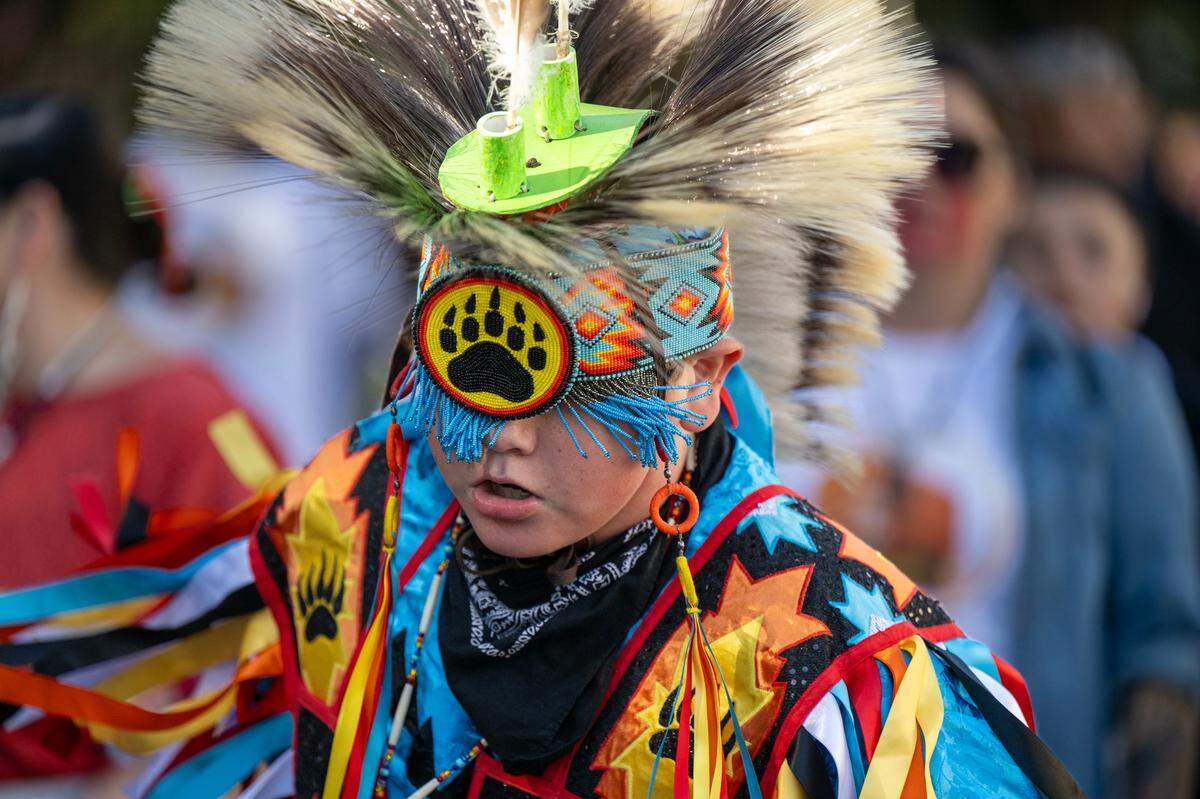
The parade featured cultural performances from tribes from all across the state. From Southern California inter tribal bird singers to a march led by the Yurok tribe, the largest federally recognized tribe in California, Native parade attendees basked in amazement — being able not only to see a celebration just for them, but to have a front row seat to the perseverance of their people.
“This just shows our resilience of who we are as people and how we’re able to, again, resist all the colonial changes that have been happening and continue to happen,” said Alikoi Parra, who is Chumash. “It’s a beautiful thing. Even though we endure so much, our struggles and challenges, we’re still able to come together as a community with different tribal nations and celebrate who we are.”
The floats also highlighted issues impacting Indian Country in California, For example, a float memorializing Angel Baby Espinoza and bringing awareness to the Missing and Murdered Indigenous People crisis, also made its way downtown. Espinoza, a member of Wilton Rancheria, died in 2001 and is one of the more than 150 documented Missing and Murdered Indigenous People cases in California.
Honoring Sacramento-area tribes
An event like this one is rare for Native people in Sacramento. Arana Cueto, who is Miwok, said she felt seen watching the parade. While her people are Indigenous to the Sacramento area, she’s never seen a commemoration like this before.
“I never get to see anything like this. Us and other tribes. We never get this,” Cueto said. “It’s empowering in a sense, because everyone’s coming together and being able to see all these tribes. This is recognition for pretty much anyone from any tribe around California.”
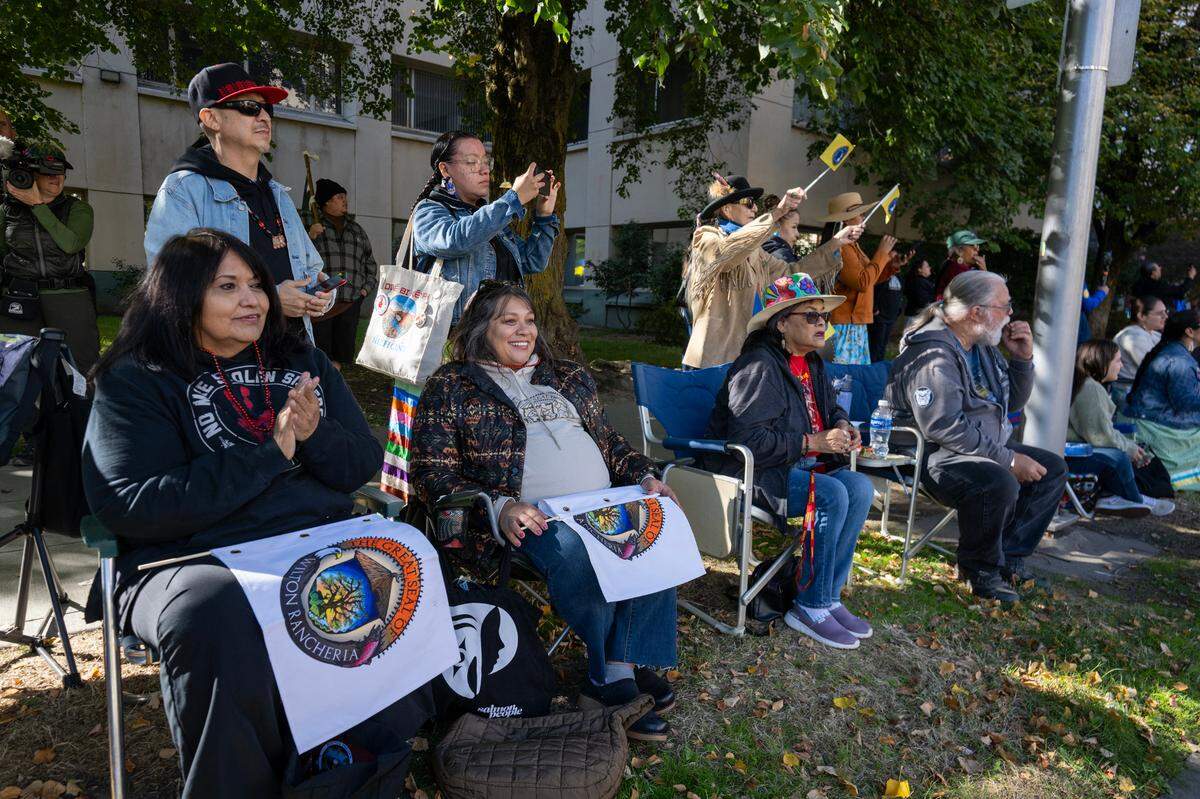
Sacramento is the ancestral homelands of the Nisenan, Miwok and Maidu people. These tribes were represented by Wilton Rancheria and the Band of Shingle Spring of Miwok Indians.
“This is our homeland. We’re from the river here,” said Rose Hollow-Horn Bear, a member of the Shingle Spring Band of Miwok Indians. “It’s exciting to let people know we’re still here.”
The day celebrated the vast diversity of California tribes, and the different practices, regalia and areas they all come from. California currently has 110 federally recognized tribes and the biggest self-identified Native population in the country with more than 700,000 people.
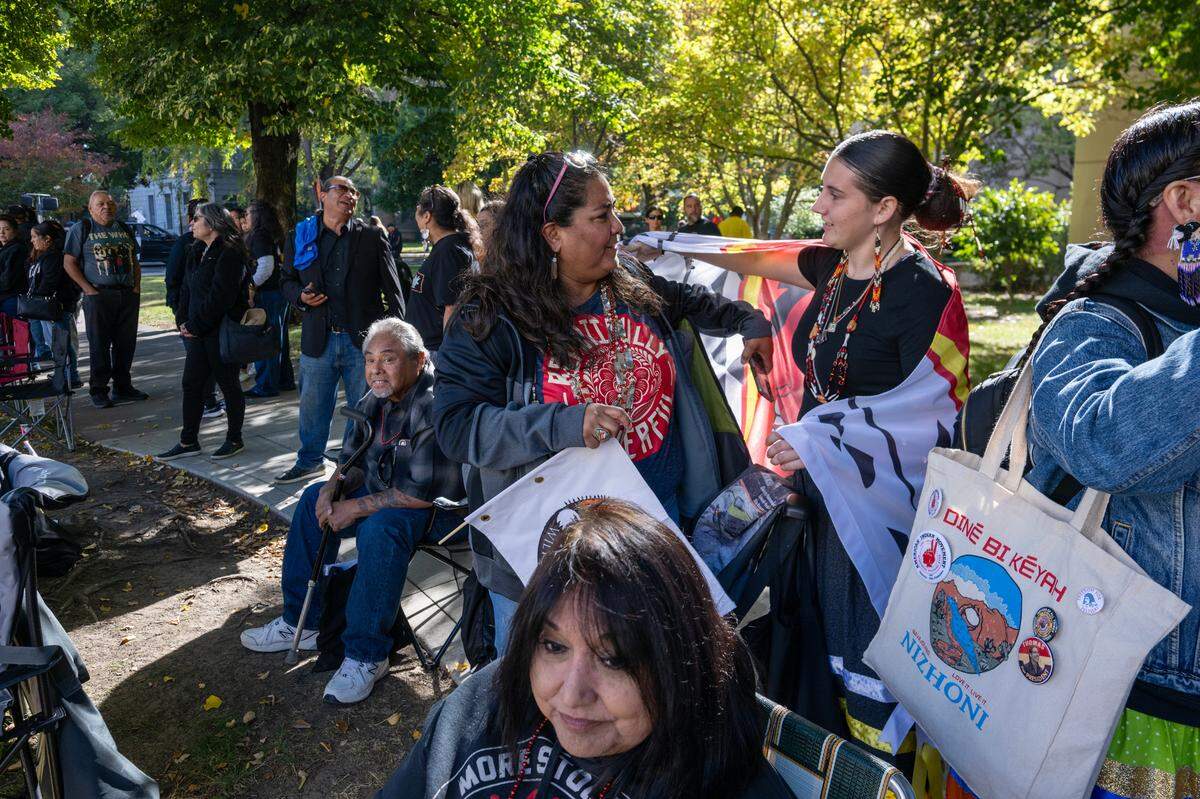
“Today really showcases all the beautiful tribes of the area, not only ours, but central, northern, southern that came all the way up here,” said Regina Cuellar, chairwoman of the Shingle Spring Band of Miwok Indians. “...This is the first of many. And next year is going to be bigger and better.”
“Today is a day for everybody to be educated on the rich cultures of our tribes and see that we’re still here, and — we’re not going anywhere.”
This story was originally published November 9, 2024 at 2:36 PM.
CORRECTION: This article has been updated to correct the spelling of Elena Tarango’s name in a photo caption. The story was also updated to correct that Pusúune was originally a Nisenan ancestral village, not Miwok.