Sacramento substation that caught fire was near ‘end of useful life’ in 2015, documents show
Officials with the Sacramento Municipal Utility District in 2015 said an electrical substation that powers much of downtown was “nearing the end of useful life and requires replacement.” By late 2017, officials declared that the historic site at Sixth and H streets was “too small for current safety regulations.”
On Tuesday, the substation burst into flames, seriously damaging equipment and plunging downtown Sacramento into a multi-day darkness that closed businesses and restaurants a week before Christmas and knocked out power to street lights and offices.
SMUD officials have not yet said what caused the fire. But records reviewed by The Sacramento Bee show that SMUD officials and the city of Sacramento have been well aware that the site posed a risk of catastrophic failure.
Completed in 1895, Substation A was part of the first electrical service that came to a major city on the West Coast, according to site plans, connecting downtown to power generated at the Folsom Powerhouse. The project is a California Registered Historical Landmark. SMUD has owned and operated Substation A since the 1940s and the utility built the outdoor portion in the 1950s.
By 2015, problems with the aging infrastructure began to mount, according to a 2015 report outlining a major series of repairs the utility envisioned for the site.
.JPG "SAC_HA_12152021_SMUDFireFollow8609 (1).JPG")
“The existing substation equipment is nearing the end of useful life and requires replacement, upgrade and additional space to maintain Station A as a reliable power source for downtown Sacramento,” officials wrote in the 260-page project assessment.
Their proposed fix? Install new equipment on a 1.3-acre lot on the north side of the substation, move existing transmission and distribution lines and take parts of the aging facility offline. Plans also called for a new control building to house electrical equipment.
In a statement Thursday afternoon, SMUD said the facility was never found to be a safety hazard. While it was admittedly nearing the end of “useful life,” the utility said that status “is not an indication of the health of the system.”
As time went on, environmental reviews appear to have ticked along, records show.
In its planning documents, SMUD officials said they planned to begin construction in 2017 and complete the final stages in late 2018. Crews would tear out the antiquated equipment “after approximately 5 – 10 years.”
The Sacramento City Council approved the plans in late 2017, records show. The facility’s limited size meant that it could not accommodate additional equipment and comply with safety regulations, SMUD officials said in their statement Thursday afternoon.
“At no time did the analysis show that the current configuration of Station A was unsafe. It was simply not large enough to accommodate the needs of Station G.”
Then in late 2020, in yet another notice about the facility, SMUD said it was planning to decommission Substation A and remove all equipment from inside the historic building and in the outdoor substation yard.
“Following the removal of all Station A equipment, SMUD would construct a new electrical substation (Station H) in place of the outdoor substation along the north side of H Street between 6th Street and 7th Street in downtown Sacramento.”
That decommissioning was anticipated to begin next year, with new construction slated for 2024.
It’s unclear exactly what the status of the project was at the time of Tuesday’s fire.
Lindsay VanLaningham, a SMUD spokesperson, said in a statement Wednesday evening that inspectors assess equipment “at least every two months, and no less than 10 times each year.” That is in addition to other maintenance and testing.
“Station A was last visually inspected in October 2021,” VanLaningham said, “and was scheduled for inspection again this month.”
SMUD officials have not yet provided copies of inspection reports for the facility or explained why the efforts to upgrade the facility have taken more than six years.
Major evacuation at downtown apartments
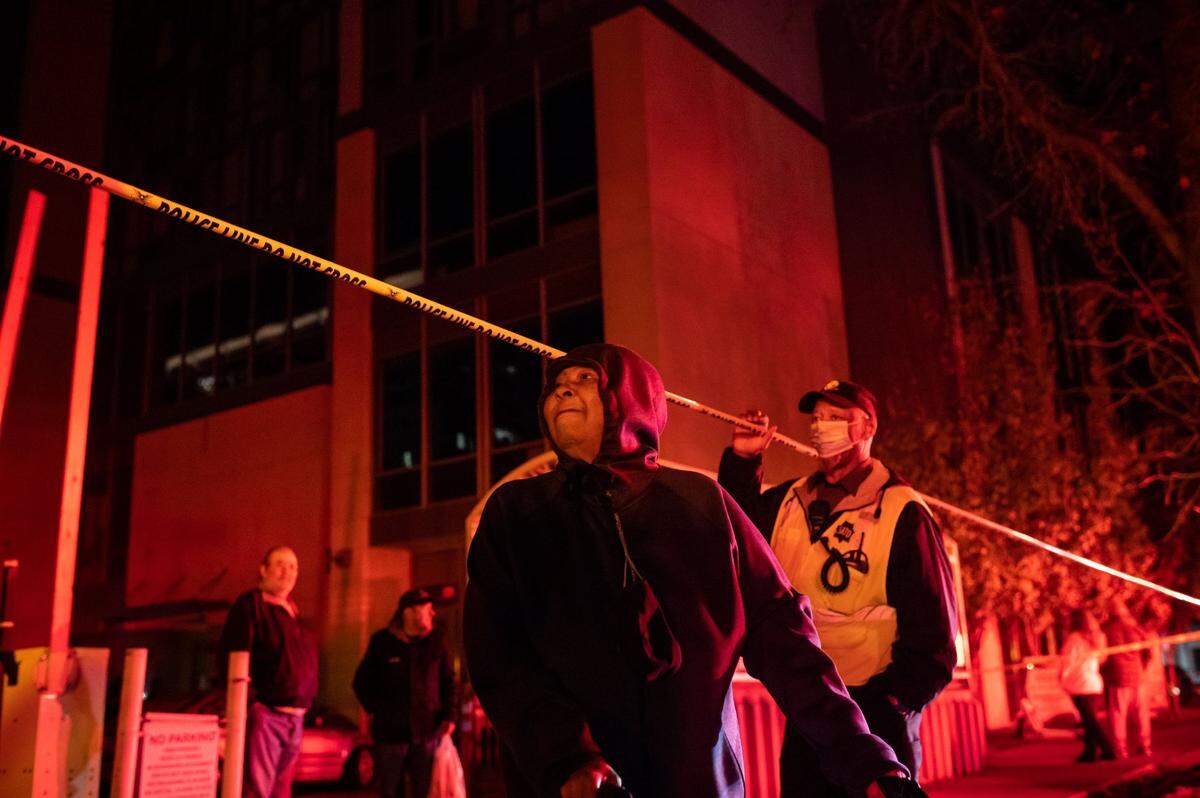
Without electricity, businesses in the city’s core, including in the Downtown Commons and Old Sacramento, were forced to close their doors. By nightfall on Tuesday, as temperatures dipped into the 30s across a pitch-black downtown, the Sacramento Fire Department evacuated the Edgewater Apartments, an 108-unit affordable housing high-rise operated by the Sacramento Housing and Redevelopment Agency.
It was one of the largest evacuations of a building in recent history, said Sacramento Fire Chief Gary Loesch.
Power came back in spurts throughout Wednesday, including at Edgewater. But for hundreds of downtown residents, restaurants and shops, the power stayed off for a second day entirely.
SMUD in updates Wednesday morning said it re-energized one of the networks at 6:35 a.m., bringing power back for about 500 customers, and the second at 9 a.m., restoring power for 250. That left roughly 550 downtown customers still without electricity as of 11 a.m.
“The third network suffered far more extensive damage and crews are working 24/7 on repairs,” the utility wrote. “Due to the magnitude of the damage and the amount of equipment involved as well as the tight quarters and confined workspace, we expect to return all customers to power by Friday morning.”
SMUD officials said those customers don’t appear on SMUD’s online outage map because the downtown area is on a different network.
Businesses shuttered before the holidays
The outage has dealt a big blow to the Old Sacramento Waterfront District, where district director Scott Ford said all but one property — Hoppy’s Railyard Kitchen & Hopgarden — remained closed as of Wednesday, with business owners not knowing when the lights will come back on.
An employee who answered the phone at Hoppy’s confirmed it was the only business in Old Sacramento with power as of Wednesday afternoon, and said it remains open. Ford said the property, located at 1022 Second St., is a more modern rebuild and has a separate power line.
“A vast majority of Old Sac is still without power,” Ford said around 1:30 p.m.
That includes the California State Railroad Museum in Old Sacramento, which remained closed Wednesday, according to its website.
Ford said the Christmas-themed Polar Express train that departs from the museum also had to be canceled Wednesday. That attraction, which opened in late November, is only set to run through Sunday, and its status for the rest of the week remains unknown.
Ford said he has never seen Old Sacramento experience a widespread power outage lasting this long during his time as director.
He said Old Sacramento business owners over the past two years, during the COVID-19 pandemic, have “become accustomed to working together” and “overcoming unfathomable situations.”
But he also noted the poor timing, as one of Sacramento’s popular tourist draws and shopping destinations is stuck in limbo the week before Christmas.
Ford said the Old Sacramento district is in close communications with SMUD, awaiting updates on potential restoration, “hour by hour.”
“We want to relay that out to all our stakeholders so they can make informed business decisions and staffing, and all the holiday-related parties and banquets,” Ford said. “There’s some real impacts in not being able to move forward with this.”
Another popular holiday attraction, the downtown ice rink at Seventh and K streets, said in social media posts that it was closed Tuesday due to the power outage, then closed again Wednesday for “poor ice conditions.”
In an email Wednesday afternoon, property managers at the 555 Capitol Mall office building notified tenants there that SMUD officials expected a three- to five-day power outage. Tenants were asked to consider limiting the number of people in the building until SMUD can restore power to the building.
The building’s property management team, with help from SMUD and several vendors, had obtained two large generators, and an electrician is working to get them connected to the building and running by Wednesday evening, according to the email. But they anticipated possible delays that could lead to the HVAC or other building services being offline for an extended amount of time.
.JPG "SAC_HA_12152021_SMUDFireFollow8656 (1).JPG")
This story was originally published December 15, 2021 at 2:35 PM.