Business partners donated big money to Sacramento politicians as they built cannabis empire
Over the past several years, a group of business partners has quietly amassed the largest network of cannabis storefronts in Sacramento, despite city rules designed to prohibit consolidation of the pot industry here under single ownership.
At the same time they were buying up cannabis storefronts, the investors under the Kolas brand also were courting city and state officials through campaign donations, a Sacramento Bee review has found. The group of investors donated more than $42,000 to Sacramento campaigns, including one ballot initiative, according to an analysis of campaign finance data.
The donations, from the business partners personally and by their businesses, corporations and LLCs, were given from 2010 through 2018, as the Kolas brand gained nine dispensaries in the city, more than any other group.
The city has now launched an audit into how the storefront consolidation occurred under its watch, after a Sacramento Bee investigation showed how city officials allowed those investors, including a man named Garib Karapetyan, to became the de facto pot kings of the city.
One of those storefront investors with Karapetyan included a man named Andrey Kukushkin, a Ukrainian-born U.S. citizen who has been indicted in an intricate plan to funnel foreign campaign donations to U.S. politicians and enter the legal pot business. Kukushkin also is an associate of two men linked closely with President Trump’s attorney, Rudy Giuliani.
The web of business partners entering the legal pot business in the United States points squarely to the enormous revenue that can be made in the industry. Sacramento’s pot storefronts brought in an estimated $142 million last fiscal year in an all-cash business with little oversight.
There is no evidence that Kukushkin directed or donated any campaign donations to local officials. But The Bee’s review of campaign finance records shows that Karapetyan, his business partner, and four other partners — Joe Karapetyan, Gevorg Kadzhikyan, and Gayk and Greg Serobyan — collectively donated:
▪ $14,150 to Assemblyman Kevin McCarty from 2010 through 2017. Of that, $8,150 went to McCarty’s assembly campaigns, and $6,000 went to his campaigns for City Council, where he was a member from 2004 through 2014, though $1,000 was returned in 2012.
▪ $5,000 to Mayor Darrell Steinberg’s 2016 mayoral campaign, on Feb. 9, 2016.
▪ $5,000 to City Councilman Jay Schenirer’s election campaigns in 2012 and 2018. Another $11,000 to Schenirer’s failed 2016 ballot measure that would have imposed a special tax on cannabis cultivation businesses to raise money for youth services. In 2018, $250 to the council campaign was returned by the bank due to a transaction issue, Schenirer said.
▪ $2,000 to Sheriff Scott Jones’ 2018 campaign.
▪ $500 to State Treasurer Fiona Ma’s 2018 election campaign in 2017.
▪ $1,000 to Patrick Kennedy’s campaign for City Council in 2010. He lost, and is now a Sacramento County Supervisor.
▪ $1,500 to former City Councilman and Sacramento County Sheriff Robbie Waters’ council campaign in 2010.
▪ $1,700 to “No on Measure B, Major Funding by Plumbers & Pipefitters Local 447” in 2010. That campaign raised money to defeat a ballot measure that would have rolled back city utility rates, which failed in 2010.
▪ $600 to Rosalyn Van Buren, who unsuccessfully ran for City Council in 2014.
Brad Hirsch, an attorney for Karapetyan and his four business partners, did not return an email message from The Bee about the donations. Since Kukushkin’s arrest and the revelation of his links to a Sacramento dispensary, officials in Sacramento have moved to distance themselves from the campaign donations. Mayor Steinberg called for an internal audit into how the city manages its pot storefronts.
The Sacramento City Council Tuesday voted to enact a 120-day moratorium prohibiting any changes to dispensary ownership and to create a code section limiting the number of dispensaries a single person can own. Steinberg is also proposing the city hire a compliance officer to oversee the cannabis department and allow five more dispensaries to open, all owned by residents most affected by the strict penalties for marijuana possession in the past.
There are currently no African American-owned dispensaries, according to Malaki Amen of the California Urban Partnership, despite a city program that started two years ago to improve equity in the cannabis business.
The city code strictly prohibits the city’s 30 dispensary permits from being sold or transferred. City staff has checked since 2014 to make sure at least one name stays on the paperwork from the previous year, but it’s not effective to prevent ownership changes over time, the Bee found. Critics say it’s a loophole that allowed a small number of investors to take over the Sacramento market.
Donations to charities
For his part, McCarty has vowed to reject any more donations from the business partners.
“After reading these initial reports … that highlighted a contribution to my Assembly campaign – I made a contribution to a local charity and directed my fundraising team to no longer accept money from these entities. In addition, I will be looking into greater accountability and oversight from the state level,” he said in a statement via Andrew Acosta, a campaign spokesman.
McCarty is donating $1,000 to the Tahoe Elementary PTA, Acosta said.
Steinberg is donating $5,000, the equivalent amount of the donations received, to the Boys and Girls Club of Greater Sacramento, his spokeswoman Mary Lynne Vellinga said.
Schenirer, who is not seeking reelection, emptied out his account last month, and gave the roughly remaining $10,000 to charities including NorCal AIDS Cycle, Street Soccer USA, Wind Youth Services, and a scholarship fund, he said. The ballot measure account was closed long ago, he said.
Steinberg, McCarty, Schenirer, Waters and Kennedy said they did not know the men, to their knowledge. Sacramento County Sheriff’s Department spokeswoman Tess Deterding did not respond to an email seeking comment on behalf of Jones. A spokesman for Ma said Wednesday that Ma is donating an equivalent amount to the Bataan Legacy Historical Society.
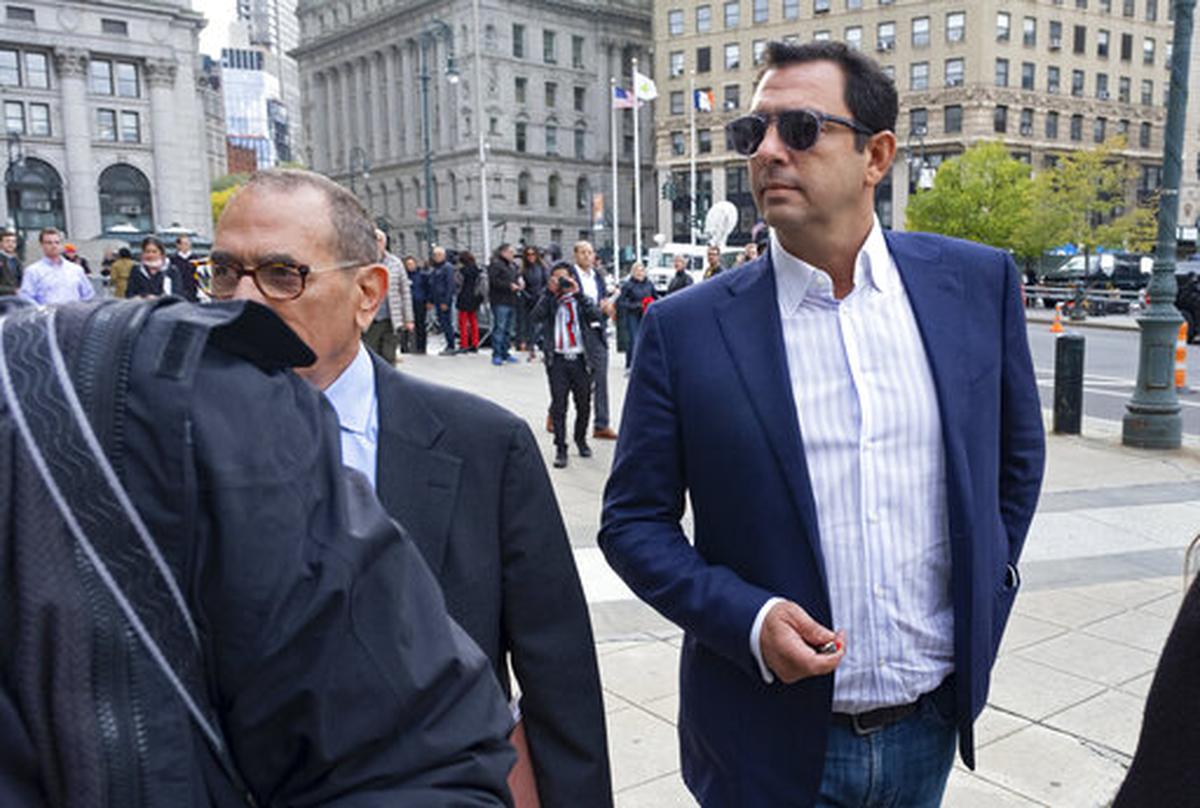
Waters was a member of an advisory group for Greenstone Biomass, a dispensary, according to a 2014 document filed with the city. He also sent a letter of support asking the Planning Commission to approve a conditional use permit for the dispensary in 2014.
Waters and McCarty were members of the council in 2010 when it adopted its code for cannabis businesses.
In the federal indictment issued by a grand jury in New York last month, prosecutors allege that Kukushkin, the Sacramento cannabis investor, and three partners — Lev Parnas, Igor Fruman and businessman David Correia — planned to form a marijuana business that would be funded by a foreigner (identified only as “Foreign National-1”), McClatchy has reported.
The team planned to get retail cannabis licenses approved in several states by funneling the foreign money to campaigns, the indictment alleges. It’s illegal for foreigners to donate to U.S. election campaigns. Kukushkin is quoted in the indictment as saying the scheme had to be kept secret because of the unnamed financier’s “Russian roots and current political paranoia about it.”
The men developed a plan to give up to $2 million of Foreign National-1’s money to state and federal campaigns to get the marijuana licenses approved though a “multi-state license strategy.” They hid the source of the money so that Foreign National-1 wouldn’t be linked to the funds, the indictment alleges.
McClatchy has reported that Fruman and Parnas, who are both U.S. citizens, made campaign donations to four Republican congressman from California: House Minority Leader Kevin McCarthy and three who lost their re-election bids last November: Jeff Denham, Steve Knight and David Valadao.
Fruman gave Valadao, who is challenging the Democrat who unseated him, a donation of $2,444. Valadao’s spokesman said the candidate will donate the funds to charity. Parnas gave $2,700 to McCarthy, who has promised to donate the money to charity.
This story was originally published November 13, 2019 at 5:30 AM.