
Local response team steps up when pets are displaced by fires and other emergencies
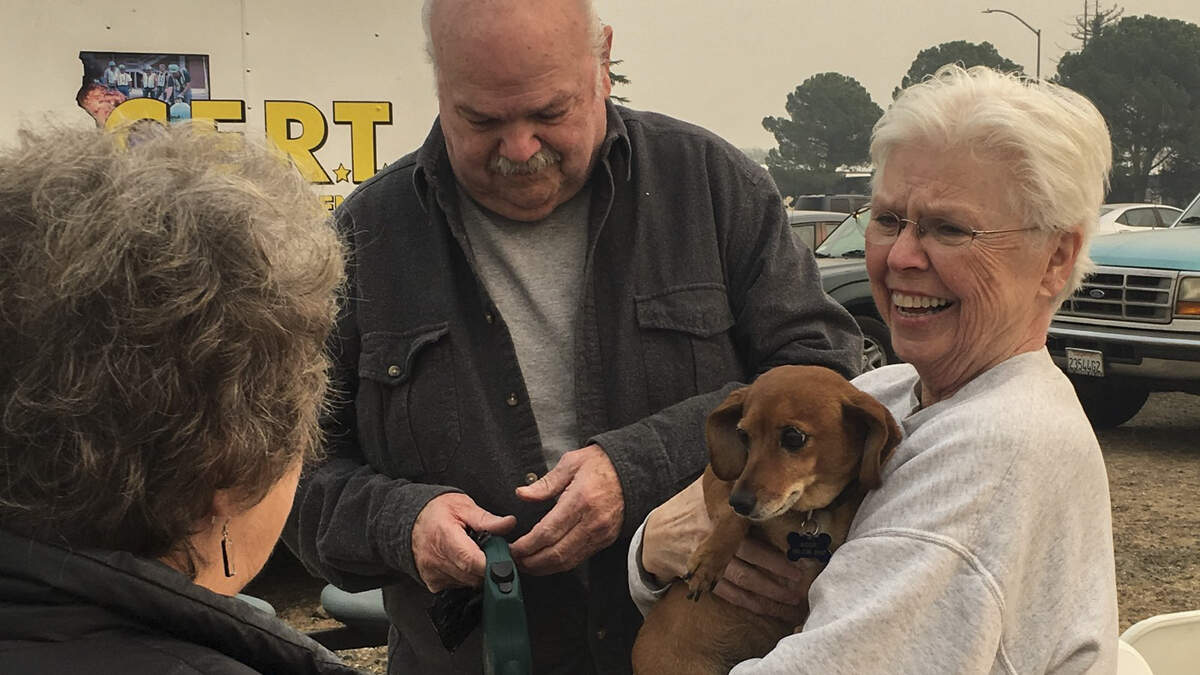
Humans aren’t the only ones who suffer during times of crisis or disaster.
The lives and homes of our animal companions are just as vulnerable to floods fires and other emergencies, according to Robert Ross, chief of operations for Sacramento Community Emergency Response Team (CERT), part of a nationwide volunteer response program guided by FEMA and run by regional fire departments.
Locally, the group set ups and runs animal shelter facilities during emergencies like 2018’s catastrophic Camp Fire. During that fire, CERT managed a building near the Chico airport that housed around 2,000 animals.
“Our job is during a large event, if we encounter animals, we will know how to care for them and how to shelter them temporarily,” said Ross.
This year the group is asking Book of Dreams readers for $500 to supply the organization with stainless steel bowls for serving food and water to animals in future crises.
Ross said that disasters like Hurricane Katrina in 2005 exposed the dangers of not having rescue and evacuation planning for animals, and that since then states and counties have made efforts through FEMA-guided organizations like CERT to address animal care and rescue during times of disaster.
“It’s vital simply because if you look back at Katrina, people did not leave their homes because they couldn’t take their animals with them,” he said. “There was no place to take them, and they were not willing to leave them behind. They’re family members.”
The shelters set up by CERT’s animal response team are designed to deal with surges of animals in need that typically have owners in areas where local shelters do not have the resources to accommodate them. Animals can be sheltered anywhere from airline hangars, as was the case with the Camp Fire, to tents depending on the nature of the disaster and what facilities are available.
“(The animals) are brought in by people that were evacuated and have no place to go,” said Kathleen Winkelman, CERT’s animal response ream coordinator. “We house them, feed them and make sure they have veterinary care.”
Winkelman said CERT can shelter animals for up to two weeks before having to reevaluate need and plan accordingly.
Sacramento CERT’s animal response team is trained to shelter a variety of small animals. During the Camp Fire, the group sheltered large and small dogs, cats, even an iguana, and small farm animals like chickens, rabbits and ducks. Horses, cattle and sheep usually go to a large animal shelter, according to Winkelman.
Winkelman said some animals are found and rescued or brought in by the CHP during disasters, but often people bring their own animals in out of necessity.
“Not only have people lost their homes or been evacuated, or don’t know if they have a home left, they have no place to go with their animals so they bring them to a shelter and we watch them, and care for them, and love them, and hug them and all that stuff,” said Winkelman.
Why is the group seeking stainless steel feeding bowls?
“Stainless steel bowls are easily cleaned and disinfected so that no disease is possible,” Winkelman said. “Receiving these bowls would be make us ready to help the next time we are needed; bowls are such an important part of caring for the animals affected by disasters.”
Feeding bowls are especially needed because many were left behind during the Camp Fire to serve animals still being housed by Butte County Animal Control following CERT’s withdrawal from the area.
The request
Needed: Funds to purchase stainless steel animal feeding bowls in sizes small, medium and large.
Cost: $500
This story was originally published December 22, 2019 at 2:00 AM.