
Sacramento community groups aim to dispel immigrants’ fears of the census
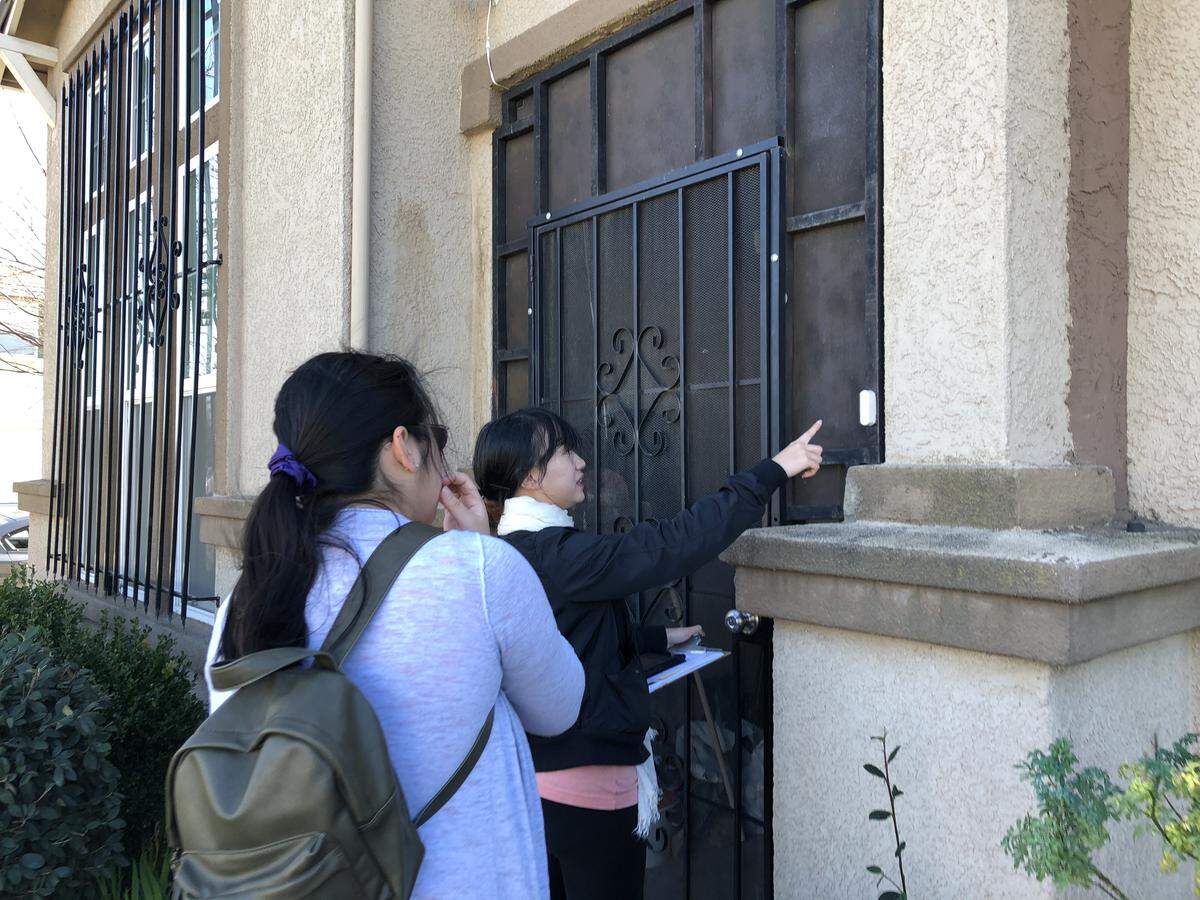
Equipped with iPads and flyers, canvassers Sandy Yang and Judy Chang drove into the heart of south Sacramento on a recent Sunday morning. They checked their maps, fixed their hair and started ringing doorbells to talk about the census.
Their T-shirts read: “No hate, no fear; immigrants are welcome here.”
They represented the community organization Hmong Innovating Politics, which is one of a number of groups reaching out to traditionally undercounted populations ahead of this year’s census. The group kick-started a canvass of the Asian American and Pacific Islander community, which runs until March, in Sacramento on Feb. 8.
Yang and Chang are among the dozen bilingual college students hired to make phone calls and knock on doors to spread awareness about the upcoming census and primary election, said Cha Vang, the organization’s executive director and co-chair of the Asian American and Pacific Islanders Complete Count Subcommittee of Sacramento County.
Vang said they wanted to start canvassing work early and have conversations at people’s doors, instead of expecting them to come to community organizers.
“We want to go door-to-door, talking to residents and informing them a little early so that we can get them all the information necessary, so that when census drops they are ready to fill it out and send it back,” Vang said. The Census Bureau will start mailing forms in mid-March.
Yang and Chang initiated their conversations by asking residents if they are going to complete the census in April, then logging their responses into the iPads. For residents unaware of the census, they explained the count’s importance. One resident who had not heard about the census said she would be happy to fill in the questionnaire for her household. The canvassers left flyers for those who were not at home and marked on their iPads to return later.
The federal government is required to count each individual living in the U.S. every 10 years, regardless of citizenship. Census data is vital to determine the funding Sacramento County receives for schools, hospitals, transit and more. It also helps determine the number of seats California receives in the U.S. House of Representatives.
Low-income immigrants who do not speak English are particularly vulnerable and risk being undercounted. Around 31.7% of Sacramento County residents speak an Asian or Pacific Island language in homes where English is not spoken. According to the Sacramento Region Community Foundation, Sacramento County is the eighth-hardest-to-count county in California.
Trusted messengers
Another group working to make sure Asian Americans and Pacific Islanders are counted is the Jakara Movement in the Sacramento and Yuba City regions. Harjit Singh, a community organizer for the group, has been coordinating tabling at events or places of worship in Sacramento as well as canvassing and training in Yuba City. He also joined regular segments on local ethnic radio stations to reach the Punjabi community about the census. Being present is most important in spreading the word about the census, Singh said.
For Filipinos, having the trust of community members is vital in relaying the census’ importance, said Chris Mateo, board member of the Philippine National Day Association in Sacramento. Due to experiences with government corruption in the Philippines, many older Filipino immigrants distrust politics and are more reluctant to give their information to the government, Mateo said.
Those who are undocumented also fear that census data could be used to deport them, which could deter them from returning the questionnaires, he said. As of 2015, immigrants from India, the Philippines and China are the three Asian countries with the largest unauthorized populations after Mexico, El Salvador, Guatemala and Honduras.
Nearly 70% of adults think that the citizenship questions will be included in the census questionnaire, even though the Supreme Court barred it, a 2019 study by the Urban Institute shows.
Trusted messengers, such as the youth in the community, have more authentic relationships with the community and are therefore crucial to dissuade hesitancy and debunk myths about the census, as opposed to strangers knocking on doors, Mateo said.
The Filipino community is organizing its first census outreach kickoff on Friday at Jose Rizal Community Center, where there will be performances, dinner and speakers talking about census.
“We want to make sure we can encourage a celebration, not a political movement, to count ourselves and make us recognized,” said Mateo, who anticipates an audience of 200 from churches, nonprofits, the health industry and schools. Students and faculty members from UC Davis’ Bulosan Center for Filipino Studies and Sacramento State University have also expressed interest in participating in ground work like phone-calling.
The workers will then be able to use their manpower to spread the word out to their communities. “We will divide and conquer,” Mateo said. “The strategy is to utilize what we currently have and to get our presence there.”
The youth, many of them fluent in English, are a good channel to relay important information to their family members regarding the census, said ‘Ofa Mann, president of The To’utupu’o e ‘Otu Felenite Association, which translates to Friendly Islands Youth. The group will begin its census training program for Asian Pacific Islander youths in the region in March as a part of their ambassador program.
Mona Foster, founder of Hui o’ Hawaii of Sacramento Inc., is also planning to reach out to church ministers and pastors of the native Hawaiian and Pacific Islander community to bring census information to their congregations.
“They are high chiefs with authority, and people listen to them,” Foster said.
Steve Lee, chapter president of the Korean-American Scientists and Engineers Association in Sacramento, is organizing a talk at 5 p.m. Saturday at the Korean School of Sacramento in Rosemont.
David Banuelos Jr. from the Census Bureau will be talking with interpretation available for Korean speakers. The event is a refresher following a talk in October last year, to reinforce the importance of completing the census form.
Lee hopes to reach more community members as the Korean Independence Movement Day is a day later, on March 1, so people can learn about the census as well as celebrate at the event. He anticipates attendance from business organizations and Korean leaders from 30 to 40 churches in the Sacramento region, some with congregations as large as 400 to 500 families. Dinner will be provided.
“People who understand (about the census) will be glad to fill it out,” Lee said. “You are going to miss out $2,000 per person per year in 10 years. If you put that into perspective, people will be positive in filling it out.”
Reaching those who do not respond
The Census Bureau is recruiting until spring, said Marna Davis, media specialist for the bureau. While the county exceeded its recruitment goals in early February, with over 10,000 applicants, recruitment remains open in case some more workers are needed.
Among other positions, the Bureau aims to hire 200 census field supervisors and 3,200 census takers in Sacramento County to reach out to households that did not respond to the census. Follow-up mailings will be sent to those residences before a census taker visits.
Limited English speakers can point and indicate the language that they speak on a card that census takers carry. If no one in the household is able to help translate, the census taker will provide phone numbers and online questionnaires available in 12 non-English languages, or an online guide available in 59 languages, Davis said.
Resources for language support
The Asian American Advancing Justice provides toolkits and fact sheets of up to 17 Asian languages, as well as language guides and fact sheets in Chamorro, Chuukese, Hawaiian, Marshallese and Tongan.
The Sacramento Region Community Foundation provides printed and online FAQs and one-pagers in 13 languages about the census.
Language guides of up to 60 languages are available on the Census Bureau’s website.
Important Dates for Census 2020
- March 12-20: Households will begin receiving official Census Bureau mail with detailed information on how to respond to the 2020 census online, by phone, or by mail.
- March 30-April 1: The Census Bureau will count homeless people over three days in shelters, at soup kitchens and mobile food vans, along city streets, and at outdoor locations such as tent encampments.
- April 1: Census Day is observed nationwide. By this date, every home will receive an invitation to participate in the 2020 census.
- April: Census takers will begin visiting college students who live on campus, people living in senior centers, and others who live among large groups of people. Census takers also begin conducting quality check interviews to help ensure an accurate count.
- May-July: Census takers will begin visiting homes that haven’t responded to the 2020 census to help make sure everyone is counted.
- December: The Census Bureau will deliver apportionment counts to the president and Congress as required by law.
Source: United States Census 2020
This story was originally published February 23, 2020 at 4:00 AM.