Sacramento area fails Newsom’s early reopening test: Not enough coronavirus ‘contact tracers’
Sacramento-area counties hoping to reopen restaurants, offices and shopping malls in the next week ran into what amounted to a sorry, not yet from the governor on Thursday, angering some local officials, leaving others preaching patience and prompting one Placer County official to threaten to take the state to court.
Gov. Gavin Newsom has said he’s willing to let some counties reopen certain businesses sooner than the state as a whole. But, based on much-anticipated standards Newsom revealed during a mid-day press conference, none of the six Sacramento-region counties appears to qualify yet.
Although most have low coronavirus infection rates and few hospitalizations compared to the state average, none appears to have enough staffers trained in the critical role of coronavirus “contact tracing” to qualify for early opening.
Newsom did reconfirm his intention to allow retail businesses and product supply chain companies, such as factories and warehouses, to reopen throughout the state on Friday as part of a gradual expansion of the economy as new coronavirus cases and deaths ease off.
The stores would be allowed to do curbside sales only. Warehouses and factories must observe social distancing.
Rural counties with low case numbers, however, have been pushing the governor to let them reopen more of their economies now, and some are demanding it. Newsom has largely demurred, but agreed to allow qualifying counties to reopen some businesses, such as restaurants and some offices more quickly than harder-hit counties in urban areas, if those counties can attest that they meet a detailed set of what he called scientific, data-based criteria.
The criteria will be formalized by the state on Tuesday, Newsom said. But state Health Director Dr. Mark Ghaly offered a preview on Thursday. The Sacramento Bee also reviewed an attestation form the state sent to counties to fill out.
Those reviews suggest local counties such as El Dorado, Yuba and Sutter meet most of the governor’s standards, but could still fall short on “contact tracing,” which is emerging as a critical weak link in California’s still-incipient defense system against a resurgence of the virus spread.
The state is far short of the number of contact tracers, or as Newsom calls them, the “army of disease detectives” that will be needed to assure that future potential virus spreads can be snuffed out quickly as more businesses reopen and more people come in near contact with each other, touching the same surfaces and at times failing to stay six feet apart.
Newsom’s tough reopening plan
Under Newsom’s plan, which he calls Phase 2 of a four-phase effort to return to normalcy, the state will need at least 10,000 contact tracers, Newsom said. On Thursday, he reported the state only has 3,000.
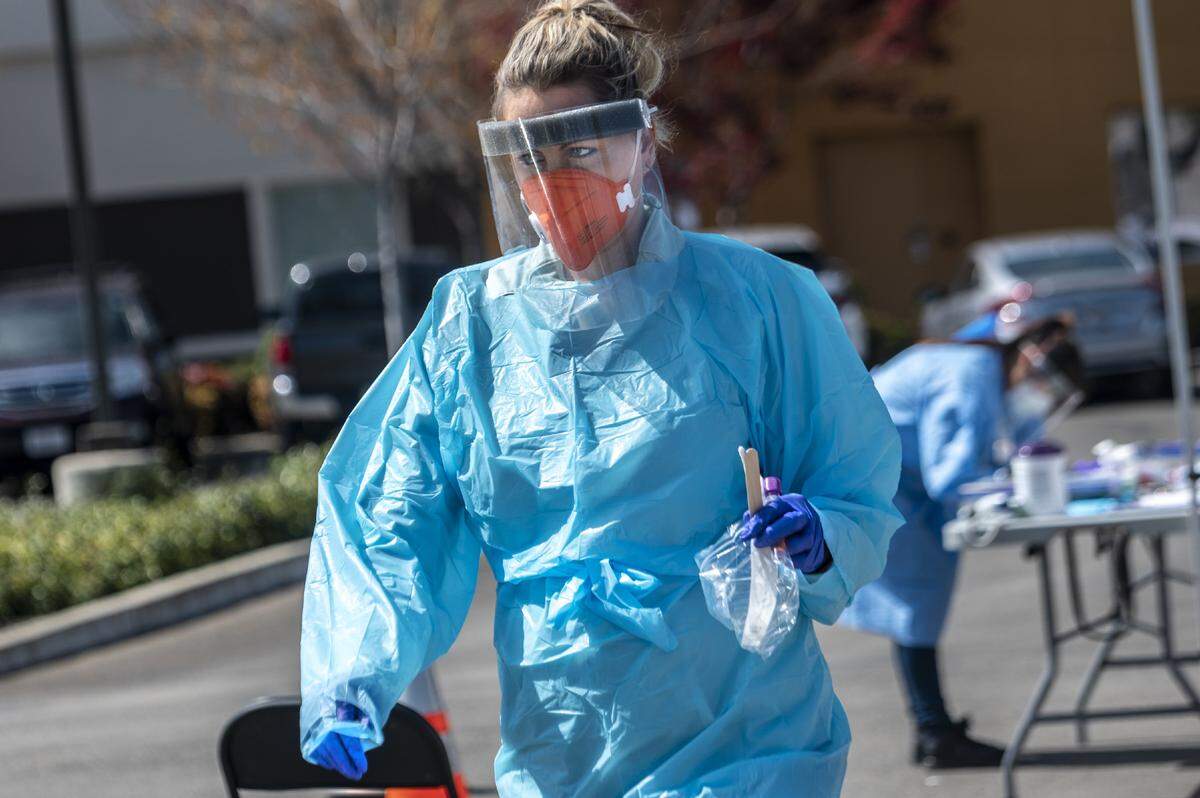
As the economy reopens, contact tracers will have the critical role of quickly tracking down anyone who had contact with a newly infected person and get those people tested and potentially quarantined.
That work, health officials say, combined with more robust testing, will be the critical line of defense until a vaccine is developed and administered.
Ghaly on Thursday said counties will need to have 15 contact tracers per 100,000 residents. A Bee review suggests neither Sacramento, Placer, Yolo, El Dorado, Yuba or Sutter counties qualifies.
Other criteria for early reopenings include:
▪ having no more than one new case of coronavirus per 10,000 people in the last two weeks.
▪ having no COVID-19-related deaths in the last two weeks.
▪ a minimum daily testing capacity of 1.5 per 1,000 residents.
▪ enough personal protective equipment for essential workers.
▪ the ability to house at least 15 percent of homeless residents
▪ county- or regional-level hospital capacity for a patient-surge of 35 percent.
▪ a robust plan to protect their hospital workforce.
▪ more than two weeks’ supply of personal protective equipment on-hand for skilled nursing facilities.
▪ metrics in place that can serve as triggers for slowing the pace of reopening or tightening modifications.
The standards suggest Newsom is holding fast to his assertion that reopening the economy should be done only if the state and counties can assure themselves that they are inoculated against another deadly surge in cases.
“I think the message today was, ‘Time out, go a little slower,’” said Sacramento Mayor Darrell Steinberg. “None of the larger counties, including Sacramento, have met the standard of less than one death in 14 days.
“So it looks like we’re only going to move forward if we continue to show real results. I know the weather is nice, and we are all tired of this, but the path forward is to continue to practice physical distancing and all the other precautions we’ve been taking.”
The new standards stirred anger though. Placer County officials this week sent the governor a demand that he allow them to set their own reopening course.
“If we don’t see any action, we may be calling a special meeting to seek a legal injunction,” Placer County Board supervisor Kirk Uhler said on Thursday. Uhler said he believes the governor has overstepped his legal authority in effectively shutting down much of the economy and requiring people to stay mainly at home.
Newsom and epidemiologists nationally and internationally, however, say the highly-contagious and sometimes lethal coronavirus is only being tamped down because people are staying away from each other while county health officials prepare for contact tracing.
Here is a Sacramento Bee review of where each of the capital region’s counties stand:
Sacramento County
County health officials had been hoping Sacramento County could qualify to open restaurants for on-site dining as early as next week, but the county fails to meet two key standards.
The county had only six contact tracers when the virus hit, and has increased that workforce to 30. But it falls far short of the roughly 230 tracers the governor’s edict appears to require.
Sacramento also falls short of the requirement that it have no deaths in the last 14 days. That requirement is harder for large counties like Sacramento with 1.6 million residents, compared to smaller counties, some of which have fewer than 100,000 residents.
County health officials indicated they are hoping the state will help provide more contact tracers.
“Sacramento County meets the Stage 2 readiness criteria released from the state in all instances with the exception of zero COVID-19 deaths within the past 14 days and the number of contact tracing staff,” county health chief Dr. Peter Beilenson wrote in an email. “We expect to have the appropriate amount of contact tracing staff within the next two weeks.
“In the meantime, we encourage everyone to continue following the safe social distancing and other guidelines provided in the Public Health Order. Sacramento County’s low infection and death rate numbers per capita are among the best in the United States for large jurisdictions and illustrate the admirable effort of County residents to slow the spread of infection.”
Placer County COVID-19 response
Increasingly alarmed by the hit to the local economy, city and county officials in Placer County have urged Newsom for weeks to give locals more agency over how to reopen businesses. “I hear stories every day of family businesses that will never come back,” said Uhler, the county board chair.
Placer County will self-certify a readiness plan “if qualified based on current data,” according to county spokeswoman Katie Combs-Prichard.
But the county fails to meet several factors.
The county recently opened two new state testing sites, which has more than doubled its testing capacity. But the highest number of results in one day the county has received in the last two weeks is 199. Newsom’s guidelines require the county conduct nearly 600 daily tests.
In addition, Placer County has only six full-time contact tracers on staff, though the county plans to “ramp up quickly” with additional state and county workers, Combs-Prichard said in an email. The county would need at least 61 disease detectives under Newsom’s criteria, but “in the later stages of reopening, Placer County could need around 100 contact tracers,” Combs-Prichard said.
Uhler criticized Newsom’s criteria, however, calling it “completely arbitrary, completely excessive.” Though the county health department plans to self-certify, Uhler said he’s “not interested in playing Newsom’s little games anymore.”
“We have a grand total of ten people in the hospital. We’re not beyond our control, we’re completely within our control,” Uhler said.
Lower infection and hospitalization rates in Placer County prompted the board of supervisors to send a letter to the governor this week demanding he end the state of emergency declaration, which Uhler said has allowed Newsom to overstep his authority.
Though the county may provide safety guidelines or advice for industries and businesses looking to reopen, Uhler said that “we are at the point where we have to rely on the common sense of our citizens.”
El Dorado County coronavirus plan
El Dorado County has been making a strong push in recent days to position itself to open early. The county submitted an attestation to the governor on Friday, supported by the Board of Supervisors, informing the state that it intends to open restaurants for on-site dining, as well as more businesses as part of the governor’s early reopening plan for counties that are not as hard-hit by the virus.
The county has not yet had a COVID-19 related death. And County health officer Nancy Williams said the two county hospitals have not had more than two COVID-19 patients at a time in recent weeks. Both Barton Memorial and Marshall Medical Center attest that they have enough “personal protective equipment” available to handle a surge of new patients.
The county opened two test sites this week at Ponderosa High School in Shingle Springs and Lake Tahoe Community College in South Lake Tahoe.
Williams has written that she believes “my county has well surpassed the minimum readiness standards and is in an excellent position to maintain them for the long run.”
The county appears to be short of the 29 contact tracers it would need under the governor’s standards. It has only three full-time contact tracers and one half-time. But in its attestation letter on Friday, the county noted that it has trained nurses and is in the process of training other staff to do contact tracing, giving the county a COVID-19 investigation team of more than 30.
“We’ll be ready to go at the soonest possible moment we’re allowed to,” county spokeswoman Carla Hass said.
Yolo County
The hardest hit rural county in the region, Yolo County has been aggressively tackling COVID-19 outbreaks at nursing homes and assisted living facilities, particularly a Woodland senior care complex where at least 15 have died from the virus.
Those recent deaths would disqualify Yolo County from reopening early. But county board chair Gary Sandy said he would like to see Newsom’s criteria be more flexible for counties that have “played ball with the governor and observed the rules.”
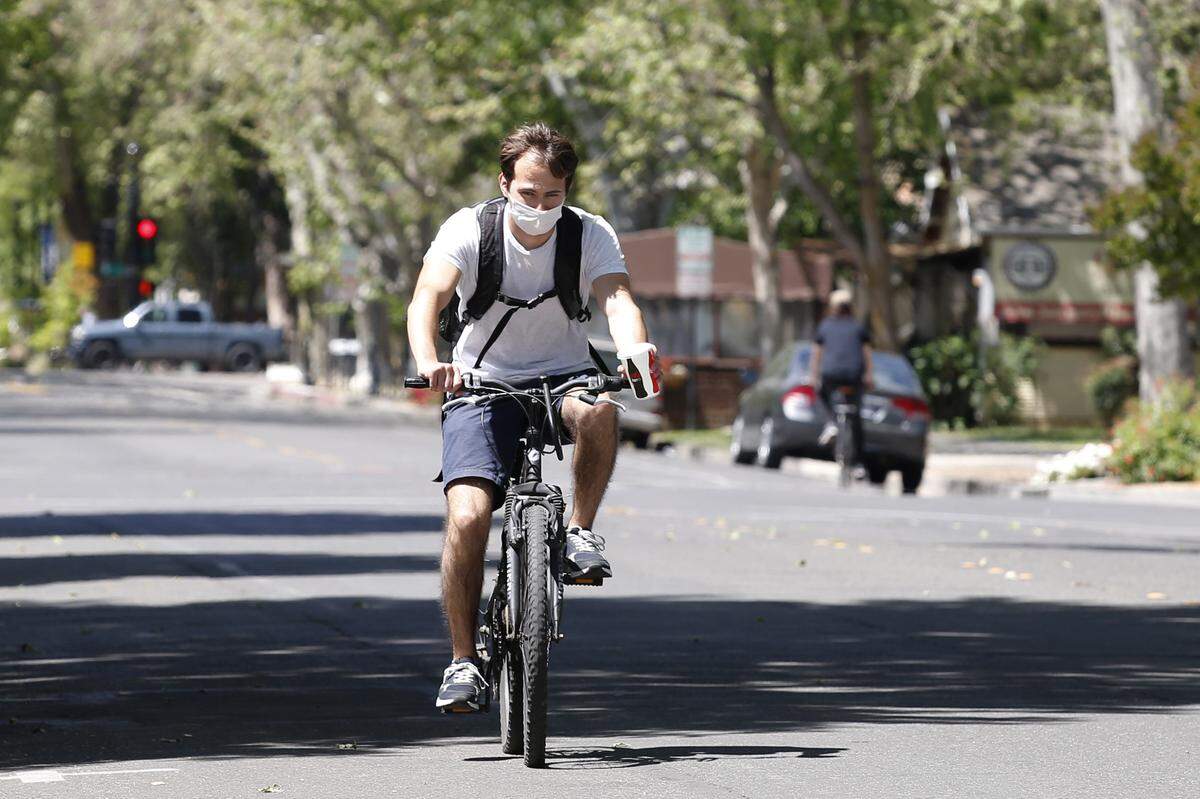
Yolo County was one of the first counties in the state to require residents wear masks or face coverings in public or while working an essential job.
Sandy said the “amazing specificity” of Newsom’s criteria doesn’t allow county officials to “draw up on their own wisdom” and create nuanced safety and health rules for local groups and businesses.
Newsom should allow counties to exclude deaths at skilled nursing facilities from the 14-day period, since “by virtue of having that facility in our community, that criteria affects us more adversely than a community or county without health care facilities like some other northern counties,” Sandy said.
“Every time we wait until some new check point is reached means the spread of human misery around joblessness and unemployment and lack of business continues,” Sandy said.
Yolo County is working on a readiness plan to self-certify, according to county spokeswoman Jenny Tan. But in addition to death rates, other factors, like limited contact tracers on staff, may delay efforts.
Yolo County currently has 19 contact tracers on staff, though they’re adding staff to the team later in May, Tan said in an email. The county would need at least 34 to self-certify.
Sutter-Yuba
These two Northern California’s counties came under fire from the governor this week after they allowed for reopening of restaurants, gyms, hair and nail salons and their regional shopping mall head of the governor’s timeline.
County leaders point out that their largely rural areas have had a minimum number of cases and haven’t had any deaths for nearly a month. They are adamant about restarting their economies and not being hamstrung by a state government they claim is focused more on Los Angeles and the Bay Area.
Newsom has publicly admonished the counties, saying their reopenings ahead of his OK are a “big mistake.” The state sent regulators to the county this week to tell some businesses they must close or face potential misdemeanor charges.
Although the two counties appear to meet most of Newsom’s standards, it is unlikely they have enough contact tracers at the moment. That could be rectified if Newsom lends state tracers to the counties.
County officials on Thursday said they have opened new testing sites and plan to submit “attestation” paperwork.
The county said in an email to The Bee that it has been conducting contact tracing and has “increased the number of staff who will be conducting the contact tracing, and began training weeks ago.” A Yuba spokeswoman did not respond to a request by The Bee for the number of tracers currently working.
A Bee analysis suggests the Sutter County will need 16 contact tracers and Yuba will need 12.
This story was originally published May 8, 2020 at 5:00 AM.