Sacramento quietly opened shelters in these 3 neighborhoods to protect homeless from COVID-19
Sacramento County has converted three motels into temporary shelters to protect hundreds of homeless people from the coronavirus pandemic, avoiding the typical process of seeking public input and City Council approvals when shelters are established.
The motels are located in Rancho Cordova, near the intersection of Folsom Boulevard and Hazel Avenue; on Jibboom Street, next to the entrance to Discovery Park and Tiscornia Beach north of downtown Sacramento; and in the Woodlake neighborhood of north Sacramento.
County officials had not previously released the locations of the motels to the public, saying they were trying to prevent homeless from lining up outside. The Sacramento Bee learned the locations in contracts it obtained through a California Public Records Act request.
As of Tuesday night, 468 homeless people were staying in the rooms, part of Gov. Gavin Newsom’s Project Roomkey initiative, Sacramento County spokeswoman Janna Haynes said. Newsom said some of the leases signed for motels across the state contain purchase options so they can be turned into longer-term housing for the homeless.
“We’re not just thinking short term,” Newsom said at the time.
None of the leases for the three Sacramento County motels contain purchase agreements. But local officials are coming up with a plan to prevent those staying in motels from going back to living on the streets when the pandemic passes.
Sacramento Mayor Darrell Steinberg said officials will convert motels in the area into housing for homeless served by Project Roomkey, but not necessarily the three motels currently being used.
“The bottom line is we have to rehouse all the people we’re bringing in,” Steinberg said in a statement. “We are working with an absolute commitment to rehouse everybody, and motel conversion is going to be a part of that whether or not it is these particular motels.”
Such a conversion could look similar to the projects the Sacramento Housing and Redevelopment Agency has done in the past, such as a 150-unit project at Seventh and H streets downtown. The agency in a City Council meeting earlier this month also floated the idea of using manufactured homes, which are typically less costly than motel conversions.
County and city elected officials are expected to discuss the topic again in June, Haynes said. They might be under a tight timeline. The lease for one of the hotels, in Woodlake, is set to expire at the end of June if it is not extended, with the other two following in early July, according to the contracts.
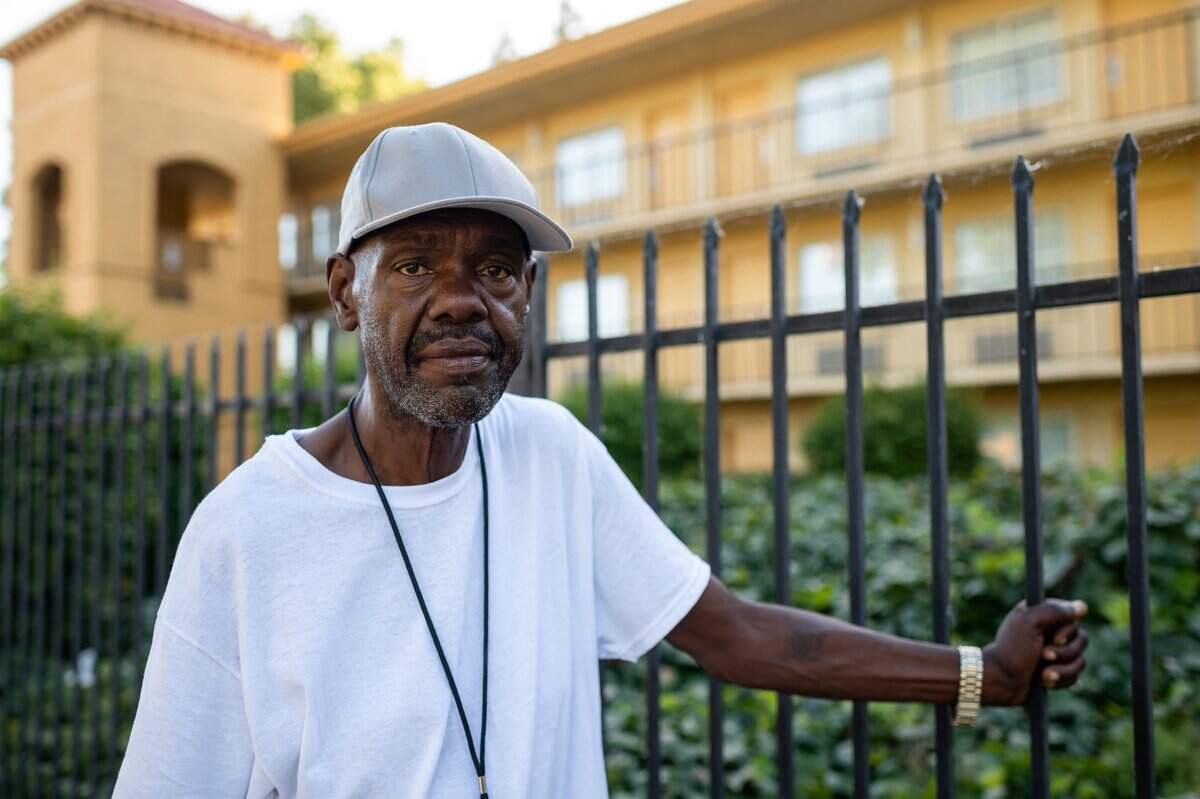
Curtis Freeman, who’s been sleeping in a tent under the W-X freeway for two years, was thrilled when he got a room at the La Quinta on Jiboom Street about two weeks ago with help from the Sacramento Poor People’s Campaign.
“I have a place to live with a roof over my head and I don’t have to worry about people at night,” said Freeman, 64, who grew up in Sacramento. “I don’t want to go back to the streets. I’m hoping I don’t have to.”
Going back to the streets would be especially difficult now, Curtis said. The motel did not allow guests to bring more than two bags of belongings with them, meaning he had to get rid of his tent, Curtis said. The two-bag limit has caused some homeless people in Sacramento to reject the rooms altogether.
Councilman criticizes location, process
Typically, when city officials decide where to open homeless shelters, it includes long public meetings and a City Council vote. The process to decide which motels to use for Project Roomkey was vastly different, with the locations never being made public and no council votes taken.
While the motels will serve as shelters for less time than other city homeless shelters – six months maximum under the current contracts – the process should have been public, said Councilman Allen Warren. One of the motels being used as a shelter is in his district: the SureStay Plus Hotel by Best Western at 1900 Canterbury Rd. in Woodlake, a neighborhood in north Sacramento.
“That selection happened without any input from my office or the city and I was very unhappy about it,” Warren said.
The idea was to open the motels quickly in order to get the vulnerable homeless population off the streets to prevent an outbreak.
The state shared with agency officials a list of motels that could work, Haynes said. The county selected motels that had at least 100 usable rooms, exterior facing hallways, microwaves and refrigerators, onsite laundry and owners willing to enter leases. Officials found eight motels that met most of the criteria, entered leases with three, and are preparing to enter a lease with an unnamed fourth motel, Haynes said.
Warren said the Woodlake location is inappropriate for a motel shelter because it is next to a residential neighborhood and in an area that already hosted a large homeless shelter on Railroad Drive, just a mile away. He also opposes it for permanent housing for the homeless.
“In the city of Sacramento, why do they tend to always look to north Sacramento to place facilities like this?” Warren said. “There needs to be equity. We hear equity discussed over and over about a variety of things and yet the same (stuff) continues to happen in lower income communities that have traditionally had high concentrations of ethnic diversity.”
Instead, Warren has suggested a site in the Noralto area of his district to house homeless and low-income residents, but it would need to be built from scratch.
Rancho Cordova Mayor David Sander said he had no issues with the Comfort Inn on Folsom Avenue on the eastern border of the city, near Folsom, being converted into a shelter.
“It’s not terrible,” Sander said. “If we had to choose a spot, that’s it.”
Large shelters in the city typically house those who sleep in areas near the facilities in order to get people off those nearby streets. The Project Roomkey motel shelters, though, host homeless people from all over the county, with preference given to those most vulnerable to contracting the virus.
Since April 8, 635 homeless people have spent time in motels, as well as trailers at Cal Expo that were set up to quarantine homeless individuals and prevent a spread of the virus, according to county officials. As of Tuesday night, 480 people were staying in the motels or trailers; 86 of the units were empty.
So far, there has not been a spike of coronavirus infections among Sacramento’s homeless.
This story was originally published May 29, 2020 at 11:52 AM.