
John F. Moulds III, longtime federal magistrate judge and Sacramento lawyer, dies at 82
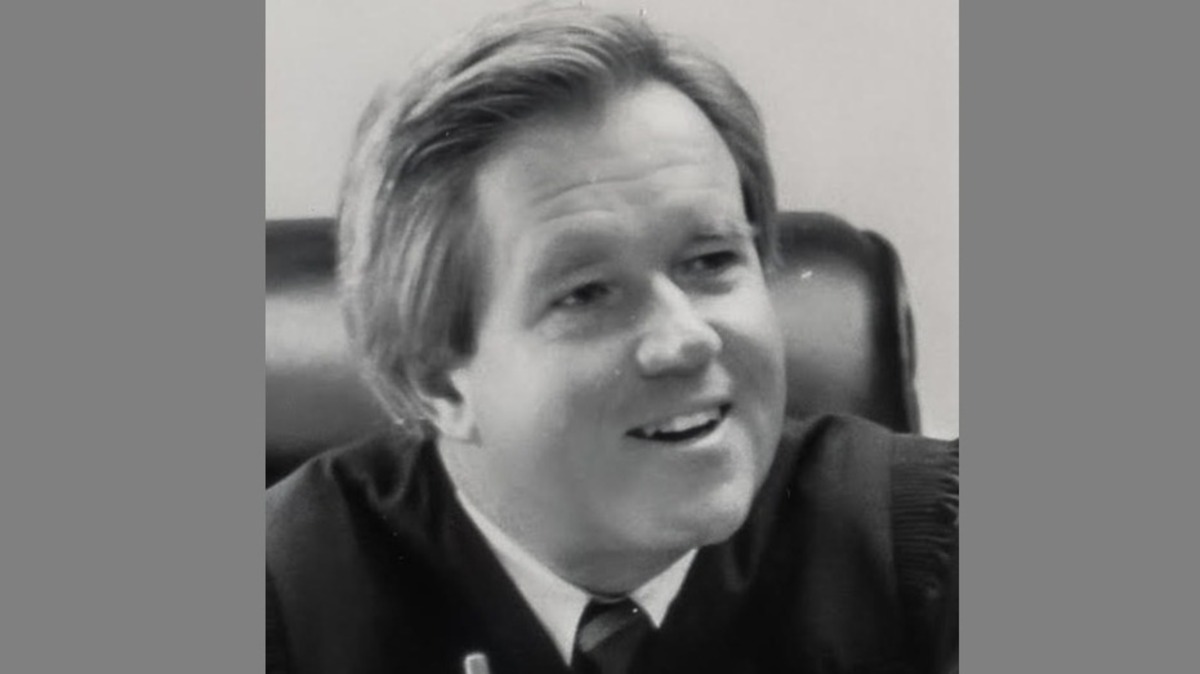
When John F. Moulds III was in private practice as a criminal defense lawyer in Sacramento, he was notoriously late for court hearings, so much so that he would end up racing to leave his car parked wherever he could.
“I had a lot of calls from court clerks saying, ‘Is he coming?’” his former secretary, Carla Wright, recalled Wednesday.
And as his unpaid parking tickets piled up, his law partners eventually got used to finding them tucked into legal tomes in the law library as bookmarks.
He had a penchant for working for free, his family says, donating his time to Mothers Against Drunk Driving, Democratic political campaigns and a domestic violence shelter.
His career in Sacramento began as a lawyer in Marysville representing farmworkers for California Rural Legal Assistance and went on to include a number of notable defense cases, including representing, along with now-U.S. District Senior Judge William Shubb, two members of the Manson family accused of sending out threatening letters to media and other organizations.
That trial, in which Sandra Good and Susan Murphy insisted on representing themselves, ended in their convictions after Good concluded her closing argument by setting fire to a $100 bill and declaring her devotion to Charles Manson.
To say Moulds, who eventually became Chief Magistrate Judge for the Eastern District of California, had a remarkable career, would be downplaying his impact nationally and on Sacramento.
Moulds died May 29 in Carmichael following the effects of a stroke, vascular dementia and Alzheimer’s disease, his family said. He was 82.
As a federal magistrate judge in Sacramento from 1983 through 2013, Moulds had a dramatic impact on how inmates in California prisons were treated, overseeing lawsuits filed on behalf of individual inmates.
Working with U.S. District Judge Lawrence K. Karlton, Moulds handled years of hearings on the landmark Coleman prisoner rights case that ensured improvements in how California inmates receive mental health care.
But he had as important an impact on the magistrate judge system nationwide, working with colleagues to enhance their duties and influence, and change their original titles from “magistrate” to “magistrate judge” to reflect that they perform every possible duty in court except overseeing criminal trials.
He served as chief magistrate and then chief magistrate judge in the district from 1987 through 1997, and lobbied extensively on Capitol Hill to help expand the system for magistrate judges who preside over hearings, initial appearances and other matters to help lessen the caseload on district judges.
“He was working with other magistrate judges nationwide who universally agreed he was the leader,” said Chief U.S. District Judge Kimberly J. Mueller. “He charted a course toward reflecting the role by working to get the title changed to magistrate judge, also increasing the pay and benefits, and making clear that these were judges and not just glorified law clerks, which is the way they were treated in some parts of the country.”
He also provided a lasting impact on Sacramento’s collection of public artwork, being selected to sit on the committee that chose artwork for the Robert T. Matsui U.S. Courthouse at Fifth and I streets as it was being built and making certain local artists were represented on each floor.
Mueller recalled how Moulds encouraged her when she became a magistrate judge in 2003, presenting her with a John F. Kennedy half dollar.
“He gave it to me in a little gold box,” she said. “On one side it’s engraved ‘sustained,’ and on the other ‘overruled.’
“I’ve pulled it out many times. I haven’t actually used it on the bench, but symbolically it was so important because it can be quite intimidating to go on the bench for the first time.”
Coin flips evidently were a habit for Moulds. His lifelong friend and former law partner, former Sacramento Mayor Phil Isenberg, recalled Moulds bringing an important case into their law firm involving a challenge to a Butte County statute that required five years of residency in the county before someone could run for the Board of Supervisors.
The case ended up before the California Supreme Court, and the partners had to decide who would argue it.
“John and I flipped a coin,” Isenberg said. “I won the coin flip, but it was John’s case from the beginning.”
The court ruled unanimously in their favor, Isenberg recalled.
Born in Kansas City, Missouri, Moulds’ family moved to Sacramento when he was 4. He attended Arden Elementary School and El Camino High School, then went on to Stanford University, before having to leave because of a family emergency.
He ended up graduating from Sacramento State in 1960, where he met Elizabeth “Betty” Fry, who would later become his wife.
He served a time in the California National Guard and worked as a research analyst in the Legislature before moving onto Boalt Hall School of Law at UC Berkeley.
He returned to Sacramento, eventually settling into Curtis Park and later the Sierra Oaks neighborhood. As Moulds built his law practice, he also served on the Sacramento City and County Human Relations Commission.
But he also devoted time — and legal help — to his sons, Donald and Gerald.
“He was known in Sacramento for being a super-talented lawyer and judge but, for my brother and me, he was the most supportive person either of us has ever known,” said Donald Moulds, 52, who is chief health director at CalPERS. “He really indulged just about every single crazy interest my brother and I ever had, and encouraged them.”
Moulds recalled that he decided at age 12 to start a backyard goat dairy, and researched county codes to determine he could do so in the family backyard.
“At one point we had a dairy of four goats, and I was actually a full registered dairy making goat cheese for the Moveable Feast, an old French restaurant,” Donald Moulds said. “My dad was the one who sort of played general counsel for the dairy and pushed back. He kept them at bay.”
At home, Moulds enjoyed dry gin martinis and was a self-taught chef, preparing elaborate meals for friends and family. Later, he taught himself to prepare pastries and desserts for Moveable Feast.
“He was a delightful person to be with, fun and exasperating,” Isenberg said. “He was a great chef and he cluttered his life with pots and pans that poor Betty and some of the rest of us had to clean up after.”
During trips to the family’s Plumas County getaway home in Johnsville, Moulds was an avid fly fisherman who could spend hours at it catching and releasing his fish until darkness fell.
“I remember he would stay out there,” Donald Moulds said. “My brother and I would go fish until bats would start hitting at his fly, which was is signal that it was time to go.”
Moulds also had time to mentor others than his own family.
Wright, who started in a temp job as his secretary, worked for him for 30 years and became an attorney during that time, recalling Moulds as a “very generous mentor.”
“He was amazing,” she said. “He made a huge difference in my life. He persuaded me to go to law school. I had actually wanted to go to law school, but he was a great mentor in that way.”
Moulds is survived by his wife and sons; brothers Gaylord Moulds of Sacramento and Bob Moulds of Nashville, Tennessee; and granddaughters Hannah and Mia Moulds.
No services are immediately planned because of the limitations caused by the coronavirus pandemic.
“The last thing he would want is for his 70- and 80-year-old friends to get together and put their lives in peril,” Donald Moulds said.
Instead, the family suggests donations be made to the Innocence Project, CRLA or the Johnsville Historical Society.