
‘Every black mother heard him’: Sacramento mothers mourn George Floyd at Oak Park rally
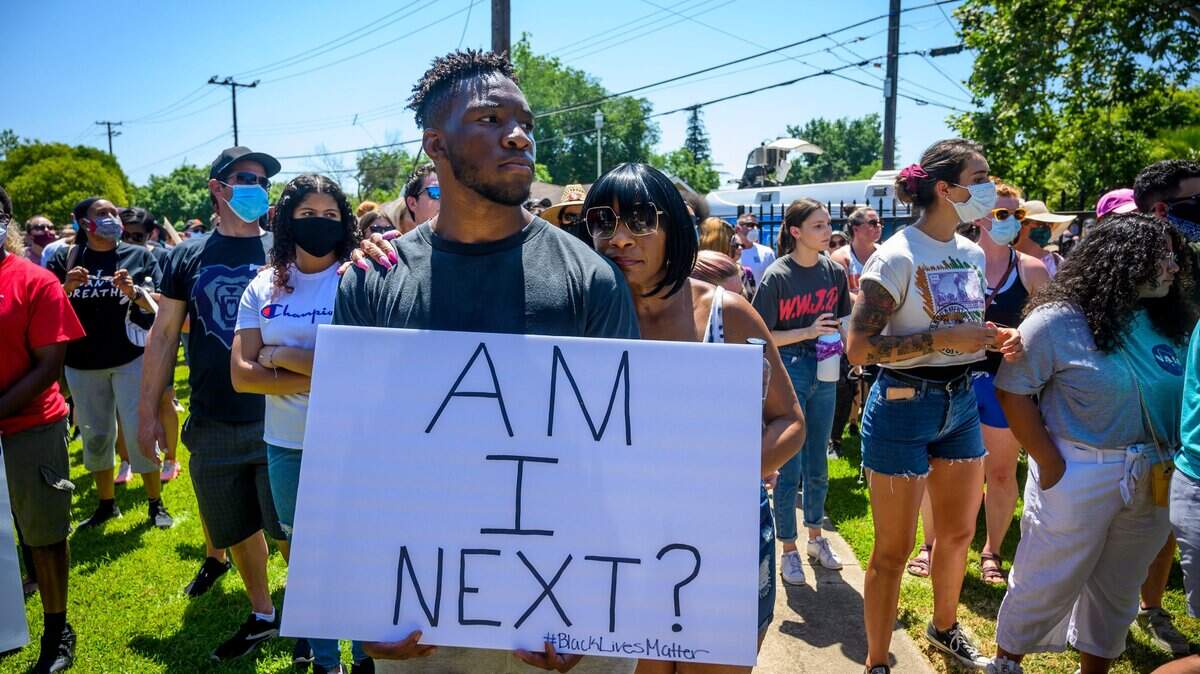
In a week filled with anguish, anger and grief over the death of George Floyd, mothers felt the pain the most.
Among Floyd’s final words face down on Minneapolis pavement, a police officer’s knee pressing on his neck, was a desperate cry for his mother, two years gone. And, in that moment, Floyd was their son, too: The sons they fretted over and had nightmares about; the ones they’ve lain awake over and the sons who never came home.
On a hot June Wednesday in Sacramento’s Oak Park, they were among the hundreds who made the short walk from Oak Park Community Center to the grounds of Shiloh Baptist Church, not only for Floyd, but for the sons they’re holding tight – and the ones they’re still mourning.
“Every black mother heard him. Every one of us heard him,” Rachel Love said while walking with the group, her fist aloft.
Ahead of her, others raised their hand-painted signs: “Is my friend next?” “Mother of a black child.”
All were part of what was dubbed a Solidarity Walk with activists, community leaders and neighbors. They joined Sacramento Mayor Darrell Steinberg and Sacramento Police Chief Daniel Hahn, who grew up in Oak Park; and the Rev. Anthony R. Sadler, pastor at Shiloh Baptist Church.
A shirtless young man, his gig bag strapped across his back, played a trumpet beside Love, a swinging phrase full of feeling, as a hand drummer kept time. Love encouraged him, patting her heart, telling him that the music was needed now.
“Police have to understand you can’t protect people you’re afraid of. Maybe now, things can change,” Love said, protest and outrage over Floyd’s killing spreading across the nation and now worldwide.
“Stop killing us. We’re done dying,” Love said. “We’re done-done.”
Samantha Carr of Elk Grove nodded solemnly among the crowd as Sadler mourned Floyd’s life, taken too soon by police at the age of 46: “What could he have done if his life wasn’t taken from us?” he said.
Hahn later expressed disgust at the videotaped police brutality that sparked nationwide protest and demands for reform.
“As a black man, a police officer and a human being, what I saw on video was disgusting,” Hahn told the crowd from Shiloh’s front porch as Steinberg, Sadler and others looked on. “We have to get to the root causes and the only way we get there is together.”
But on Wednesday, Carr wore a mother’s frustration and pain. She has three sons, she said, ages 23, 17 and 5.
“I’m hurt. I’m angry. I can’t take it anymore. I’m tired of praying, so I’ve got to come out here and walk,” Carr said. “I’ve got to do something.”
Deonte Whiteside was 17 when he fell victim to gunfire and died outside his Elk Grove home in 2016.
July will mark four years since Whiteside’s murder. Two men were convicted in December for Whiteside’s killing and the attempted murder of a teenage girl at an Elk Grove park.
For Lujania Whiteside, one of Wednesday’s speakers, video of Floyd’s death brought her own painful memories flooding back.
“My son was murdered outside my home. I heard something, like somebody crying out. To this day, I think it was him crying out to me. I didn’t know he was out there,” Whiteside said. “George Floyd will always bring fresh memories of that. I watched as a mother and I wasn’t crying, I was hurt. I was angry because it reminded me of my baby.”
In the crowd, front and center, a young African-American man, someone’s son, held a handwritten sign close to his chest.
It read simply: “Am I next?”
This story was originally published June 3, 2020 at 5:53 PM.
.JPG)