
How Chavez Plaza became a symbol of resistance and staging ground for Sacramento protests
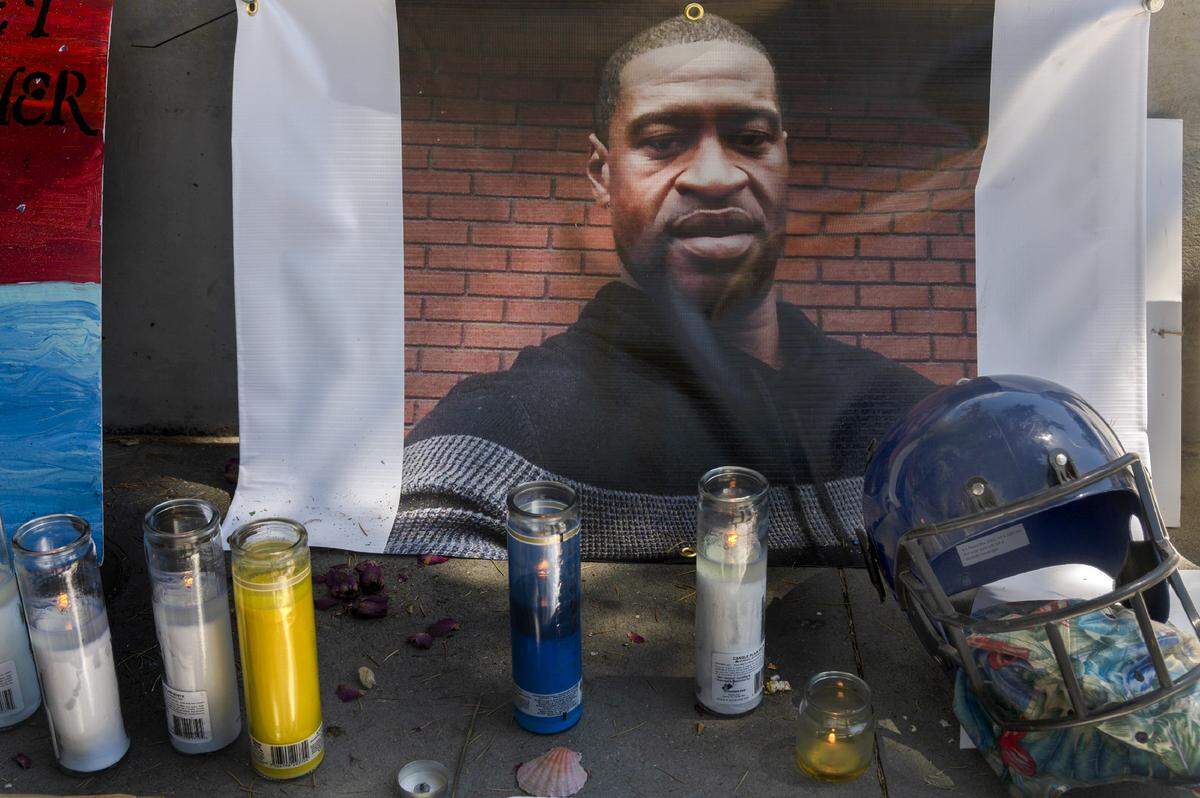
The concrete stage in Sacramento’s Cesar E. Chavez Plaza is now a makeshift shrine to victims of police brutality, a collection of candles, flowers and homemade posters growing daily as demonstrations continue against the killing of George Floyd.
The man who made it all possible, if you will, stands about 40 feet away, cast in bronze, leading a group of farmworkers on a march toward City Hall.
It’s no accident that Chavez Plaza serves as the starting or end point of the protests over Floyd’s death in Minneapolis police custody. The park is fairly spacious and offers some shade. Its central location in downtown Sacramento makes for a short march to the Capitol, another favored venue for demonstrations.
But the plaza’s importance to protest movements in Sacramento goes beyond logistics and convenience. Chavez’s legacy as crusading United Farm Workers leader and advocate for society’s downtrodden resonates with many demonstrators and adds symbolism to their protests.
“It just made sense that this is a gathering place,” said Morning Star Gali of Anti Police-Terror Project Sacramento, which has spearheaded several of the protests over Floyd’s killing. “It’s just made sense in terms of the values that Cesar Chavez stood for, in advocating for farmworkers and his communities.
“When we are organizing, it’s generally a go-to,” said Gali, who has also participated in protests at the plaza over environmental issues.
Chavez Plaza is often a staging ground for political activism. When the Occupy Sacramento movement protested economic inequality for long stretches of 2011 and 2012, the demonstrators took up semi-permanent residence at the 171-year-old park. Dozens were arrested for camping there and violating the city’s anti-loitering law.
Two years ago, when former Sacramento Kings player Matt Barnes launched a scholarship fund for the sons of Stephon Clark, the unarmed black man who was shot to death by city police, the Del Campo High School graduate announced it from the stage at Chavez Plaza.
And now days of marches over Floyd’s death have brought Chavez Plaza back into the spotlight. Wednesday’s protest, for instance, began at the park with an afternoon of speeches, music and poetry, laced with a ringing denunciation from stage of Mayor Darrell Steinberg as he stood silently in front of the shrine. Protesters then marched to the Capitol, where they chanted slogans for nearly an hour, then returned to Chavez before dispersing.
“To kick it off at Cesar Chavez Plaza, it does mean something,” said Marc Grossman, a longtime associate of Chavez and spokesman for the foundation named for him.
One of the city’s first parks
The park is among the oldest in California and dates to the city’s infancy in 1849. It’s one of 10 parks that city pioneer John Sutter dedicated for “the public use of the inhabitants of the city,” according to the American Planning Association. At one point, city planners considered building the Capitol there before choosing the current location a half-mile south.
It was known as Plaza Park until Mayor Joe Serna Jr., who had been a UFW organizer, got the City Council to rename the park for his hero in 1997. Serna died two years later, but not before securing state funds to help renovate the park.
Before then, UFW marchers heading to the Capitol used to stop at Southside Park because of its proximity to Our Lady of Guadalupe Church, where the farmworkers would get fed. Now they include Chavez Plaza on their route as well, said City Councilman Eric Guerra, the son of Mexican farmworkers.
The city has struggled for years to make the site a show place. The Friday Night Concert series draws thousands during the summer – when there isn’t a pandemic – and the Wednesday farmers’ market is popular with state workers. But the plaza is also a constant magnet for the homeless, who line up for free meals distributed every Sunday by a group called Food Not Bombs Sacramento.
Downtown business leaders say they’re comfortable with the mix of politics and social activities.
“It’s kind of the the city’s front porch for farmers’ markets, concerts, community events,” said Michael Ault of the Downtown Sacramento Partnership, which organizes the farmers’ markets and Friday concerts. “This is how the park has always been used.”
The political activity, though, can complicate matters for people like Ernesto Delgado, owner of La Cosecha, the Mexican restaurant that opened at the western end of the plaza in 2017.
Delgado said the combination of the coronavirus and the protests have made it harder to keep the business flowing smoothly.
“We open, we close, we open, we close,” said Delgado, who’s kept La Cosecha open during the protest. “I’m trying to be more consistent, but it’s hard.”
His restaurant hasn’t been vandalized, but other businesses in the surrounding area have had their windows smashed and boarded up.
“It’s been very, very nerve-wracking,” Delgado said. “Because I’m in the center of it all, it’s difficult to know what to do.”
He added that he supports the protesters and understands that the plaza is a logical site for political speech.
“Cesar Chavez obviously marched, and it has that connotation of a gathering place,” he said. “That’s what plazas are designed to do, whether it’s social or political.”
This story was originally published June 4, 2020 at 1:42 PM.