
‘It came naturally.’ Two young organizers find their voice in Sacramento protests
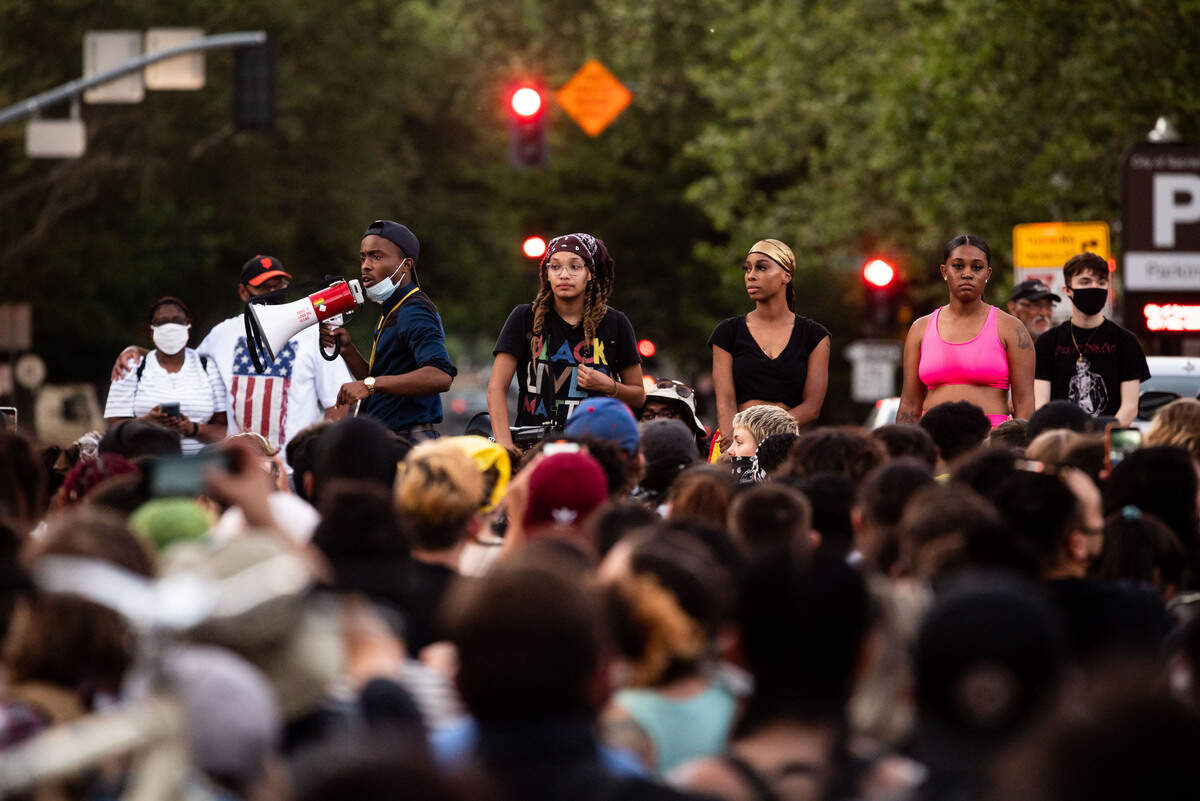
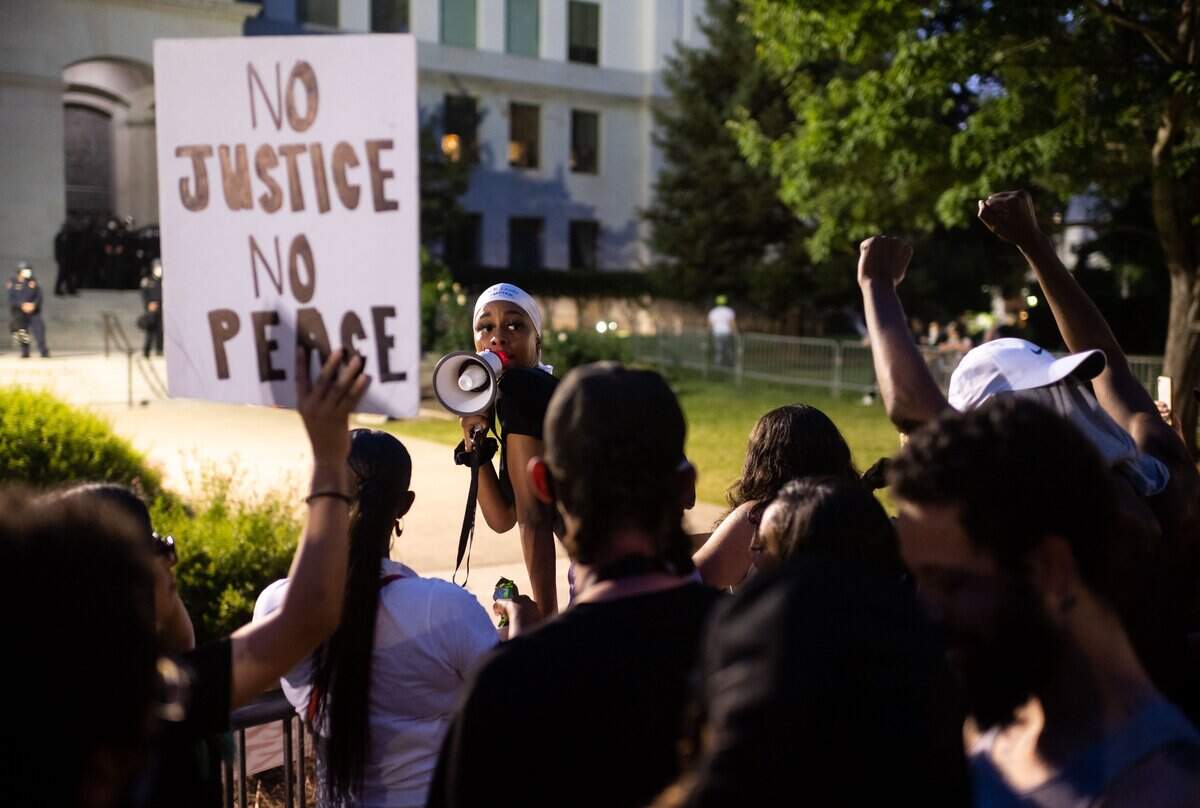
For five consecutive evenings, protesters pressed against the metal barricade on the eastern steps of the state Capitol. Led by many voices, they chanted, knelt and, for nine minutes, demonstrated in complete silence in memory of George Floyd.
It was crowded, it was tense, and, for two nights, sweltering above 100 degrees.
But, for the fifth time in as many evenings and through a web of emotions, there was cohesion, often led by the aggrieved voice of JaeDa Montgomery.
“Y’all come out here in numbers, huh?” she asked the California Highway Patrol officers lining the blockade. A few blocks away, after leading marches, her chants echoed through the streets from a packed Cesar E. Chavez Plaza.
Montgomery — passionate, disgruntled and wide-eyed — turned to quiet the crowd that surrounded her.
We need to make sure the officers “can hear themselves breathing,” she coaxed.
Montgomery and her friend, Samuel Lewis, have stood out among the growing chorus of new organizers and participants in the downtown Sacramento protests over the death of Floyd, who was killed on Memorial Day in Minneapolis. As more protests are planned downtown this weekend, the duo said they’d continue adding their voices to the movement.
They’ve been among the younger voices keeping the energy high and continuing the momentum of the protests. They kept it up, even when Sacramento had imposed a curfew.
The friends, working independently of an established group, have formed their particular movement as they go. With new influence and responsibility, the peaceful demonstrations have given them an opportunity to speak their minds.
Lewis’ friend Austin Michael has only known Montgomery since the protests began, but he said he wasn’t surprised that she and Lewis found themselves at the front of the pack. Michael said that women and members of the LGBTQ community have been the most affected by acts of police brutality, even if they disproportionately kill Black men.
Lewis “has always had this voice in them,” Michael said of his normally quiet friend. “It didn’t surprise me.”
The activists
Throughout the week, Stevante Clark has re-emerged as a visible leader calling for police reforms. It’s a role he thrust himself into two years ago when his brother, Stephon, was shot and killed by Sacramento police.
In his nightly speeches to the crowds, Clark has issued calls for two groups to lead: women and youth. Joining him throughout the protests have been Tanya Faison and Sonia Lewis, two longtime activists calling for systemic changes in policing in Sacramento, as well as investment in the Black community.
Montgomery and Lewis have long agreed with these sentiments, and have admired their convictions. But until Monday, neither Montgomery, a 20-something Black woman from Sacramento, nor Lewis, a 21-year-old, mixed-race, non-binary person from Roseville, considered becoming those faces.
It all happened quickly, Lewis said.
“I’m still processing it.” said Lewis, who identifies as nonbinary and prefers they and them pronouns.
According to the two, their first makeshift plans to protest together at Cesar Chavez Plaza on Sunday evening didn’t happen. Through the confusion of a splintering crowd and the growing chaos of the evening, they were never able to find each other.
It wasn’t until the next day that Montgomery learned Lewis had been detained by the police. (Police said Lewis had ignored orders to disperse.)
After being released 16 hours later, Lewis “took a step back” to reconsider the most effective method to demand change.
That same day both returned to the plaza and, to Lewis’ surprise, found themselves on stage. It was a first for both. Both took the chance to speak. Montgomery asked the crowd to march with her from the plaza to the Capitol.
“As soon as I came up to the stage, it came naturally,” said Montgomery, who had never before spoken in front of a crowd and considered herself to be a quiet and private person.
The formula
Since then, Montgomery and Lewis have been prominent leaders at the barricades.
They each have focused on leading crowds back and forth to the Capitol — some nights on multiple occasions — often mobilizing the crowd to peacefully confront law enforcement and National Guard troops.
“It’s gonna hurt, but we aren’t dying,” she told the crowd as they kneeled on the intersection of 9th and J streets to stop traffic.
Later, when the dissonance of the crowd would ring over speakers, she’d grab the microphone and redirect them: “We know what we came here for!”
As a protest leader, Montgomery has switched her focus between the crowd and CHP officers. Her speeches are focused critiques of the policing system as much as they are pleas for individual officers to be the first to join protesters and kneel.
She said she thought it must be hard for officers who sympathize with protesters to express their support, “but one day it has to happen.”
Less visible but ever as effective, Lewis moves through the crowd to find Black voices they had heard in the peripherals of the crowd, bringing them to the megaphone for a chance to speak. Lewis will interject to soothe the crowd. When the marching wears on and Montgomery’s voice wears, she’ll pass the mike to Lewis to carry on.
They find success through teamwork, too. When 8 p.m. struck on Tuesday and Wednesday, it was Montgomery and Lewis who held the attention of the largest group of protesters in the central city.
The times
Montgomery and Lewis recognize they live in extraordinary times.
The cellphone video of Floyd’s death was but “the spark that set the fire” to nationwide conversation on the topics that long bothered many of those protesting, Lewis said.
The current discussion over the disproportionate effects of police brutality on Black communities has unearthed a wider discussion about how homelessness, poverty, and lack of access to mental health among others, as disproportionately impacted the Black community
In conversation, Montgomery and Lewis communicate with the language best understood by Generation Z, the group born around the turn of the 21st century. Everything, from their movement to themselves, is unpacked, unfolded, and sniffed out for traces of privilege and allyship.
Lewis found it in their “comfortable” upbringing in Roseville, in their separation from what they consider a “traditional” Black experience. Their sense of responsibility sprouts partially from this.
They both maintain equally stringent specifications for what they look for in “white allyship,” the term used to describe white individuals who want to participate in movements focused around communities of color. It is essential, they said , for these allies be willing to take a secondary position to non-white people within the protests.
“You have to know that this is not your movement,” Lewis said of them.
The combativeness of them reveals a struggle to maintain the authenticity of the protest movement they are joining.
“You better not be here to pose for photos or for the f------ clout,” Montgomery told the crowd behind her on multiple occasions throughout the week.
‘The movement’
For all their conviction, the two share an understanding of the inevitable complexity of translating momentum into policy change. They have marched alongside those that call for abolition of the police and those who want to work within the system to address police brutality.
For the two, the movement that they have joined is rooted in the unfair systems of justice for marginalized communities. Policing is the most outstanding shade of injustice that they see, but it is by no means the end.
Montgomery hopes to be involved in efforts to spread protests to other neighborhoods in the city to further participation, particularly to those with significant minority communities. Lewis hopes that they can increase other conversations within the Black community as well, such as mental health and LGBTQ issues.
But they both agree they are joining the first step of many.
“In 10 years, 15 years, this (movement) is going to be seen as the first step,” Montgomery said.
This story was originally published June 12, 2020 at 5:00 AM.