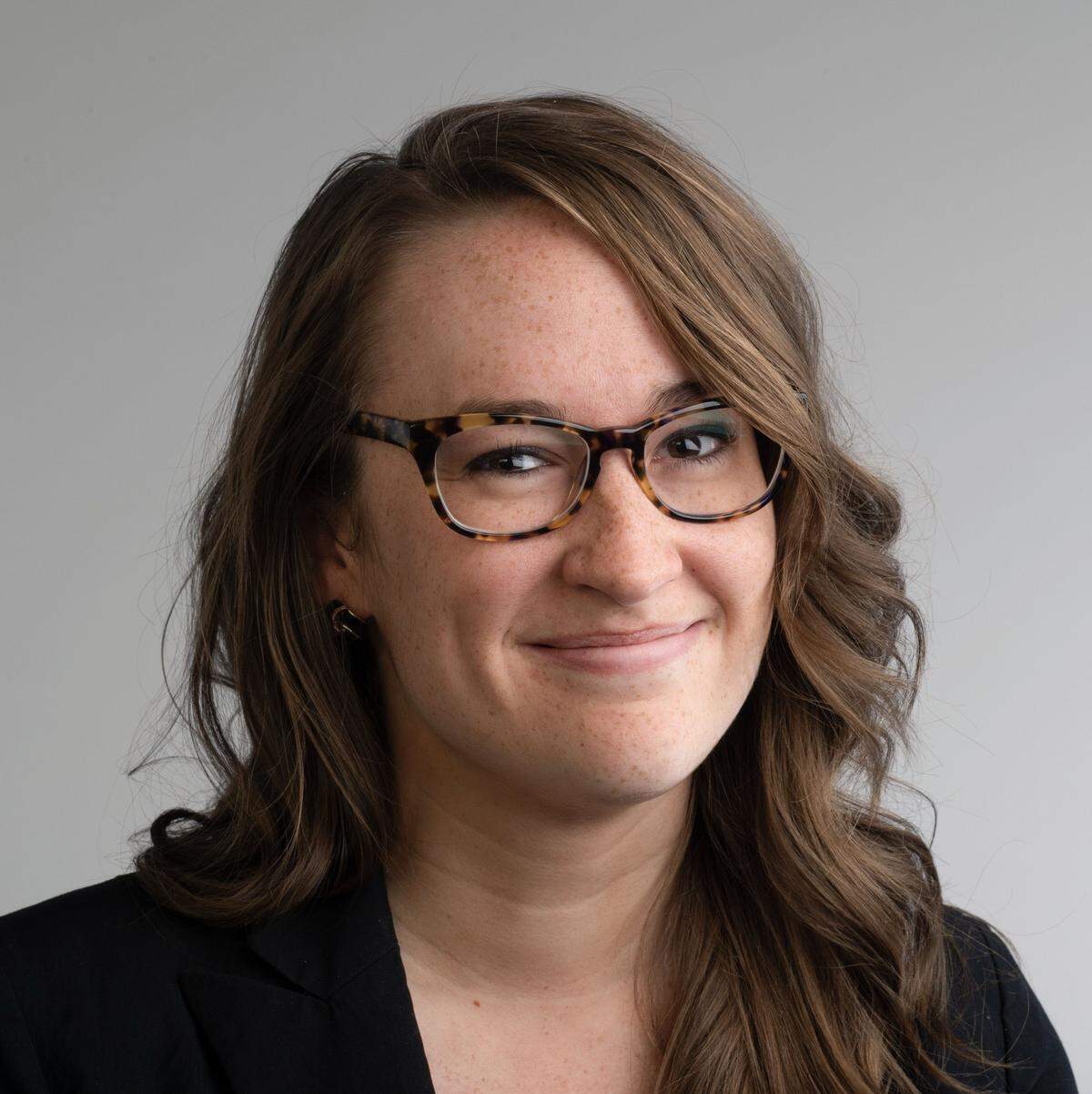
Sacramento councilwoman-elect urges city to ‘defund’ $10 million from police budget
Amid nationwide calls to “defund the police,” incoming Sacramento City Councilwoman Katie Valenzuela is pressing the City Council to remove about $10 million in funding from the police department.
Valenzuela and other residents are calling for the city to instead redirect that money toward youth services and programs in the city’s underserved neighborhoods.
Valenzuela picked $10 million as a starting point, she said, because the city’s budget document on its website states the police department’s budget is increasing from $147 million during the current fiscal year to $157.5 million in the fiscal year beginning July 1. However, city budget officials say the true increase is closer to $3 million because last year’s police budget was actually $154.5 million.
The budget also does not fund an increase in police department staffing.
Valenzuela said she still wants the council to remove $10 million in budgeted police funding and instead redirect it toward youth services in underserved neighborhoods.
“It’s a low hanging fruit opportunity, but I hope it will lead to more action,” Valenzuela said.
Mayor Darrell Steinberg has said he supports major policing changes, even more than the city enacted after the killing of Stephon Clark, but said he is unsure if he supports Valenzuela’s idea.
“I think we have to have a conversation about where the numbers come from,” Steinberg said.
Steinberg is not in favor of disbanding the police department, he said, instead preferring to look at the issue another way.
“I think instead of starting the conversation about money, you start the conversation about function and then the money follows the function,” Steinberg said.
In that vein, he’s working on a proposal regarding policing changes, including overhauling the 911 system so police and fire personnel are not automatically the first to respond when people are not committing a crime, are having a mental health crisis, or are homeless.
“We ask them to be our chief mental health outreach workers,” Steinberg said. “We ask them to be our first line of assistance and intervention when it comes to homelessness, in many cases, and if you look at their call volume, a significant percent of their calls relate to issues that are important that are in fact stressful but do not involve any violation of the law.”
It’s possible that proposal could include diverting funds from the police department, he said. A similar program has been rolled out in Austin, Texas, and Eugene, Ore., and Los Angeles has launched a pilot program, Steinberg said.
Steinberg commended the department for doing mental health training and launching an IMPACT team for homeless outreach, but those efforts have not yet been brought to scale, he said.
“What we tend to do is work around edges, this team, that team,” Steinberg said. “This begs a more fundamental conversation about what is public safety? What do we need men and women with guns and batons to actually do?”
Valenzuela expressed a similar desire to reform the response to 911 calls.
Valenzuela, elected in March to take over Councilman Steve Hansen’s seat representing downtown, midtown and Land Park, has organized similar efforts in the past, but this is her first as a councilwoman-elect, she said. She will be sworn in in December.
“I’m not your typical council person,” Valenzuela said. “I’m an organizer. This is the first of what I expect to happen many times ... I’m providing them (residents) a clear path to make their voices heard.”
The council is also set Tuesday to consider spending some of its roughly $89 million in federal coronavirus stimulus funds on services and programs for teens – an initiative Councilman Jay Schenirer has been pushing. With the CARES money, Schenirer wants the council to continue to fund pop-up activity nights for teens, a peer to peer mental health support initiative and an expended paid internship program.
Valenzuela wants the council to approve those items, and add another $10 million from the police for items the teens ask for, she said. For the first time, the teen members of the city’s Youth Commission will be included in the City Council meeting, Schenirer said.
Is Measure U being used for police?
In the fiscal year that starts July 1, the department is receiving $45.7 million from Measure U sales tax revenue, which includes 261 full-time equivalents. But it’s unclear how much of that money is from new Measure U, which voters approved in 2018, and how much is from a tax increase first approved in 2012.
“Measure U is a general tax and the revenue it produces goes into the General Fund. The City does not track old/new Measure U within the General Fund,” city spokesman Tim Swanson said in an email.
The new and old Measure U money for police will pay the match for grant-funded officers, and restore positions in the department such as community service officers, dispatchers, forensic investigators and officers. It will also fund body-worn cameras, ShotSpotter and police observation device programs, as well as mental health related strategies and impact teams, the budget says.
Valenzuela raised issues with continuing to fund ShotSpotters, devices that are installed in high-crime areas and send a signal to the department when a gunshot is detected.
“Let’s start investing in policies that make us safer,” she said. “Being safer isn’t having someone respond when a gun goes off. It’s making sure the gun doesn’t go off in the first place.”
The council can amend the budget even though it has already been passed, but spending changes would need to be placed on the council agenda, Swanson said.
Unlike Schenirer’s proposal to use some federal stimulus funding for youth, defunding the police is not on the agenda, which means the council cannot take a vote Tuesday, but can discuss it.
The virtual meeting is scheduled for 5 p.m. Tuesday, with written and called in public comments accepted.
This story was originally published June 9, 2020 at 5:01 PM.