
Trump’s student visa order rescinded: Reaction on campuses + This week in AAPI pop culture
It is Thursday, July 16, and this is The Sacramento Bee’s AAPI weekly newsletter.
Here’s a recap of the stories I’ve recently covered and issues I’m following:
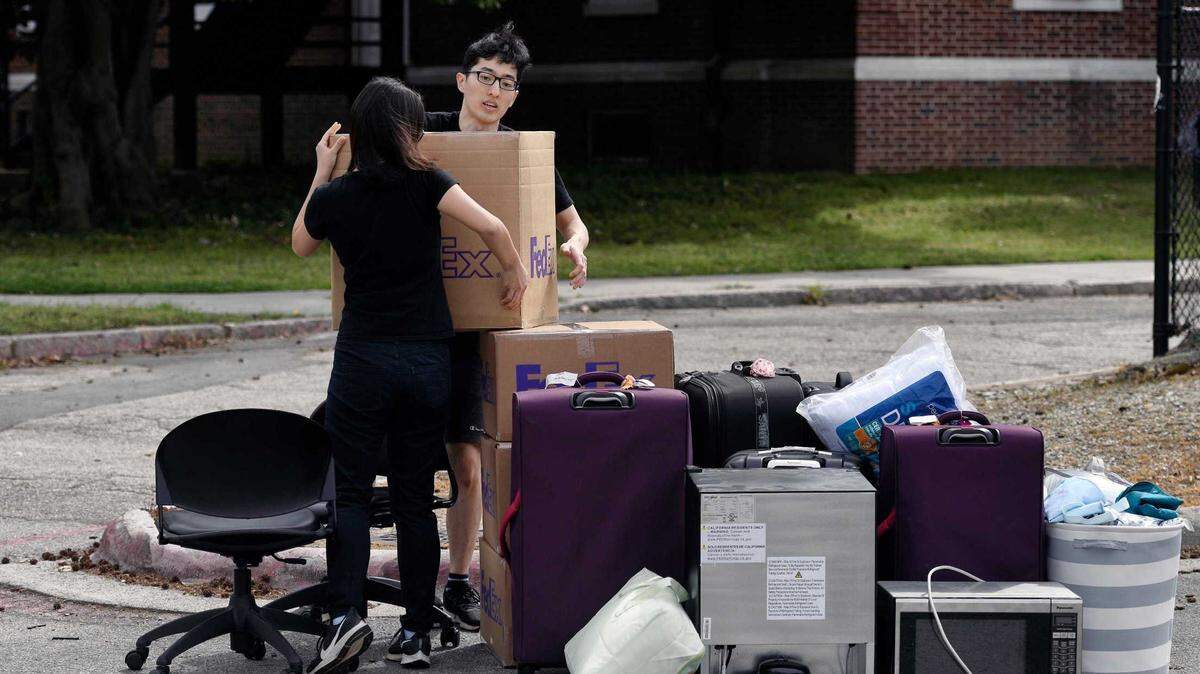
Before the Trump administration rescinded its rule Tuesday that would have required foreign students to leave the U.S. or transfer schools if their colleges shifted to online-only coursework. The Bee spoke with professors and students about the fear and confusion sparked by the sudden ICE policy change.
Prior to the coronavirus pandemic, international students were allowed to enroll in only one online class per class term, a rule ICE waived for the spring and summer. Several professors and university officials said the timing was harsh given the ongoing pandemic, but others said the move was unsurprising under the current federal government.
“It has this sort of tone of immigrant minimization that’s consistent with the anti-immigrant policies that we’ve seen from this administration,” said Gabriel J. Chin, a professor at UC Davis’ School of Law.
A second-year international student from India at Sacramento State University, who asked to remain anonymous for fear of retribution, said she couldn’t afford a flight home and that her home’s internet connection is spotty.
“This is just a political move that uses international students as scapegoats for a political agenda,” Chris Deng, a junior and international student majoring in economics at UCLA, said during public comment at a UC Regents’ meeting. “And the worst part is that we don’t have a vote.”
In other news
- Asian American members of Congress on sustaining allyship long after Floyd protests [NBC News]
- Taiwanese immigrant who invented N95 mask on working amid COVID-19 racism [NBC News]
- Street food drive-through event being held by Asian-Pacific Festival [MLive]
- The biggest misconceptions about Chinese American food [Huffington Post]
- Young Asian American Christians are finding their voice on racial justice [Christianity Today]
- UNLV researcher explores the Thai American experience via cuisine [Las Vegas Sun]
- Korean-owned beauty store’s pact with black customers starts neighborhood partnership [The City]
- Karen Yamashita offers dazzling short stories about growing up in Japanese America [UC Santa Cruz]
Growing up as a Taiwanese American gamer was the best of both worlds [Kotaku]
Asian American girls saw pivotal icon in ‘The Baby-Sitters Club’ [Associated Press]
This week in AAPI pop culture
There’s been a lot of conversation about the use of the Hindu god Ganesha in a music video from the K-pop girl group Blackpink. The elephant-headed deity was quietly edited out of the video for “How You Like That,” but not before it was caught by eagle-eyed viewers and fans.
Online, the band faced an onslaught of backlash and accusations of cultural appropriation. Many people objected to the use of a religious figure as a prop, and for disrespecting it by placing it on the ground.
“No hate to the artists but our Hindu religion and gods aren’t a toy/prop/aesthetic for pop culture music videos to use,” a fan from Delhi wrote on Twitter.
This isn’t the first time K-pop groups have stumbled in the face of cultural insensitivity. So why do these bands seem to keep making similar mistakes?
Some experts, as noted in explainers from Vice and The New York Times, pointed out that South Korea gleaned much of their cultural knowledge of the world from mainstream American media during the 1990s, when South Korea was opening up after the Cold War. This meant that several racist, ignorant tropes were also imported.
“K-pop has grown faster than the industry had time to raise issues with or reflect on their problematic behavior,” Shim Doobo, a professor of media and communication at Sungshin Women’s University in Seoul, told the Times.
Got a story suggestion? Please reach out to me at awong@sacbee.com.
That’s it for this week’s newsletter. Thanks for reading, and stay safe out there!
Please spread the word about our newsletter and send to a friend. Sign up here to receive this newsletter each week.
This story was originally published July 16, 2020 at 8:01 AM.