
‘Sobriety looks good on you’: Woodland man beats drugs, streets through court program
He has a car, a job and for the first time in a long time, a fresh start, drug-free.
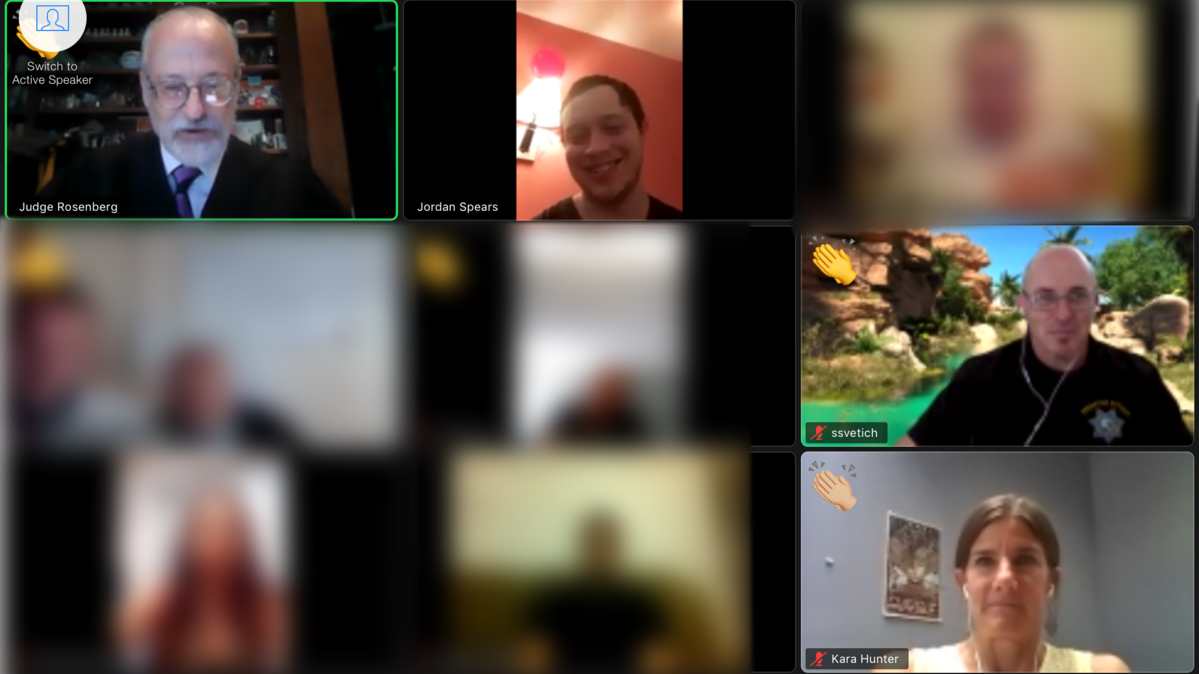
After repeated run-ins with the law and more than two years in a court-ordered program to help end that cycle, Jordan Spears of Woodland got the news he’d waited and worked for: he had graduated from Yolo Superior Court’s Addiction Intervention Court.
The announcement Sept. 17 came via Zoom, as so much does in these coronavirus pandemic days. That Spears’ big day came in September during National Recovery Month gave the virtual ceremony more significance. The COVID-19 pandemic briefly canceled in-person addiction court appearances to slow the virus’ spread. By April, a virtual “Zoom Court” was in session via video conference.
Spears, Yolo Superior Court Judge David Rosenberg, district attorney’s prosecutors, defense attorneys, probation and health and human services officers gathered virtually, greeting each other remotely from their homes and offices.
But distance or remote networking didn’t diminish the moment or the work it took for Spears to graduate.
“I don’t think anyone understands addiction unless they’ve been addicted and understand the terrible draw of addiction,” Rosenberg said before turning his attention to Spears. “But you are a poster child for not giving up. Life isn’t ever perfect, but it’s better when you’re clean and sober.”
How the court program works
The intensive program helps people like Spears break the cycle of addiction and jail. The specialty court program serves as many as 20 people at a time ensnared in similar struggles. It’s a retooling of Yolo’s former Felony Drug Court, which until 2017 was seen as a final chance for people in the court system to get clean instead of going to prison. The intervention court instead hopes to head off jail time and repeat offending by addressing addiction issues early.
The program includes drug and alcohol testing, 12-step treatment and work toward finding a job and permanent housing. Program graduates must not be arrested for at least nine months, stay sober for 180 days and develop an “exit plan” with the help of their probation officer.
It wasn’t that long ago that Spears had two homes, jail and the streets. Homeless and hooked on methamphetamine, he’d break into cars to steal what he needed to buy more drugs, get picked up by Woodland police and sent to jail only to start the cycle all over again.
Woodland officers would often find him at his usual spot behind a building at Fourth and Main streets. Spears would open the door to whatever car he was living in at the time and the meth pipes would tumble out “like rain,” one officer recalled.
“We go back a long way,” Woodland police Officer Gina Bell said. “Sobriety looks good on you.”
A February 2018 arrest in Yolo County could have been just another stop for Spears on the road from homelessness to a jail bunk. Spears was driving a stolen car and carrying the tools of his dual trades: stealing cars and getting high. Instead, Spears said he’d had enough. He was 22. He wanted treatment and a chance to get clean.
Spears found it in Addiction Intervention Court. Program administrators who assessed him determined Spears’ addiction was behind his crimes and signed him into the program.
His first of what would be 45 court appearances was in April 2018. But Spears didn’t make it easy. He skipped out of court-ordered treatment — twice. Once, after just two hours.
“You literally walked away from two programs,” said his probation officer, Yolo County deputy probation officer Stephen Svetich, still incredulous more than two years later.
He overslept and appeared late to hearings.
Rosenberg recalled Spears’ excuse: “He said, ‘Mom didn’t wake me up,’” the judge said in the video hearing. “I said, ‘How old are you, Mr. Spears?’”
But something finally clicked and Spears grew up. He wrote a letter to the program’s administrators asking for one more chance. He began to take the program — and his life — more seriously, making his court dates and going into rehabilitation through CommuniCare Health Centers.
“You never looked back,” Svetich said. “You surprised us all.”
County officials and officers are now ‘family’
By April 2019, he’d found a job at a local restaurant and had saved enough by the fall to buy a car and the insurance to keep himself on the road.
“You got the car the right way this time,” said Bret Bandley, the Yolo County deputy public defender for each of Spears’ 45 court appearances, bringing a smile to Spears. “Thanks for letting us witness it.”
Spears’ success story was also one that Yolo County District Attorney’s officials could take back to skeptical prosecutors, said Yolo County Chief Deputy District Attorney Jonathan Raven.
“You did exactly what we asked of you. You put in the hard work,” Raven told Spears. “It’s really important that you accomplished this for the deputy DAs. Some were anxious about this program — it makes them want to take a chance.”
Spears graduated from the program, but he isn’t done. He remains on probation and must continue to report to Svetich.
But the view — the “mountaintop” one Yolo County deputy prosecutor, Deanna Hays, called it compared to Spears’ homeless, drug-addled lows — is clearer now.
“I don’t know what to say. I learned a lot and I wouldn’t be where I’m at” without the intervention court, Spears said. “I used to dislike a lot of you people before. But you guys are part of the family now.”
.JPG)