
Can Sacramento market survive COVID-19? + Punjabi woman’s job at bike shop a first: Your AAPI newsletter
It is Thursday, Oct. 1, and this is The Sacramento Bee’s AAPI weekly newsletter.
Here’s a recap of the stories I’ve covered and ones I’m following:
Sam’s Market is a Sacramento fixture and a grocery store that’s been owned by the same Chinese American family for nearly 80 years. They’re gunning for 20 more.
Arvella Fong, oldest daughter of shop founder Sam Wong, is turning 90 years old in October. But she’s still behind the counter, punching your purchases into a solar-powered handheld calculator before ringing up the total on the cash register.
“I don’t even feel that it’s work,” Arvella said. “It’s something I like to do. I enjoy talking to customers.”
Customers have fond memories of growing up with Sam’s, like Tonya Pate, who grew up going to the Sam’s in Oak Park and still remembers looking at the candy as a child.
“All the kids in the neighborhood, we all went around there,” Pate said. “Even when I had my son, we would walk around the corner. I would take him in his stroller … for Arvella to see him.”
If Kenton Fong, Arvella’s oldest son and the shop’s current owner, had his way, he’d keep this market going at least until 2040, when they would finally be able to claim the title of 100 years of business. But COVID-19 has thrown a wrench into those plans, though just how much of one remains to be seen. Before the pandemic caused the Capitol to send its staff home, most of Sam’s Market’s customers were Capitol workers rushing in for a quick sandwich or chopped salad on their lunch break.
There’s also been the ongoing struggle of the last few years to keep up with the prices of the larger stores, especially as wholesalers have increased their delivery fees and other handling costs. And they’re also not sure who would take over from them.
“I just hope that they can stay and continue to be such a nice little part of the community,” said longtime customer Cathleen Gardella.
Evrinpreet Kaur, a Punjabi college student, is the first female bike mechanic to work at Natomas Bike Shop. Female bike mechanics are hard to come by, and Kaur has had to deal with customers expressing surprise and skepticism about her ability when they see her in the shop. It’s become a near-daily experience, she said.
“It happens almost every day. Every day … some of (the customers) are surprised to see me,” Kaur said. “Some people will just come and stare at me while I’m working. It’s like they don’t believe me or believe that I can work on bikes.”
As a Punjabi woman, Kaur said her race has also played an unexpected role at times. A Punjabi customer once came in and told her to quit her job at the bike shop and get a job at a pharmacy instead. Customer interactions like these are another frustrating reminder of the difficulty of pursuing something she excels at when her background is seen as both a limitation and an open invitation for scrutiny.
Kaur also faced resistance from her parents, who, she said, are quite strict and traditional, and were shocked by the thought of their daughter working a manual labor job.
“They said, ‘Well, you’re going to work at a bike shop, what will our family in India think? They will say, ‘You went to America … and you’re going to work at a bike shop?’ I think they kind of felt shameful.”
Today, Kaur said, her parents are proud of her and her work. And despite any hard days that may come with the job, Kaur said she’s never regretted taking it.
“It’s a different feeling, to be first in something,” Kaur said.
In other news
- Community groups, education helped drive down COVID-19 cases among Pacific Islanders [Hawaii News Now]
- Andrew Yang: Helping Biden win could be Asian American ‘political awakening’ [NBC News]
- Asian Americans most likely to live in multigenerational homes. How Covid has taken a toll [NBC News]
- Viet Thanh Nguyen, 1st Asian American Pulitzer board member, on how his new role transcends literature [NBC News]
- Addressing a lack of culturally sensitive healthcare for Cambodian and Vietnamese communities in O.C. [Los Angeles Times]
- Japanese American museum, East West Players to receive part of $156-million fund [Los Angeles Times]
- Wright Museum, Arab American National Museum included in $156 million grant effort [Detroit Free Press]
- How is Little Saigon curbing coronavirus? By respecting elders, authorities and masks [Los Angeles Times]
- David Chang’s Memoir, ‘Eat a Peach,’ Provides Food for Thought [The New York Times]
- University of Hawaii awarded $3.4M to improve COVID-19 outreach, testing for Pacific Islanders [Honolulu Star-Advertiser]
- This run-down home bore witness to racism against Asians. Now, it’s being protected [Los Angeles Times]
- Teen creates site to help Asian-American businesses [ABC 10News (San Diego)]
- Coalition of students urge school leaders around Boston to address anti-Asian racism [The Boston Globe]
- Filipinos make up 4% of nurses in the US, but 31.5% of nurse deaths from COVID-19 [Business Insider]
Bowen Yang on ‘SNL’ and Diversity [NPR]
Asian American unemployment spikes amid pandemic [Axios]
Pacific Islander communities grapple with high COVID-19 infection rates and issues with language barriers [ABC News]
- Opinion: How do you cover a group as diverse as Asian Americans in Southern California? [Los Angeles Times]
- Opinion: I’m a Pacific Islander rugby mum and I don’t want my son ending up like Suaalii or Folau [Sydney Morning Herald]
This week in AAPI pop culture
Three short films created by the winners of HBO’s Asian Pacific American Visionaries film competition are available on HBO after premiering live last Friday at the virtual Los Angeles Film Festival.
The winning films are “Si” by Thomas Percy Kim, Tiffany So’s “Fine China” and “Lonely Blue Night” by Johnson Cheng. Each film deals with the challenges and points of pride specific to each of the filmmaker’s communities, and the theme for the 2020 competition was “Breaking Barriers.”
“Si” is about a Korean American adoptee navigating his Korean and Asian American identity in his predominantly white baseball team. Through conversations with his teammates on the field, the teenage boy grapples with anti-Asian microaggressions while feeling conflicted by his own efforts to fit in with his peers.
In So’s musical short, Lily finds herself in a never-ending dinner where music and performance stand in for the lack of verbal communication at home. Over the course of the meal, the miscommunication within Lily’s Chinese American family erodes their relationship, forcing Lily to express her true feelings through movement.
And in “Lonely Blue Night,” a Chinese mother learns the consequences of leaving her child in the care of an American family in a 15-minute short narrated entirely in Mandarin. After a send-off dinner with both families, the mother and daughter reconnect through karaoke.
The HBO APA Visionaries short film competition was established in 2016 as a way to give emerging filmmakers of API descent the opportunity to showcase their work. Winners are selected from hundreds of submissions by a panel of API filmmakers, industry leaders and HBO executives.
And, in addition to the chance to premiere their work at the Los Angeles Film Festival and on HBO’s platforms, winners receive cash prizes, with the first place winner receiving $5,000, the second place receiving $2,000 and the third place winner receiving $1,000. I know what I’ll be watching this weekend!
Got a story suggestion? Please reach out to me at awong@sacbee.com.
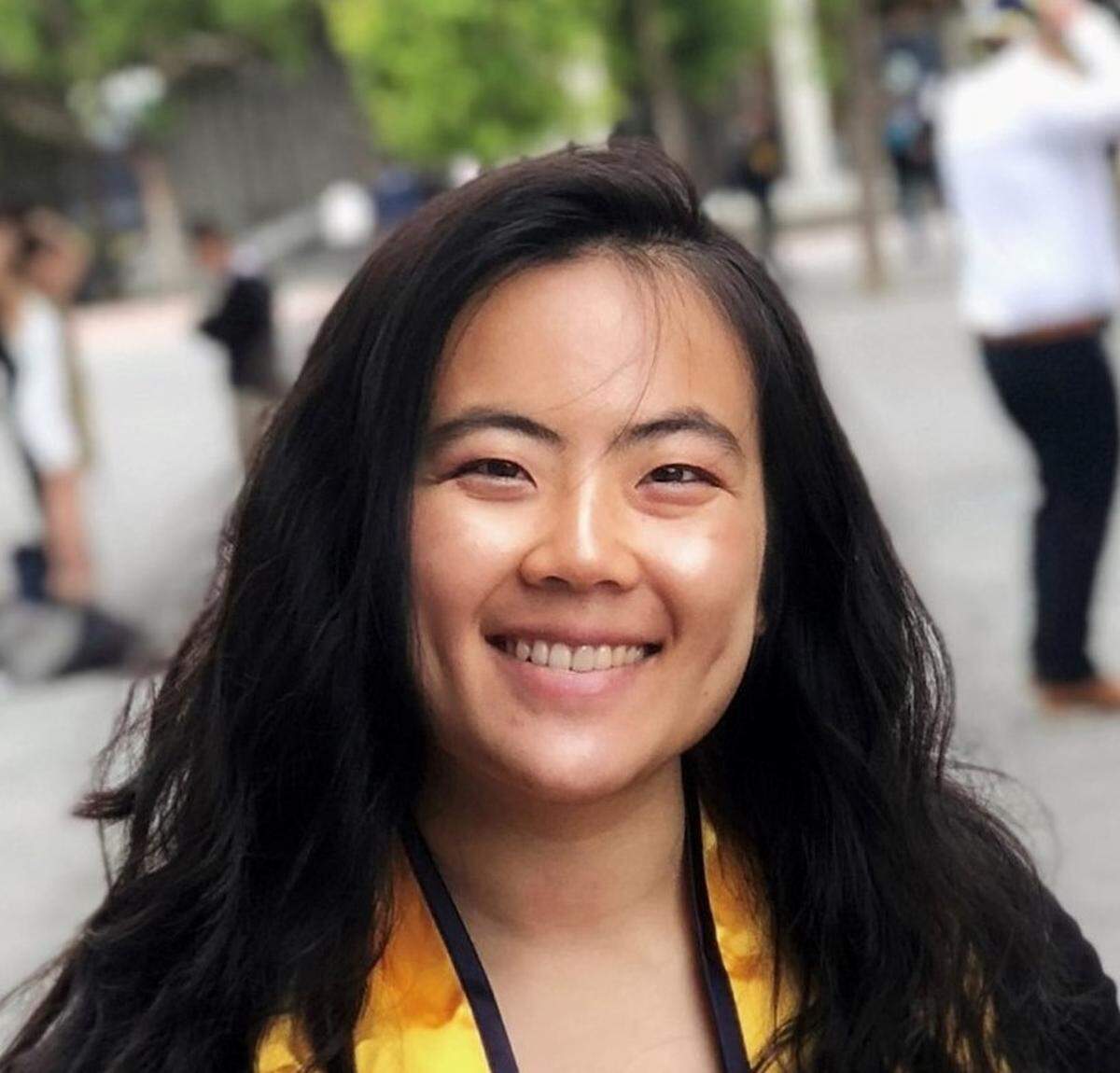
That’s it for this week’s newsletter. Today is Mid-Autumn Festival, or Chuseok, or Tsukimi — whatever you call it, whatever you celebrate, enjoy the day, enjoy the moon and be safe. Thanks for reading, and see you next week!
Please spread the word about our newsletter and send to a friend. Sign up here to receive this newsletter each week.