
Sacramento and Aggie Square developers offer $50 million to combat Oak Park gentrification
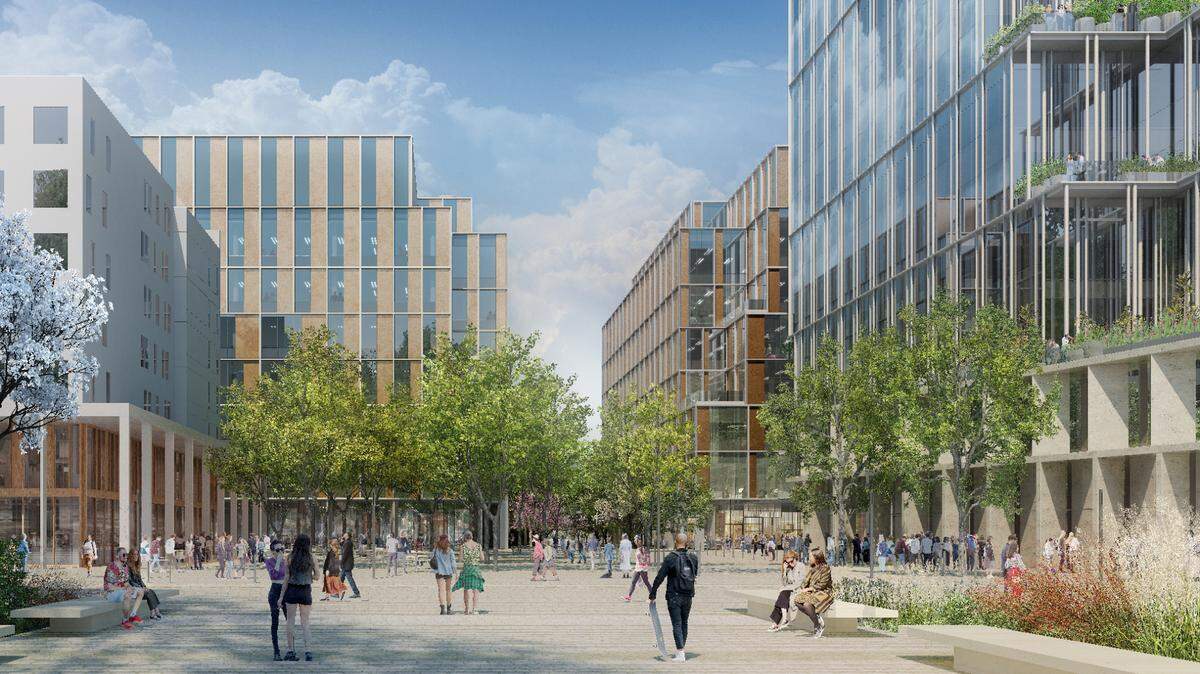
Seeking to end months of rancor, Sacramento officials say they’ve drafted a groundbreaking “community benefits” agreement that will allow construction of the $1 billion Aggie Square research and business center on Stockton Boulevard while guarding against displacement of current residents as Oak Park and Tahoe Park gentrify.
The agreement calls for the city and Aggie Square developers to invest at least $50 million to be used to build affordable housing in adjacent neighborhoods, and to set up programs that assure at least 20% of jobs created by future businesses in the proposed tech and research center be filled by residents of nearby ZIP codes.
Much of the affordable housing money is expected to come from Measure U and city housing funds and from expected increased taxes over time as property values rise at Aggie Square.
Another $5 million will be raised under the proposed community benefits partnership agreement to be invested in efforts to help current nearby residents from being forced out of their homes by gentrification.
The agreement is between the University of California, Davis, which is proposing and sponsoring the project, the city of Sacramento and Wexford Science + Technology, which will serve as the Aggie Square builder and developer.
Sacramento Mayor Darrell Steinberg said he will ask the City Council in two weeks not only to support the agreement, but also to codify it as the way the city should do business in the future to assure that major projects help rather than hurt surrounding neighborhoods.
“This community benefits agreement is not only an essential part of the Aggie Square project, it is so fundamental that I am going to propose that the city require similar CBAs for any new major development projects ... going forward,” Steinberg said.
The agreement is still being finalized, city officials said, and will be published in full next week as a prelude to an April 6 City Council vote. Council members Jay Schenirer and Eric Guerra led the efforts to sign the agreement, which includes provisions for training local residents to qualify for jobs at the site.
Sacramento Assemblyman Kevin McCarty also has introduced legislation that would allow the state to give two state-owned land sites in the neighborhood to UC Davis to be used for affordable and moderate-income student housing.
The City Council will be asked April 6 as well to approve setting up an “enhanced infrastructure financing district” for Aggie Square, essentially investing the city’s future portion of the increased property taxes created by the development of Aggie Square to pay for up to $30 million of infrastructure needs at the project site.
The announcement drew a cool reaction, however, from representatives of a community group that recently sued UC Davis in an effort to force it and the city to more directly address community concerns over potential displacement of current lower-income residents. A representative, Oak Park resident Erica Jaramillo, said it doesn’t go far enough to assure residents will not be displaced.
Sacramento’s fight over gentrification
The Aggie Square project — proposed in 2018 but still in the planning stages — has become the centerpiece of a major debate over the positive and negative impacts of neighborhood gentrification, focused mainly on Oak Park, an area that has been a locus of friction for a decade as property values slowly rise amid new investment in businesses and housing.
Steinberg, a major Aggie Square proponent, has billed the 1-million-plus-square-foot project as the most important economic development project in the city in years, saying it is another step in expanding the city economy beyond its base government workforce, luring life science, bio science and medical-related jobs and industries.
The project, approved in November by the University of California Board of Regents and located adjacent to the UC Davis Medical Center campus at Second Avenue and Stockton Boulevard, is expected to bring more than 3,600 jobs to the site. The plan is for four buildings on several blocks, including medical student housing, retail sites, business incubation and job training.
But the Aggie Square site and the UC Davis Medical Center are sandwiched between Oak Park and Tahoe Park, two traditionally affordable and lower-income areas, and on Stockton Boulevard, where rising property values already are putting pressure on lower-income residents.
Affordable housing advocates and some community activists have challenged Aggie Square in a lawsuit against the Board of Regents, claiming the developers have failed to properly deal with housing displacement issues and air quality issues under the California Environmental Quality Act.
The lawsuit was filed by the Sacramento Investment Without Displacement group, which includes members of the Oak Park Neighborhood Association, Sacramento Housing Alliance, Alliance of Californians for Community Empowerment and several other community groups.
“UC’s actions will exacerbate existing housing inequities and drive displacement in some of Sacramento’s most historically under-served communities,” stated the lawsuit, filed Dec. 21 in Sacramento County Superior Court
Steinberg said Thursday he believes the community benefits agreement is “responsive in every way” to the concerns expressed in the lawsuit and said he hopes the plaintiffs will support it rather than continue to fight UC Davis and the city in court.
“This should not be litigated,” he said. “We would like to bring (the project litigants) into the fold as partners.”
In an email to The Sacramento Bee, however, Jaramillo, a member of the Sacramento Investment Without Displacement group board, said the proposed community benefits agreement does not adequately address the displacement issue.
“The main purpose of community benefits is to bring measurable, permanent improvements to the lives of affected residents, particularly those in low-income neighborhoods,” she wrote. “Many of our coalition members are residents living in Oak Park and surrounding neighborhoods such as Colonial Heights and Tahoe Park. We were not included in their CBPA. Furthermore, the exact details haven’t been shared with the public yet.
“Their CBPA does not prioritize nor does it specifically or meaningfully address prevention of displacement. These are aspirational figures, we need to make sure that they’re binding and tied to helping the residents in immediate proximity to the project.”
Jaramillo said her group wants to see an oversight committee set up by her group’s board to meet quarterly with developers. That creates “an ongoing, regular accountability mechanism.”
Another of those litigants, Sacramento Housing Alliance executive Kendra Lewis said she appreciates the benefits agreement effort and said the group is willing to work with the city. She said she and others who have challenged the project will review the details of the agreement when it comes out and will respond at that point.
“SIWD has always wanted to work with the city and UC Davis to come to an agreement,” she said. “I believe there are possibilities for us to come to the table.”
Project developers on Thursday said they hope to begin project construction in early 2022 and have the first phases of the project up and open two years later.
This story was originally published March 25, 2021 at 3:05 PM.