
Sacramento volunteers protect elders + Break-in at Chinese American society: Your AAPI newsletter
It is Thursday, April 15, and this is The Sacramento Bee’s AAPI weekly newsletter.
Here’s a recap of the stories I’ve covered and ones I’m following:
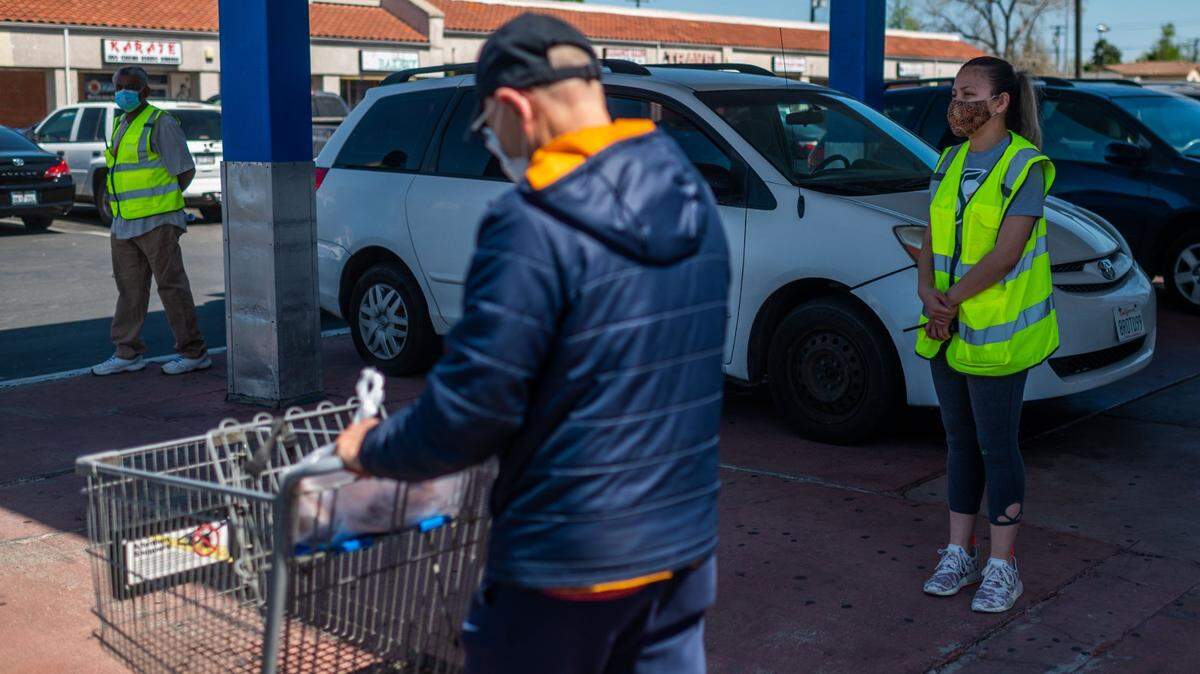
Volunteers assembled on Stockton Boulevard on a clear Thursday afternoon to keep an eye out for Sacramento’s Asian American and Pacific Islander residents as they did their daily shopping in Sacramento’s Little Saigon.
Working in pairs, the volunteers were part of the program launched last Thursday by the Stockton Boulevard Association called “Safety on Stockton.” Community members can sign up to walk up and down the street, accompany elder Asians from the grocery store to their cars or simply greet residents at bus stops and outside stores, acting as an extra set of eyes for law enforcement in light of the recent spike in anti-Asian violence and attacks.
The idea, organizers said, is to proactively protect the city’s Asian residents and ease their anxieties about going out. Volunteers can sign up for three-hour shifts from noon to 8:30 p.m. on SBA’s website. All volunteers work in pairs and are outfitted with whistles, walkie talkies and bright vests reading “SOS” for Safety on Stockton.
“This is my neighborhood. My family still lives here,” volunteer Kao Saephanh said. “Violence in our community is not a new thing. Many look at our community as easy targets ... so it’s good to have allies.
“We’re not crime fighters. But if it deters one person from being a victim, it’s worth it.”
When Bob Matsumoto was promised a full ride to ArtCenter College of Design by KCRA station manager Bob Kelly, Matsumoto was asked to promise only two things: to eventually pay Kelly back in full and to use his abilities to help others some day.
That’s exactly what Matsumoto’s spent his life doing with his art. Now, the Sacramento-raised artist is using his latest billboard installment — a portrait of the Statue of Liberty, emblazoned with the phrase “Anti-Asian Hate is Not What I Stand For” — to combat anti-Asian hate.
“It’s a time where we’re stereotyped (as people who) don’t make waves, and yet the waves are hitting us across the country,” Matsumoto said. “This hate is really rising.”
For Matsumoto, calling out and fighting anti-Asian racism has been a lifelong personal cause. When he was little more than 4 years old, he and his family were incarcerated in the Manzanar incarceration camp along with 120,000 other Japanese Americans across the country during World War II.
Matsumoto calls it a shameful chapter of American history, one that he never wants to see the country return to. But the recent rise in anti-Asian violence and discrimination alarms him.
“I thought about my parents and what 120,000 Japanese Americans went through, all the signs and threats ... two months later, they ended up in camps,” Matsumoto said. “I said, ‘I gotta do something.’”
A break-in at the Sacramento chapter of the Chinese American Soo Yuen Benevolent Association last Monday left the organization’s building with extensive damages and its members deeply shaken.
The Sacramento chapter of the SYBA operates at a building on J Street directly across from Downtown Commons, a location the chapter has called home since 1970. Last Monday, the association’s property manager went to the building to pick up mail when he noticed water leaking from the second floor, according to Eric Fong, SYBA Sacramento president.
When the property manager went upstairs, he discovered a stranger there, Fong said, and quickly ran out of the building to call the police. According to Officer Karl Chan, Sacramento Police Department spokesperson, the suspect was detained by officers and identified as Brian Myers.
Evidence suggested that Myers, 49, had been living in the building “for a little time,” Chan said, and was experiencing homelessness. The break-in is not currently being investigated as hate-motivated.
Members of Sacramento’s SYBA are fearful about returning to their old meeting spot again, Fong said.
“I told all the members, if you go in, have at least two people, make sure there’s nothing happening before you go inside the building,” Fong said. “We all fear (for) our safety, we’re all on edge.”
Vincent Li’s children, like thousands across the Sacramento City Unified School District, struggle with their Zoom classes. But Li can’t justify sending them back to campus.
With COVID-19 still active in the community, “I still feel like they’re not prepared for reopened schools,” said Li, whose children attend Earl Warren Elementary and Hiram Johnson High School.
“I just don’t have any other choice,” Li said. “Keeping my kids safe is the most important thing, and being at home is better than being at school.”
Li is one of thousands of Asian and Asian American families at Sacramento City Unified schools choosing to keep their children at home as the district begins to reopen its classrooms.
Only about one in three Asian households in the district will send their children back to the classroom in the district — the lowest rate of any ethnic group, and a trend that’s been reflected in school districts nationwide.
The reasons why many Asian families are keeping their children home are varied, advocates said — some may be working from home and can afford childcare, while others may be working low-wage essential jobs without the flexibility to pick up kids at different schools at different times. Many feel the threat of COVID-19 still looms large, and some have grown accustomed to their distance learning routine.
Asian Resources Inc. executive director Stephanie Nguyen said for many, the overarching theme from Asian families is a fear of potential COVID-19 exposure. Sacramento’s Pacific Islanders were hit particularly hard by COVID-19, and Asian Americans are over-represented in medical fields. She has talked to some parents who work full-time jobs at supermarkets along Stockton Boulevard and will keep their kids at home, since they don’t have the flexibility to pick up their children early on half-days.
“For every family, you have to do what works best for you,” Nguyen said. “Even within my own circle of friends, they’ve chosen to stay home too. Most of us have left it up for our kids to decide.”
In other news
Cause of fire at Sacramento’s Chinese Gospel Mission is ‘undetermined,’ officials say (The Sacramento Bee)
‘All the same’: Modesto communities gather for rally against anti-Asian hate (The Modesto Bee)
‘A Sigh Of Relief’: Crowdfunded Cab Rides Aim To Get Asian Americans Home Safe (NPR)
As Students Return To Classrooms, One Group Is Noticeably Still Learning at Home: Asian Americans (CapRadio)
Oakland 98-year-old awarded Congressional medal for World War II service (The Mercury News)
The NYPD’s Method Of Counting Anti-Asian Attacks Underestimates Severity Of Crisis, Critics Say (Gothamist)
Seeing Hate, 28 Asian and Asian-American Photographers Focus on Love (The New York Times)
Bowen Yang’s Rules of Culture (NPR)
The spectacle of anti-Asian violence on Instagram (Vox)
‘Minari’ Broke New Ground for Storytellers of Color, But Creatives Don’t Want to Be Pigeonholed (The Hollywood Reporter)
This week in AAPI pop culture
When Paula Yoo set out to write a book about Vincent Chin years ago, she had no idea just how timely his story would become, nor could she predict that her book would be published amid a rise in anti-Asian hate crimes around the country.
On June 23, 1982, Chin was beaten to death in Highland Park, Michigan, by two white men. The men mistook Chin, a Chinese American, for Japanese, and blamed him for the downfall of American auto manufacturing.
His horrific murder, and the lenient sentence his killers received, sparked nationwide anger and a resurgence in the Asian American civil rights movement.
But this is history that is rarely taught or talked about. It’s a form of historical erasure that’s contributed to ongoing stereotypes of Asian Americans as meek, submissive and politically apathetic, as well as perceptions that anti-Asian racism doesn’t exist. We know that this is not and has never been true.
Now, for the first time, Chin’s murder and the subsequent trials that followed will be the subject of a book, “From a Whisper to a Rallying Cry.” (Believe it or not, there has never been a book solely dedicated to exploring Chin’s life and legacy until now.)
Written for a young adult audience, Yoo’s book blends court records, interviews, devastating photographs and newspaper clippings to revisit the years of shockwaves Chin’s death made and how he became an enduring symbol of AAPI resistance. Some of the interviews in Yoo’s book are with the trial’s key case witnesses, who spoke publicly for the first time.
It’s a bruising recount of painful history, especially the chapters on how Lily Chin, Vincent’s mother, fought long and hard for her son’s name, only to be delivered a devastating lack of justice. I found it hard to breathe while reading about the brutality of Chin’s killing, feeling my blood pressure spike with every frustrating setback in Chin’s trial.
But it’s also an uplifting reminder of the Asian American community’s power and a time when we came together in one blazing movement. Don’t swallow your uncomfortable emotions while reading this book. Confront your rage, this book says, hold that fire and turn it into fuel so we can make sure this never happens again. For that, this book is deeply necessary medicine.
“From a Whisper to a Rallying Cry” will be available at booksellers everywhere April 20.
Got a story suggestion? Please reach out to me at awong@sacbee.com.
That’s it for this week’s newsletter. Thanks for reading, and see you next week!
Please spread the word about our newsletter and send to a friend. Sign up here to receive this newsletter each week.