
‘I’m glad we’re doing it again.’ Pony Express stops in Folsom, saddles up for historic re-ride
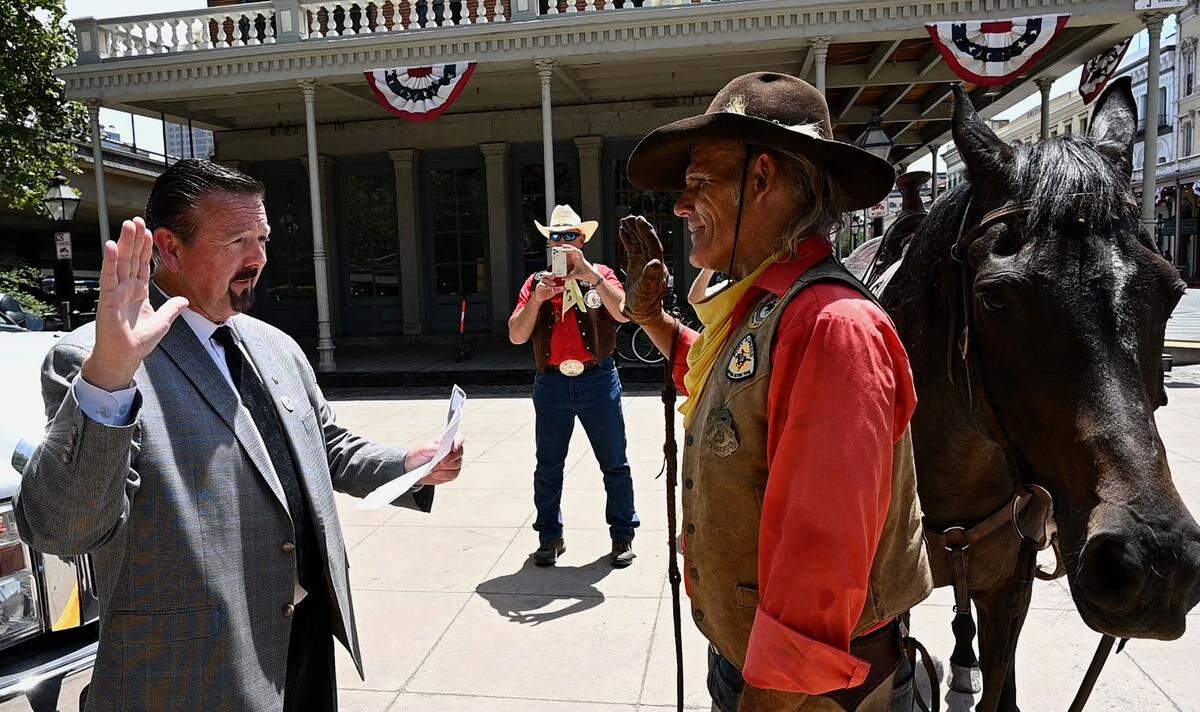
The National Pony Express hit the trail for the first time in two years, kicking off it’s annual “re-ride” Wednesday in Old Sacramento.
The commemorative event retraces the roots of the historic mail route that ended service 160 years ago this summer. Last year’s event was canceled due to the coronavirus pandemic.
Blistering heat in the Sacramento Valley didn’t prevent the riders, who began the 1,966-mile relay along the historic trail, from their appointed stops in Old Folsom, Kingsville and Placerville before midnight.
“It’s fun, it’s good to do it,” said Steve Pool, who rode the first leg of relay from Sacramento to Folsom. “We were shut down all of last year. All of us spent the time to clear the trails and get everything ready (last year) and then no.
“So this is good, I’m glad we’re doing it again.”
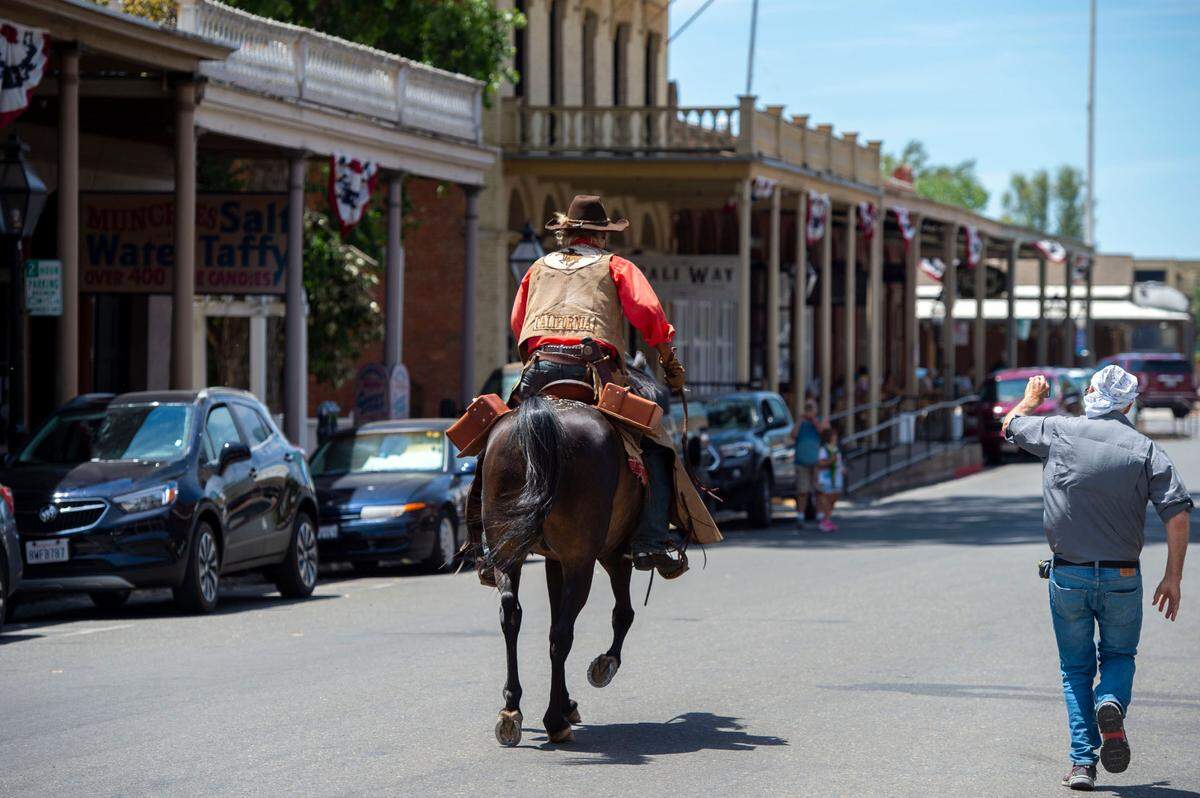
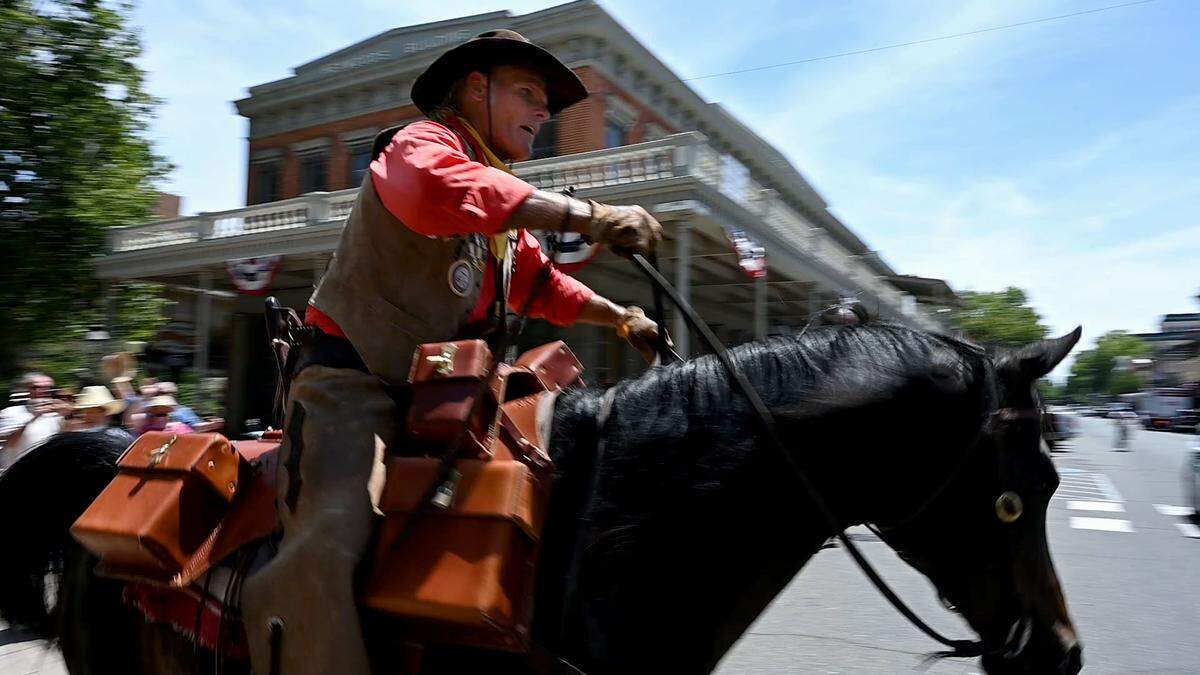
Pool, 67, arrived in Old Folsom at 6:48 p.m. and passed his saddle bags to the next rider in the relay, who rode down Sutter Street toward El Dorado County, which is home to the National Pony Express Association’s California chapter.
Pool said he’s been participating in the re-ride for 20 years and has trained and ridden six horses to make the journey. More than 750 riders are expected to take part in the event, handing off letters from rider to rider 24 hours a day for 10 consecutive days.
Before leaving California, riders along the relay stopped near Cedar Grove and Woodfords Station. The re-ride will continue through Nevada, Utah, Wyoming, Colorado, Nebraska and Kansas before arriving at its final destination in St. Joseph, Missouri, on June 26. (A full schedule of stops is available on the National Pony Express Association’s website.)
The first Pony Express rider galloped into Sacramento in April 1860, fewer than 10 days after leaving St. Joseph. Today, members of the National Pony Express Association wear red shirts, brown vests, yellow neckties, jeans and cowboy hats to replicate the attire that adorned the original riders.
Not all details are the same as that first ride, though. The National Pony Express Association no longer posts advertisements calling all “young skinny wiry fellows not over eighteen” who are “willing to risk death daily,” and they do not pay their riders. Instead, riders pay dues to the National Pony Express Association.
“The goal and the objective from the get-go was to mark and identify the trail, and to try to bring history and the significance of the pony express to the general public,” former National Pony Express Organization President Jim Swigart told The Sacramento Bee in 2018. “Our organization was bent on trying to get that information out. We are preserving history and keeping the legend of the pony express alive.”
This story was originally published June 16, 2021 at 10:09 AM.