
Mother of girl killed on Sacramento freeway sues county, nonprofit group home
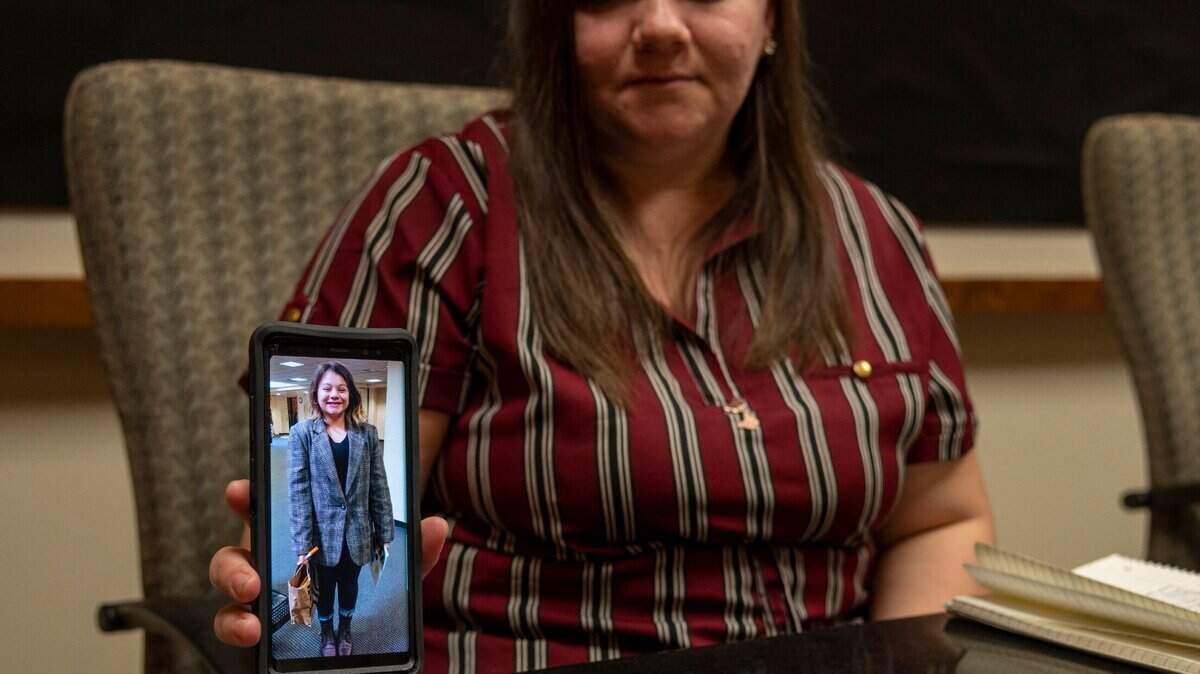
The mother of a 12-year-old girl who was killed after running away from the region’s largest group home has filed a lawsuit in Sacramento County Superior Court accusing the facility’s staff and county child welfare officials of negligence and wrongful death.
Michele Bryant filed the lawsuit on July 2 claiming the Children’s Receiving Home and Sacramento County failed to care for her daughter while she was a resident, according to court records.
Bryant’s daughter Kendra Czekaj was struck by a car on the Capital City Freeway after leaving the Children’s Receiving Home with a group of other children on the night of Jan. 15, 2020. The nonprofit contracts with Sacramento County to accept children from troubled families or other caregivers into its temporary shelter.
Michelle Callejas who oversees the county’s department of child, family and adult services was also named as a defendant, as well as the driver of the car that struck Kendra. The driver was accused of automobile negligence.
The other allegations largely focus on the roles of Sacramento County, which determined Kendra’s placement at the group home, and the Children’s Receiving Home’s role in her care.
“The problems at CRH and its inability to protect the children in its custody have been widely known to the County of Sacramento for many years,” the lawsuit contends. “Despite this, the County continued to place vulnerable children at CRH whom it had removed from their homes or for whom it had otherwise failed to find an appropriate placement.”
Sacramento County, which operated an intake facility on the Children’s Receiving Home campus for several years, declined to comment, citing a policy of not discussing pending litigation.
The intake office, also known as the Centralized Placement Support Unit, was moved last September to a county building on Bradshaw Road.
The Children’s Receiving Home disputed the conclusions made in the lawsuit and cited a state law that restricts group home staff from confining children inside the facility against their will. They said the staff’s job is to “shadow” children and encourage them to return any time they leave the facility and report them missing to the police. Sometimes, officials said in previous statements, the same children leave multiple times a day and that results in numerous reports to police.
In a prepared statement, a lawyer representing the Children’s Receiving Home said the lawsuit “contains a number of inaccuracies and misrepresentations, including some that were erroneously reported by news media at the time or in later stories.”
“Aspects of this complaint are blatantly false, and (are) obviously being used to bait the media into publishing false information about CRH,” said Cynthia Lawrence, an attorney with the Roseville law firm Sims, Lawrence & Arruti, who represents the nonprofit.
Children’s Receiving Home administrators previously told The Bee that they are seeing more challenging cases involving teenagers who need far more intensive services, and those demanding cases are the reason runaway activity increased in recent years.
Founded in 1944, the group homes’ longtime CEO David Ballard retired in May 2020. Glynis Butler-Stone was chosen to replace him.
“The entire CRH community remains devastated by the tragic death of Kendra Czekaj in January 2020,” Butler-Stone said in the prepared statement. “We have always felt a deep sense of professional and personal responsibility for the children and youths placed in our care.”
Kendra bounced between housing placements
The problems surrounding Kendra started with her placement at the facility and would continue for the 10 months she was under the state’s supervision, the lawsuit says.
In March 2019, her father Carewin Czekaj was accused of sexually abusing Kendra and shortly afterward she and her siblings were removed from his home in Citrus Heights. He later pleaded no contest to two counts of lewd acts with a minor and one count of committing lewd acts with a minor by force. He was sentenced to 14 years in state prison.
Kendra was placed in a foster home and then “bounced” between placements and the Children’s Receiving Home. She was involuntarily hospitalized at least two times for severe depression and thoughts of suicide, according to the lawsuit.
Her mother’s requests to the county for family therapy took months before services were provided, the lawsuit alleges. After the second hospitalization in late December 2019, the lawsuit says Michele Bryant was allowed a one-day visit before taking Kendra back to the Children’s Receiving Home.
She went back on January 5, 2020. In the days leading up to her death, lawyers wrote in the complaint that Kendra went missing at least 15 times. During this time, Kendra had also stopped taking her antidepressant medication prescribed after the recent hospital stay. The lawsuit contends there is no record that suggests anyone tried to intervene or inform her mother that she had stopped.
Kendra’s needs were ignored in other ways, according to the lawsuit. She never attended any educational programs, missed a health appointment and a scheduled interview with a new school as well as a Jan. 10 court hearing, according to the lawsuit.
Meanwhile, Kendra reported that she’d been lured into a car and offered marijuana in exchange for sex; and the same man offered to be her “pimp,” according to records reviewed by Michele Bryant’s attorneys.
The lawsuit alleges that the county knew about the runaway activity at the Children’s Receiving Home when Kendra was sent to live there, and that the county failed to get court authorization to keep her there longer than 10 days.
The complaint also singled out the location of the Children’s Receiving Home as a contributor to the dangers runaway children could face.
The facility moved to its Watt Avenue and Auburn Boulevard campus in the 1960s when the outer suburbs of Sacramento were still growing but the area has greatly declined decades later. Law enforcement officials and store owners told The Bee that drug deals and prostitution are common in the area near a freeway entrance.
For this reason, the lawsuit said the county and the Children’s Receiving Home “failed to provide adequate housing by locating their shelter in one of the most dangerous neighborhoods in the Sacramento region, which is located directly next to a major freeway and intersection.”