
‘I cry every day.’ Fentanyl overdoses spread death, misery through Sacramento region
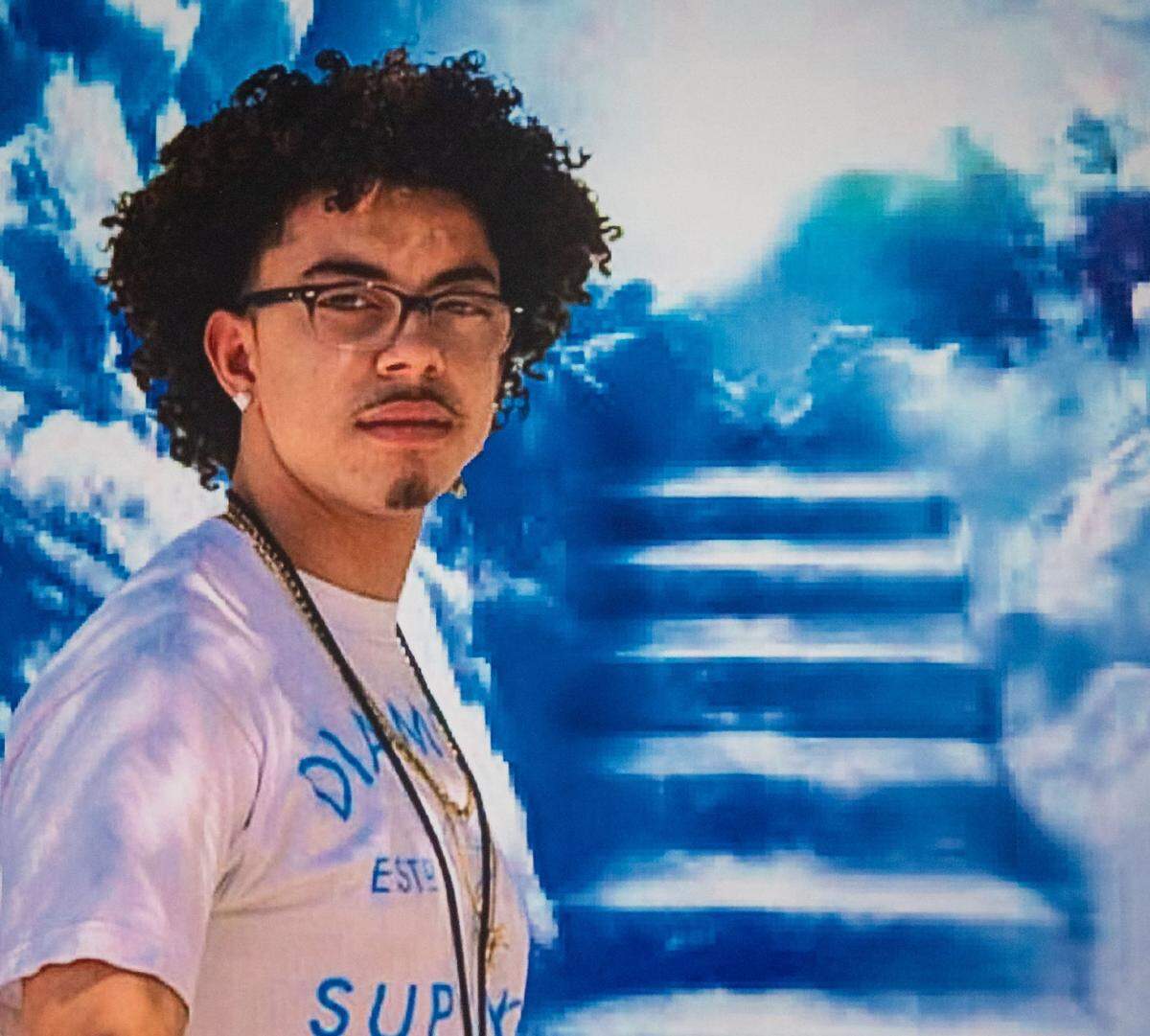
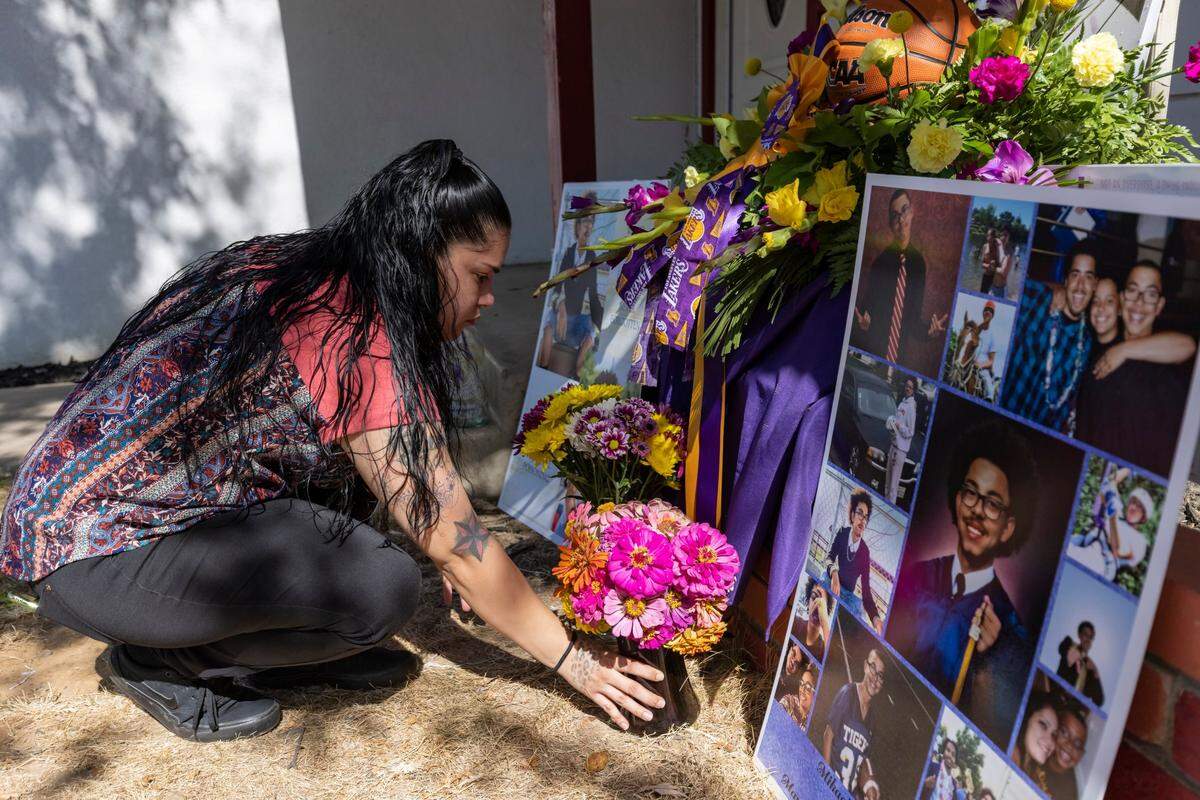
Alone in his bedroom after going out the night before, Mikael Tirado appeared to be snoozing on the floor where he usually played video games, staying up all night. Allyssia Solorio tried to wake him unsuccessfully the next day.
A few seconds later she figured out why she could not: Tirado, her youngest brother, was dead.
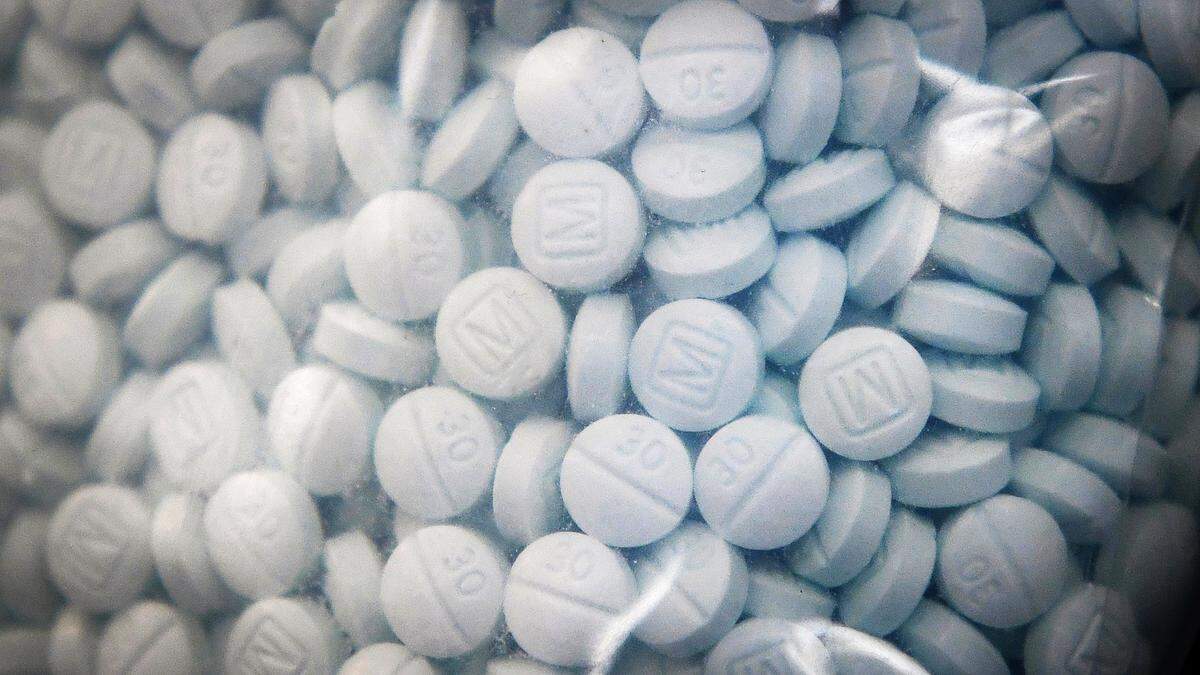
At only 23 years old, Tirado’s death made no sense at first until a toxicology report showed that the pain-relief Percocet tablets the coroner found in his wallet weren’t really Percocet at all. They were 100% fentanyl, a powerful substance used to treat severe pain and strong enough to subdue an elephant.
Tirado’s death from ingesting a counterfeit pill Sept. 7 was number 66 in Sacramento County last year, part of a dramatic increase in overdoses linked to fentanyl during the pandemic.
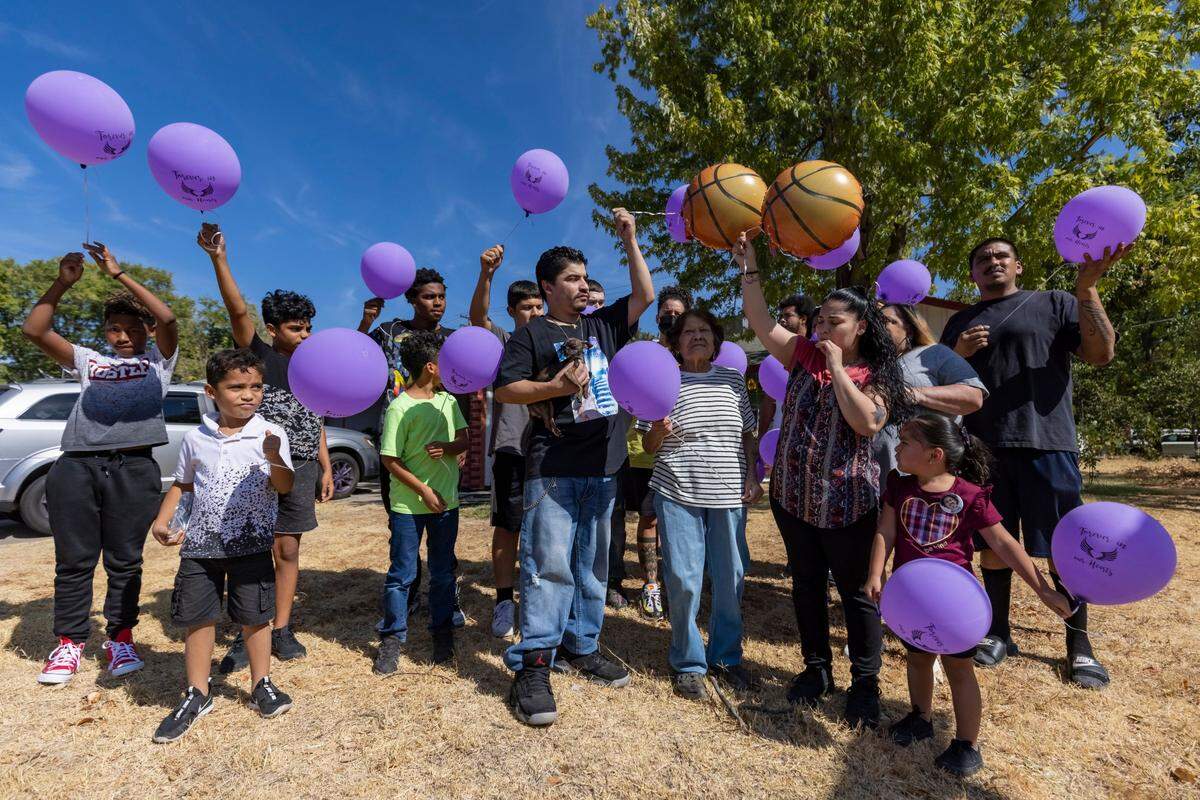
Last year, illicit fentanyl contributed to the death of 95 people, according to a Sacramento Bee analysis of county coroner data. That was nearly a three-fold increase compared with the 36 cases in 2019 — an alarming trend that is also gripping the rest of the country as it struggles with an ongoing opioid epidemic.
The death toll in Sacramento County hasn’t slowed in 2021 either: The coroner has linked fentanyl to at least 43 more cases this year. The synthetic opiate is suspected in another 36 deaths that are still under investigation.
“We didn’t see as much fentanyl in 2019 as we did in 2020,” said Sacramento County Coroner Kimberly Gin. “Having just part of 2021 (completed), it already seems like it’s more.”
Officials said the Sacramento cases are part of an international black market that stretches from Asia to Mexico, sending pills flowing through the heart of California on Interstate 5 and then to the rest of the country. A trail of dead bodies lies in its wake.
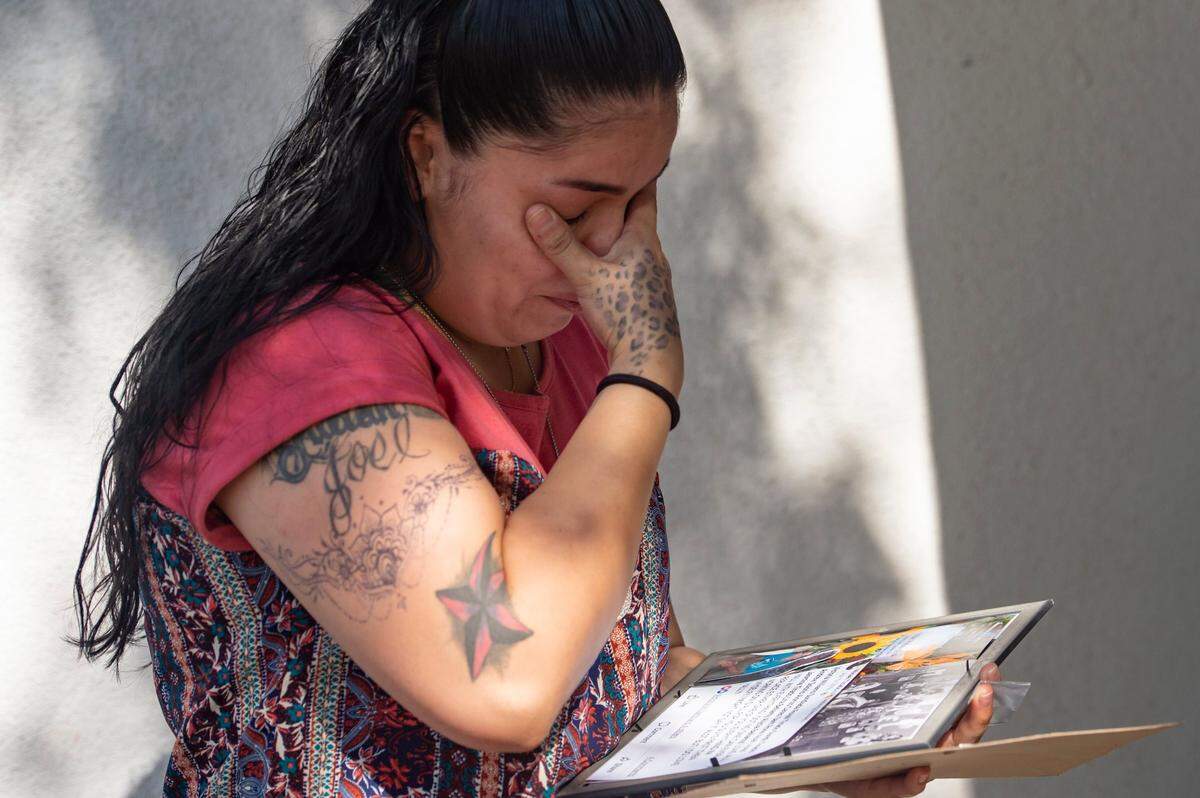
“Nobody knows about this fentanyl stuff going around,” Solorio said. “And all it took was one time.”
The police have few defenses against the wave of counterfeit pills flooding the streets. Earlier this month, three people, including comedian Fuquan Johnson died of suspected overdoses linked to fentanyl at a Venice Beach party.
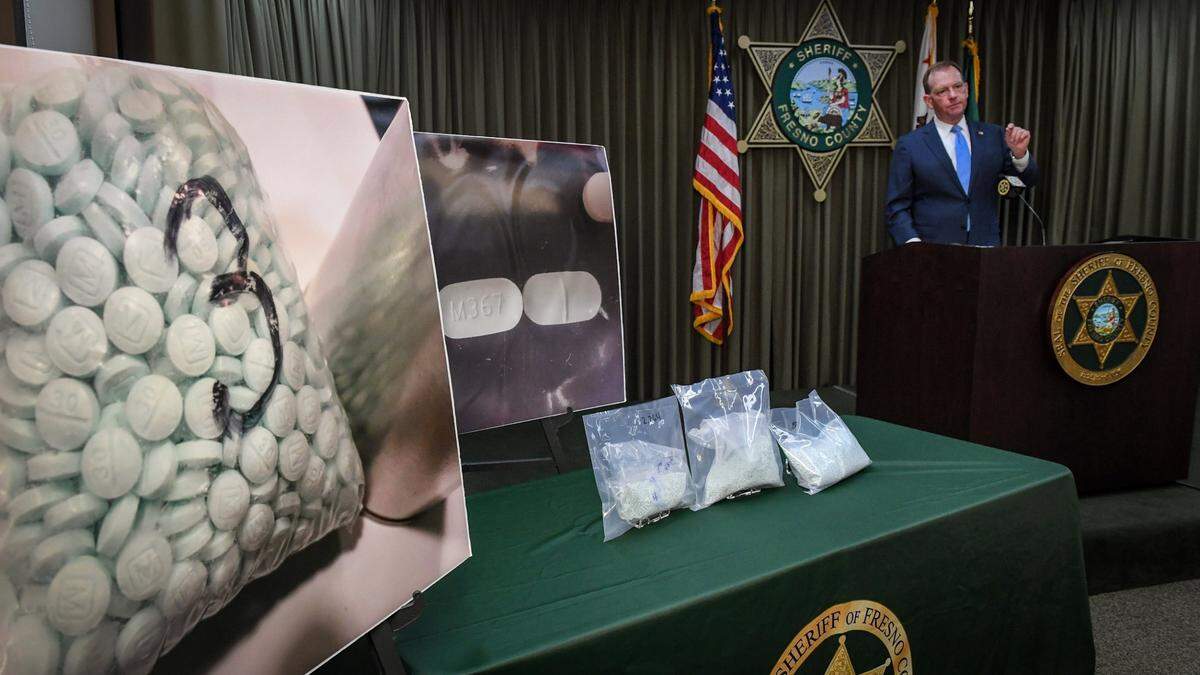
While announcing a public awareness campaign, Sacramento County District Attorney Anne Marie Schubert said her office’s crime lab, which tests narcotics seized by law enforcement, has found a high volume of fake pills. They’re often stamped in the image of well-known prescription drug brands like OxyContin, Percocet, Xanax and Adderall.
The District Attorney’s Office estimated that 97% of oxycodone pills confiscated between January and June this year were counterfeit, and nearly all contained fentanyl.
Schubert recently convened a group of law enforcement leaders and families to discuss solutions.
“What we came away from was the magnitude of the problem and the critical nature of us trying to flood our community with prevention because we will not prosecute our way out of this problem, ever,” Schubert said recently. “We just simply will not, and we don’t have the tools to do that.”
Illicit fentanyl’s deadly arrival
The first alarm sounded on March 23, 2016.
A 24-year-old man was rushed to the emergency room at UC Davis Medical Center where doctors first detected dangerously low blood pressure and respiratory failure. He would later admit to taking one and a half pills of hydrocodone purchased on the street. He told them it was his “normal amount” and that it left him “feeling really high.”
As his condition worsened, it became clear that the three rounds of naloxone — a narcotic widely used to reverse opioid overdoses — was not enough. They slid a tube down his throat to help him breathe. And then infused him with a cocktail of other drugs and tethered his body to life support.
For the doctors, the next two days would be a revelation.
Toxicology tests uncovered the culprit: a pill disguised as Norco was tainted with fentanyl. By the time the first patient was released two weeks later, nearly 50 overdoses would occur. More than a dozen people died from fentanyl poisonings that year.
UC Davis treated at least 18 of the overdose cases and documented the experience in a journal article published by the Society for Academic Emergency Medicine. The episodes placed additional strain on the region’s largest public hospital, requiring longer hospital stays and emergency naloxone deliveries to maintain supply.
“I think that was the warning shot for us, warning us that fentanyl was going to become ubiquitous as it is now,” said Dr. Daniel Colby, a toxicologist and co-medical director of the UC Davis emergency department.
“We still see occasional months of bad batches out there and a bunch of people getting sick at the same time although not to the same degree from that period back in 2016.”
The recent uptick in deaths is nevertheless stunning, Colby said. And it mirrors, in some ways, what they’re seeing inside the hospital. Patients often do not know if their supply was switched at some point. Some people are more aware that fentanyl is being substituted in counterfeit pills and laced into heroin and cocaine.
“I think the fentanyl deaths we’re seeing are consistent with fentanyl becoming more ubiquitous in the supply of drugs from the street,” Colby said. “The opioid epidemic is seemingly getting worse, but whether that’s related to the pandemic would be speculative.”
The new pills mills
In the spring of 2016, fentanyl outbreaks were already rattling the Midwest and East Coast but didn’t register much in California — the epicenter of legal cannabis. So law enforcement officials were not entirely surprised by the new and serious health threat.
‘We have seen a big epidemic on the East Coast, but to my knowledge, this is new to us,” a DEA agent told The Bee at the time. “We hoped it (fentanyl) would never come here. But it was only a matter of time before it came this way.”
The federal agency had already pieced together the international supply chain fueling the new wave of the opioid crisis. It stretched between countries in Asia and North America.
Drug cartels were purchasing pharmaceutical-grade chemicals on the cheap in China, shipping the products to Mexico, Canada or the U.S. where they manufactured bootleg versions of brand name drugs in makeshift labs. But instead of pills designed to alleviate pain, the main ingredient was fentanyl. A DEA intelligence brief from July 2016, described the operations as “a global threat.”
The economics of fentanyl are what make it such an attractive substance for drug traffickers. Unlike heroin or cocaine which are plant-based, fentanyl is a man-made opiate-based drug — and it’s cheaper to produce.
“It’s also very potent so a little fentanyl goes a very long way,” said Wade Shannon, a special agent in charge at the DEA’s San Francisco field office.
One kilogram of fentanyl (about 2.2 pounds) can be purchased overseas for $3,000 to $5,000, Shannon said. That has the potential to make as many as 500,000 counterfeit pills. In the Sacramento region, he said the wholesale price can be $4 or $5 a pill; when sold Individually, dealers can charge maybe $10 or $25 on the street.
“There’s no other synthetic opiate that gives the same bang for your buck,” Shannon said. “The problem is you have really inconsistent quality. Anything over 2 milligrams can be a lethal dose.”
The federal government has tried to disrupt the fentanyl supply chain with varying degrees of success but other countries have emerged as alternative routes to obtain the chemicals. In May 2019, China started controlling all forms of fentanyl as a class of drug, a move the DEA hopes will limit production and trafficking from the country. A DEA report later noted that India had become a black market source as well.
Bryce Pardo, a drug policy researcher with the Santa Monica-based nonprofit global policy think tank RAND Corp., said regulatory enforcement in both countries is lacking, which leads to minimal compliance.
And in some cases, manufacturers do an end-run around the authorities by tweaking the product just enough to escape scrutiny.
“They (China) have a massive chemical and pharmaceutical industry,” Pardo said. “They don’t even know how large it is and there is not a good regulatory structure in place to really enforce the guidelines they have in place. So that’s a problem.”
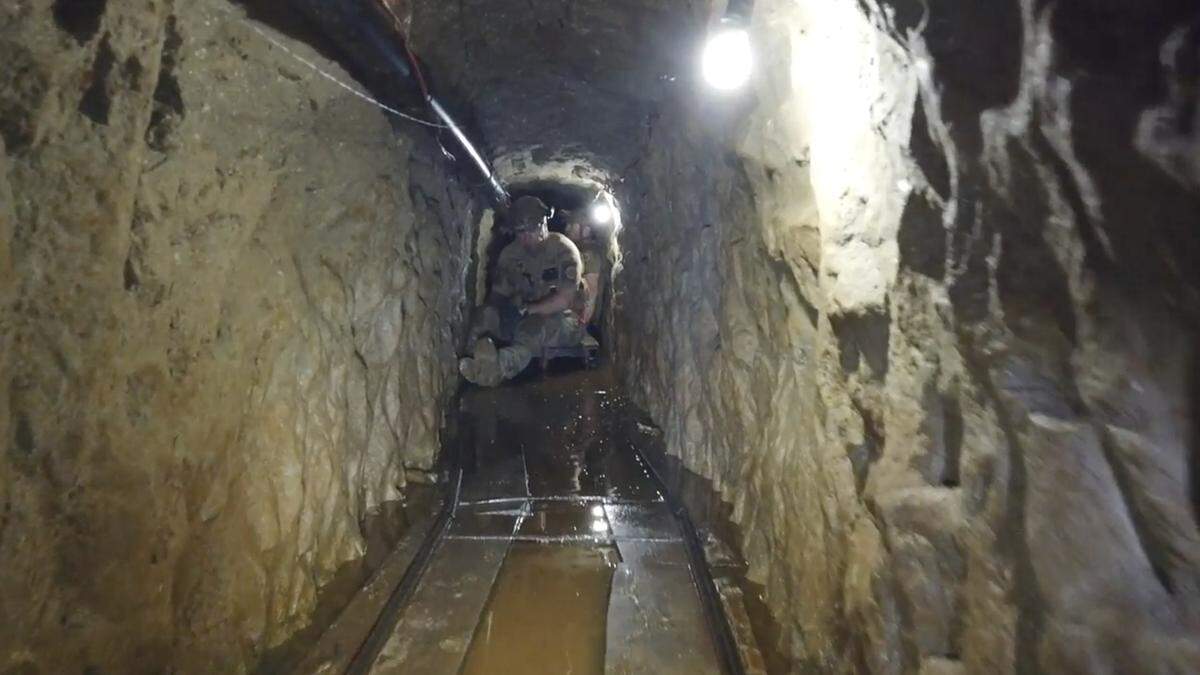
What’s more, the report noted that Mexican cartels were becoming savvier in their operations, using hard-to-find labs and industrial size tablet presses. Perhaps as a sign of their more sophisticated production methods, the amount of fentanyl seized at the border is also spiking.
In 2020, U.S. Customs and Border Protection seized 4,791 pounds of fentanyl in the field and at border crossings throughout the country. The volume seized in 2021 is already up to 9,337 pounds as of Aug, 4, according to the agency’s website.
DEA labs also tested 106 pill samples from drugs seized in 2019 — some 40 of which came from California — and found that more than a quarter of them contained a lethal dose of fentanyl. The highest measurement was 4.2 milligrams — more than twice the amount that could kill someone.
‘I cry every day’
Before the morning of Jan. 2, 2021, Lita Rose expected to have a New Year’s dinner with her 39-year-old daughter and one of her friends. They all would pile into her Valley Springs home in rural Calaveras County while Rose’s husband made them salmon croquettes.
But Jamila Ward never got the soul food dinner she wanted.
“The next thing I know I get a call in the morning telling me she was dead,” Rose said of her only daughter. “I’m devastated. She was my best friend.”
Jamila and two friends stayed up late in her Greenhaven apartment. The night, as Rose was told, included some drinking, three lines of cocaine and a Percocet. The coroner’s exam turned up cocaine and fentanyl but no Percocet.
Only Jamila died that night.
“I cry every day,” Rose said. “When your child dies in a circumstance like this you try to make sense of it.”
Not just a drug overdose
The rise of counterfeit pills challenges the traditional narrative around drug overdoses.
The victims are not simply drug-addled users with long histories of addiction. In some cases, they’re teens or young adults experimenting for the first time.
Ed Ternan, who founded a nonprofit to honor his son’s death from fentanyl poisoning, said those people represent the fastest-growing group of drug deaths. They’re people like his son Charlie Ternan who died in 2020 after taking a fake Percocet that he’d ordered online. Charlie, 22, died 30 minutes after ingesting the pill.
“Like a lot of families that this happens to, we were shocked to find out about the phenomenon of counterfeit prescription pills,” Ed Ternan said. “(It’s) a new thing on the drug scene and it’s killing unsuspecting kids that don’t fit the profile of a drug user.”
Now, Ternan tries to create more awareness of fake pills through Song for Charlie, the Pasadena-based nonprofit he and his wife created after their son’s death. The organization tries to reach people as young as 13 and as old as 30 in hopes of staging an intervention.
“Our message is a little bit less the traditional ‘Just say no. Drugs are bad.’ message,” Ternan said. “It’s a warning about the fact that they (the pills) are fake.”
Now there is a new category of drug-related deaths: people who ingested a drug in excess and those who were poisoned from a single pill. That distinction adds a layer of nuance to the tally of overdoses that Ternan said is sometimes ignored.
He likes to use a liquor store analogy: Let’s say you purchase a bottle of whiskey and die after taking a sip because it was actually brown food coloring and cyanide. Is that an overdose?
“That is not an overdose by definition,” Ternan said. “I did not take too much of anything; that is a poisoning and the responsibility for that death is on the seller of that counterfeit product.”
Ternan is among the growing number of families hoping for stiffer penalties against sellers of counterfeit pills. Prosecutors say it’s unlikely because the bar is high for winning a murder conviction in California.
A lawyer must prove a defendant knew his actions would likely result in death and showed a conscious disregard for human life, said Rod Norgaard, chief deputy in the Sacramento District Attorney’s Office.
Driving while under the influence is a case in point. If a guy drives drunk and kills somebody, that’s not murder, he said.
“The law says you have to prove this defendant knew it was dangerous to human life,” Norgaard said. “Just because it’s common knowledge doesn’t mean you can prove it.”
It’s even more challenging when you consider the elusive nature of counterfeit drugs. He said the pills look just like the real thing. And only an expert chemist can tell the difference. How are you supposed to prove a dealer knows that much?
“I can’t charge that guy with murder because I have no proof that he personally knew selling Oxycontin could kill someone,” he said. “I can’t prove he knew it was fentanyl, and I can’t prove he knew fentanyl was deadly to human life.”
What prosecutors can do in Sacramento County is formally advise charged suspects about the dangers of counterfeit drugs. That way, if they sold a counterfeit product in the future that killed someone they could be prosecuted for murder, he said.
“But that won’t solve the problem on the scale that this is occurring,” Norgaard said. “Half of one of those pills will kill you. We have people with thousands and thousands of pills in their possession.”
Crackdown on criminal distribution
Federal prosecutors have had better chances.
In 2018, the U.S. Department of Justice launched “Operation Synthetic Opioid Surge.” The campaign was aimed at hard-hit communities: two districts in both Ohio and West Virginia; and jurisdictions in Maine, Tennessee, Kentucky, Pennsylvania and New Hampshire.
Their goal was to reduce the supply of synthetic opiates like fentanyl by targeting wholesale and international distribution networks. The Eastern District of California, which stretches from Kern County to the Oregon border, was the only jurisdiction west of the Mississippi River.
In the years since, the U.S Attorney’s office has indicted people in at least 34 cases involving fentanyl trafficking and distribution throughout the Central Valley. What effect this has had on the street market is unclear.
“A part of the reason we made a big effort on the federal side is because it’s a lot easier to prove homicide under the federal law versus the state law,” said former U.S. Attorney McGregor Scott, who left his post in February 2021.
“When there were deaths, we were trying to send a message that there are going to be consequences for this and you better think about what you’re doing before you do it.”
Scott said the dramatic increase in deaths is “scary,” and surmised that the disruption from the pandemic could be at play. But more than anything, Scott said more attention should be directed to the U.S.-Mexico border.
“The interdiction at the border has to be a huge part of it,” Scott said. “The stuff that’s being seized, to them (cartels), is just a cost of doing business.”
Bryce Pardo, the drug policy researcher with the RAND Corp., said the availability of fentanyl may call for an unconventional approach. He said in the past, law enforcement aimed to raise the price of drugs sold on the street through seizures, arrests and prosecutions; and through investigations to dismantle smuggling groups.
That approach has a track record of success with heroin going back to at least the 1970s, he said. But fentanyl is a different kind of product — very easy to produce, powerful and deadly.
“Law enforcement’s role now is to do a better job analyzing what’s in these markets and putting out that information to the community in a quicker way,” Pardo said. “Doing a seizure analysis of the drugs and sending that message, especially to cocaine users who don’t want to come in contact with fentanyl, could very well save lives.”
Pardo said counterfeit pills and contaminated drugs on the black market are a “demand-side problem.” And Scott agreed.
“The only way we solve this thing, in the long run, is by eliminating the market,” Scott said. “We like to point our fingers at Mexico and we like to point our fingers at China, but Mexico would not be doing what it’s doing if there wasn’t a huge demand in the United States.”
Death at the end of the supply chain
Mikael didn’t fit the typical description of a drug addict. Allyssia said he didn’t even drink alcohol.
As a teenager, he gravitated toward sports — swimming, football, basketball. He graduated from Inderkum High School in 2016. But five years later, Mikael remained adrift in life.
“Ever since then he was searching for his passion in life to see what he wanted to do,” Solorio said.
Mikael worked as a cook at Chicago Fire, a pizzeria on J Street, but was let go. Then he worked at a movie theater until the coronavirus pandemic put the brakes on that. He was a great babysitter with her two children, perhaps after years helping out in a daycare owned by his father, she said
Mikael was slow to anger but Solorio noticed a shift in his mood. In the weeks before his death, she said he seemed depressed by his situation. He started hanging out with friends she knew were doing drugs. Solorio struggled with how to intervene because, after all, he was an adult.
He had not been out of his room all day, which wasn’t odd because he would sometimes stay up playing video and emerge around noon or 1 p.m. It was about 6 p.m., though, and he still hadn’t come out yet. Apparently, he had died sometime in the night.
The coroner found marijuana in his body and high concentrations of two types of fentanyl. His listed cause of death is fentanyl intoxication, a technical term for overdose, records show.
Solorio hoped there would be more of an investigation. She wants to know where he got the counterfeit pills and who sold them. But no one, including the friends he had been out with the day before, has offered any clues, she said.
“It’s heartbreaking because we know (they) know something but they don’t want to say anything to anyone. We know there’s information being withheld,” Solorio said. “Even a year later, everything is still fresh and hurts very much.”
This story was originally published September 19, 2021 at 5:00 AM.