
A harrowing Kabul escape. A Sacramento motel. How Afghans are adjusting to their new home
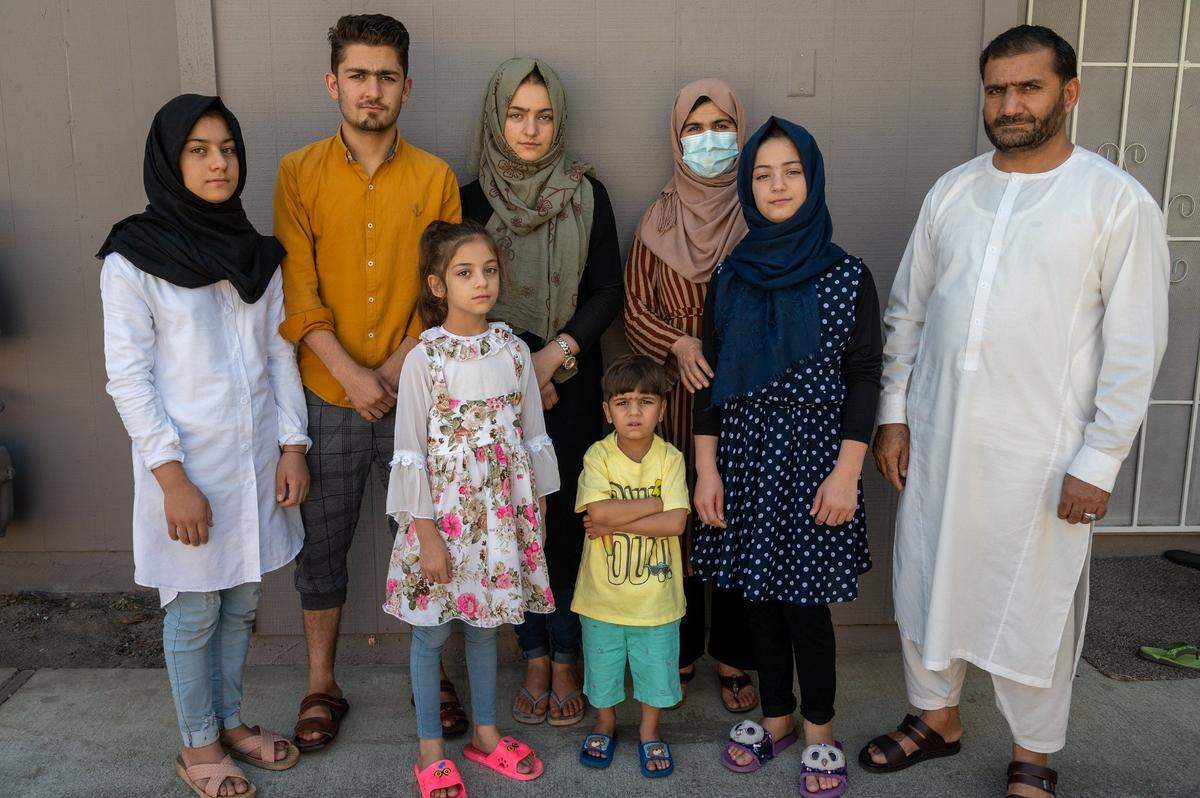
They headed to the airport on Aug. 15, the day Taliban fighters stormed into Kabul, took control of the presidential palace and toppled Afghanistan’s government. As panic and uncertainty swept the city, Abdul and his family boarded a plane at Hamid Karzai International Airport.
“Flight attendants announced, tighten our belts, then we will fly soon,” Abdul said through an interpreter. The family — Abdul’s wife and six of their children who range in age from 4 years old to 20 — obeyed along with hundreds of other people onboard Qatar Airways flight 7323.
“And then nothing happened.”
Abdul, who only wished his first name be used because of fear for his and his family’s safety, had worked as a guard for the U.S. embassy in Kabul. He obtained Special Immigrant Visa papers to get himself and his family out of Afghanistan. He had done the work for 19 years, he said. He had a glowing review and a binder of achievement certificates to show for it.
Their flight would come with weeks to spare before U.S. forces completed their withdrawal from the country. They were anxious, though they expected a smooth journey.
Like thousands of other Afghans fleeing their homeland, Abdul and his family were eager to restart their lives in America. They picked Sacramento, in part because the county is home to the largest concentration of Afghans in the U.S. The diaspora of relatively young refugees makes it easier to settle in, and the climate makes it feel like home.
But on the plane, minutes turned to hours. Tension ratcheted up as Afghanistan’s government fell. Abdul feared the flight would be forced to offload passengers and send everyone home. It would be a worst-case scenario, he said, especially for those like him who had spent years doing work that went against the Taliban’s interests.
“We will get targeted,” Abdul said.
Then, after four uneasy hours, the plane suddenly lurched forward. It rumbled down the runway and began hopscotching around the planet, from Kabul to Qatar to Washington, D.C.
On the 14-hour flight to Washington, chaos deepened on the ground where they waited only hours earlier. People flooded the tarmac and crammed into military transport planes. Abdul and his family would later see online showed men falling to their deaths after wedging themselves into a military jet’s wheel well.
“The first thought,” Abdul said he had upon landing in the U.S. was, “I feel 100% safe.”
Finally, around 9:30 p.m. Aug. 16, their United Airlines flight touched down in Sacramento. Abdul and his family are among the hundreds — perhaps thousands — of Afghans arriving in Northern California this year. They worked alongside government forces and escaped ahead of the U.S. military’s slapdash exodus from Kabul.
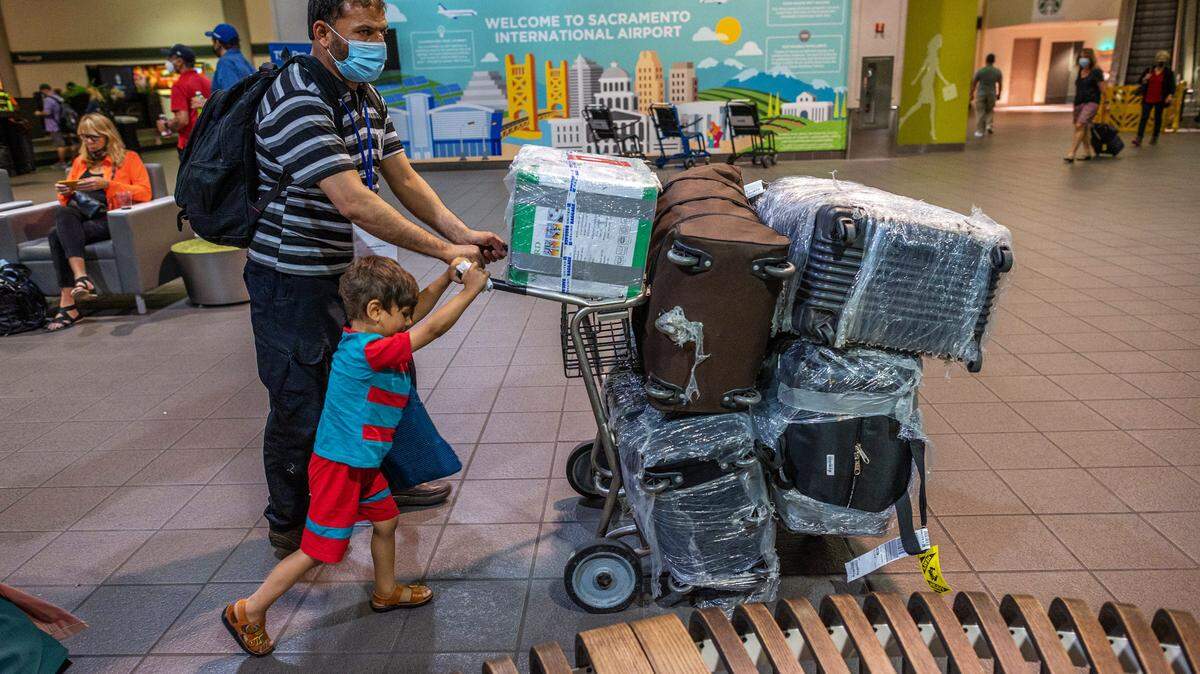
Abdul, his gentle eyes focused on the task at hand, used his limited English to navigate to the baggage carousel at Sacramento International Airport. That was easier said than done, as he saw signs for a flight from Dallas and another from Dulles.
His partner, Adela, corralled their four daughters and 4-year-old son in a nearby seating area. Signs of sleep deprivation mounted in everyone’s eyes, the only visible part of their faces that were otherwise obscured by the blue surgical masks they wore while flying around the world.
Their eldest son, Rashed, 20, went to work hauling luggage off the crowded carousel in the corner of Terminal A. One by one, he stacked the dozen or so bags onto the carts. It was everything they’d escaped with. The rest of their lives were left behind in Afghanistan, as were Rashed’s two older sisters.
Behind them at the luggage carousel, a backlit sign depicted a grove of almond trees and a message: “Welcome to Sacramento County.”
Here they must resettle with the aid of local agencies, which engage in bidding wars for apartments with limited federal funding and a tight housing market. They’re trying to lock in apartments for the new arrivals who are left couch-surfing or cramped in one-star motels for weeks, maybe months.
They fear they cannot help all the refugees.
“It’s like the perfect storm right now of just a system that’s going to break,” said Kathy Chao Rothberg, CEO of Lao Family Community Development, one of Sacramento’s five resettlement agencies and the group resettling Abdul.
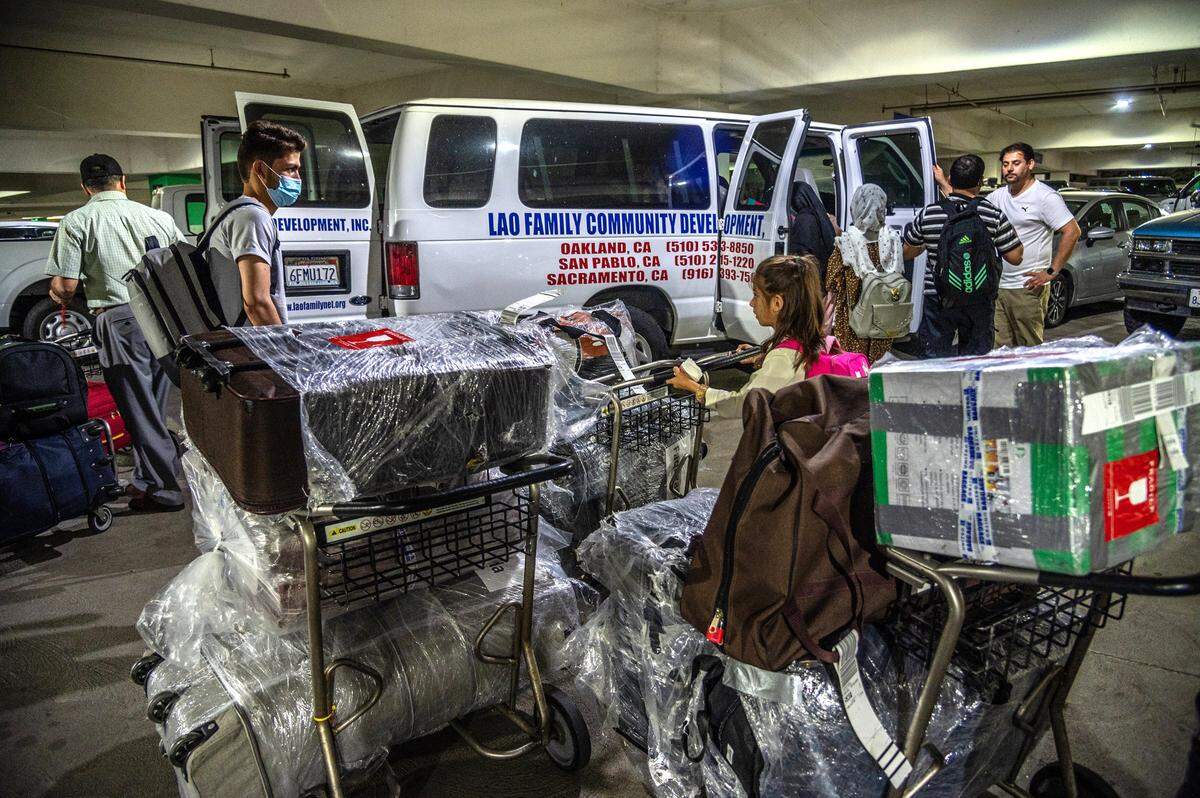
As the family stepped into the warm evening air that Monday night, a suitcase tumbled off the cart. One of the girls snagged a handle and dragged the bag as plastic wrap ripped and fabric scuffed across the crosswalk. Headlights lit the way, illuminating shreds of hope and weariness.
Bag by bag, men stacked the suitcases in the agency van like a strenuous game of Tetris.
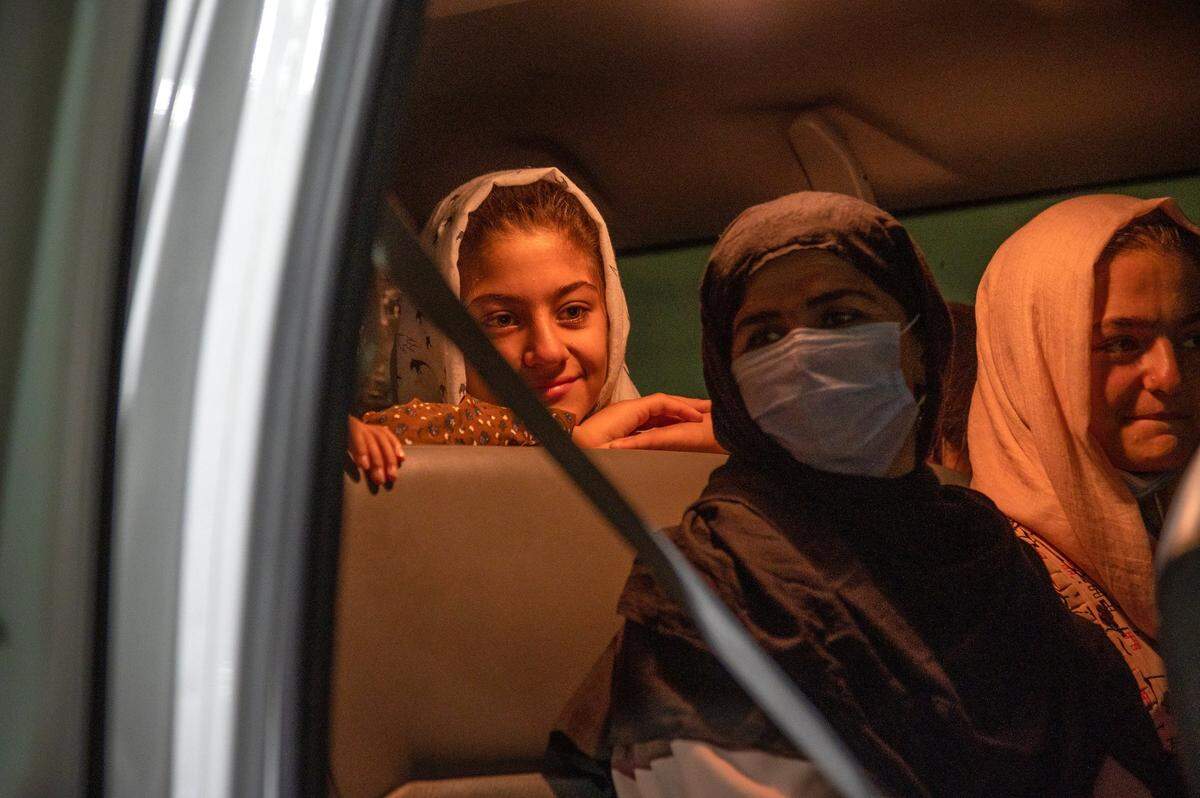
And then, 15 minutes after taking their first steps in California, they were off to the next destination: a motel offering peeling wallpaper, dingy cabinets and pared-back rooms off Interstate 80. Their new U.S. home, for now, was America’s Best Value Inn.
‘Scrambling’ for a space
Resettlement agency caseworkers learned only about 24 hours earlier that Abdul and his family were coming. A family of six was landing with them, too. And that Monday afternoon, as the world watched what was happening in Afghanistan, Rothberg’s resettlement agency got word that another family with 12 people would be arriving that night, setting in motion a scramble.
Normally, resettlement groups have at least two weeks to secure an apartment or similar permanent housing for new families. It’s always challenging but usually workable and the most prudent use of money and time, said Rothberg. Lately, they’ve had mere hours to work what can spiral into a herculean puzzle.
Afghan families tend to be large, while hotels can only accommodate four people per room. Those expenses add up.
Abdul’s family of eight, for example, needed two rooms. Federal benefits gave them approximately $1,025 each in resettlement and placement “welcome money.” It’s akin to a one-time grant to get started in America, the money used by resettlement agencies to pay for hotels, food and more permanent housing. It dries up fast. A two-week stay in a $100-a-night motel could cost the family a third of their cash with nothing permanent to show for it.
“That’s why it’s better to use as little money as possible for the motel and then find the apartment,” Rothberg said. From her perspective, it would be better to hold people on military bases until caseworkers secured a permanent space.
Rothberg said her team has struck out during the searches in recent weeks. In one instance, she said they located a three-bedroom apartment that was listed for $2,100 a month. Someone else offered to pay $2,600. Rothberg’s team was outbid.
“We’re scrambling,” she said.
‘Out of your budget’
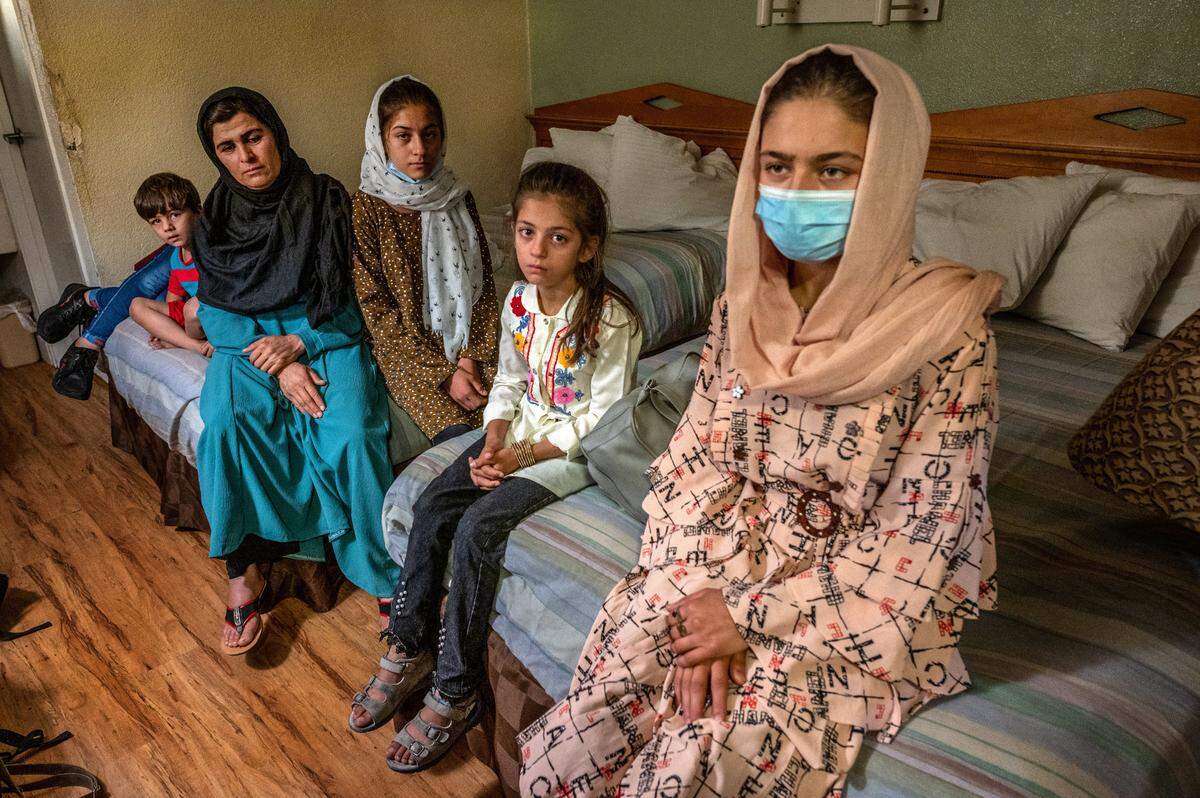
Instead of being whisked to an apartment to start their new life, Abdul and his family arrived at the two-story motel looking drained of energy and devoid of hope. One daughter stared into space. Mom had a blank expression, apparently too exhausted to emote anything more.
Their room lacked soap and toilet paper. Marijuana smoke was pungent around the motel grounds. They could hear planes overhead and the hum of North Highlands traffic.
They would stay the night and soon be gone.
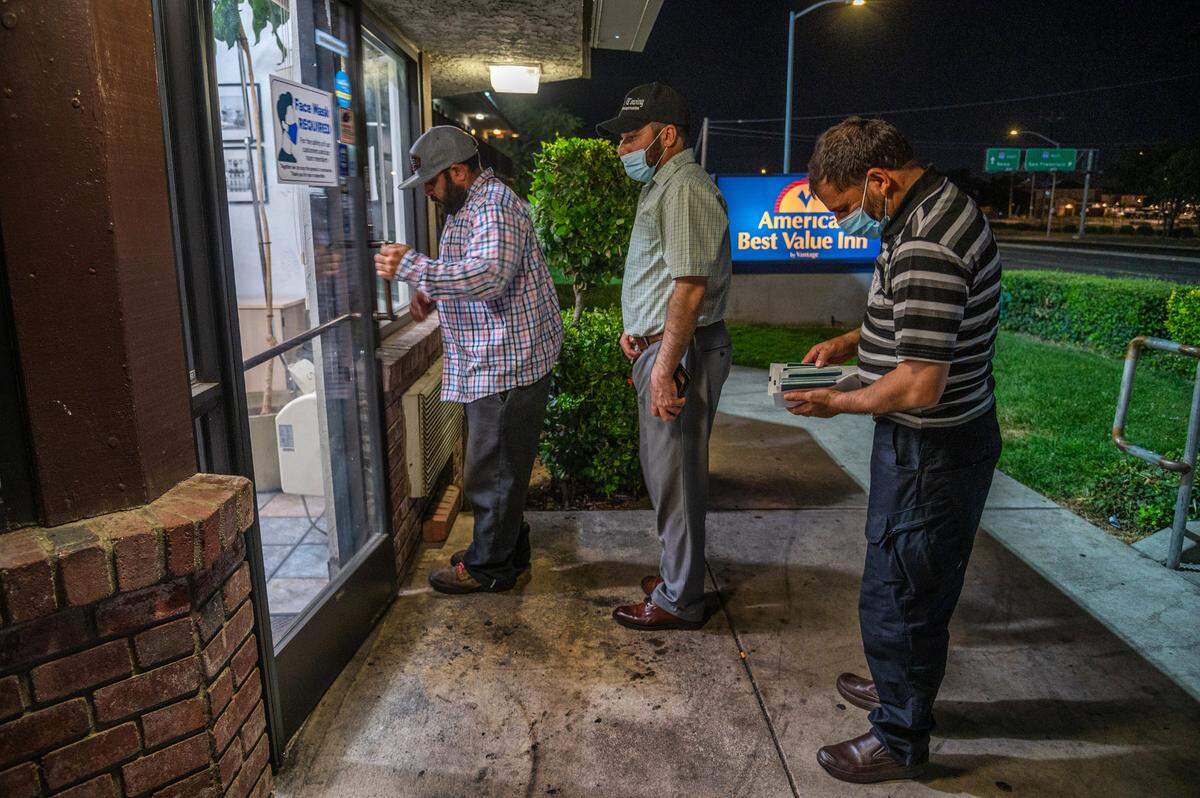
Knocks on the motel room door went unanswered the next afternoon when Omar Mustafa Karamkhil, a caseworker, went to meet them for orientation. This happens, Karamkhil said, who is also in Sacramento on a Special Immigrant Visa after working with the U.S. government in Afghanistan. He still carries his weathered government badge in a wallet, a faded point of pride.
Abdul’s cousin, it turns out, also lives in the Arden Arcade area. Their relationship was a major reason why he chose to move his family to Sacramento. So, that Tuesday afternoon, Abdul and his family fled the motel and had lunch at the man’s apartment in a gated community.
Karamkhil met them there. More comfortable that way.
Abdul and his family huddled on the couch with their hands clasped and listened as Karamkhil spoke almost nonstop for an hour. As a floor fan whirred in the background, he talked about government benefits and housing and how to buy furniture. He explained the basics of job searching and the parameters for spending their allowance. He warned them about scammers at small stores who might prey on the new arrivals’ unfamiliarity with the cost of things in the U.S.
They spoke in Dari, with some English sprinkled in.
“Department of Human Assistance.”
“Medi-Cal.”
“Food stamps.”
“We are going to buy the essential things for you,” the caseworker said, describing the pot of fast-dwindling federal benefits for refugees. “But the cost will come out of your budget.”
With no apartment yet that night, they’d have to return to the motel.
Rothberg and other refugee resettlement advocates say there has got to be a better way. One option: Inject federal dollars from the American Rescue Plan Act of 2021 into agencies that could buy up apartment complexes or hotels with appropriate amenities. Doing so would put them in control of getting people stabilized, rather than having to compete for single apartments while new arrivals languish in motels and use up their limited cash.
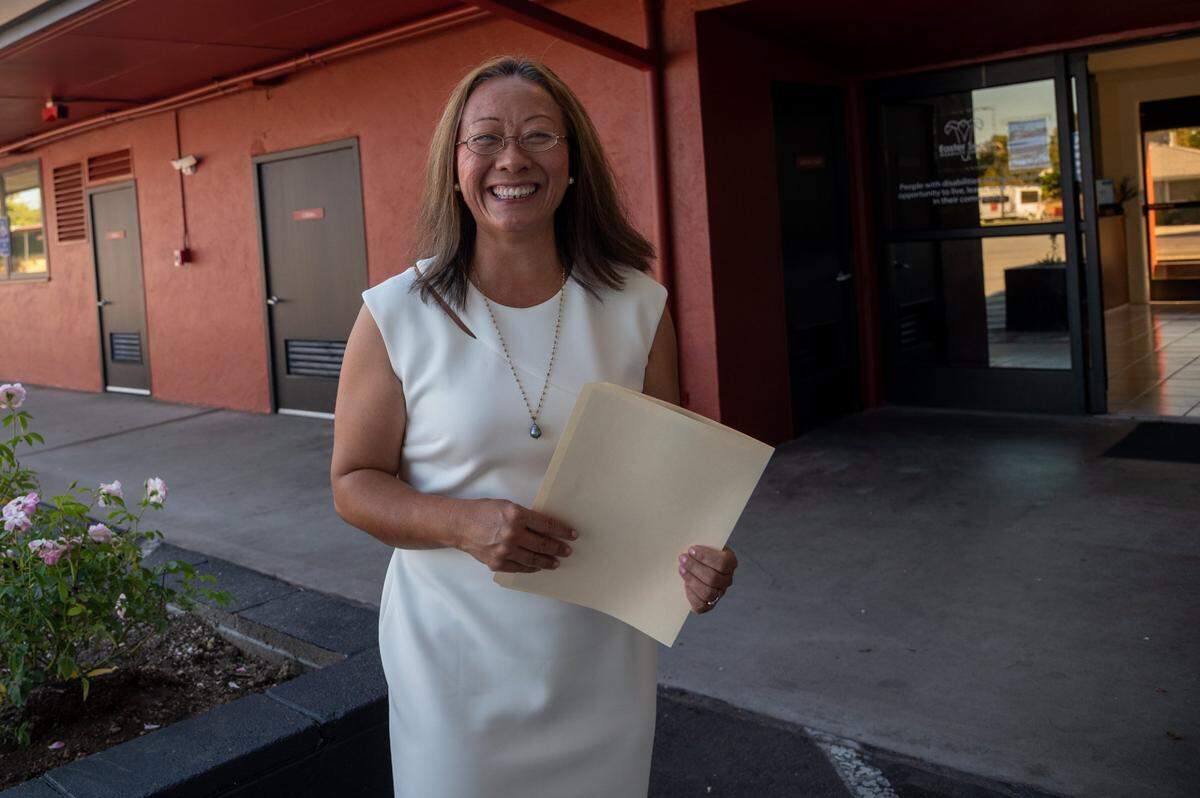
“What we need to do is step up and act faster,” Rothberg said. “Our leadership, our public officials, need to step up and say, ‘Yes, let’s allocate that money for Afghan refugees for housing.’ ”
Rep. Ami Bera, D-Elk Grove, introduced a similar plan and called for the coronavirus rental assistance money that went to cities and counties to be used for finding Afghans a place to live. If or when the authorization might pass in Congress is unclear, but Bera said this month that Sacramento-area leaders have endorsed it.
“I think they’re very open to using those funds to help folks find more permanent housing as opposed to a motel,” Bera said.
California left off ‘welcoming’ list
The International Rescue Committee, the largest aid group locally, last month predicted an eye-popping 1,700 Afghans would arrive in the Sacramento area by the end of the year.
More recent estimates suggest the total could be double that, said Kerry Ham, director of World Relief Sacramento. Roughly 1,000 Afghans landed in Sacramento in the month surrounding the Kabul evacuation — more than groups had resettled in the previous eight months combined.
The crush has left resettlement workers and officials simultaneously calling on the community to open its arms while also lamenting how the existing housing crisis is worsening with the sudden influx of people.
Despite taking an accommodating posture, no California cities were on a list of locations that the State Department found had a reasonable cost of living, housing availability, supportive services and sufficient resources. Most cities on the list, which has since been removed from the State Department’s website, are in the South or Midwest.
“Some cities in California are very expensive places to live, and it can be difficult to find reasonable housing and employment,” the State Department still warns. “Any resettlement benefits you receive may not comfortably cover the cost of living in these areas.”
Citing the region’s already tight housing market, aid groups successfully lobbied the U.S. refugee resettlement agency to change guidelines about who could come to Sacramento. Now, new arrivals claiming federal benefits must have a direct tie to the community, such as a spouse, parent or sibling.
Other state and federal benefits are available for new arrivals but often fall short. The primary one, called Refugee Cash Assistance, pays families a few hundred dollars per person each month and expires after eight months or when an adult gets a job.
California lawmakers have pledged an additional $26.7 million to help new arrivals, though unclear is exactly how that money might be spent or whether it can cover the anticipated influx.
A search for home
Ten days after touching down in Sacramento, Abdul’s eldest son, Rashed, watched driver’s training videos on his phone from the America’s Best Value Inn. He’d been studying English in Kabul. He wants to get his license and attend college in the U.S.
“My goal is to study to improve my knowledge,” he said through an interpreter.
Asked what subject in particular, he didn’t need to think twice or have anyone translate.
“Computer science,” he said.
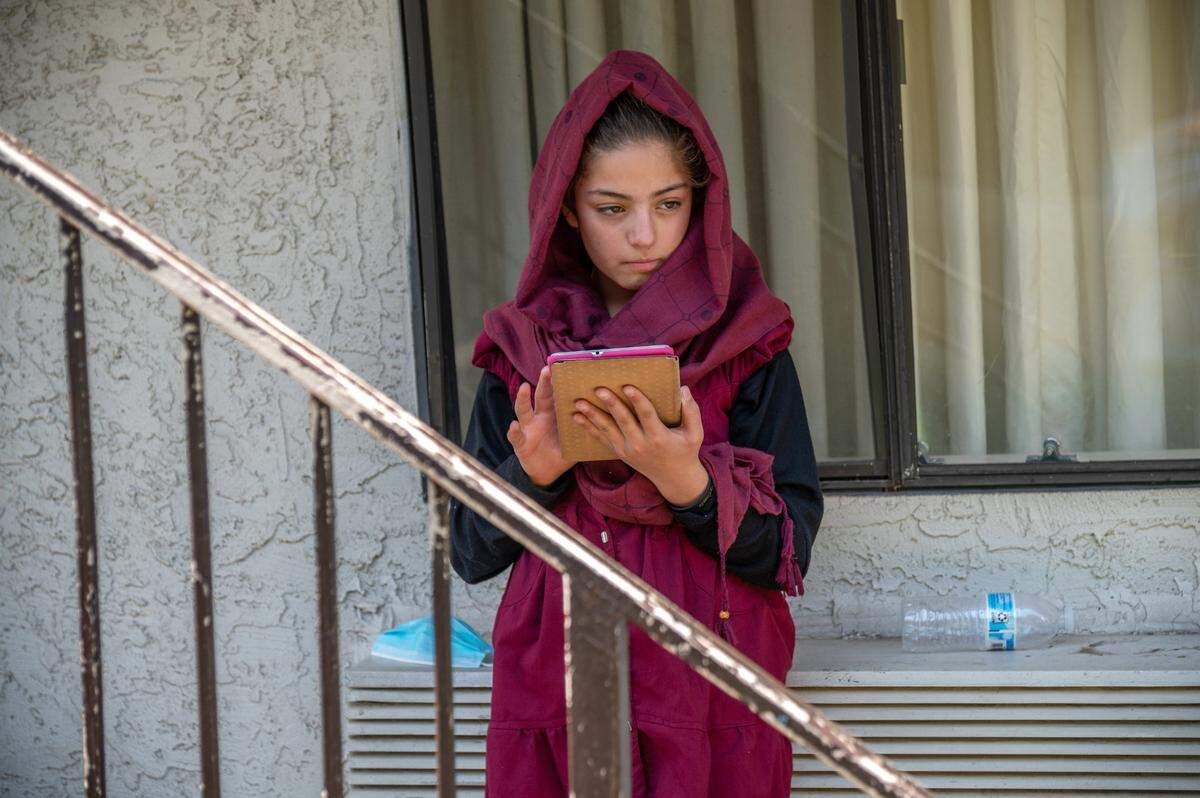
Meanwhile, at the motel, 4-year-old Abdullah ran up and down the courtyard sidewalk shouting. Zulaikha, 13, played on a tablet. Planes boomed overhead as they took off and approached nearby Sacramento McClellan Airport.
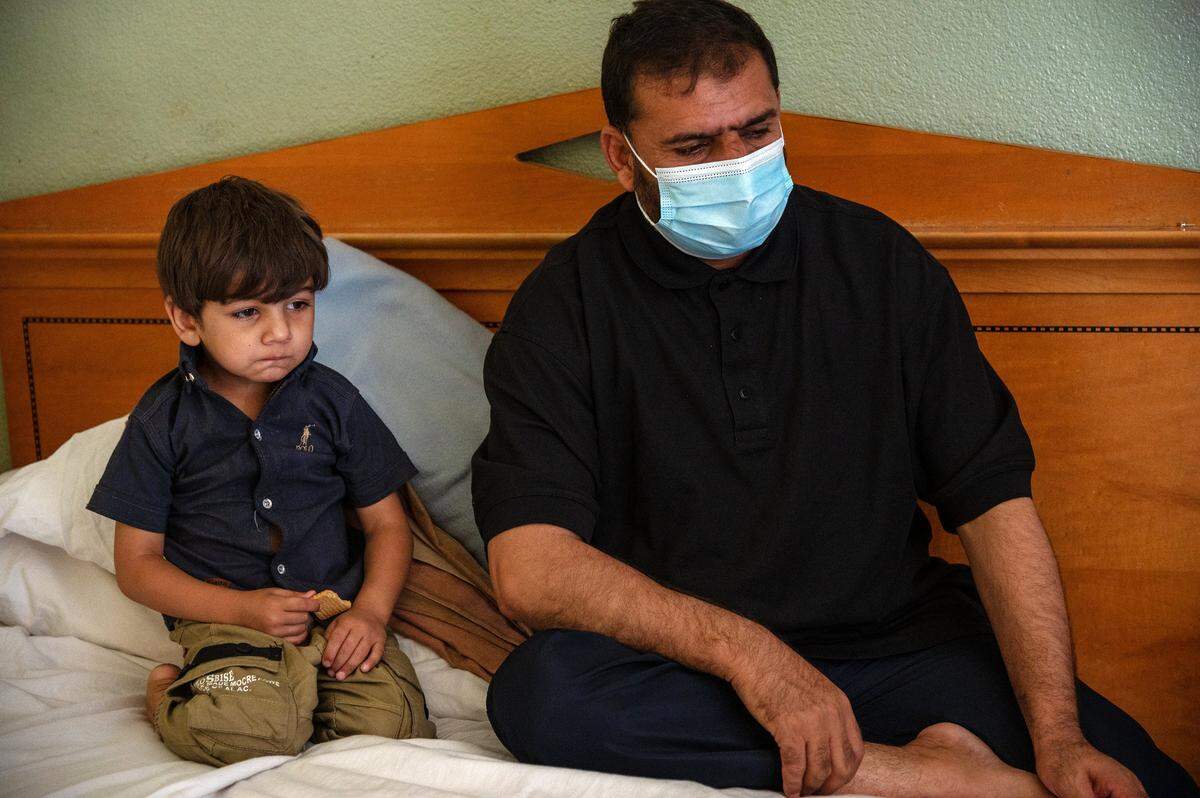
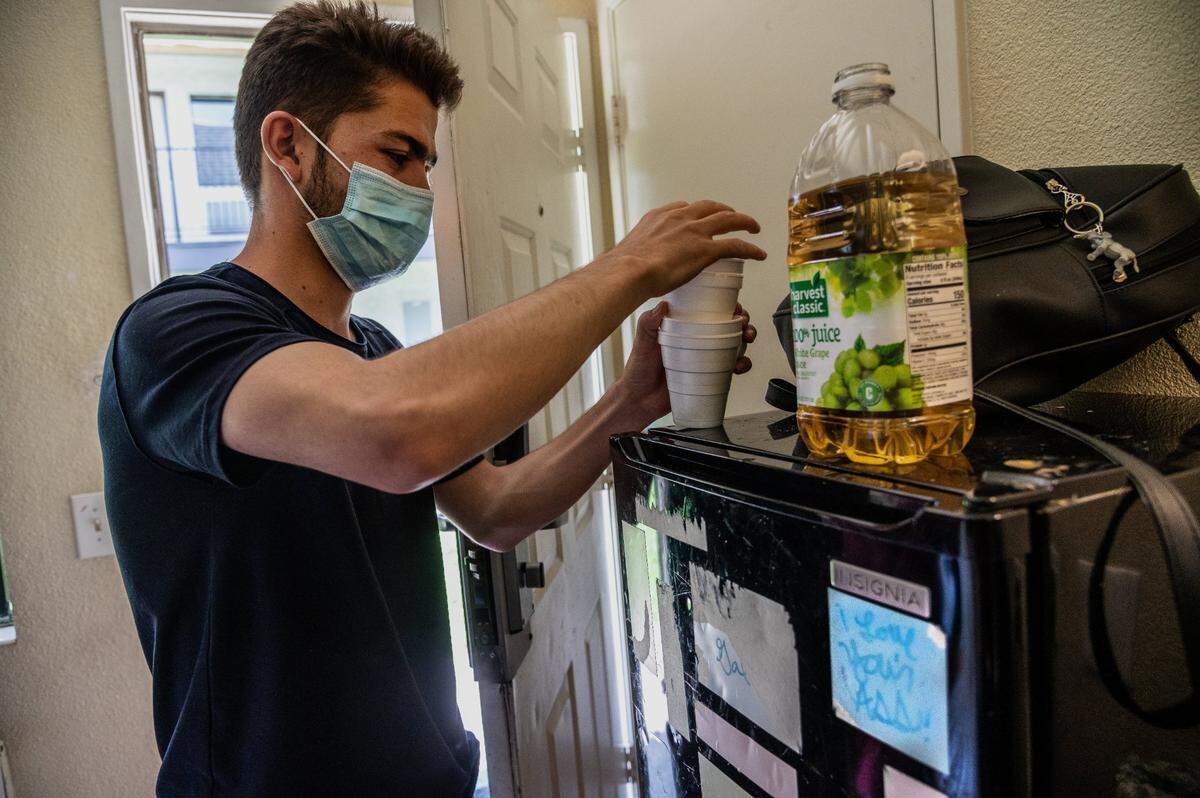
Abdul and his family sometimes walked to Walmart across the street from the motel for supplies with the welcome cash they had received from the aid group. They bought bread at a local Afghan market and ate dinner in their crowded room. Some evenings, they wandered to a park down the road, when the air wasn’t too smoky.
They did what they could to get away from the room where the walls started to close in on them.
With stuffed suitcases still piled in the corner, Abdul and Rashed explained that they had a lead on an apartment next to their cousin’s place. They hoped to seal a deal Sept. 1.
The day couldn’t come soon enough.
They couldn’t comfortably do family dinners together. Without a permanent address, school for the kids would have to wait. Strolls in the neighborhood meant walking next to cars speeding down Watt Avenue and a concrete jungle that mostly connected gas stations, fast-food joints and a gun shop.
Officially, about 9,700 Afghan people live in Sacramento, more than any other county in the U.S., according to census data. They’re mostly concentrated in the Arden Arcade area — the 95821 and 95825 ZIP codes, which account for more Afghans than in any others in America.
About half live below the poverty line.
“We have a profound moral obligation to welcome Afghan refugees,” said Jessie Tientcheu, CEO of Opening Doors, another resettlement group in Sacramento. “And that means securing the resources needed to welcome them into lives of stability and security.”
An exodus, a new life
After two weeks in the motel, Sept. 1 arrived. It was a good day after hard weeks.
Abdul signed the agreement for an apartment in the same complex as his cousin. It’s a two-bedroom oasis that feels worlds removed from the crammed limbo they found themselves in during their introduction to America.
In some ways, they were the exception, not the norm. Rothberg said 10 of the 57 families her group has resettled since July 1 remain in motels. Tientcheu said her group has one family who has been in a motel for seven weeks.
“We are finding apartments, but not at the pace we need,” she said.
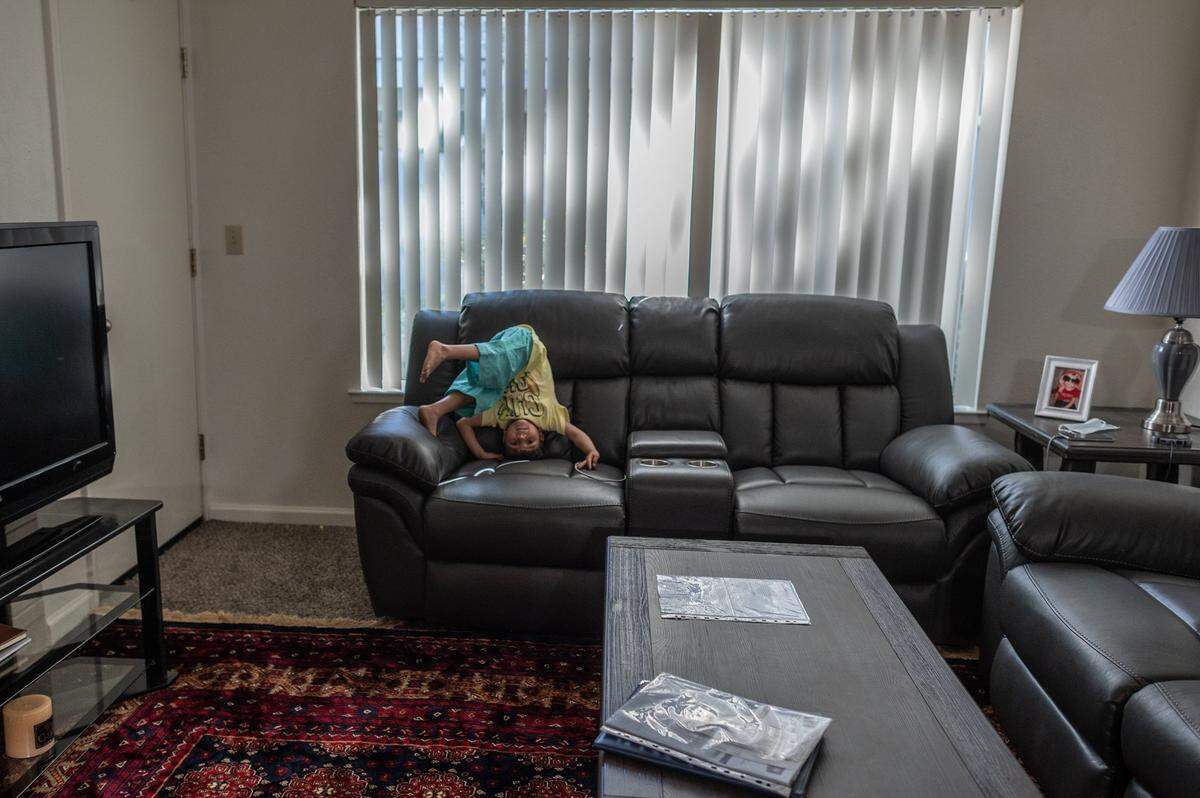
A few days after Abdul signed the lease, they unrolled the ornate rugs they brought from Afghanistan. They heaved couches into the first-floor apartment, which the resettlement agency helped them acquire.
They scribbled on a piece of paper and tucked it behind a clock in the center of the room. It’s a reminder for everyone in the family who is memorizing their new address: 95825.
“We are happy,” Rashed said, his English seemingly more confident by the day. His mind, he said, is constantly on the DMV training app that he downloaded on his iPhone. Once he gets his license, he can start thinking about a car. And then work and school.
In the meantime? “Just relaxing.”
During the week, they carpool with their cousin to buy groceries at WinCo and shop around the Afghan markets dotting the Arden area. Money is tight, groceries paid for largely with food stamps. Rashed said he misses some things, namely shorwa, a traditional vegetable, bean and meat soup.
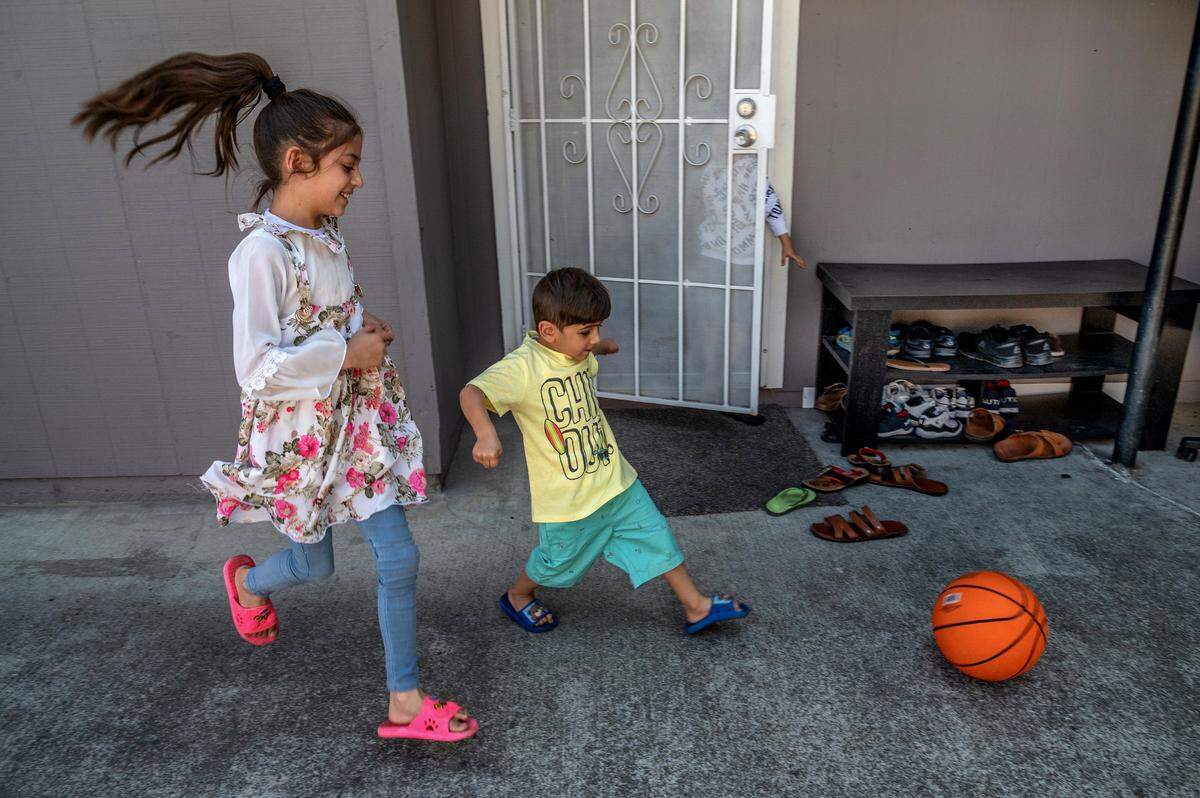
His siblings await a vaccination clinic, a necessary final step before they can enroll in school. They’ll need English classes, on top of the normal coursework. In the meantime, they play outside in the shaded courtyard, as leaves begin to turn bright yellow and rain down to the sidewalk and their entry mat.
On a recent Monday, Abdullah kicked a new basketball as if he were playing soccer. He clapped his hands and bounded across the patio as if he’d scored the championship goal, a beaming and prideful grin on his face.
Inside the apartment, Suraya, 19, sliced garlic and onions and prepared a late breakfast.
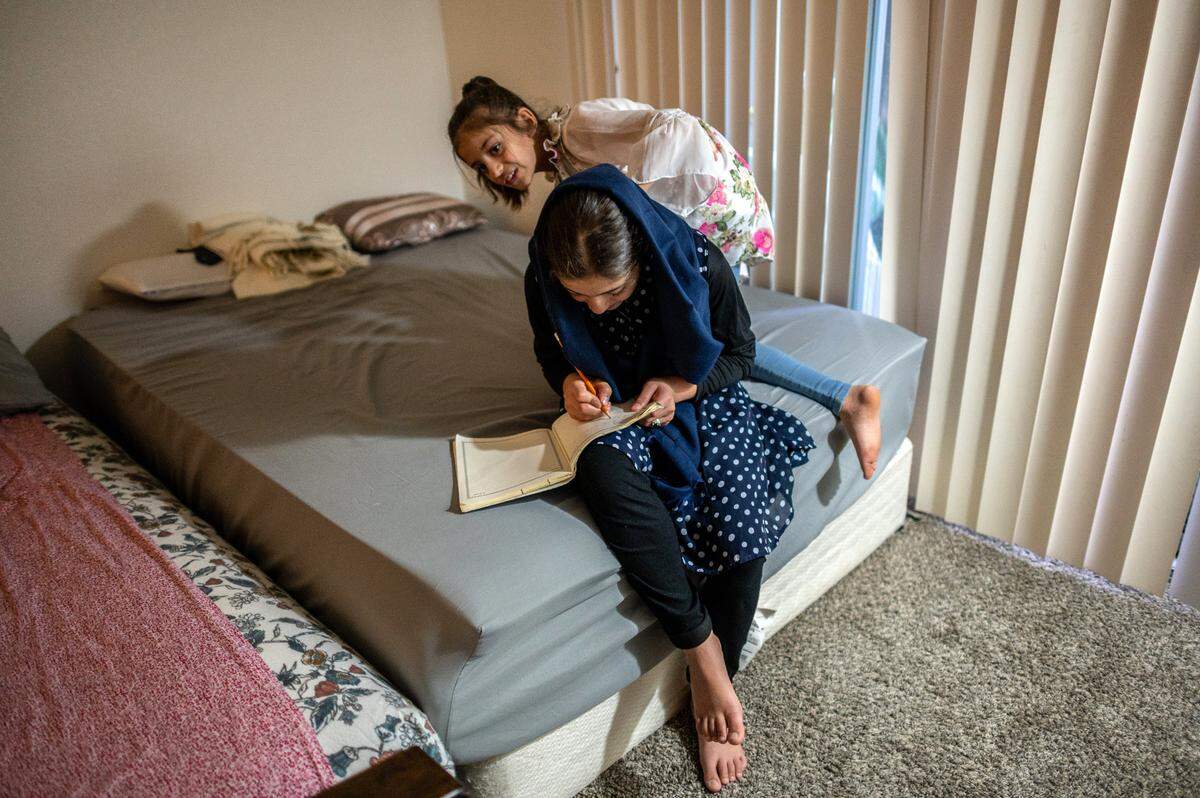
Her sisters practiced their English and spelling in the back bedroom.
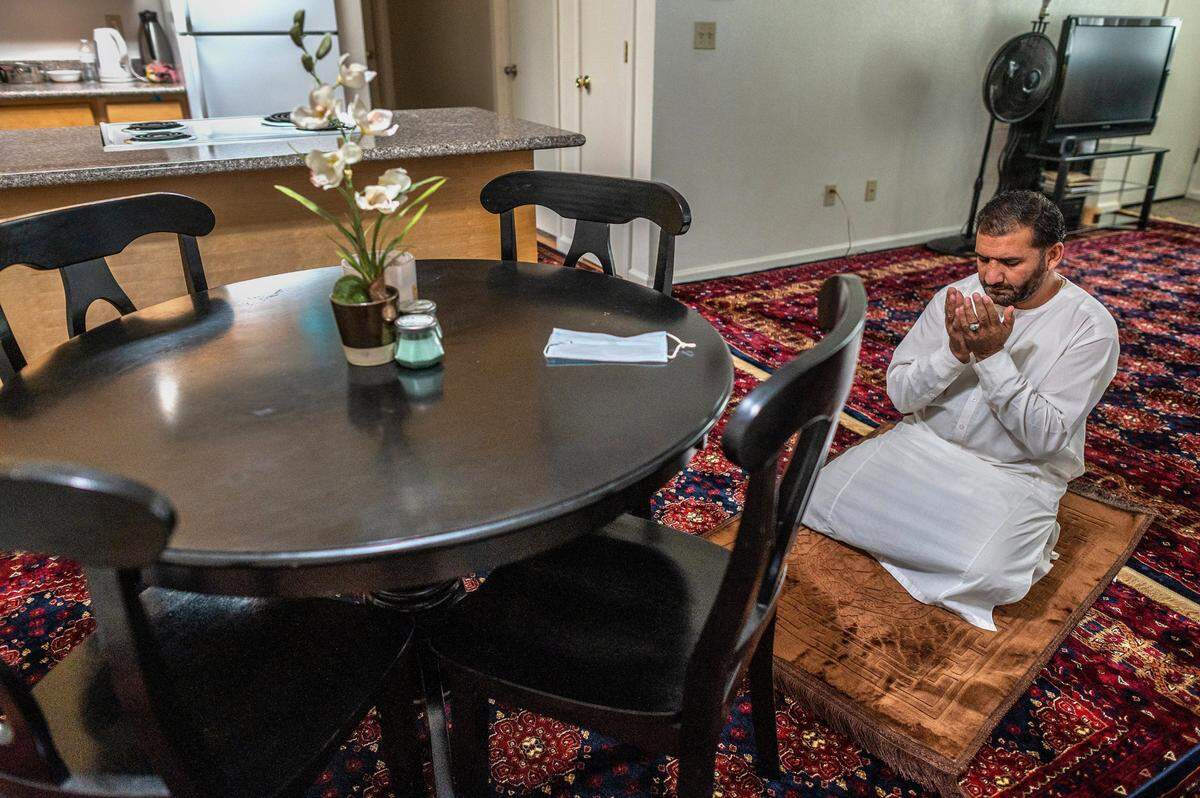
Abdul donned his white robes and laid a mat on the dining room floor. For several minutes that afternoon, he prayed. Through Rashed, he said he was praying for his family and all of the others like them who had left the country to restart their lives. He was praying for peace for those who remained.
“I’m praying for Afghanistan,” Rashed said, interpreting for his father.
They stood in the doorway to their apartment and paused.
“No bombs,” Abdul said in plain English, breaking the silence. “No fighting.”
This story was originally published September 26, 2021 at 5:00 AM.