
Controversial gunshot sensors now in more Sacramento area spots. Here’s what we know
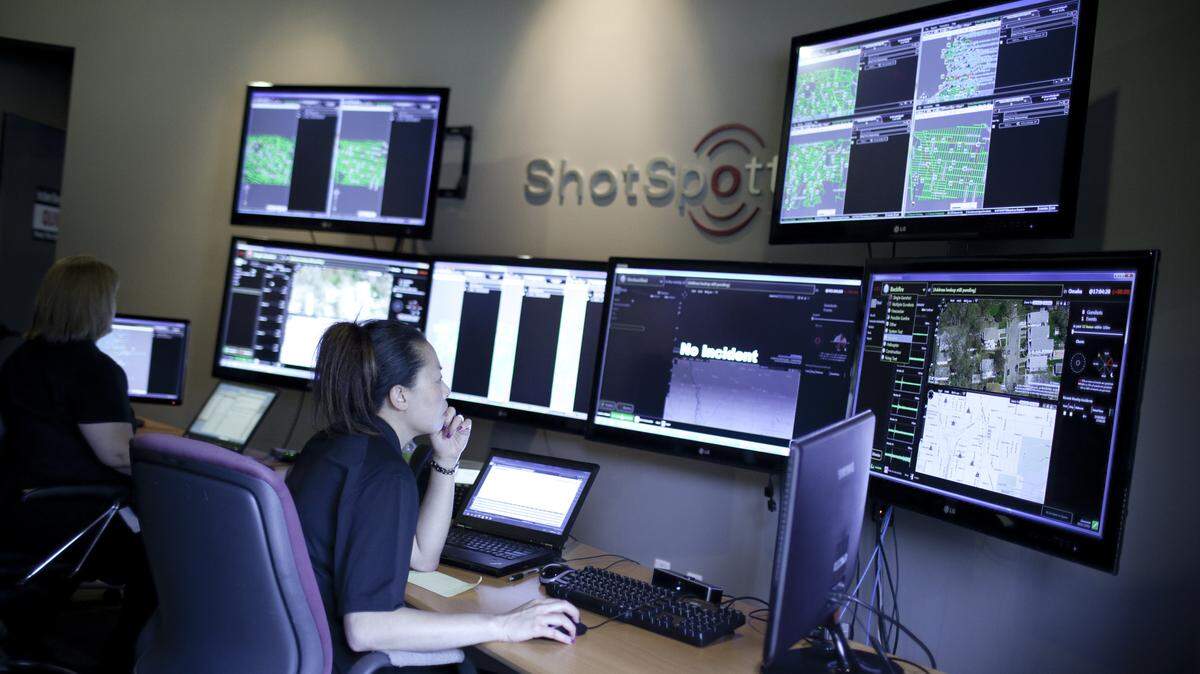
A controversial technology meant to help police get to shooting scenes faster was placed in additional Sacramento County locations last week. ShotSpotter aims to cut down emergency response time and better posture law enforcement to deal with gun violence, according to a sheriff’s office news release.
But the system has faced increased scrutiny in recent months, with several reports casting doubt on its reliability and criticizing its impact on police behavior.
So what is ShotSpotter, and why is it controversial? Here’s what we know:
How it works
ShotSpotter detects gunshots using audio sensors, which pick up noise then processed through the system’s algorithm. That algorithm has not been analyzed or reviewed by outside experts, according to media reports.
Then, a human operator listens to ensure it wasn’t a mistake — something like a car backfiring may get mixed up with the sound of a gunshot. Sometimes those analysts also reclassify sounds that the algorithm determined to be innocuous as gunshots. On some occasions, these changes have been made at the behest of police departments, the Associated Press reported.
Where is ShotSpotter located?
ShotSpotter’s technology is present in more than 120 cities, according to the company’s website.
The Sacramento County Sheriff’s Office now uses ShotSpotter in three locations. Last week’s two new additions, in what the sheriff’s office called communities that have “historically been plagued by gun violence,” are in the area of Watt Avenue and Roseville Road and the area around Howe Park.
The third location is in the area around 47th Avenue and Fruitridge Road, according to a sheriff’s office spokesperson. The sheriff’s office has used ShotSpotter since 2018.
The Sacramento Police Department also uses ShotSpotter technology. The technology was first deployed in the city in 2015. When asked, the police department did not provide specific location information, saying only that the technology is used in the North, South and East areas. The Sacramento Bee previously reported exact locations of the technology are kept secret.
Why is the tech controversial?
In its press release, the sheriff’s office called the ShotSpotter expansion a “game changer” in gun violence accountability.
But recent investigations from Vice News and the Associated Press, as well as the MacArthur Justice Center and the Office of the Inspector General for the City of Chicago, have cast doubt on whether the technology actually helps reduce gun violence and assists in finding evidence from gun-related crimes. Here are the main takeaways from these reports:
- There is a lack of clarity around the ShotSpotter software and how it works, which has led judges in some cases to throw out ShotSpotter evidence as inadmissible. On top of that, allowing people to alter initial results introduces the potential for human bias.
- The MacArthur Justice Center’s study found that in Chicago, over the course of about 21 months, 89% of ShotSpotter deployments surfaced no gun-related crimes and 86% led to no crime report at all.
- Not only are police chasing dead-ends, according to this data, but the presence of ShotSpotter technology in a neighborhood is altering police behavior, according to the Chicago OIG report. The inspector general’s office found that when police believe they are working in an area that has seen a lot of ShotSpotter alerts, they sometimes use this perception as a reason to stop people or pat them down once a stop has been made.
Last year during the height of national protests decrying the police murder of George Floyd, local activists also criticized the Sacramento City Council for approving the extension of ShotSpotter, saying it would increase frequency of police interaction, therefore increasing the risk of police brutality against Black residents.
To sum it all up, critics say it’s not clear that ShotSpotter’s technology produces accurate and reliable information, and it may influence the way police interact with communities.
Caroline Beckmann, a spokesperson who represents ShotSpotter through public relations firm Trident DMG, responded to questions from The Bee with links to official statements on the AP and Vice reporting. These statements assert reports created a “false narrative” around ShotSpotter technology. The company also said reports that the system turns up “dead ends” do not offer a full picture of police action, which ShotSpotter does not control, following an alert.
ShotSpotter contends its algorithm is effective in distinguishing the sound of gunshots from other, similar noises and frequently touts its 97% accuracy rate for real-time detection. ShotSpotter’s evidence has been successfully admitted in more than 200 court cases in 20 states, according to an article written by CEO Ralph Clark.
Do you have questions, concerns or other thoughts about ShotSpotter and how it affects your community? Email mjasper@sacbee.com.
This story was originally published October 4, 2021 at 11:33 AM.