
Sacramento family escaped the Taliban. How this principal was a lifeline from back home
The principal’s mission to help a family trapped in Afghanistan started with an easygoing, four-sentence email at 2:12 a.m.
Nate McGill, the head of Ethel I. Baker Elementary School in Sacramento, knew that a family in his district had traveled to Afghanistan in February to be with a grandmother whose health was failing. For months, the students logged in for online classes.
But the first day of the fall semester was approaching and, with it, a return to in-person classes. In the early morning hours of Aug. 20, McGill was working through a roll call of families he wanted to ensure would be in class when the opening bell rang.
The children, ages 6, 8 and 9, were at the top of his list.
“This is Mr. McGill from Baker,” he wrote in his middle-of-the-night introduction to Rahmatullah, father of three students. “I came by the house today to see if you all are back in the States. Are you all home from Afghanistan? Send my best to the kids.”
The worrisome reply came a couple of hours later: “We are stuck in Afghanistan, and the Taliban have captured (the) whole country,” the father wrote. The family had tried to reach the airport in Kabul to get a flight home but were blocked, he explained in his email.
“God safe us,” the father wrote, misspelling the word “save.” “Need your prayers please.”
Until then, McGill had only loosely monitored the developments in Afghanistan. He’d seen the headlines about the U.S. troop withdrawal. He was aware of the Taliban’s rapid power grab inside Kabul.
But he was also running an elementary school with more than 600 students. His job now included all the complexities of managing a school in a diverse, low-income neighborhood in the middle of a pandemic with ever-changing safety rules. Time and attention were in short supply.
“We were just hoping that they (the U.S. military) would see them at the airport, show them their picture and get them aboard one of the flights,” McGill said in a recent interview with The Sacramento Bee. Since the family already had papers to be in the U.S. and were established in Sacramento, he anticipated a smooth exodus.
McGill didn’t know then that he would soon be at the center of an eight-week international effort to extract those three students, among about four dozen from the Sacramento area who had become trapped in Afghanistan.
He would wind up working with an on-the-fly array of rescue groups and former military personnel who crafted plans to smuggle his students to nearby countries. He was on the phone with the U.S. Department of Homeland Security and coordinating with Sacramento’s congressional delegation and Sacramento City Unified School District. He would start his mornings with a text message to the family, coaching them at all hours through their fitful start-and-stop evacuation. He would help pay the family’s rent in Sacramento and wire them money.
McGill became the lifeline to a family a world away.
Escape plans dashed
A few days before McGill’s early morning email to Rahmatullah, Taliban fighters stormed into Kabul and took control of Afghanistan. In the uncertainty that engulfed the city, the students and their mother, Huma, said they spent seven days outside the Kabul airport trying to catch a flight home. (The Bee is not publishing the family’s last name out of concern for the safety of relatives still in Afghanistan.)
Their hopes of escape were buoyed by the official line coming out of the White House, in which President Joe Biden had vowed to “do everything” to get allies, partners and U.S. residents out of Afghanistan. The situation in Kabul was stark and devolving by the hour.
“But let me be clear, any American who wants to come home, we will get you home,” Biden said on Aug. 20, hours after McGill sent his initial email to the stranded family.
Optimism for a smooth escape was short-lived. Gunfire and teargas drove Huma, her husband and their children from the airport, she said. Hope of home was tumbling out of reach.
In Sacramento, McGill and other principals from Sacramento City Unified and San Juan Unified schools were having conversations about what advocacy might look like on behalf of the families. Who could they talk to that might help aid in a rescue? What could they do to expedite their return?
Those plans were punctuated with horrifying scenes that rippled around the world. On Aug. 26, explosions rocked the Kabul airport. In the end, evacuation flights plucked 120,000 people out of Kabul. Huma, who for years had worked as a translator for the United Nations, and her children — Faizan, 8, Pakiza, 9, and Raihan, 6 — were not on any of them. “‘Mom why can’t we go to the U.S.?” the children asked. “Mom, will the (Taliban) kill us?’”
No longer feeling safe, the family went into hiding.
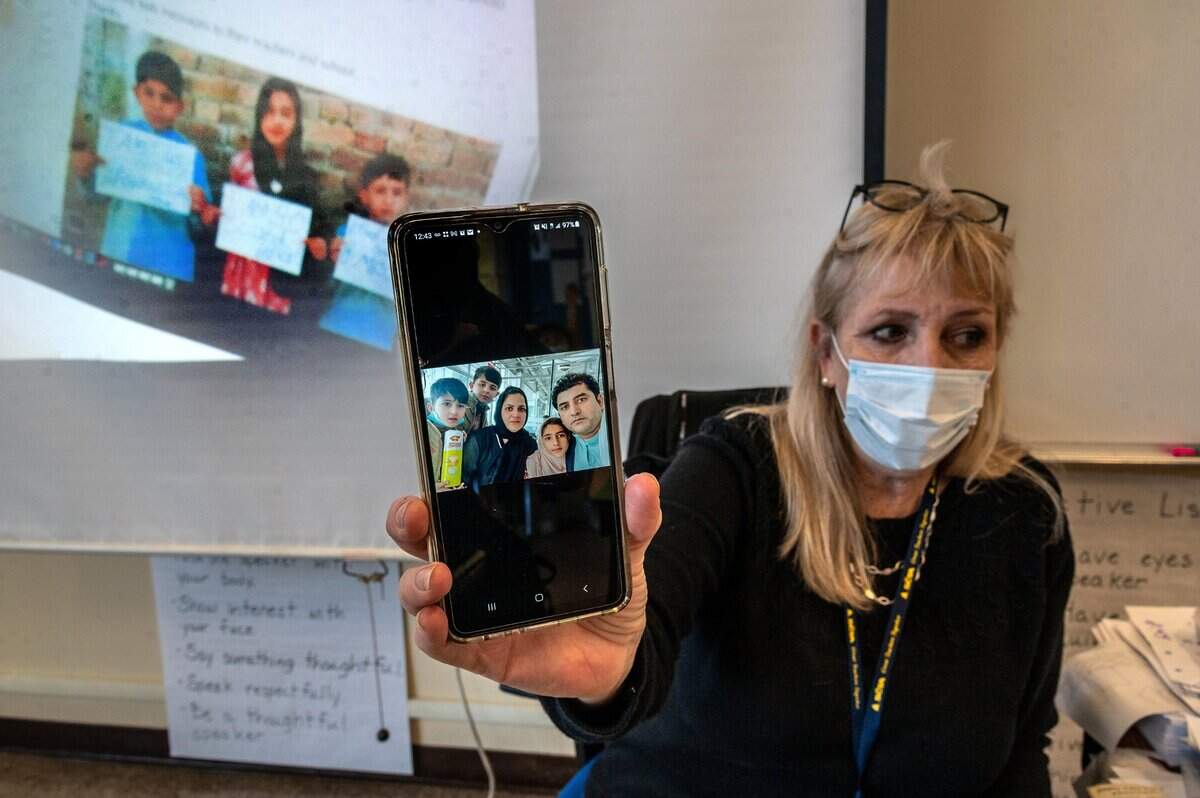
Huma sent McGill a photo of the three kids standing next to a brick wall and holding up signs.
“I am so scared here,” one said.
“Ethel I Baker School I miss you,” said another.
“Take us out of Afghanistan please,” said the third.
Four days later, on Aug. 30, Secretary of State Antony Blinken said the U.S. had identified fewer than 200 Americans still stuck in Afghanistan who were trying to leave. A handful of those people were students from Sacramento-area schools. As school officials began tallying who was missing classes, they came to realize roughly 50 Sacramento-area students were trapped.
“They feel unsafe everywhere they are,” McGill said from the elementary school playground on Sept. 2. It was the first day of class. While kids ran along the courts, McGill said Huma and her family had relocated three times in the prior three days, fearing they might be targeted.
“There’s present danger all of the time,” he said.
His sister posted the interview on Facebook. It would prove to be serendipitous.
‘Vicarious trauma exists’
McGill, 38, doesn’t want this story to be about him. The focus, he said, must remain on the students and families stranded overseas. To him, families like Huma’s seem to have been the “negligible margins” to a messy withdrawal. Missing in action through it all, he said, has been any semblance of an organized and involved federal government to help get U.S. residents, like Huma and her family, home.
A State Department spokesperson told The Bee they could not comment on specific cases but said officials are still involved in helping to arrange departure out of Afghanistan and to determine where evacuees can go temporarily and eventually permanently.
As weeks ticked by, McGill became central to their escape.
McGill was working hard on reopening school for five-day instruction amid the pandemic. His focus has long been on how to equitably serve all 600 of his students emotionally and academically. Last year, he made home visits around the Lemon Hill area to help find so-called “missing” students who’d not logged into remote classrooms.
Like many Sacramento-area schools, Ethel I. Baker Elementary has a large immigrant population. More than half of the families speak a language other than English. Dozens of students regularly cross the border to visit relatives in Mexico and beyond. School officials have worked with families who arrived in Sacramento claiming asylum, escaping gang violence.
McGill attended Peter Burnett Elementary School a mile down the street from his current office. After a Spanish teacher at McClatchy High School left a lasting impression on him, he majored in Spanish at UC Davis. He started teaching, which was sort of inevitable — his mother, sister and wife are all teachers. McGill, who is half Armenian, has tattoos on his arm of family phrases and his Armenian family name.
“I don’t speak Armenian,” he admitted. “But I should.”
Up at 5 a.m. every day, he almost immediately messaged the parents trapped in Afghanistan. Morning in California is early evening there, so the timing worked out, he said. As the weeks went by, the parents slept in shifts, so there was always someone to respond.
“Everybody needs this level of communication, they deserve this level of service,” McGill said. “This family has a situation that is bananas. … We have done very intense outreach for very unsafe situations before. This one just happens to be across the sea.”
But this latest work is particularly heavy.
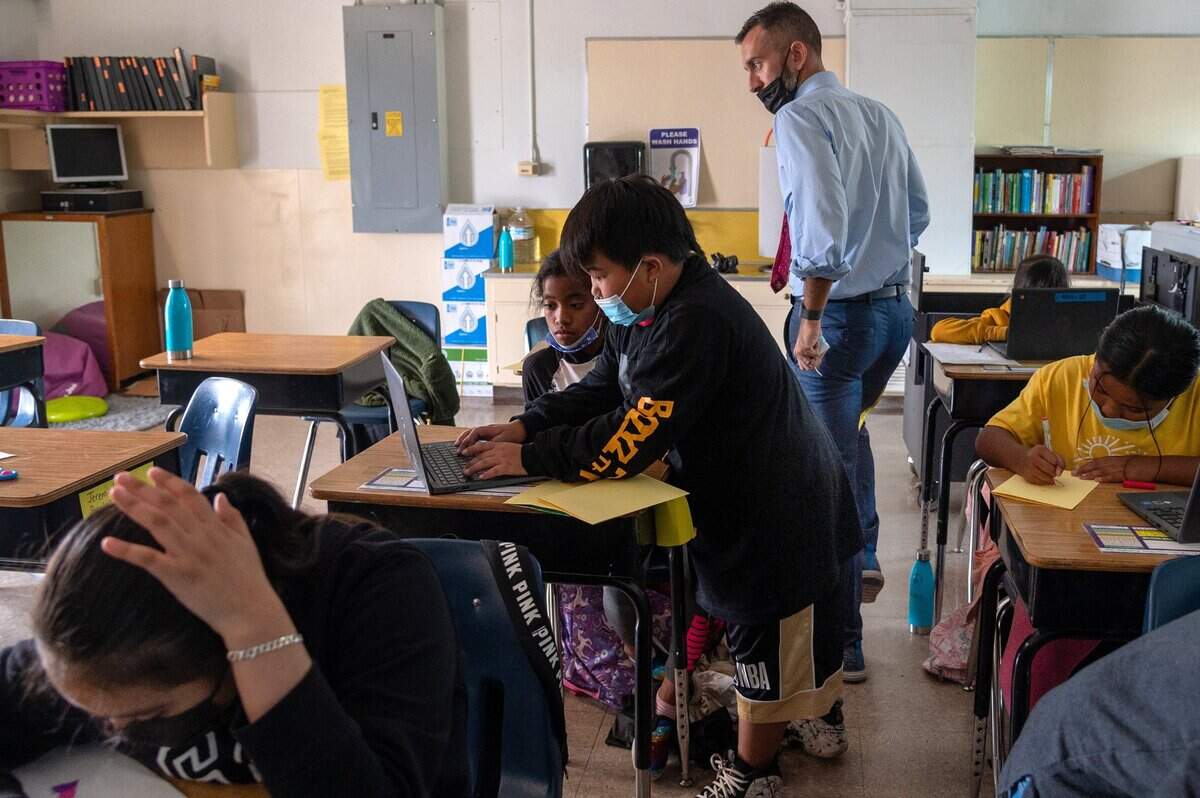
McGill — a naturally fast speaker — slowed his words in an interview at the end of September when The Bee asked about a particularly difficult exchange he’d had with Huma’s family.
Then he explained the images and media stories Huma and the rest of the family were seeing about reported executions not far from where they were hiding. There were searches. Relatives were no longer safe.
“Need your advice,” the father wrote McGill, describing nearby violence. “Should we wait some more days … what should we do sir?”
“It’s the middle of a crisis,” McGill said in the interview. “And so in the middle of a crisis, you don’t really take stock of how you’re doing necessarily. This crisis happens to be particularly drawn out.”
He acknowledged the vicarious trauma he and his counterparts in the district were facing. They felt powerless here in California.
But for the family? “It’s a matter of life and death.”
Principal, counselor, friend
The school days drew on.
On the rare days when they had reliable internet, the three children would sporadically log into Google Classroom and try to complete some online assignments. But they feared they could be tracked by Taliban leaders.
In between the seven times they relocated, their father would write out math problems in a messaging app on his phone. It was an act of desperation to keep them academically engaged — and distracted.
For a time, there were talks with a third-party group that had connections in Afghanistan about getting the family into a neighboring country. It wouldn’t be cheap, and the family didn’t have the money, so McGill stepped in. He offered to raise several thousand dollars to help pay for an evacuation flight.
“Just tell me the cost,” he wrote one day at 5:03 a.m. “Let’s do it.”
That seemingly imminent plan fell through. The built-on-the-fly plans to get people from across Afghanistan to the right place, at a certain time with the proper approvals has been daunting. Military veterans and a network of non-governmental organizations have led the efforts, which change by the hour.
Meanwhile, the kids were losing weight.
The stress might be causing the children to lose their appetites, McGill thought. “They are so strong,” he assured the family in a message.
“Yes they are the reason of (my) strongess,” Huma replied.
Huma was struggling with anxiety that at one point required medical treatment. “Any normal person would lose their mind,” McGill comforted her. “I know it sounds very basic, but the more you sleep and rest, the better your mind can deal with things.”
Throughout September, parents who read The Bee’s earlier stories about Huma’s family would ask school leaders for updates. During a classroom exercise, students were asked to share their hopes and dreams for the year, McGill said.
Some hoped and dreamed that their classmates would return soon.
Even before the stranded family drew widespread attention, teachers rallied around them. They were well aware of the situation. In the spring, when the kids logged in for remote learning while in Afghanistan with their sick grandmother, Pakiza would stay up late into the night so she could be in sync with her classmates in Sacramento — 11.5 hours behind Jalalabad time.
Sometimes the third-grader would fall asleep on camera, said her teacher, Jennifer Dare Sparks. When the students broke for recess around 10 a.m., Sparks would tell Pakiza to go to sleep. Instead, Pakiza would rally and keep studying with the class deeper into the night. She was there “every single day.”
When the situation grew perilous in August, the teachers all reached out to any connection they had — past and present military, aid workers, friends of friends, elected officials. Often, Sparks said, they’d funnel those contacts to McGill.
She called him “indefatigable.”
“He was on it every single day,” Sparks said. “We would do the constant follow-up and the constant networking. And we were just all trying to be as creative as possible. But it was Nate that really held it together. Constantly.”
After a month of all-hours text messages and harrowing stories of their travels across the country, of ever-changing evacuation plans and talks with the government that seemed to go nowhere, McGill had grown close with the stranded students a world away.
He began referring to them as “my family.”
‘Lots of uncertainty’
With frustrations growing by the day, an official from the Department of Homeland Security called McGill on Sept. 24 to request additional information about Huma, her husband and her children. It could mean only good news, McGill thought. Escape might be just hours away.
The family was then listed on a flight manifest. “It’s not 100%,” McGill warned. “Could be good. Lots of uncertainty.” The flight never took off.
The start-and-stop plans dragged into October. “Stay tuned,” McGill wrote to reporters.
By Oct. 6, he’d joined a text group with 17 other advocates who were also trying to coordinate the evacuation of people trapped in Afghanistan. Even without the federal government’s obvious presence, advocates and aid groups getting on the same page was a “good sign.”
Later that day, he help pay the family’s rent for their Sacramento home.
He filled in passport details and biographical information for any official who asked. He coordinated hundreds of dollars in wire transfers to pay for medicines and other necessities while they awaited instruction.
Finally, good news came on Oct. 11: Approvals for a flight were in the works. “Each time,” he said, “I get a little, better nugget, nugget, nugget, this would be the best, the most encouraging.”
‘Headed to safe houses’
The family had to wait five more days and journey hundreds more miles before that nugget panned out. But finally, the weekend of Oct. 16, Huma, her husband and their three children started their multiday escape.
McGill dashed off messages that included step-by-step instructions he was getting from the volunteers coordinating the evacuation on the ground 7,000 miles away. After two months of delays, everything was suddenly racing ahead.
Be here at this time.
Talk to this person.
“That was on one end,” McGill said. “The other end was making sure that the adults in the family, Mom and Dad, were staying calm and feeling safe, knowing that it would be quite a process.”
For security reasons, McGill and others — including former military personnel and aid group workers involved in the evacuation — won’t publicly disclose specifics. Hundreds of U.S. citizens and legal permanent residents still need to leverage the escape routes. That’s in addition to potentially thousands of people seeking Special Immigrant Visas who assisted the U.S. government on the ground.
Finally, at 5:01 a.m. on Oct. 17, McGill got the message he’d been waiting for. The family had arrived in the United Arab Emirates, where they’d be relocated to a receiving center to quarantine before returning to Sacramento.
“Headed to safe houses,” they wrote that Sunday morning.
“Yes!!!” McGill replied.
In an interview about the evacuation, Rahmatullah said he “took a deep breath and felt safe” as they left the country.
Huma felt a pang of sadness for Afghanistan. “We don’t have anything there,” she said.
Volunteers coordinated the entire escape, apparently without the help of the federal government, McGill said. It was anything but guaranteed. Some might even call it happenstance.
McGill was among the first school officials in the country to speak to reporters about students in Afghanistan. After his sister shared that Bee story on social media, a friend with connections to Afghanistan saw it and helped connect McGill with sources on the ground. They ultimately pulled off the evacuation.
“That person is why they got out,” McGill said.
The students are months behind on homework now. Not only did they leave clothes behind in Afghanistan, they left their iPads. Ever the educator, McGill scheduled an Amazon order for some math workbooks and art supplies to be delivered to the children’s temporary living arrangement in the United Arab Emirates.
“I am worried about their school,” Rahmatullah told The Bee from their temporary space in Abu Dhabi. “We want to be out of here soon so they can attend classes.”
It’s unclear how long they will wait there before they are cleared to fly back to the U.S. — federal officials have blocked landing rights to some flights with evacuees onboard, and gaining proper clearances can be a drawn-out process, even for legal permanent residents.
Huma said she was surprised to learn of the delays. The couple are green card holders.
In a message last week to reporters at The Bee, Huma said she was tired. She’s concerned, too. Her children have missed so much school — two months, to be exact.
Whenever they return, McGill knows they’ll all need time to readjust.
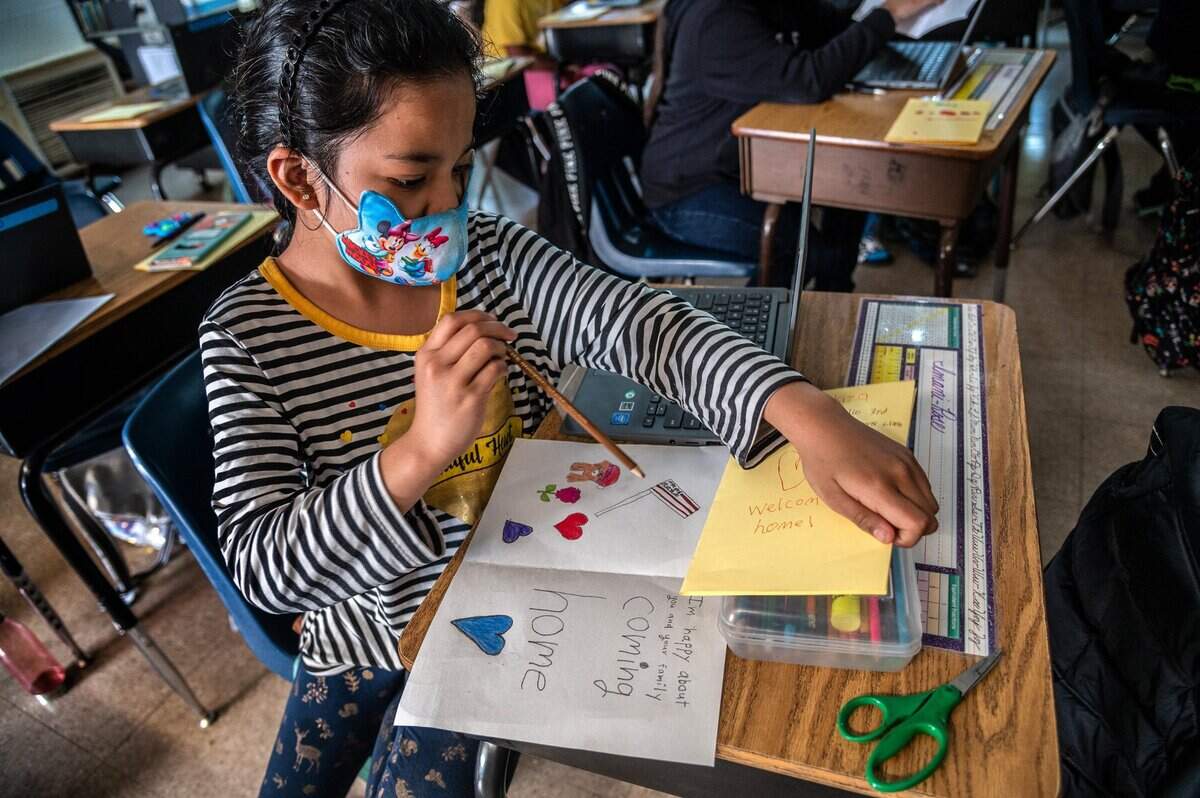
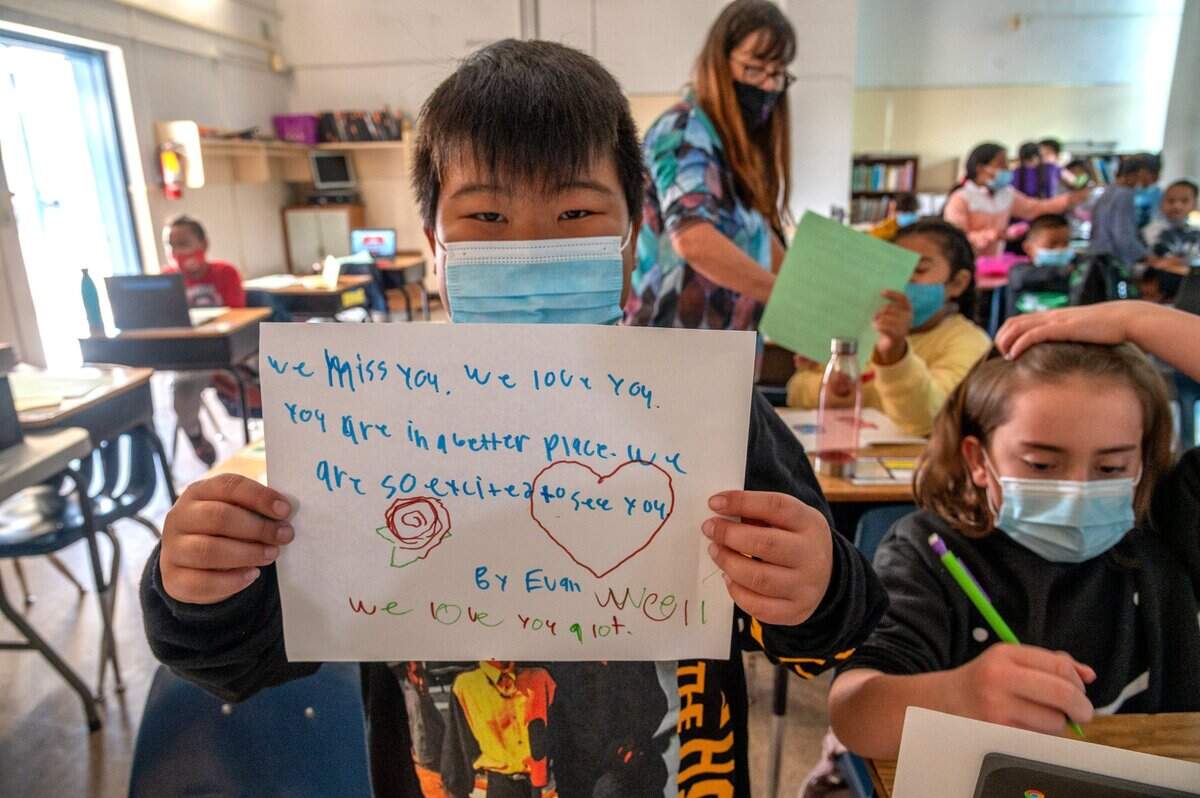
At the school, plans are in the works to get the parents jobs as interpreters with the district and have them use their skills to help other Afghan families. On a recent Friday, classmates wrote welcome home letters and planned to make posters they will hang at the school. It’ll be a homecoming of sorts for the kids that have been gone for so long.
And in Abu Dhabi, as the family of five arrived at their temporary living spaces where they’d begin a mandatory quarantine and finally relax, Rahmatullah sent McGill a message. It was a far cry from the middle-of-the-night missive two months earlier.
“You really saved some lives sir,” he wrote.
McGill sent a reply a minute later.
“Thank you. That means a lot,” he wrote.
“When you get home, we’ll work on getting the rest of the family out.”
This story was originally published October 31, 2021 at 5:00 AM.