‘A nightmare.’ Sacramento sued 12 homeowners during COVID. They lost control of their homes
Piles of household items and a broken down pickup truck had accumulated outside the front of Bruce and Linda Siegrist’s North Sacramento home in 2016. The city posted a notice to the couple’s door ordering them to fix the issues. The couple said they did in 2018, when they got rid of the items and cut the grass.
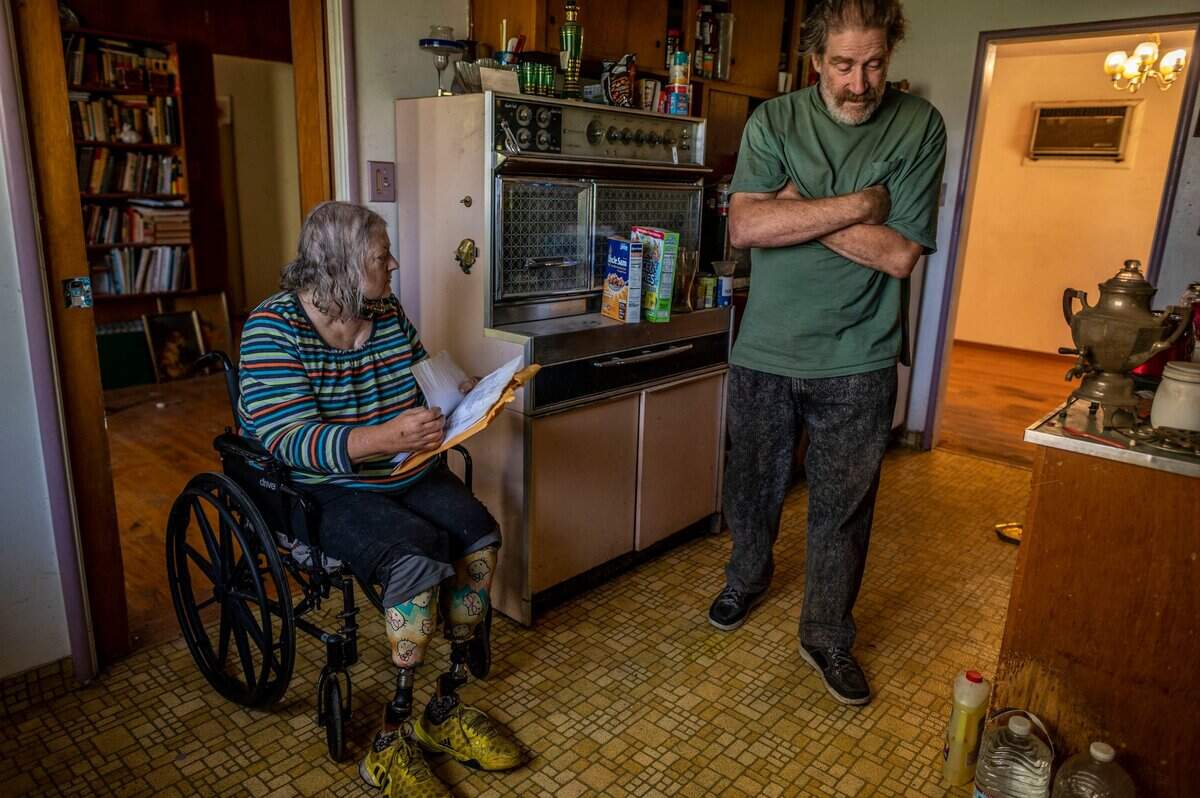
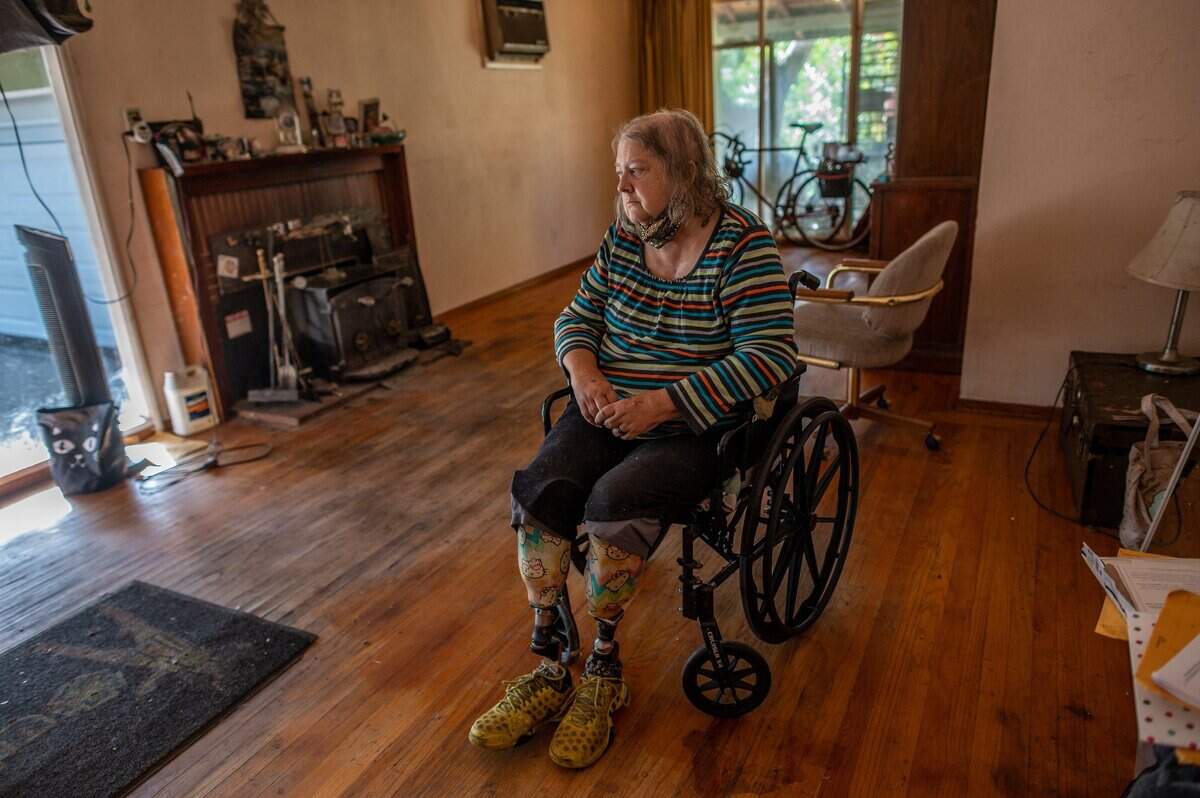
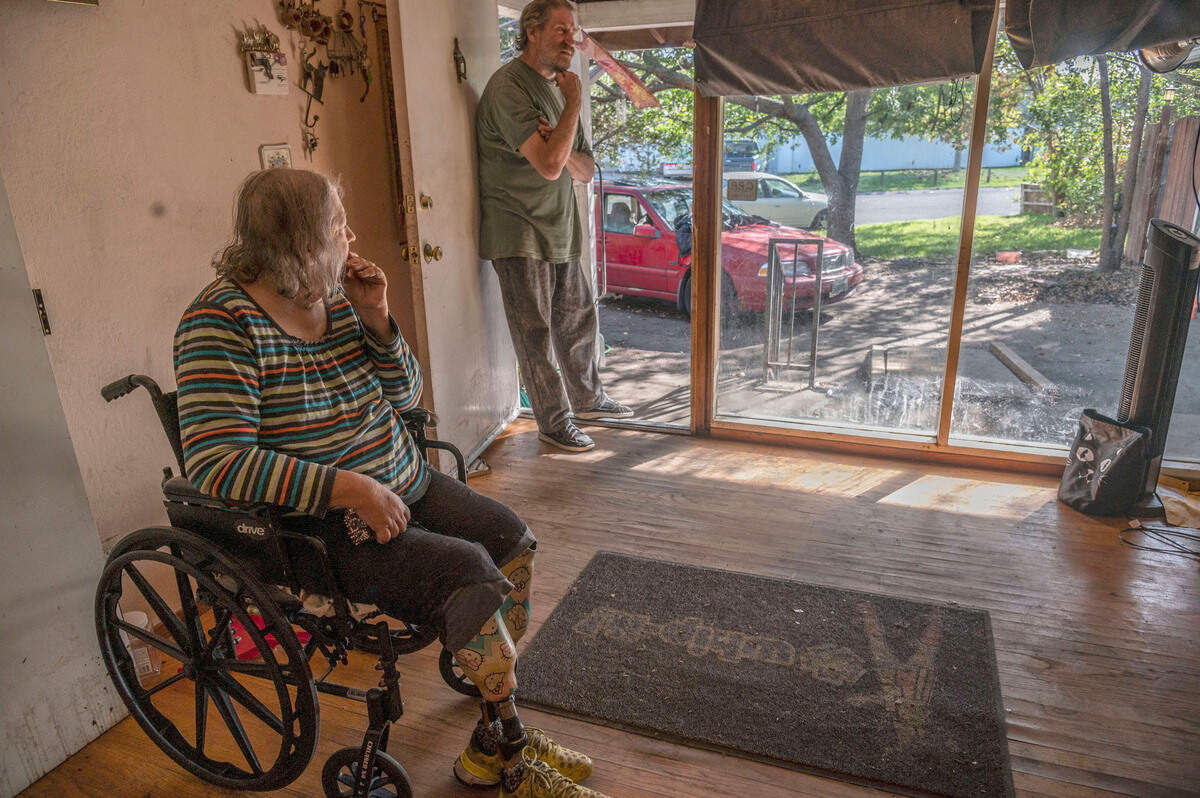
Linda Siegrist, 67, is a double amputee in a wheelchair – her legs were amputated in 2016 due to diabetes. Bruce Siegrist, 66, is a veteran. The elderly couple now is worried they could become homeless.
“It’s quite a nightmare,” said Linda Siegrist. “They just took over our lives.”
The city of Sacramento in 2017 sued Linda Siegrist for code violations. In 2021, it filed a court petition asking a judge to appoint a receiver for the Swanston Estates home . A judge granted the request, meaning an attorney with the Bay Area Receivership Group now has “full and complete possession and control” of the property — including the ability to demolish or sell it.
In the last five years, the city has filed petitions asking judges to appoint receivers for 33 homeowners, a Sacramento Bee analysis found, including a dozen filed during the pandemic.
Some of the houses are boarded up with overgrown grass. Others look newly renovated, and the owners say they recently purchased the properties. But others are houses owned by vulnerable seniors. The homeowners are criticizing the city for placing them in receivership during a pandemic and a severe housing crisis.
Councilman Sean Loloee, who represents the North Sacramento neighborhood where the Siegrists live, said he wants the city to stop putting seniors into receivership except in rare cases in which the houses are at risk of collapsing. He wants the city to instead start fixing the code violations for older residents, such as towing abandoned vehicles and paying for storage units.
“When you get seniors who have fixed income and all by themselves, I think it’s our obligation to step in and help them out and to clear out their code violations,” Loloee said. “If they can’t afford the $150 to tow, then the idea of taking away their house so we can pay for the towing doesn’t make sense.”
He plans to bring a proposed ordinance to the council’s Law and Legislation Committee this year. While the council has spent much time in the past year responding to the city’s severe homeless crisis, Loloee said the council needs to spend more time preventing homelessness, especially among seniors.
“There’s another sector of people,” Loloee said. “If we’re not taking care of and watching over them, they’re gonna be the next homeless.”
‘They were thieves’
Earlier this year, the receiver told the Siegrists to stay in a hotel for four days, Linda Siegrist said.
During that time, Siegrist said crews threw away many items inside their house, including their bed, their washer/dryer, antique family furniture, dining sets, clothing, wheelchair legs, a toilet raiser, and file cabinets of important paperwork, including a document proving Bruce Siegrist is a veteran. They also took some of their beloved cats.
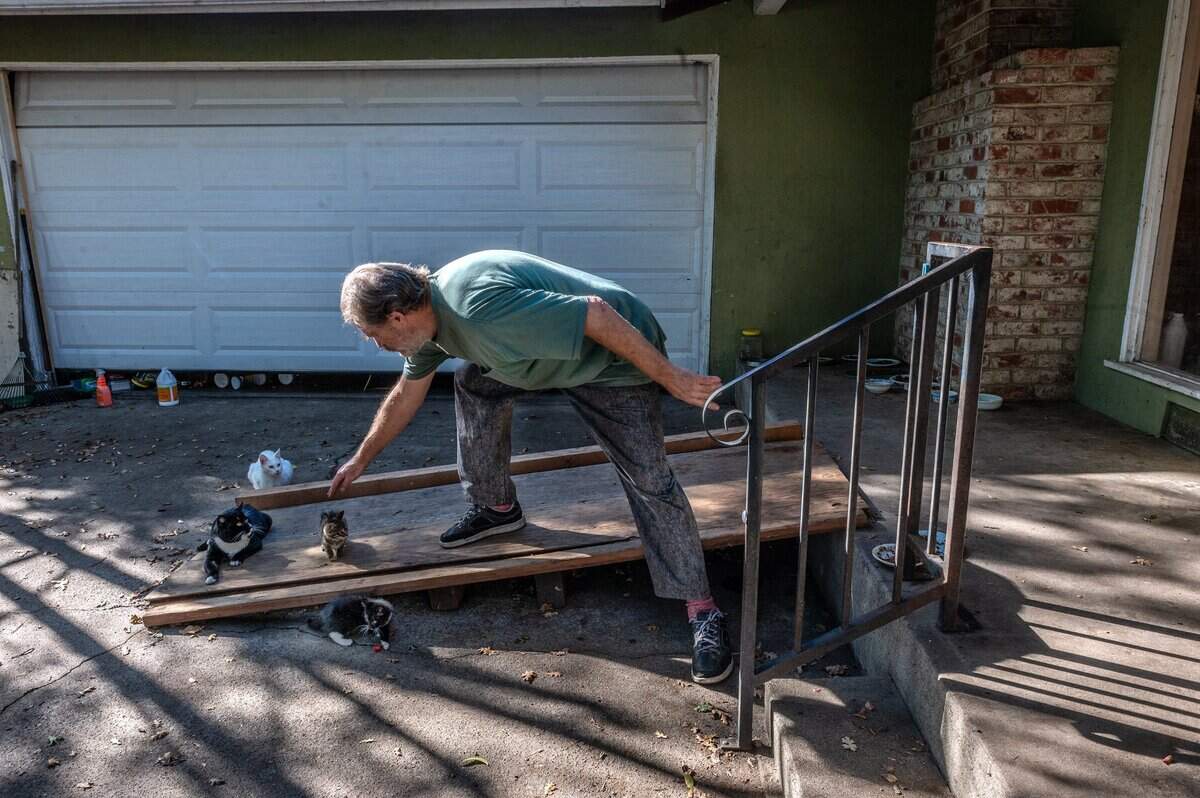
“They were thieves,” said Linda Siegrist. “I don’t get social security or disability. I don’t need a whole lot but just don’t take what I have.”
When the receiver took possession of the house, it was so full of personal property and trash that it was “very difficult to get to the bedroom and kitchen,” according to a court document filed by the receivership group.
“Other areas of the house were literally inaccessible due to the amount of hoarding,” the document read.
The receiver’s services have so far totaled at least $126,000, according to a court document from Sept. 30. That includes many charges for emails, calls and trips to Sacramento. The receiver charges $250 an hour. One of the charges is $13,500 for “property clean out.” Another item is $118 for a phone call.
That amount will likely turn into a receivership lien on the property. If the Siegrists don’t pay, the receiver could put the house up for sale in order to use the profits to pay off the lien. That’s what happened to Wanda Clark, 71, a homeowner in Oak Park whom the city filed a receivership petition against earlier this year for code violations largely stemming from unfinished construction; an order appointing the receiver on Clark’s property has been stayed by a court until Jan. 21.
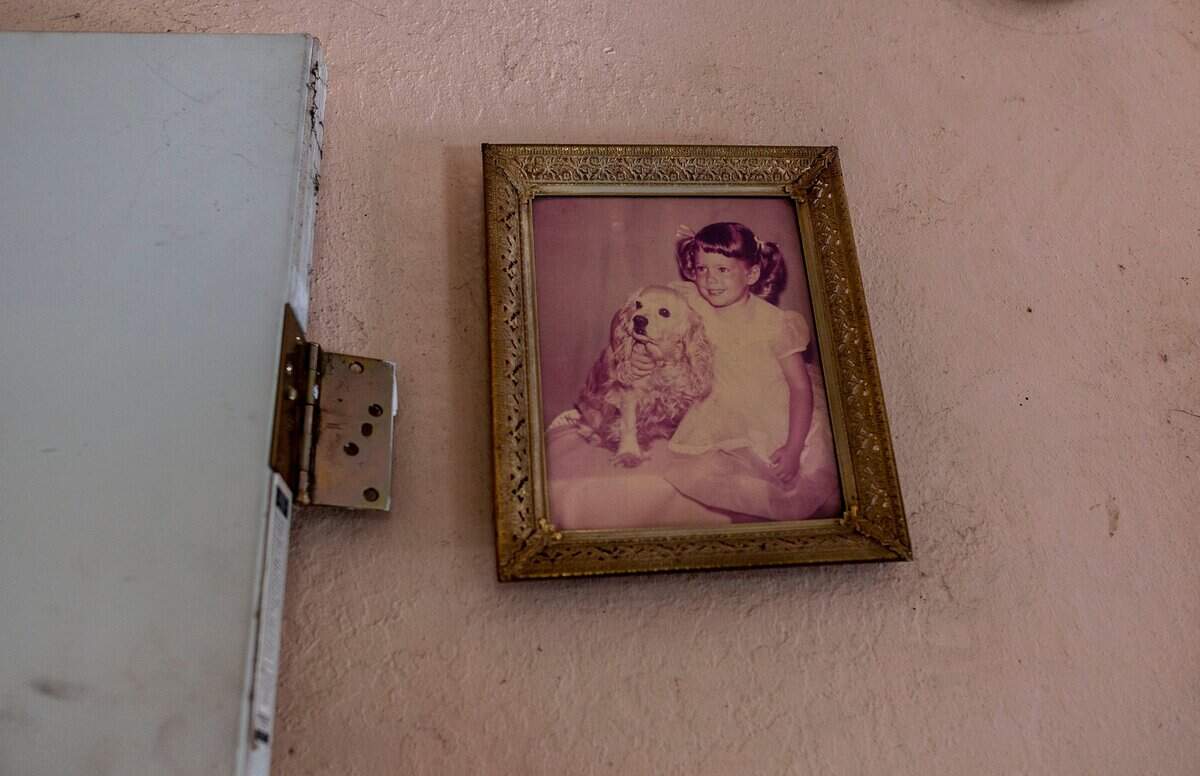
“Eventually I think they want to kick us out and sell the house,” Linda Siegrist said. “Even though this house is paid for. I grew up in it. It’s not like the house is falling down or falling apart ... Basically they’d make us homeless.”
The entire home is set up to be wheelchair accessible and finding another one they could afford would be near impossible, Siegrist said.
City spokesman Tim Swanson defended the city’s use of the receivership process, both in the case of the Siegrists and in general.
“The City of Sacramento is committed to its programs that address blight and nuisances in the city’s neighborhoods and to maintaining a clean and safe environment for all residents in our community,” Swanson said in a statement. “Pursuant to California Health and Safety Code sections 17980.6 and 17980.7, the city can petition the court to appoint a receiver to take control of a residential building that has been declared substandard or dangerous if the property owner does not remedy health and safety violations at the property in a reasonable time. The court then makes a decision regarding receivership following a hearing that includes witness testimony and a review of all pertinent facts and documentation.”
The city first sued Linda Siegrist in February 2017, citing violations that included an unsafe building, structural violations, storing trash/junk/debris, storing inoperable vehicles and a hazardous/unsanitary premises. Four years later, in February 2021, the city filed a petition for the appointment of a receiver, which the judge granted.
The receiver in July 2021 filed a court document that stated the Siegrists had “failed to abate dire nuisance conditions at the property as required by the court’s September 17, 2020 order.”
“The continued code violations at the property constitute a public nuisance; and given the severity and amount of work necessary to abate the conditions at the property, the appointment of the receiver was necessary,” the filing read.
Linda Siegrist said the appointment of a receiver was a surprise because the couple thought they addressed all the code violations in 2018, as documented in a settlement agreement she signed.
“Somebody should’ve called us,” Linda Siegrist said.
The couple’s attorney at the time, whom they have since fired, could have had information they did not share with the couple, however, Linda Siegrist said. The couple has not been able to afford another attorney.
On a recent afternoon, the front of the Siegrists’ one-story home looked fairly neat. There was a red Volvo parked in the driveway and a couple of bowls set out for cat food and water. Sections of the grass were about a foot tall, while other sections looked freshly cut.
The Bay Area Receivership Group did not return a call seeking comment.
The Siegrists’ neighbors had mixed feelings about the situation.
Daniel Gomez said some of Siegrists’ many cats had in the past wandered across the street and defecated in his yard. He said he was in support of the city making sure the code violations were addressed, since it has been years.
“I’d like to see it better off for the neighborhood,” Gomez, 38, said.
Travis Rottini, who owns the house two doors down from the Siegrists, agreed the cats were a problem. Some of the cats had even died in his yard, he said. But other than that, he had no issues. He had not heard of the receivership process and was surprised it was legal.
“They’re nice neighbors,” Rottini, 40, said. “I don’t think the government should be able to take anyone’s stuff away.”
‘It breaks my heart, hon’
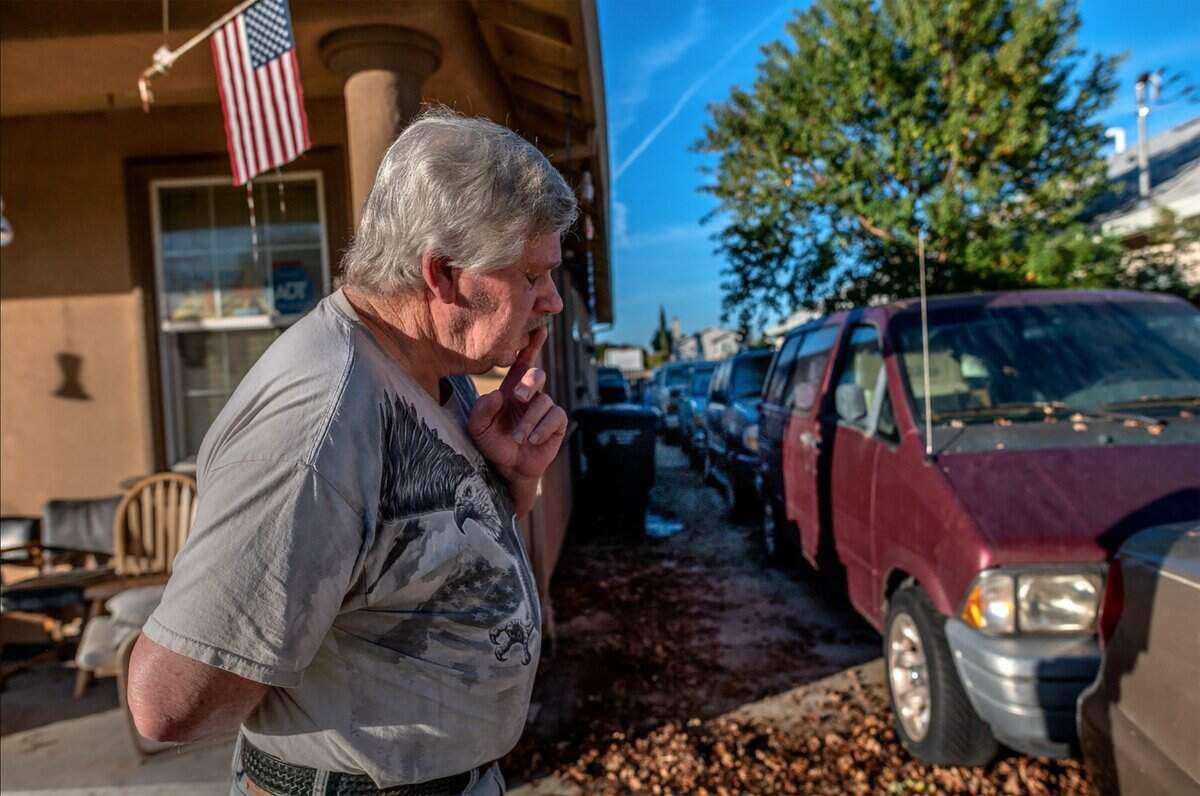
Mark and Karen Melton, who are also in receivership for their home in North Sacramento’s Robla neighborhood, also worry they could be on the streets at the end of the process.
The city sued Mark Melton in June 2019 for code violations including: Maintenance of a dangerous, unsightly, and blighted condition; keeping, storage, and accumulation of trash, junk and debris; and parking of vehicles on unimproved surfaces. The city then filed a petition for a receiver in October 2020.

Crews took items from outside the home, including many family mementos from relatives who had recently died. They also took the swing set and basketball hoop that their grandchildren would often use, Mark Melton said.
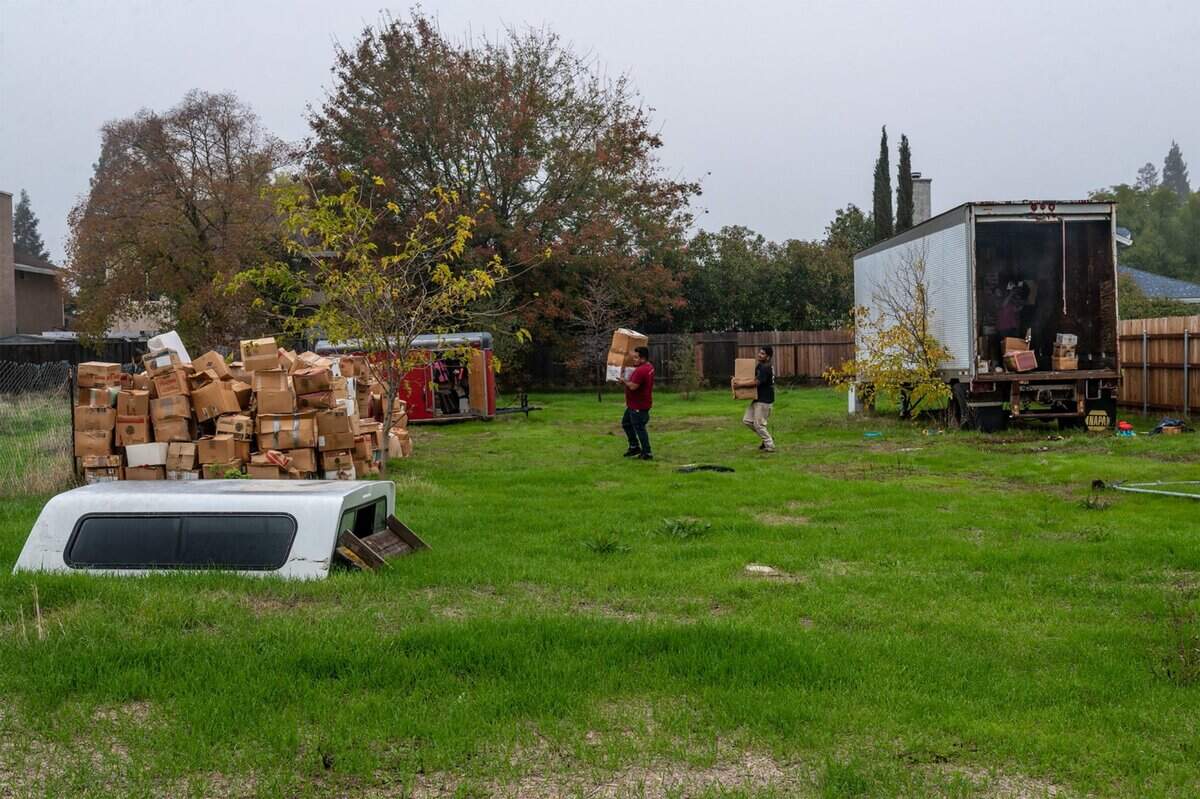
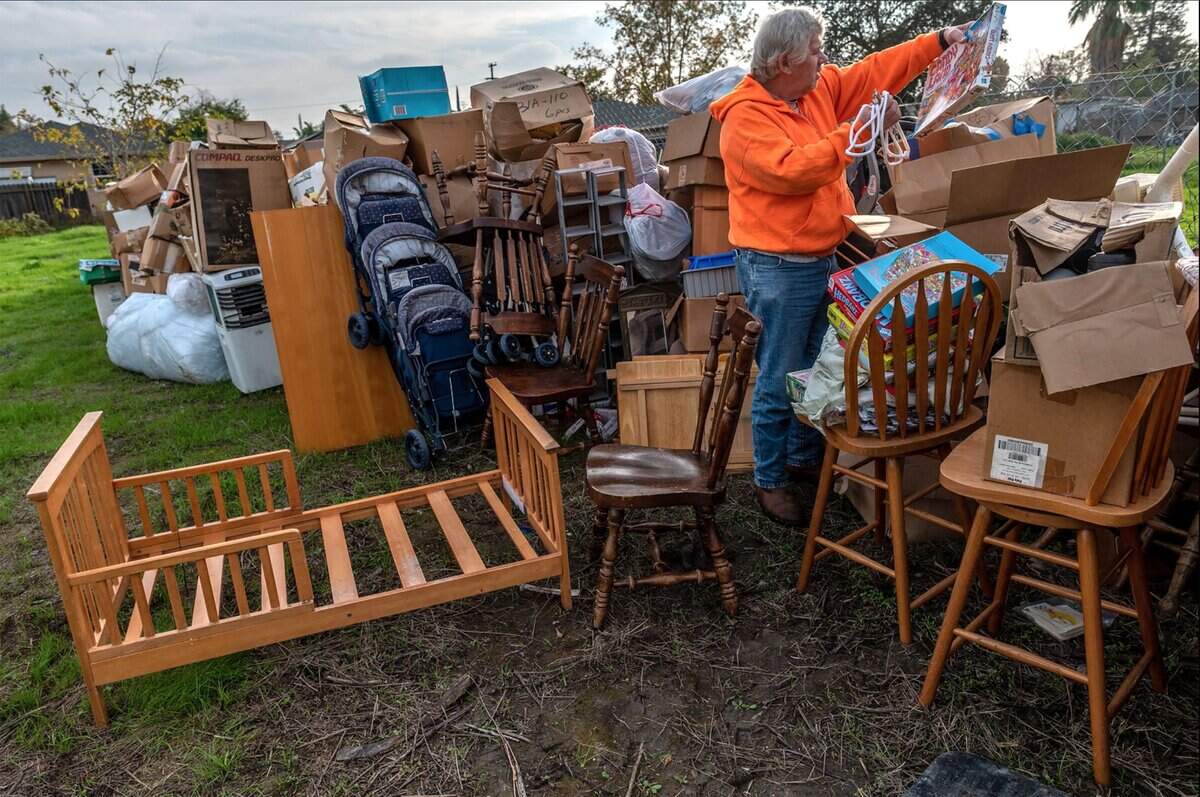
In November, the receiver sent a tow truck to remove a big rig out of Meltons’ backyard they were using to store dozens of boxes containing items from deceased relatives. The soil was too wet to tow the big rig, leaving massive indentations in the grass and stacked boxes lining the yard.
The Meltons received a letter saying they needed to move the boxes — filled with toys, family photos and family mementos — into storage or they will be thrown away. They have now been soaked with rain.
“We live here,” Mark Melton, 62, said. “They’re acting like we abandoned it and left the country.”
The Meltons have fostered more than 60 children, Mark Melton said. When the receivership started, he had a self-described mental breakdown and had to quit his job as a Regional Transit bus driver after 16 years.
“We worked all our life to get what we have,” said Mark Melton. “This is my personal property. This is my home. And they come and take my stuff? It’s not right, them taking my stuff.”
The items were disposed of or recycled, said Richardson Griswold of Griswold Law, the receiver in the case.
The receiver’s work has so far totaled about $40,000, which the Meltons will be responsible for, Griswold said.
The Meltons tried to get an attorney, but couldn’t find one who would take the case, Karen Melton said.
Griswold said the Encinitas-based company always makes attempts to work with homeowners and allow them to put tape on items they want to keep, for example, but the Meltons have not cooperated.
“We’re in no hurry to throw away anything if there’s some other option,” Griswold said. “We’re ordered to make decisions on what’s junk and what’s not and we don’t want to make that for other peoples’ property.”
One option for the Meltons could be refinancing, Griswold said. But the Meltons already tried that and were rejected due to the lien on the property, Mark Melton said.
“It breaks my heart, hon,” Mark Melton said.
Editor’s note: This story has been updated to reflect that the order that appointed a receiver on Wanda Clark’s home has been stayed by a court until Jan. 21.
This story was originally published January 12, 2022 at 5:00 AM.