
California pension fund sunk $340 million into its headquarters before COVID. Was it a mistake?
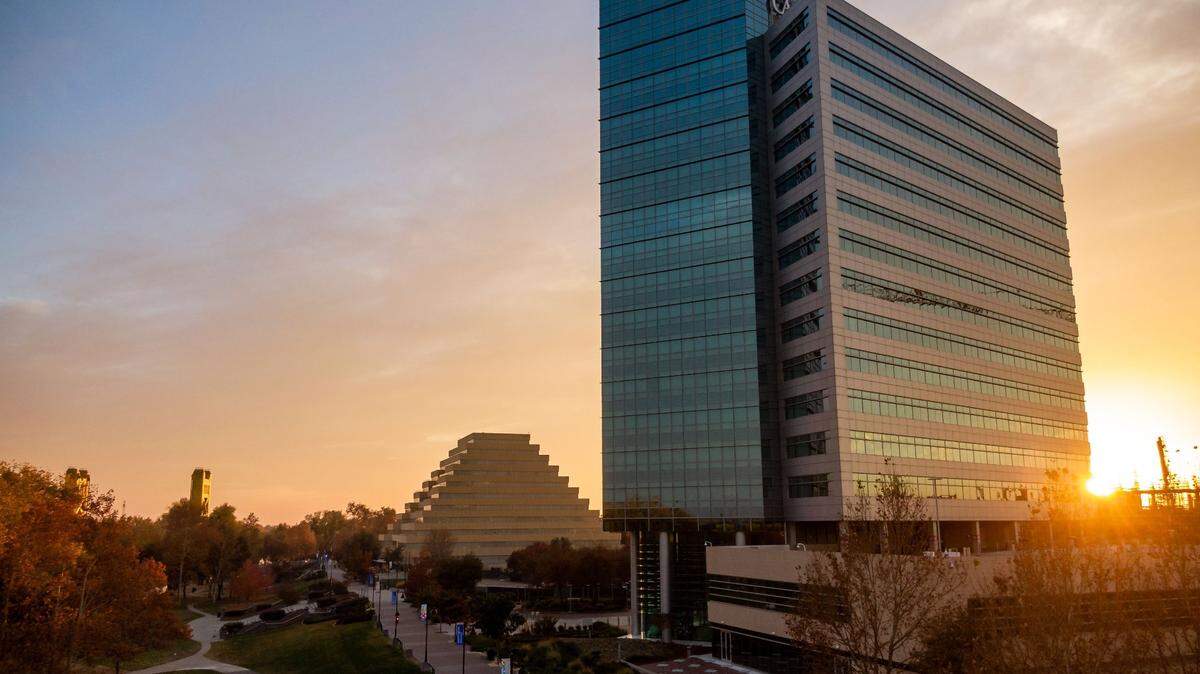
The reality of a depressed COVID-19 commercial real estate market is testing the California State Teachers’ Retirement System’s plan to pay for a $340 million expansion of its headquarters in part by renting out space to commercial tenants.
The ambitious plan calls for a second 275,000 square feet 10-story building next to the 17-story CalSTRS tower on Waterfront Boulevard in West Sacramento along the Sacramento River.
The building, which began construction a year before the pandemic, is scheduled to be completed by the end of 2022. CalSTRS won’t need all the space for several decades.
CalSTRS officials four years ago estimated that the pension plan would only occupy half the space in the new building by 2027. The rapid growth of remote work from the COVID-19 pandemic could slow down that timeline, CalSTRS officials concede.
In the meantime, it aims to collect rent from outside tenants until it can fill both buildings with its own staff.
CalSTRS plans to move some of its employees out of its existing 17-story tower building once the new building is complete. The pension plan would then lease more than 200,000 square feet of office space from its current headquarters, which opened in 2009.
A CalSTRS leasing agent has been marketing its office space since before the COVID-19 pandemic, but interest has been low.
So far, just one potential tenant has visited the CalSTRS site, although several have participated in virtual tours, said Greg Levi, Sacramento area managing director for leasing agent Jones Lang Lasalle.
Levi said he is bullish that more tours will occur and deals will get signed in 2022 as companies reopen their offices to workers and assess future space needs going forward.
He acknowledged that rental interest in the area office market was not growing at the November CalSTRS meeting, but said a trend is occurring that is seeing tenants in older buildings move to newer ones.
He said CalSTRS is well-positioned to take advantage of that trend.
“Our competition is not overwhelming,” he said.
What will offices look like after COVID?
How CalSTRS ended up as a landlord in one of the most difficult times in history for the commercial office market dates back to a board decision made before COVID-19 in 2018.
The pension plan was running out of space for new employees. While pension system growth required more space for workers, a second building wouldn’t be fully occupied with CalSTRS staff for at least another two decades.
CalSTRS then-CEO Jack Ehnes pushed for the new building at a board meeting in late November 2018.
He noted that while CaSTRS was a state agency, it did not have to be constrained by how the government typically does business. It could do innovative thing, such as creating a campus for future needs that would attract world-class investment professionals.
“We can recruit people from across the river, “ he said of the larger California Public Employees’ Retirement System, based in Sacramento “Can you recruit people from Chicago, from New York, from Singapore, from London?”
Ehnes said renting out the vacant space to outside tenants until CalSTRS needed it would enable the project to be a success.
“Use your imagination,” he urged the board, noting that the addition of a second building would “make this an opportunity for this organization for decades, not something from the past.”
A little while later, the CalSTRS board, which includes the state treasurer and state controller, unanimously approved the plan.
Even then in 2018, CalSTRS officials’ vision had a risky element. Pension plan officials noted in board documents that a risk was not being able to rent out the office space — and whether the pension plan would be successful — could depend on market conditions.
COVID-19 has made those market fundamentals worse than ever.
The Sacramento area commercial office market has seen more office space become vacant than new space is being leased month after month since the pandemic started, according to data from real estate firm CBRE.
Companies have put leasing plans on hold and working remotely has become the new norm.
It’s unclear how much of a recovery will occur in 2022.
“The problem right now is that we honestly lack a perspective of what office use is going to look like in the next several years,” said Randy Getz, a Sacramento-based executive vice-president for CBRE. “And I say that because even though we have been in the throes of this pandemic for about two years, it’s still not enough time to understand how office use is going to evolve over the next several years.”
CalSTRS staff is not yet back to work and a plan next year calls for some employees to work remotely entirely while others may come to work in CalSTRS offices several days a week.
CalSTRS officials are putting a positive spin on it. They said that should mean even more floors to rent out, possibly six to seven, in CalSTRS’ 17-story tower.
“So we’re in a great spot because we have the flexibility that we need to make sure that we can meet our space needs over the next 30 years,’’ said Lisa Blatnick, CalSTRS chief operating officer in an interview. “And then we would have the ability to lease the available space to third-party tenants.”
Underfunded pension plan
Regardless of whether the space gets leased out, CalSTRS will still need to pay debt service of approximately $19 million a year for 30 years..
Construction delays are also adding another $15 to $21 million to the cost of the new building. CaSTRS officials are considering bonding that cost, but the additional amount of those debt service costs have yet to be calculated.
CalSTRS has not yet released its current funding level, but the pension in 2020 had only around 70% of the funds it needed to pay teachers pensions long-term.
Investment returns of more than 27% in the fiscal year ending June 30 have helped CalSTRS financial situation improve, but the pension plan’s own analysis shows it may have problems in the future meeting its anticipated expected yearly returns of 7%.
Failure to rent out its vacant campus space would only aggravate CalSTRS’ financial problems.
CalSTRS officials say today the decision to build the second building was the right one for the pension fund’s longt-term plans.
“Our plans are still going to roll out the way we anticipated them,” she said. “And we have the ability to grow in West Sacramento for the next 30 years.”
This story was originally published December 9, 2021 at 7:41 AM.