
‘Everything was done wrong.’ Why was this suicidal CHP officer given back his gun?
At 10:36 p.m. on Aug. 3, 2018, California Highway Patrol Lt. Todd Brown sent an email alerting higher-ups that he was dealing with a serious problem involving Brad Wheat, an officer working out of CHP’s Amador County office.
“I just learned this evening that Brad confided in an officer (Dave Ward) tonight that he drove to a location where he thought his wife and her lover were last night to murder the lover and then commit suicide,” Brown wrote. “Officer Ward was able to secure his duty weapon and we have a sergeant (Jeremy Dobler) en route to Brad’s location to try to get a hold of him.”
Within half an hour, CHP officers found Wheat, a former associate pastor, at the converted church he lived in and persuaded him to voluntarily turn over two rifles and a shotgun.
Then, they arranged for him to meet with Sabrena Swain, a licensed marriage and family therapist who concluded that Wheat “could benefit from a good night’s sleep,” that his Christian background made suicide unlikely and that he was not “a danger to himself or anyone else,” court papers say.
No one from the CHP warned the boyfriend, Phillip “Trae” deBeaubien, that Wheat had talked of killing him, and no one warned Wheat’s estranged wife, Mary Wheat, deBeaubien said.
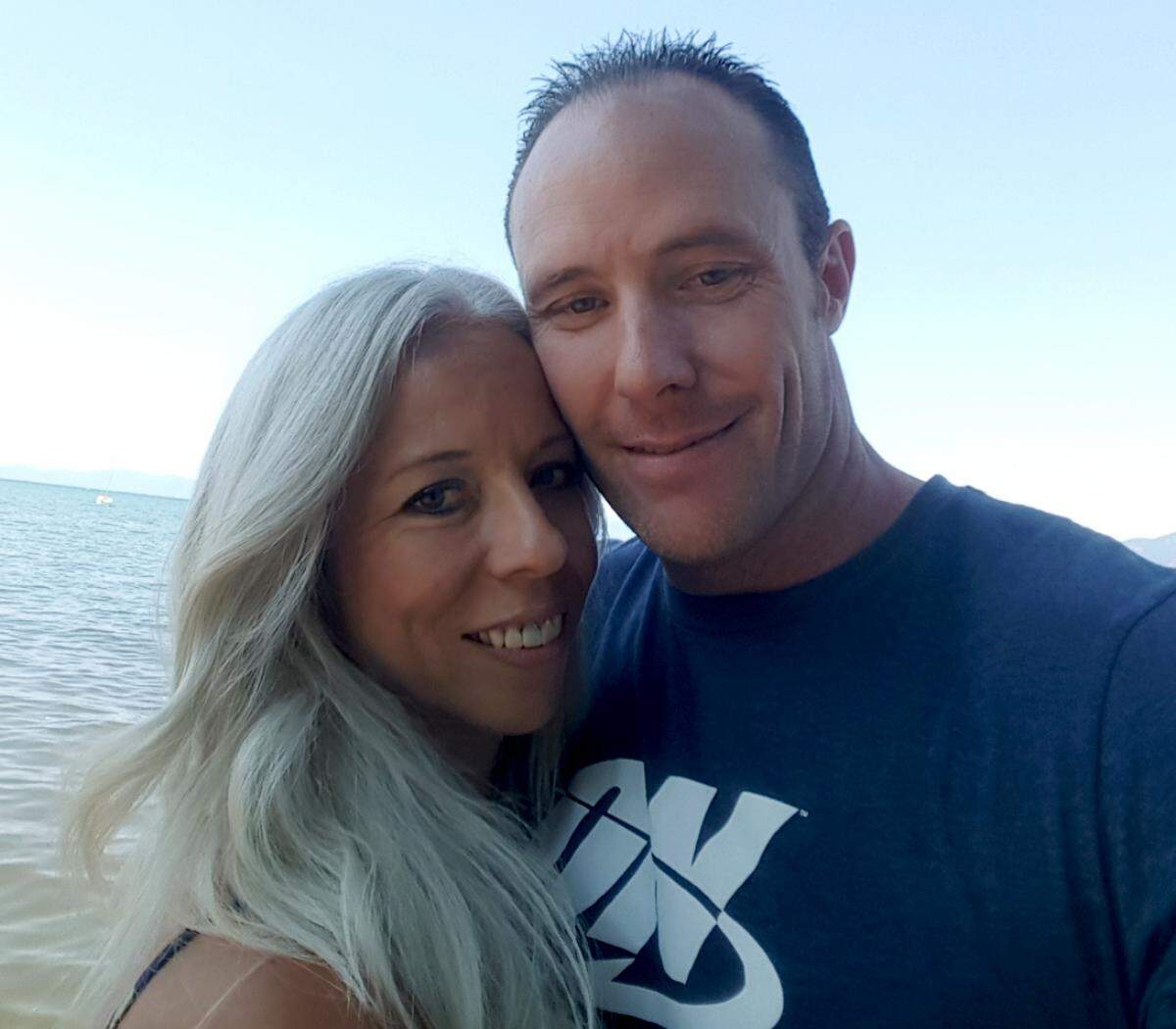
Wheat took two weeks off, traveled to Southern California with his children and received some counseling sessions.
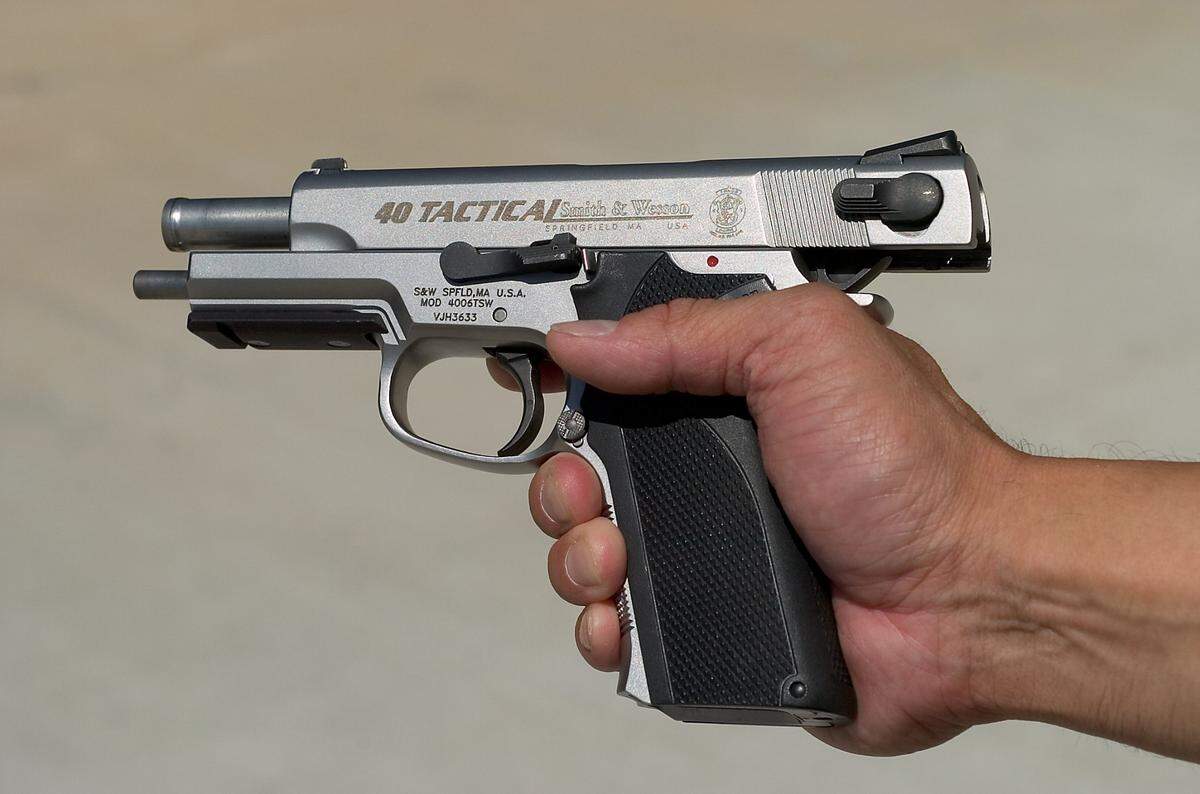
He returned to desk duty Aug. 20, and the CHP returned his .40-caliber department-issued handgun and hollow point ammunition to him.
“He needed it,” Amador CHP Sgt. Dan Lopez said in a deposition. “He was being put in the front office in full uniform, and he needed that to be in compliance with being in his uniform.
“And I certainly didn’t see him as being a threat, just from the interactions that I had with him.”
Two weeks later, on Labor Day weekend, Wheat confronted the couple at deBeaubien’s Sutter Creek fitness store, fired his handgun through the glass front and shot deBeaubien before shooting his 43-year-old wife to death in the parking lot.
The 11-year CHP veteran officer then killed himself, ending a bloody attack that was captured on video by a man who had been sleeping in his car in the parking lot.
Did CHP have a duty to stop the shooting?
More than three years after the shooting, deBeaubien and the CHP are embroiled in a lawsuit filed in federal court in Sacramento, where attorney Stewart Katz is seeking damages from the state over what the lawsuit calls a reckless breach of duty by the CHP.
The CHP declined to comment on pending litigation. But the agency says in a recent court filing that the lawsuit should be dismissed because Wheat shot deBeaubien and Mary Wheat while he was off duty, and that officials had no duty to intervene.
“Simply put, the law instructs that peace officers do not have a duty to stop a dangerous individual from injuring another person,” the agency’s lawyers concluded in a January court filing.
Katz has a different view.
“To say they have no duty, I don’t think that’s how I would put it,” he said in an interview in January. “They have a duty not to give him a gun so he can go kill someone.”
A series of depositions with CHP leaders conducted over the last year by Katz reflect decisions that allowed Wheat to remain in his job without any internal investigation or official review of whether he was fit for duty after he made the comment about killing deBeaubien.
Some CHP officials could not even agree that Wheat’s statement that he planned to kill deBeaubien and himself constituted any type of crime, conduct that one legal expert said should have resulted in prosecutors filing a charge of attempted murder.
“We do not believe that any crime has been committed that we’ve identified,” Brown wrote in his August 2018 email summarizing the situation.
In court filings, Katz contends that Wheat stalked deBeaubien and his estranged wife, and that Wheat and another CHP employee used agency law enforcement databases to access information on deBeaubien.
“He searched if I had a weapon..., and then probably my address and anything he could find out about me,” deBeaubien, now 47, said in a December interview in his lawyer’s office. “If you look at it now, with what we all know, everything was done wrong. Everything was done wrong.
“From the people who talked to him and evaluated him to giving his gun back... I don’t get it. I feel like if it was a normal citizen that had done the same thing they’d probably be in prison.”
The shooting left the Wheat’s four children without parents, permanently affected deBeaubien’s health and has scarred the family with anguish that continues to this day.
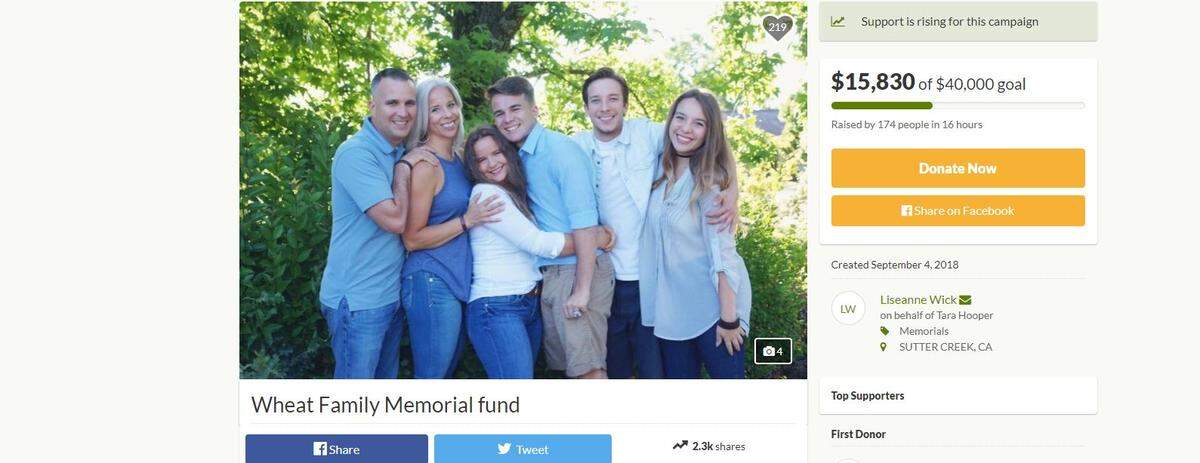
Matthew Hooper, Mary Wheat’s older brother, said in December that the memories are “still painful.”
“Each time we are contacted about this situation, it returns us to the trauma,” Hooper wrote in a text message to The Bee. “Please do not contact me or other members of our family.”
Friendship turned to romance as her marriage crumbled
Trae deBeaubien first met Mary Wheat when she came into the Get Ripped Nutrition store he opened in Sutter Creek in 2011. She operated a CrossFit gym in town, and needed advice about supplements for her customers.
DeBeaubien lived in a room at the back of the store, and he had met Brad Wheat when the CHP officer would come into the store with Mary.
Soon, deBeaubien and Mary Wheat became friends, and in 2017 she asked deBeaubien to come by and take a look at a building she was planning to rent for her operation. The space was large, and deBeaubien decided to open a gym next to the CrossFit space.
“And just, you know, over probably a seven- or eight-month period of time, we just became better friends and saw each other more and spent more time with each other,” deBeaubien said.
By July 2018, the Wheat marriage was falling apart, and her relationship with deBeaubien had become a romantic one.
.JPG "Jump2_SAC_DMK_2488 (1).JPG")
At the same time, Brad Wheat’s job performance was being scrutinized, with two minor traffic collisions in June and again in July in CHP vehicles leading to him being placed on desk duty, Lopez said in a deposition, adding that he was instructed to write up an “adverse action report” on Wheat because such incidents are exceedingly rare.
“I can’t recall of anybody being involved in wrecks that close together,” Lopez said, adding that the second collision – when Wheat ran into a gate at the CHP offices in July – may have come from the fact that “he was definitely preoccupied with what was going on in his personal life.”
This was the most serious punishment Wheat faced as a CHP officer, even after he told Ward he planned to killed deBeaubien and himself, Katz said.
That same month, Brad Wheat called deBeaubien and told him “I needed to end the relationship,” deBeaubien said.
After the call, Mary Wheat went to her father’s house in South Carolina for three weeks, a move made at her family’s urging to get her away from the relationship, deBeaubien said.
But the romance continued upon her return, even as Brad Wheat kept calling and texting his wife, deBeaubien said.
“He would go through very many phases,” he said. “So he would have texts where he would tell her he would change and, you know, he wanted a chance to get her back.
“And then, you know, if he didn’t get the necessary response he was wanting, he would, you know, get upset and make some – he’d call her names and that type of stuff.”
The night he hunted his wife’s lover
On Aug. 2, 2018, deBeaubien and Mary Wheat were staying at a Wheat family home in Garden Valley a few miles south of Georgetown. Brad Wheat’s 19-year-old son, Warren, rushed to Matthew Hooper to tell him that his father was angry and had left the house to confront Mary Wheat and deBeaubien.
Hooper, Mary Wheat’s brother, tried calling Wheat without success, he said in a deposition last April.
“And I was just saying, ‘Hey, if you don’t pick up or if you don’t text me back, I’m going to call 911,’” Hooper said, adding that Warren knew his father had his firearm in his car.
“I’m unable to contact him,” Hooper said. “I call 911, and I tell them, ‘This is what’s going on. I think they’re going to this place, and I’m concerned. I don’t know what he’s going to do, but I don’t think this will end well.’”
DeBeaubien left the home before Wheat or El Dorado County sheriffs deputies arrived in response to the 911 call.
“Wheat stormed into the Garden Valley home, finding only his wife, who he accused her of being a ‘whore,’ among other things, and took her cell phone charger,” court filings say.
Wheat left before deputies arrived, and the next day he got a call from his co-worker, Ward, who said in a deposition that he was checking up on how Wheat was doing.
Wheat told Ward he had gone to the home to kill deBeaubien and himself, court papers say. Ward called his sergeant and commander to warn them, then started driving from his Sacramento home toward Amador County to locate Wheat and find out if he was serious, Ward said in a deposition.
By then, CHP brass were emailing each other with plans for how to deal with the situation, and discussions of whether Wheat needed to be placed on a 24-hour psychiatric hold.
On the drive, Ward was able to reach Wheat and persuade him to meet him at the Amador County CHP office, where he arrived to find Wheat looking “defeated,” Ward said in a deposition.
“I asked him specifically, I wanted to make sure that what he had said wasn’t an exaggeration of, ‘God, I wanted to kill them,’ just in anger, saying an expression versus was it an actual act that needed to be addressed,” Ward said. “Based on his statements, he led me to believe it was an actual act.”
Ward asked Wheat if he would be willing to place his handgun in his locker, and Wheat walked to his car, retrieved it and put it in his locker, then gave Ward the combination. Ward later moved the weapon to his own locker, and subsequently handed it to Sgt. Jeremy Dobler, who stored it in a sergeant’s closet, Dobler said in a deposition.
CHP says it couldn’t force him to give up handgun
The CHP said that, despite Wheat’s behavior, officers had no authority to seize Wheat’s department-issued handgun.
“Officer Ward had a discussion with Brad Wheat at the office, here at the California Highway Patrol office, and asked Brad if had his weapon in possession,” Brown, the CHP lieutenant, said in a deposition. “Brad said that he did and in our department, generally speaking, you don’t take somebody’s weapon.
“Officer Ward asked if he would mind bringing his weapon in and locking it up. He wasn’t going to take it from him or had no authority to take it from him, but politely asked him if he was willing to leave it here.”
No report was ever placed into Wheat’s personnel file about the incident, and no police report was taken, according to deposition testimony. CHP officials said at the time and testified in depositions that Wheat’s statement that he planned to confront and kill his wife’s lover did not constitute a crime.
The night CHP learned of Wheat’s threat, Lt. Brown wrote an email to his chiefs saying Wheat did not appear to pose a threat to himself, his wife or her lover, and added, “We do not believe that any crime has been committed that we’ve identified.”
“I’d say no...,” Dobler, a longtime friend and co-worker of Wheat’s, later said in a deposition. “I’d say it’s what we refer to commonly as a ... mental health crisis.”
Dobler added in a deposition that he was the one who handed the weapon over to Wheat.
“I just told my commander I was returning it to him because he was coming back to work,” Dobler said. “I didn’t ask because it was never taken.”
Brent Newman, who was chief of the CHP’s Valley division at the time, also testified last year that he did not consider Wheat’s actions to constitute a crime.
“There could be reasons that he could even be making that up,” said Newman, who has since retired. “But had he taken that action and showed up, and let’s say (deBeaubien) and Brad’s wife were there, he would have to take some overt action.
“Merely sitting in a parking lot or observing them and having – having an intent, there’s no crime there. Nobody, nobody – there’s no cause for arrest or something. He would have to take some type of action to, to actually assault them or do something beyond just, just the idea, of homicide. He would have to take an action.”
That legal theory is not unanimous.
Harry Joseph Colombo, a former Sacramento County prosecutor and deputy attorney general hired by Katz as a legal expert, concluded that “any experienced prosecutor would have filed a charge against Brad Wheat based on his conduct on the night of Aug. 2, 2018.”
And Pasadena psychologist Kris Mohandie, another defense expert who has reviewed the case files, wrote in a report that Wheat “should have been immediately relieved of duty pending an investigation into this serious crime, weapons formally removed, and potentially arrested for attempted murder and other related charges, including stalking.”
“If not immediately arrested, he should have been 5150’d,” Mohandie added, referring to the California code section on detaining someone for a temporary psychiatric hold.
That didn’t happen. Instead, CHP officials gathered at Brad Wheat’s home and waited for Sabrena Swain, a licensed marriage family therapist, to arrive late in the evening of Aug. 3, 2018.
Swain talked to Wheat and CHP officials at the house until about 3 a.m., then left after concluding he was not a danger to himself or anyone else, according to her December 2020 deposition.
Wheat met with another therapist, Joy Graf, on Aug. 14 at the CHP office and she, also, concluded that he was coping well and able to conduct his desk duties, according to testimony.
But Graf’s conversation was not sparked by Wheat’s earlier threat. Instead, it took place while she was at the office to debrief officers about the arrest of another CHP officer, Michael Joslin, on charges of raping a 12-year-old.
Graf was never told about Wheat’s threat from two weeks earlier, or that he had handed his weapons in, Katz said.
Swain and Graf did not respond to messages seeking comment.
Broken windows, noises in the night
By late August, deBeaubien and Mary Wheat began staying together for a few days at a home in Sutter Creek on Spanish Street that a friend gave them access to, but deBeaubien said a series of disturbing incidents drove them out.
After the first night there, he was leaving for work at 5 a.m. when he saw a man in a gray jogging suit and hoodie staring at him, and “it was a very weird stare,” deBeaubien said.
When Mary Wheat showed up for work 15 minutes later, she told deBeaubien her husband had just stopped her.
“And I asked her, actually, ‘Was he wearing a gray jogging suit?’ And she said yes.”
DeBeaubien was awakened two nights in a row by strange noises outside, but didn’t see anything. He and Mary Wheat left the home on Friday for a weekend in Lake Tahoe over the Labor Day holiday, and got a call from the friend who had loaned them the home saying the garage window had been broken out.
The next morning, the friend called Mary Wheat again to tell her all the windows in the home had been broken out.
Deposition testimony from CHP officers also show that at one point Wheat was on a ride-along with another officer and asked his co-worker to drive by the gym to see if his wife and deBeaubien were there together, a request the other officer refused and later reported to his boss.
Mary Wheat and deBeaubien returned from Tahoe on Monday, Sept. 3, and settled into the room at the rear of deBeaubien’s nutrition store to eat and watch television.
Then, around 9 p.m., Brad Wheat began texting his wife, writing about “how he missed her and he wished that she would give him another chance and he was sorry,” deBeaubien said.
About an hour later, Wheat tried calling his wife’s cell phone twice, but she didn’t answer.
They heard banging on the store’s back door.
“It was very loud banging,” deBeaubien said. “My back door, I have a metal screen and then I also have a metal back door, so it was really loud. So if you hit on it, I mean, it’s echoing loud.”
DeBeaubien called 911.
“I let them know that I thought that it was Brad, an off-duty CHP officer, and that he was trying to break into my store,” he said. “It was very odd. So rather than saying they were sending somebody, they were trying to get a correct spelling of my name, my correct address spelling, and then I think I got a little upset about, I said, ‘Just send somebody.’”
‘Are you really going to kill us?’
DeBeaubien saw Wheat’s personal car pull up into the parking lot in front of his store, and he called him on his cell phone.
“What the f--- do you want?” Wheat asked, according to deBeaubien. “I said, ‘Mary doesn’t want to talk to you. You need to leave. I called 911. You’re getting yourself in trouble. Don’t come here.’
“And he said, ‘Oh, I’m coming.’”
Wheat got out of his car, drew his department-issued handgun and shot out the store’s front window, then walked in through the broken glass.
“She was screaming at him, ‘What are you doing? What are you doing?’” deBeaubien said.
DeBeaubien remembers his voice cracking as he asked Wheat, “Are you really going to f------ shoot us? Are you really going to kill us?”
Wheat didn’t say anything, but deBeaubien said he had a “crazy look” on his face and that as he tried to get away Wheat shot him in the upper chest near his left shoulder.
DeBeaubien then chased after Wheat and tackled him, trying to pin him to the floor and thinking police would arrive any moment from his 911 call.
Instead, Wheat was able to escape deBeaubien’s grasp because the blood pouring out of his shoulder had made the scene slippery, he said, and Wheat began chasing after his wife at the front of the store.
DeBeaubien tackled Wheat from behind, and the two began struggling over the handgun.
“Neither one of us could really get a handle on it,” he said. “I reached out far enough to where I slid the gun to Mary, to where she could get it. She grabbed the gun and she kind of headed out of the store where the broken window had been broken out.”
Wheat fought his way out of deBeaubien’s grasp again and ran toward the broken window, deBeaubien said.
“And I told Mary to f------ shoot him,” he said. “And, she looks like she fired, but nothing happened.”
Wheat moved toward the back seat of his car, and deBeaubien thought he was reaching for another gun and began to run from the parking lot in a zig-zag pattern while yelling for Mary Wheat to run.
Then he heard more gunshots.
DeBeaubien didn’t know what happened until sheriff’s deputies arrived and ordered him to sit on the ground.
“I remember asking an officer... if Mary was OK,” deBeaubien said. “And they told me she was killed and that Brad was killed, and then at that point all the paramedics started working on me.”
A man who was sleeping in his pickup truck in the parking lot heard the disturbance and began recording on his cell phone while remaining out of sight, capturing the store window collapsing and images of Mary Wheat running from the store and screaming, “Stop it right now! Brad, stop it!”
A man, apparently Wheat, can be seen running after her while deBeaubien calls out, “Mary! Over here!”
Then, the sounds of six gunshots can be heard.
DeBeaubien was taken in a helicopter to a hospital for treatment while Amador County sheriff’s detectives investigated the shooting and determined that Wheat had executed his wife with two shots to the head, and a third that hit her arm and pierced her chest.
Wheat shot himself twice in the neck, and once in the head.
‘They should have warned me’
Today, deBeaubien lives in the Sacramento area working in auto sales management. His physical health, he says, is permanently damaged. He can’t run, he can’t golf or play basketball.
“I’m alive,” deBeaubien said. “My shoulder’s a wreck, physically, I can’t do what I used to do.
“I was kind of a gym rat. Now, it’s just trying to do what I can to not be overweight.”
His mental health has been affected by the knowledge that he will always be associated with the tragedy, that anyone who Googles his name can find out what happened.
And, he said, none of the carnage might have happened if the CHP had warned him in August 2018 that Brad Wheat was targeting him. Maybe he would have gotten a restraining order, or a handgun for self defense. Maybe he would have moved from the area, he said.
“They should have warned me the first second they found out about it,” he said. “My life would be different. Mary would probably still be alive. I wouldn’t be shot, and he would probably still be alive.”
This story was originally published January 26, 2022 at 5:00 AM.