
Where she was from: How Joan Didion portrayed Sacramento, her home city
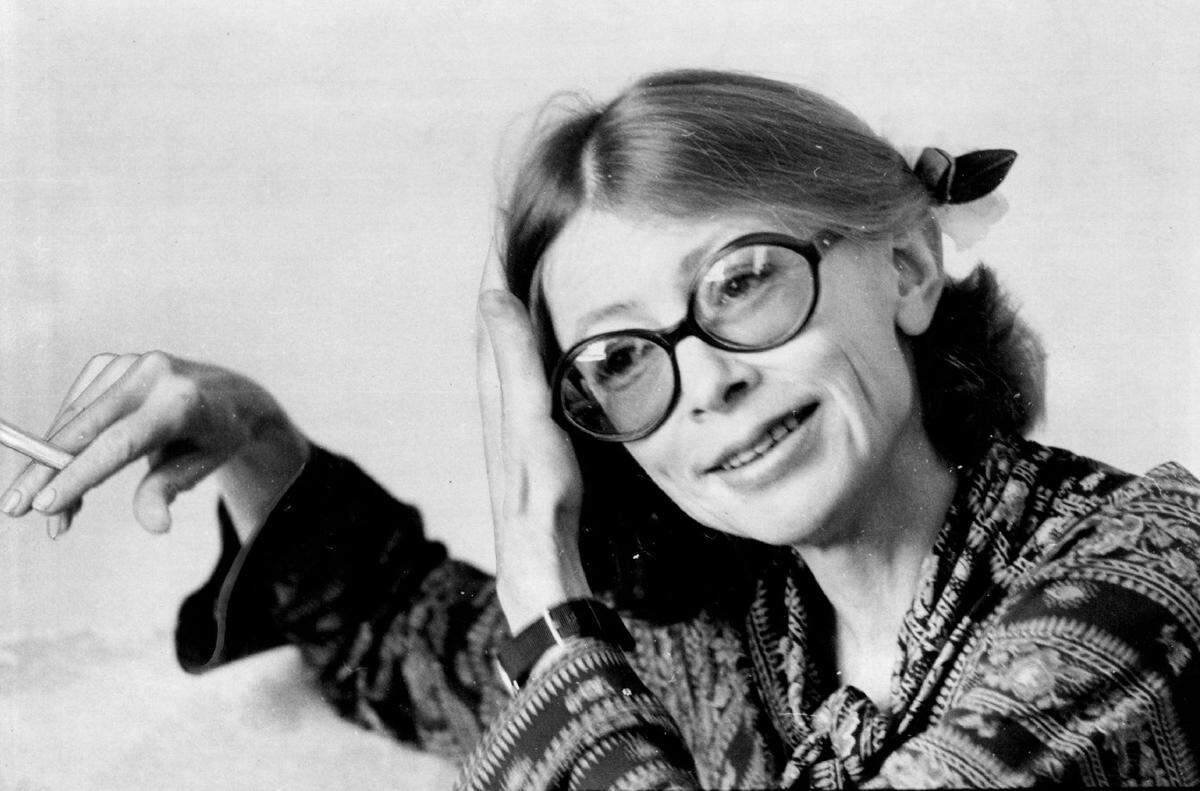
From a ranch on the Sacramento River in “Run River” to a reassessment of her life in California in “Where I Was From,” the Capital City never truly left Joan Didion’s purview.
The novelist and journalist wrote a screenplay about drug addicts in New York City (“Panic in Needle Park”), peered into the reality of El Salvador’s civil war (“Salvador”) and uncovered the political strife and life of exiles of Cuba in Miami (“Miami”).
But Sacramento’s flat horizons, extreme weather and Christmas in Sacramento shaped the legendary writer, and it shown through in her work.
Born in Mercy General Hospital on J Street in East Sacramento, Didion went to school and graduated from McClatchy High in 1952. Before climbing up the ladder at Vogue magazine and eventually being canonized alongside the pioneers of the New Journalism movement such as Truman Capote, Gay Talese and Tom Wolfe, Didion published her first words for the Sacramento Union newspaper.
In 1963, Didion published her first novel, “Run River,” a testament to her homesickness when she lived in New York. Set in Sacramento, “Run River” embodies the nostalgia Didion had for the city’s river and hot weather.
She also painted a portrait of Sacramento in her essays. In “Notes From a Native Daughter,” from her collection “Slouching Towards Bethlehem,” Didion reminisced of her childhood, where she swam in the Sacramento River with her brother and cousins, watched green hop vines sprawl across H street and passed by elm leaves outside the Trinity Episcopal Pro-Cathedral on M Street.
“I remember swimming (albeit nervously, for I was a nervous child, afraid of sinkholes and afraid of snakes, and perhaps that was the beginning of my error) the same rivers we had swum for a century: the Sacramento, so rich with silt that we could barely see our hands a few inches beneath the surface,” Didion wrote in “Notes From a Native Daughter.” “The American, running clean and fast with melted Sierra snow until July, when it would slow down and rattle snakes would sun themselves on its newly exposed rocks.”
She wrote about the old governor’s mansion and what Sacramento used to be – a farm town. One where vineyards hadn’t been uprooted yet to be planted with Walmarts, Taco Bells and Burger Kings.
“The creation of the entirely artificial environment that is now the Sacramento Valley was not achieved in one stroke, nor is it complete to this day,” Didion wrote in her 2003 collection of essays, “Where I Was From.” “Bulletins on when and where the rivers would crest, on the conditions of levees and the addresses of evacuation centers, remained into my adult life the spring commonplaces of Sacramento life...”
Didion’s nostalgic and homey view of Sacramento, her love of its hot summers, foggy winters and rain poured on her pages for all to read. And it wasn’t just a topic or a setting for her works; Sacramento was her home.
“Another thing I need to do, when I’m near the end of the book, is sleep in the same room with it,” Didion said in an interview with the Paris Review in 1978. “That’s one reason I go home to Sacramento to finish things. Somehow, the book doesn’t leave you when you’re asleep right next to it. In Sacramento, nobody cares if I appear or not. I can just get up and start typing.”
This story was originally published December 23, 2021 at 11:43 AM.