‘Truly a nightmare’: 11,000 Sierra Nevada residents now almost 2 weeks without power
Nearly two weeks after a fierce storm raked across the Sierra Nevada and knocked out their power, Elisabeth Jones and her wife were still in the dark Thursday 11 days later. “Outraged” doesn’t begin to describe their fury, Jones said.
Because their home uses a well and powered pump for water, they don’t have running water. The pair have resorted to urinating in a bucket filled with straw, Jones said. It’s been more than a week since showering or bathing. Jones said they’ve wore the same unwashed clothes, because they want to avoid laundromats and the surging spread of COVID-19.
A quarter of their food has spoiled; they buy nine $30 blocks of ice to keep the rest of the food fresh in two coolers, though the blocks only last two days at best, Jones said. Their wood-burning stove in the kitchen warms up the house a little when they cook, enough to keep them from seeing their breath billow into the air as they try to sleep.
“It is truly a nightmare, but it’s so much worse for people with small children or an elderly person who need to charge up their oxygen tank,” Jones said. “It doesn’t have to be this way; that’s what’s so enraging.”
Jones, 65, and her wife are among the more than 11,000 homes and businesses still without Pacific Gas and Electric Co. power in the Sierra as of Thursday evening, nearly two weeks after a record-breaking storm over the Christmas weekend dumped heavy snow across the region, severing power to more than 237,000 customers, leaving trucks and cars foundering on icy roads, and toppling trees and utility lines.
The majority of people who lost power have had electricity restored during the week, or had power come back on in fits and starts, according to PG&E. Now begins the work of chainsawing and burning oak trees that fell under the weight of unprecedented snowfall, and repairing electrical circuits blown by power surges.
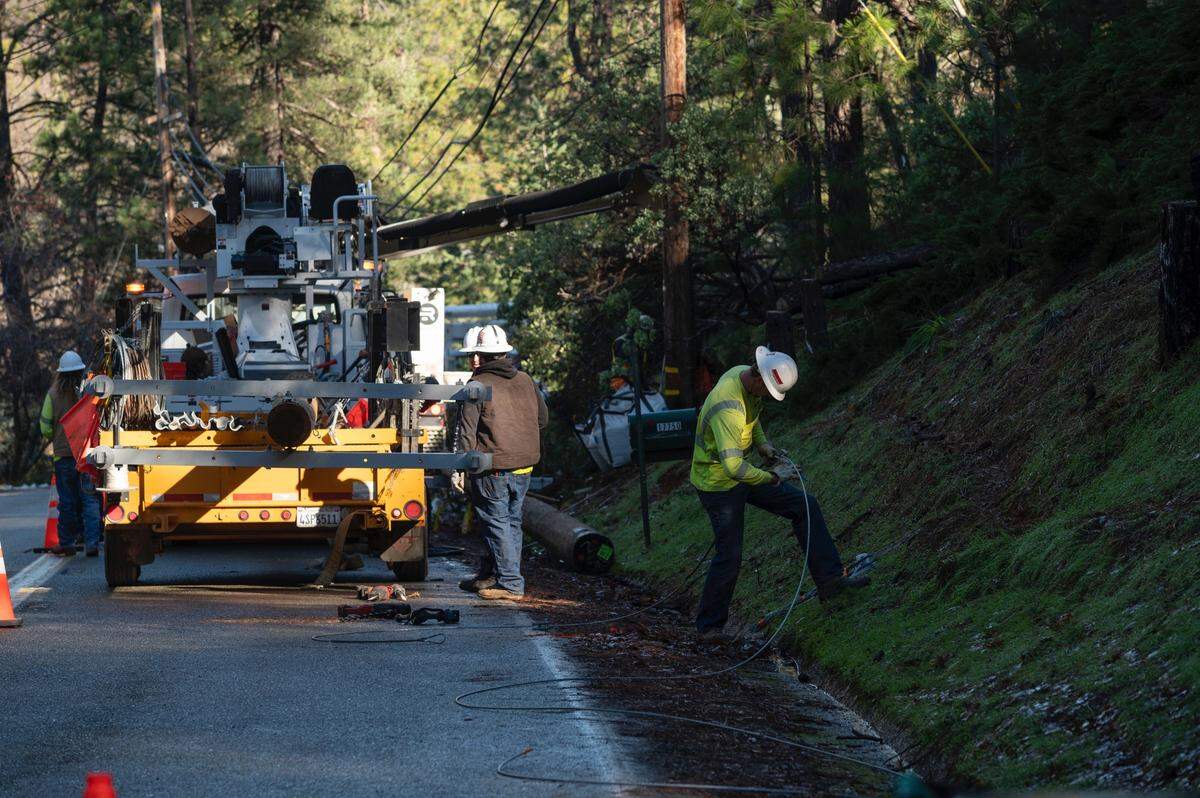
But many residents in more remote parts of the Sierra, or more severely affected by damaged infrastructure, remain in the cold, rationing fuel for their generators and charges for cellphones from their portable batteries. Others have shoveled out of their driveways and abandoned their homes altogether, seeking refuge at motels. PG&E says electricity to nearly all customers is expected to be restored by Tuesday or sooner.
Over 250 crews were out Thursday and Friday, PG&E spokeswoman Megan McFarland said in a statement, struggling to access damaged equipment, navigate road closures and deal with ongoing stormy weather. The company acknowledges “it’s an incredible hardship to be without power,” McFarland stated.
“Many of our crews live and work in impacted areas, don’t have power themselves and are still working incredibly long hours to support their communities,” McFarland said in an email.
McFarland warned the restoration progress could be stalled as another storm moves into the region Friday, but fair and dry weather was predicted for the weekend and early next week. On Thursday morning, PG&E began delivering the first shipment of portable generators to customers who remain without power, with priority to those with small children or people with health conditions.
Nevada County — which is experiencing the largest number of households still in the dark — has several firewood pick-up locations to help residents keep their homes warm. For people running low on propane, the county urges residents unable to get their tanks filled to fill out a county form to get a delivery via the Western Propane and Gas Association.
Showers and laundry service are available for residents without power at the Eric Rood Center at 950 Maidu Ave. in Nevada City, said Taylor Wolfe, a Nevada County spokeswoman. She said showers are open daily from 6 to 10 a.m. and 4 to 8 p.m., and laundry can be dropped off throughout the day and picked up 24 hours later.
Some residents in the Sierra said they were in some ways prepared for extended power outage, drilled by rounds of PG&E proactive blackouts during the bone-dry and windy days of California’s intensifying wildfire seasons.
Melissa Owens in Colfax was without power for seven days starting the day after Christmas, but had purchased a generator about three years ago because of the public safety power shutoffs. Between melting snow to flush their toilet, sticking food in coolers outside, and using the generator to charge necessities, Owens and her husband were able to weather the outage.
“You have got to get smart,” she said.
But some people are particularly vulnerable during extended power outages, such as those with disabilities, those with health issues, or those who use electrical medical devices like motorized wheelchairs, ventilators, respirators and apnea monitors.
Additionally, “there is a lot of subtle harm” that people with disabilities or with medical needs can experience during an outage, said Melissa Kasnitz, legal director for the Center for Accessible Technology. Some people with diabetes rely on insulin, which needs to be refrigerated. Others are sensitive to dramatic temperature changes, or are at-risk to the adverse effects of COVID-19 and thus can’t go to community centers.
“Some people will say, ‘Oh it’s just an inconvenience and people need to deal with it,’” Kasnitz said. “Those are the people with good health or emergency kits or can find a place to go.”
Vicki Lorini and her husband spent more than four days without power at their Grass Valley home, relying on a portable generator to power the refrigerator, water heater, a few lights and their Internet router.
Unlike many of her neighbors, her home has piped running water as opposed to a well, meaning they could still use their bathrooms. Lorini considers herself fortunate.
“There are residents up here with zero heat, there are people who are really cold,” Lorini said.
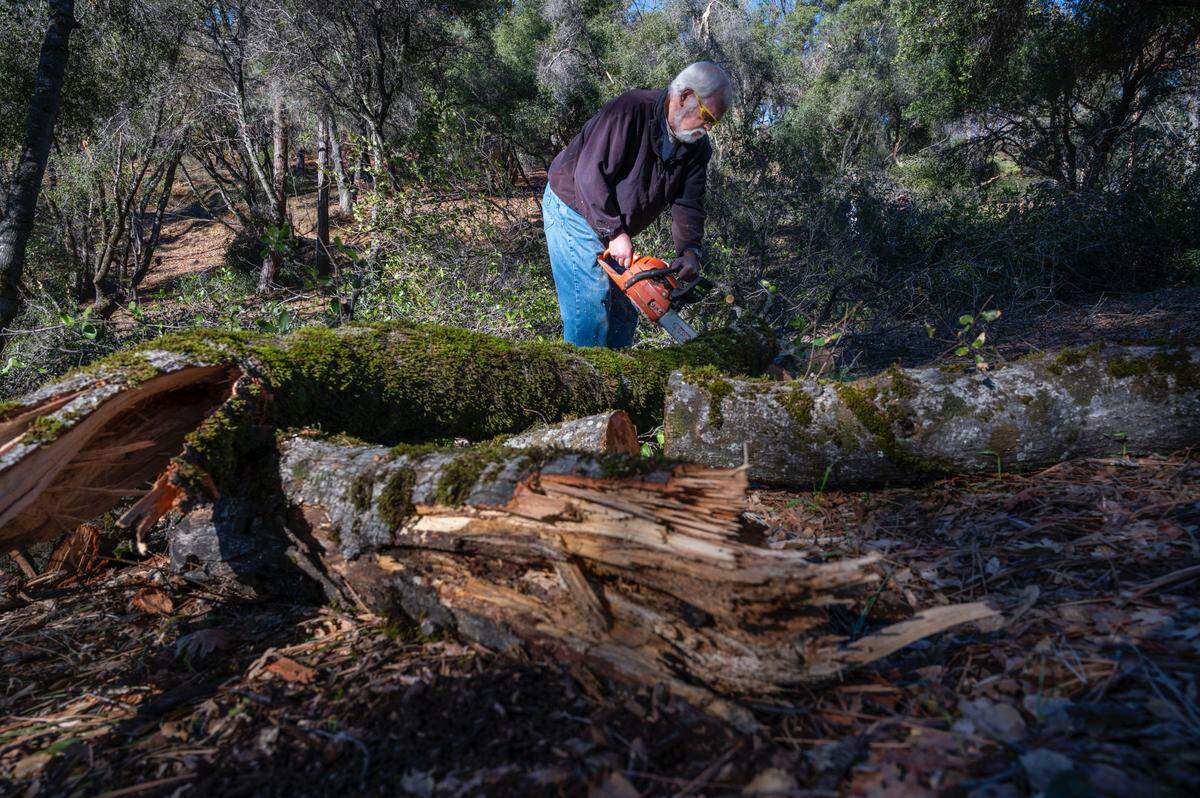
The area they live in was scorched by the River Fire last summer. Lorini said the couple is now worried all the down trees around their home will be kindling for the next wildfire. Her husband, Tom Lorini, spent several hours over two days using his chainsaws to cut tree limbs that fell and blocked the quarter-mile driveway they share with two other homes. It’s the only way to get in and out.
He says he’s going to have to spend the next few months clearing out all the fallen trees.
“This is pretty much a disaster here,” Tom Lorini said. “This is just going to be a mess out here for quite a while.”
Vicki Lorini said PG&E was far too slow to prepare for the storm and to restore power to residents, particularly for elderly residents forced to rely on volunteers to bring them food and other necessities. It took more than a week before PG&E gave even an estimated time of power restoration, Jones said.
“This isn’t business as usual; PG&E isn’t doing a good job,” Jones said.
PG&E asked for help from more than 100 other utilities to bolster crews working to restore power. Earlier this week, there were crews from the city of Roseville; Sacramento Municipal Utility District; Eugene, Oregon; Public Service New Mexico; Tillamook and Lower Valley Energy were assisting.
As of Thursday evening, there are 6,716 customers without power in Nevada County, 2,257 in Placer County, 1,047 in El Dorado County and 424 in Sierra County.
“This is real people doing real suffering, and what this is doing is normalizing it,” Jones said.
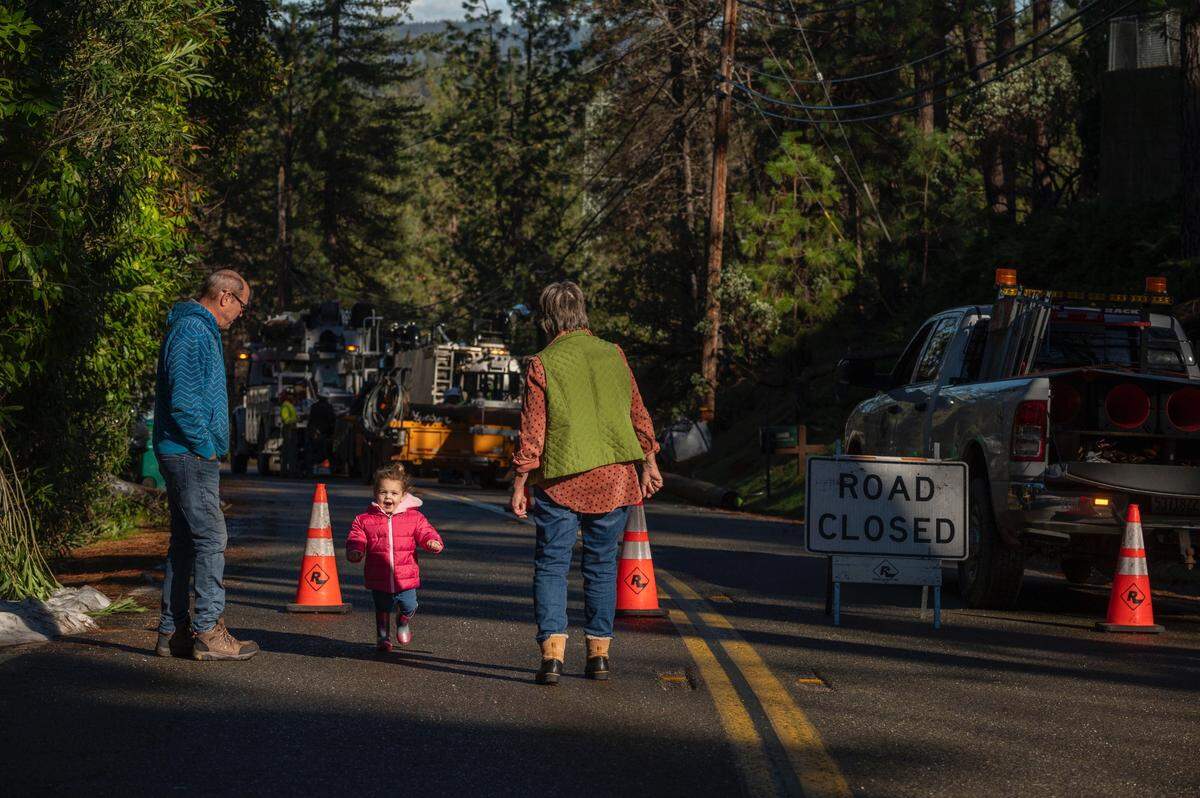
Kim and Barry Ummel have been without power since Dec. 27, burning through firewood to keep their Alta Sierra home warm. On Thursday, PG&E crews were working down the street from their house, repairing a damaged power pole and lines.
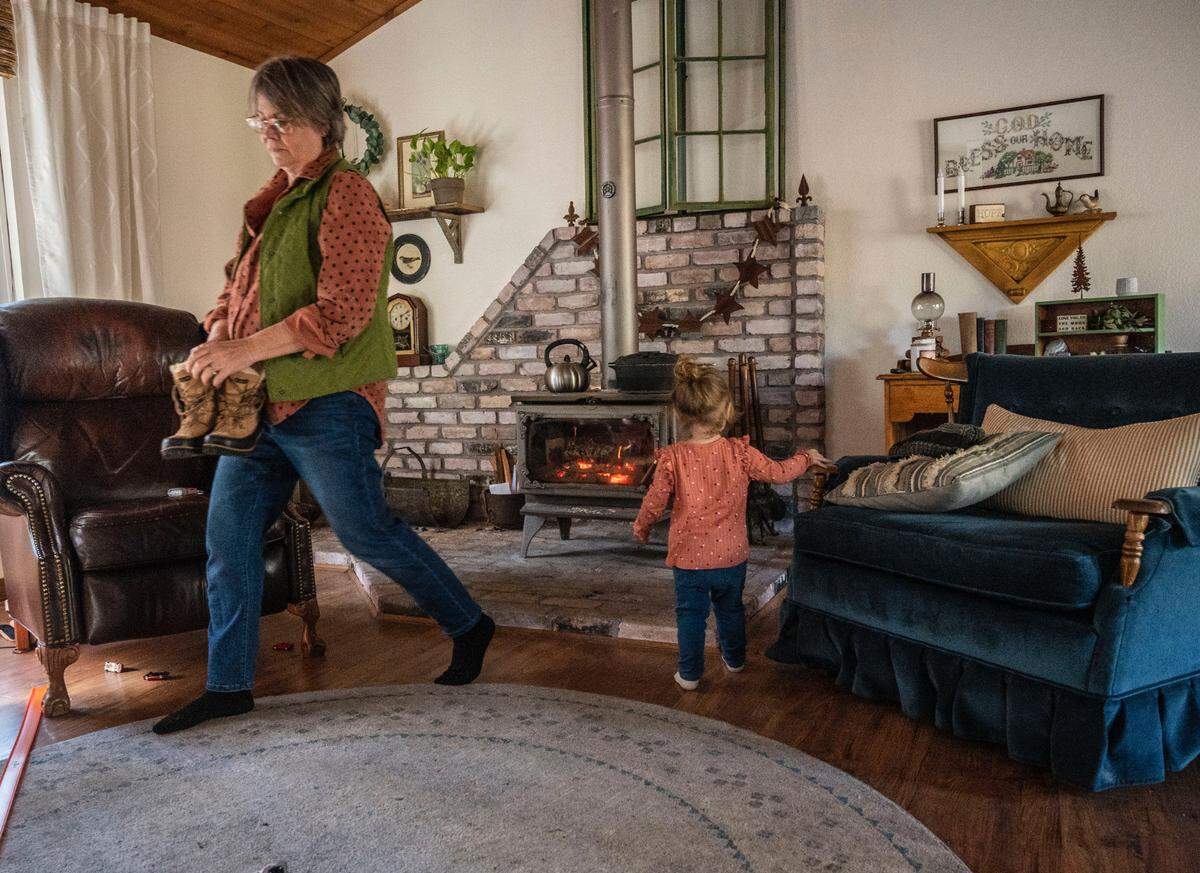
Sitting in their home, the Ummels recalled the harrowing first night of snowfall.
“We could just hear stuff crashing all around us,” Kim Ummel said. “Trees were falling all around us.”
Their home wasn’t seriously damaged — their backyard deck suffered the worst of it. In comparison, some neighbors had large trees topple; one neighbor had their backyard above-ground pool crushed by a tree.
Still, being without power has been difficult. The couple doesn’t have a portable generator, though they do have running water and a propane water heater. For meals, they cook at their nearby son’s house, who has a propane stove but who also lacks electricity.
During the day, the couple plays board games, takes their granddaughter to the park and goes out for meals when they can. At night, they play cards by candlelight and are usually in bed by 8 p.m. Eyeing the PG&E crews down their street on Norlene Way, the Ummels hope electricity will return soon.
“You just kind of give up after a while trying to keep things normal,” Kim Ummel said. “You get so anxious after being without power for so long.”
This story was originally published January 7, 2022 at 5:00 AM.