
UC Davis equine director — who oversees state racehorse safety — suspended for alleged doping
The license of University of California Davis Equine Director Jeff Blea, who oversees the medical safety of racehorses in the state, is under suspension over allegations that he previously injected horses with performance enhancing drugs.
Blea only took office on July 1 in the position jointly appointed by UC Davis Veterinary School and the California Horse Racing Board. The charges by the California Veterinary Board stem from his tenure as a horse track veterinarian between January and March 2021 in Southern California.
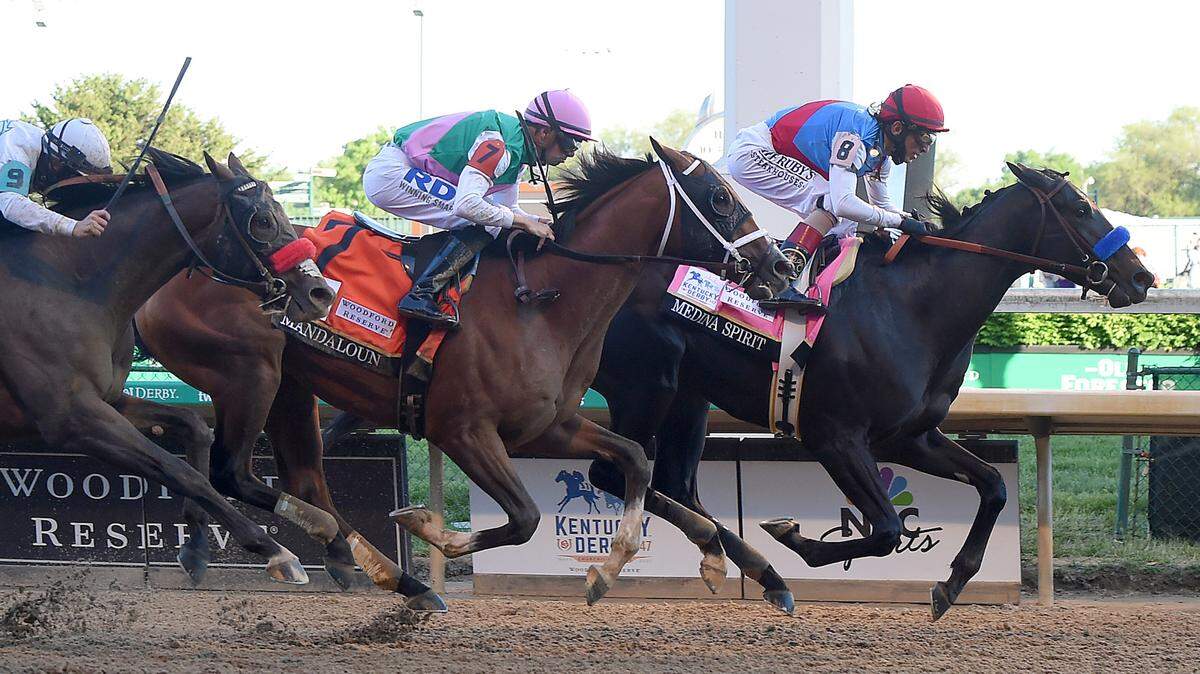
Doping scandals have plagued the horse-racing industry for years and the Blea controversy comes after the sudden death in December in California of Kentucky Derby winner Medina Spirit and questions about whether he was injected with drugs.
Blea was overseeing the investigation but was removed by the horse racing board.
“The (Vet)Board alleges that Respondent Blea administered medically unnecessary and non-FDA approved drugs to numerous racehorses,” reads a Dec. 2021 complaint against the horse doctor.. “The Board’s findings and allegations established that racehorses are administered legal and illegal drugs to enhance performance in racing. Racing is not a medical condition or diagnosis”.
Blea’s attorney George Wallace in an interview said the suspension is without merit and that Blea is the top horse racing horse veterinarian not only in California but in the entire United States.
He said he suspects that advocates who want to ban horse racing in California have gotten the ear of the veterinarian board.
A UC Davis spokeswoman said Blea is on administrative leave. He continues to collect his $255,000 a year salary, which is funded by the state.
The State Veterinarian Board has questioned how Blea could do an honest examination of Medina Spirit’s death given charges he administered controversial performance enhancing drugs into horses. That includes Thyro-L, a thyroid replacement drug that has not been approved by the FDA.
A necropsy into the Medina Spirit’s death by the UC Davis veterinarian school is expected to be completed in the next several weeks. Blea had overseen the UC Davis Kenneth L. Maddy Equine Analytical Chemistry Laboratory drug-testing program.
In that role he, worked with California Horse Racing board investigators to investigate potential medication violations and worked with peers at the UC vet school performing horse necropsies, according to the vet board complaint.
The day after Medina Spirit won the Kentucky Derby in May 2021, the three-year-old colt failed a post-race drug test and the horse’s trainer Timothy Baffert was subsequently banned from fielding any horses at the Churchill Downs racetrack for two years.
“Because Respondent Blea is alleged to have administered dangerous and medically unnecessary drugs to numerous racehorses, it stands to reason that he approves of such practice by other veterinarians,” the state veterinarian board said in late December 2021, when it first filed a complaint against the doctor. “Any necropsy and investigation results identifying any racehorse’s cause of death as drug-related would be detrimental to Respondent Blea, his career, and his livelihood.”
State Administrative Law Judge Judge Nana Chin initially suspended Blea’s license temporarily in an emergency hearing in December.
A subsequent hearing was held on January 21. In a 15-page order released on Feb. 2, Chin said Blea’s behavior was “negligent, unprofessional, and poses a danger to the public health, safety, and welfare.”
A spokeswoman for the board Monica Vargas said the board is unable to comment on pending disciplinary matters.
The vet board is seeking a permanent revocation of Blea’s license and will need to hold another hearing within the next several months in which Blea will be allowed to present a defense.
The case sets one state professional board against another because the State Horse Racing Board is supporting Blea in his battle with the vet board.
“I think the vet board means well, but they are just off the mark,” said Scott Chaney, executive director of the California Horse Racing Board. “Jeff’s an excellent veterinarian and my overall concern is if he can be charged, so can any large animal veterinarian.”
Chaney said Blea’s medical treatment of race horses “is standard among large animal veterinarians in California.”
In its complaint, the vet board said Blea administered Thyro-L, a thyroid replacement drug, to one horse with a normal thyroid test and without a documented physical examination.
“Thyro-L is well known to increase metabolism, lighten the horse, and “trim” horses up creating leaner body mass, making them fitter for racing,” the complaint said. “However, Thyro-L is also known to cause cardiac arrhythmias in horses.”
In other cases, the complaint said Blea administered lasix to three horses to counter exercise-induced pulmonary hemorrhage, a condition in which horses experience lung bleeding during exercise. The board said Blea never examined the horses.
“Lasix is a potent diuretic that can flush other medications from a horse’s system to avoid detection and lighten a horse by dehydration,” the complaint said.
.Blea also administered Phenylbutazone to three hoses, without an examination or diagnosis, the complaint said. It said Phenylbutazone is used to treat musculoskeletal pain and can also mask conditions that would otherwise show a horse to be unsound.
The vet board said in its complaint that from January through March 2021, Blea administered medications to 3,225 horses over 67 working days.
“This averages out to be 48 horses per day. The records show Respondent Blea administered the same drugs for multiple horses with the same trainer consecutively at approximately the same time,” the complaint said. “Respondent Blea provided drugs to a large number of horses not based on a documented examination, diagnosis or medical necessity, but instead on what the trainer requests.”
Blea, the complaint said, was the author of clinical guidelines for veterinarians treating racehorses in 2010, which stated as a core recommendation that all therapeutic treatment should be based on a specific diagnosis and should be documented in a medical record.
“Respondent Blea’s failure to adhere to his own recommendations illustrates that his allegiance is not to the best interests of his equine patients,” the vet board complaint said.
Blea was selected by a six-member committee to be equine medical director that included three members of the horse racing board and three members of the UC Davis veterinary school. The members included Chancey from the horse racing commission and John R. Pascoe, executive associate dean of the veterinary school
Blea replaced long-time equine director Rick Arthur who retired.
This story was originally published February 9, 2022 at 10:13 AM.