
Exclusive: Catholic high school sues Sacramento donors after family moves to halt sale of house
Walter and Agnes Anderson were devoted contributors to Sacramento-area Catholic institutions, giving to Loretto, Jesuit and Christian Brothers high schools over the years.
The co-founders of Sacramento’s Anderson Bros. pharmacies, the couple had a deep attachment to Jesuit, where their late son, Thomas, graduated in 1972 and later returned to teach civics and world history at the school’s Carmichael campus, which has a soccer field that backs up to the Anderson’s 5,035-square-foot hilltop home on Wixford Way.
So, after Walter Anderson died in 2005, his widow arranged to donate the five-bedroom, four-bath house to Jesuit after her own death, according to the family.
The “gift deed” signed by the Anderson’s estate attorney, Brian McSweeney of San Mateo, and a Jesuit high official on June 7, 2018, lists two restrictions: one requiring that the home be known and marketed as “the Anderson House,” the other that the property “shall only be used for the use and benefit of Jesuit High School of Sacramento and for no other use or purpose.”
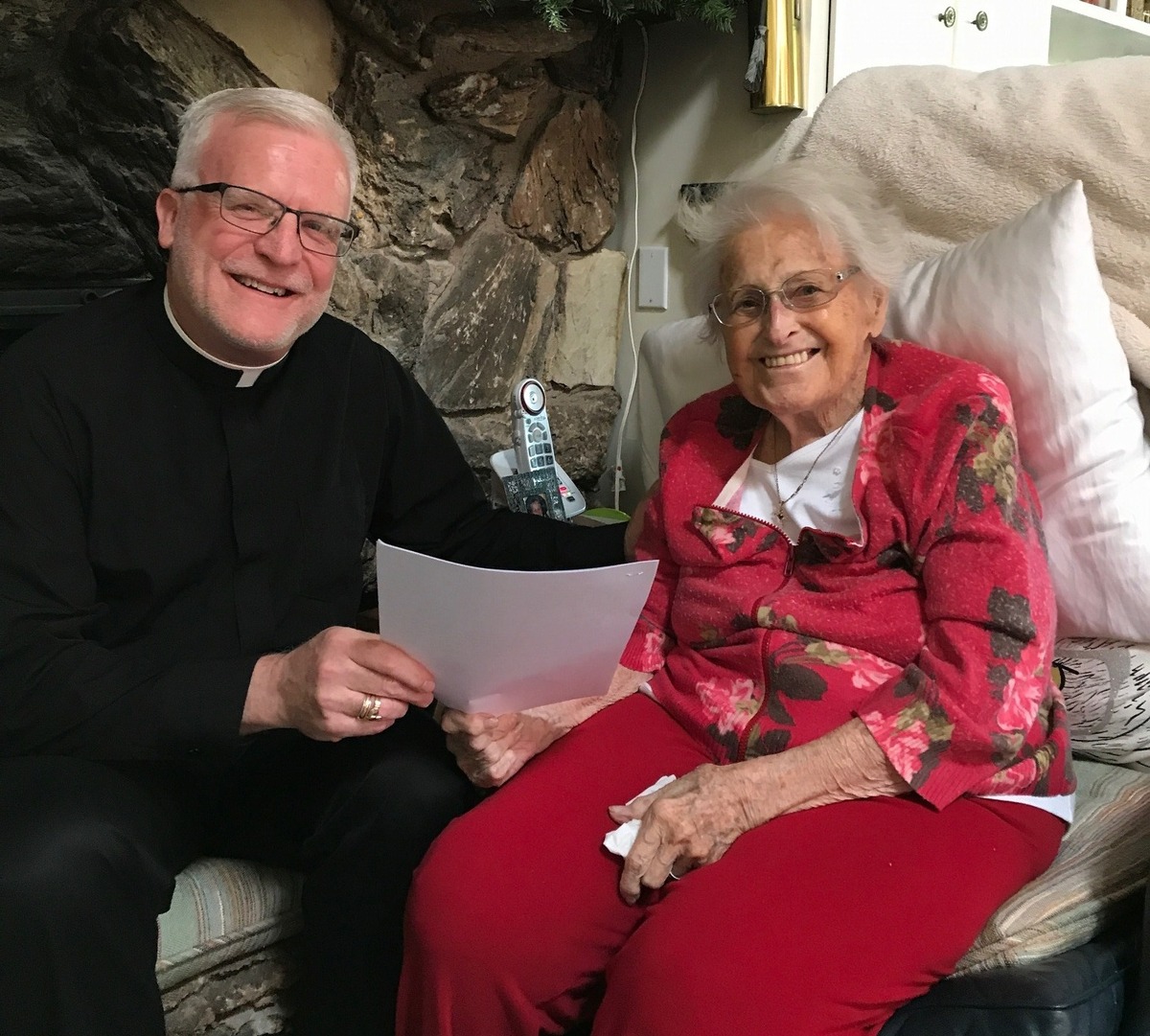
Agnes Anderson died less than three weeks later, believing the home would remain as a place where Jesuit officials could use it for fundraisers, receptions or on-campus housing for visiting priests, the family said.
Then, the trouble began.
Jesuit High School officials decided the best use of the property, valued by Zillow.com at $1.48 million to $1.92 million, was to sell the house and “use the net sales proceeds to benefit Jesuit High School by funding an endowment honoring and named for Walter and Agnes Anderson for their acts of generosity toward Jesuit High School of Sacramento over the years,” court documents say.
“Funds in the endowment would be used solely to provide financial aid to students who might otherwise be unable to attend Jesuit High School of Sacramento,” court documents say.
After learning of the plan to sell the house — which the family discovered when someone went by the home shortly after it was handed over to Jesuit and saw a “for sale” sign — McSweeney objected and demanded the sale be halted.
After accepting house as a gift, Jesuit sues the family
So, Jesuit sued McSweeney and the Andersons’ surviving children, arguing that the gift deed does not prohibit the school from selling the home.
“My mom was a very spirited, tough individual, and she would not be happy with any of this,” her son, Steve Anderson, said in an interview outside the family home where he grew up. “And it was definitely not her intention (for the house to be sold).
“It’s unfortunate to have to go through this considering her devotion over the years.”
Her “devotion” includes her and her husband being listed in Jesuit president’s reports as having given at least $1.5 million to the school. The Andersons were named as “North American Martyrs,” the highest designation for donors to the school and one awarded to only six donors in the 2019 president’s report.

When donations go wrong
Legal disputes over how a donation may be used are not uncommon.
Country singer Garth Brooks made a $500,000 donation to an Oklahoma hospital in 2005 with the notion that the hospital would name a building after his late mother. When that didn’t happen, he sued, and a jury in 2012 awarded him $1 million.
One of the largest charitable disputes involved Princeton University and the heirs of a 1926 Princeton alum whose wife gave the school a $35 million endowment in 1961. A 2002 lawsuit by the family ended in a settlement after Princeton spent more than $40 million in pre-trial legal fees, the university said.
“It happens more than it should, and there are other cases around the country,” said Kathryn Miree, who advises nonprofits on gifts and endowments from her firm’s Birmingham, Alabama, offices. “The reason they go wrong is the intentions are not clearly agreed upon in advance.”
Miree was not familiar with the Sacramento dispute, but said that generally in a case where a house is donated to a nonprofit the charity’s responsibility is to maximize the manner in which the asset can be used, even if that includes selling it.
But, she added, there are various ways to address disputes such as the one involving the Andersons and Jesuit.
“I’d say, number one, go make nice with the family, try and work it out,” she said.

Jesuit lauds Anderson gifts, but doesn’t need the house
No one disputes the impact the Andersons had on the school, particularly the impact Agnes Anderson had as she hosted receptions for Jesuit priests, allowed them free rein to use the family pool during the summers and held court at annual St. Patrick’s Day celebrations with school officials.
“Look around the campus on your next visit,” the school’s 2018 president’s report says, featuring a photo of Agnes Anderson smiling at a Jesuit function. “If you look close enough, everywhere you look you will see Agnes.
“Not only will you see Agnes in the buildings and our beautiful grounds, you will see her spirit in all that we do. Thousands of boys have grown to become the men we want them to be because of the gifts Agnes gave with love.”
The Rev. John P. McGarry, president of the school, responded to a request for comment from The Bee by lauding the Andersons and defending the decision to sue.
“Throughout their lives, Walter and Agnes Anderson were very giving to Jesuit High School and many other Catholic charities throughout Northern California,” McGarry wrote. “After Walter’s death, Agnes continued their philanthropy with one of their most generous acts – the donation of their residence on Wixford (Way).
“The property was deeded to Jesuit to be used for the betterment of the school. We were extremely grateful for this gift. However, the school had no practical use for a single-family home, nor did the Jesuit Community of Sacramento need to utilize the property as a residence, rectory, or seminary.
“Jesuit wishes to fulfill Mrs. Anderson’s wish to support the school, and it intends to use all of the proceeds from a sale of the property to create a scholarship endowment named for Walter and Agnes. This endowment would enable boys, who would otherwise not be able to afford the full cost of tuition, to attend Jesuit High School.”
McGarry added that Jesuit believes the terms of the gift allow the sale of the home, and that the lawsuit filed against McSweeney and the Anderson children “is simply seeking a ruling from the court to resolve the impasse.”
“The Anderson’s gift will then be able to serve a large portion of our community and, as an endowed fund, keep their memory and generous spirit alive for years to come,” he added.
The school’s lawsuit argues that its planned use of funds from the sale is in keeping with the Andersons’ years of philanthropy.
“The gift of the Real Property made to Jesuit High School of Sacramento by Agnes was consistent and in keeping with the generous and philanthropic ... actions of both Walter and Agnes toward numerous charities throughout Northern California, including plaintiff,” the lawsuit says.
‘An absolute betrayal’
But Anderson estate lawyer McSweeney, whose three older brothers attended Jesuit, including one who went to school with the Jesuit lawyers now suing McSweeney and the Anderson family, called the decision to sell the house “a betrayal, an absolute betrayal.”
“It was a complete shock,” McSweeney said. “There was no notice. If she wanted to give money, she would have just given them more money.
“It is a significant asset, and I cannot believe how short-sighted their analysis is. The Jesuits I grew up with would never have approved this.”
Jesuit caters to many of Sacramento’s most prominent families, touting itself as an all-male school where 99% of its graduates go on to college or military academies. The school, with more than 1,000 students and an annual tuition of $15,040, has a long list of donors who give through an annual auction, fundraising campaigns, or other efforts.
Jesuit’s 2019 report listed assets of $54,579,191, including $15,749,468 in assets “with donor restrictions.”

McSweeney contends it was clear from the start of discussions between Agnes Anderson and Jesuit that the house went to the school with a restriction against selling it, saying Agnes Anderson wanted the house to remain with the school as part of her family’s legacy.
“Jesuit knew from its meetings with her that this was not a monetary gift, it was a use gift,” he said.
Jesuit’s lawyers argue otherwise, writing in the lawsuit against McSweeney and the Anderson children that the agreement to transfer ownership of the home “does not authorize or direct the Trustee to impose any conditions on the gift of the Real Property to Jesuit High School of Sacramento.”
Nothing in the gift deed of the house or the trust documents “preclude or restrict (Jesuit) from selling the Real Property and utilizing the proceeds of that sale for the use and benefit of Jesuit High School,” Jesuit’s lawyers argued in the lawsuit, which was filed in June.
Family’s donations led to earlier court fight
The dispute with Jesuit is not the first time the Andersons’ generosity has led to a court fight.
In 2009, Agnes Anderson and her sister joined a lawsuit filed by Sacramento Diocese Bishop Jaime Soto against the nuns who shut down Loretto High School, an action taken to ensure that proceeds from the sale of the school remained in Sacramento.

The Anderson sisters had given $2 million to the school over the years, and Agnes and Walter Anderson donated $500,000 that led to the school’s science wing being named after them, according to Sacramento Bee archives.
Thomas Anderson, who died in 2018, told The Bee at the time that his mother did not want to join the suit but learned of the high school’s closing and sale only after reading about it in the newspaper.
“She does not ever want to be involved in any litigation whatsoever,” he said. “But at this point her faith is at the crossroads; it’s being tested.”
This story was originally published February 27, 2022 at 5:00 AM.