Sacramento County sent $100M in COVID aid to sheriff’s payroll. Grand jury wants new audit
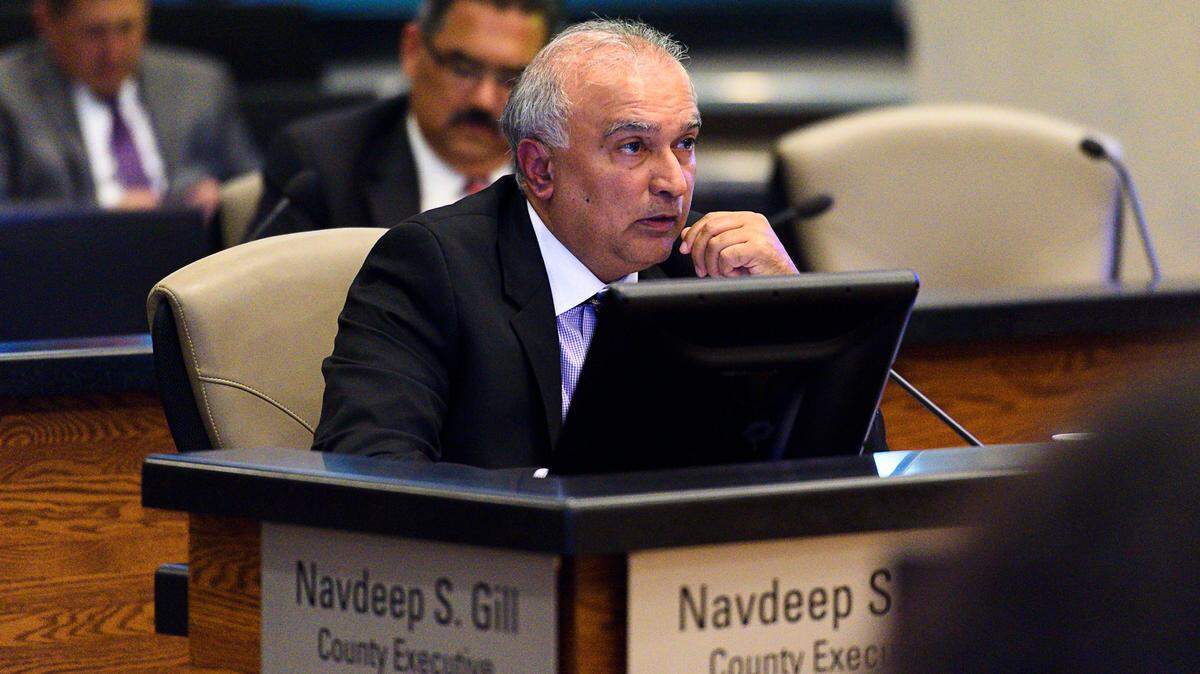
Sacramento County “abandoned responsibility for COVID spending” and “undermined public confidence in government” in 2020 when county leaders allocated the lion’s share of $181 million in federal coronavirus aid toward the Sheriff’s Office, a grand jury report concluded.
The report, released Wednesday, focused on how the county spent early coronavirus relief funding distributed by the Trump administration through a March 2020 law known as the CARES Act.
An investigation by the Sacramento County grand jury “revealed that the County of Sacramento conducted no outreach, and made no CARES Act funding plan to support countywide COVID-19 relief activities.”
The county faced intense scrutiny beginning in August 2020 when a staff report showed Nav Gill, then the county’s chief executive, had allocated more than $104 million of $181 million in CARES Act funding to salary and benefits for Sheriff’s Office employees.
Gill at the time justified the allocation as essentially an accounting move: By moving general fund dollars out of the Sheriff’s Office budget and back into the general fund, then backfilling the sheriff’s budget using CARES Act dollars, the county could offset an anticipated revenue shortfall.
Gill also said it would free the county of a Dec. 30, 2020, spending deadline attached to CARES Act dollars.
U.S. Treasury guidance for the federal funds stated local governments could use the money to cover public safety and health workers “whose services are substantially dedicated to mitigating or responding to the COVID-19 public health emergency.”
The grand jury found, however, that “these CARES Act funded ‘public safety’ employees (in the Sheriff’s Office) simply continued performing the same duties as they had prior to the start of the COVID-19 pandemic.”
That much was made clear, the grand jury wrote, by Sheriff Scott Jones’s “flat refusal to publicly enforce the Governor and County’s Public Health stay-at-home and masking orders issued to prevent the community spread of COVID-19.”
Gill’s stance had some backing from separate Treasury department guidance to local governments that said they could assume all public health, law enforcement and public safety worker expenses are covered under the CARES Act, “as a matter of administrative convenience.”
The grand jury ultimately said it was unable to determine whether the switching of funds complied with federal CARES Act requirements, and it recommended that the Board of Supervisors appoint an independent panel by June 2022 to conduct a new audit.
The grand jury report called the budget maneuver “inconsistent with the widely publicized intent that CARES Act funds be directed to meet the community’s challenges triggered by the COVID-19 pandemic.”
Little discussion of CARES Act at meetings
The investigation found other faults with the county’s COVID-19 response and use of CARES Act dollars.
The report contends that Gill and the county supervisors “showed little interest in the allocation and utilization of the CARES Act funds received,” with little to no action taken for three months, even as a major COVID-19 surge developed that summer.
“No reports of funding requests or approvals were made to the Board” between an April 21, 2020, resolution giving Gill the authority to allocate CARES Act funding and Aug. 11, 2020, when Gill gave the supervisors an outline of his spending plan, the grand jury found.
The grand jury requested formal responses to the report from Board of Supervisors Chairman Don Nottoli and the sheriff within 60 days.
Kim Nava, the county’s spokeswoman, said the supervisors would respond to the report.
“This response process will include a presentation at an upcoming Board meeting, during which the Board can provide input, review and approve the response to the findings and recommendations,” she said.
Fraction of coronavirus funds went to public health
Gill’s August 2020 CARES Act spending plan showed $148 million of the $181 million dedicated to the 2019-20 fiscal year.
About 90% of that year’s total, $133 million, went to “payroll for public health and safety employees” — of which $104 million went to the Sheriff’s Office.
The same table listed just $218,000, or less than 0.2% of the year’s $148 million, for “public health expenses” and just over $4 million, or 2.7%, toward a separate category titled “medical expenses.”
The report also noted that Sacramento County did not distribute CARES Act funding to any of its incorporated cities: Sacramento, Citrus Heights, Elk Grove, Folsom, Galt, Isleton and Rancho Cordova.
The grand jury recommended that the Board of Supervisors, county executive and Sheriff’s Office each adopt more transparent and specific budget allocation policies for special funding.
The CARES Act funding controversy put increased pressure on Gill, and left several supervisors skeptical of his leadership.
Gill resigned as county CEO in February 2021, after facing an investigation related to claims of workplace discrimination and harassment under his tenure.
A letter to the board signed by former and current county employees – including health officer Dr. Olivia Kasirye, the county’s lead on COVID-19 response – charged that Gill “created a toxic culture rife with sexism, intimidation, racism, and a blatant disregard for public health.”
Ann Edwards, who was head of Sacramento County’s department of human assistance, replaced Gill as the county’s chief executive and continues to serve in that role.
The grand jury investigation began in March 2021 and was triggered by a citizen complaint.
This story was originally published February 17, 2022 at 3:00 AM.